Aging Poodle Skin: Sebum Drops 35% by Age 9 – What to Do
Your standard poodle’s sebaceous glands decline with age, reducing sebum production by about 35% by age nine. This drop stems from hormonal shifts in thyroid and sex hormones, weakening skin’s natural moisture barrier. Reduced oil output increases transepidermal water loss and compromises coat flexibility. The stratum corneum retains less moisture, raising flakiness and matting risks, especially along the back and tail base. Systemic dryness worsens in low humidity. You’ll discover effective ways to manage this natural decline.
Notable Insights
- Sebaceous gland activity declines in aging poodles, reducing sebum production by up to 35% by age 9.
- Hormonal changes, especially in thyroid and sex hormones, contribute to decreased oil production in older poodles.
- Dry skin results from reduced sebum, leading to increased transepidermal water loss and weakened skin barrier function.
- Areas with high sebaceous gland density, like the back and tail base, show the most noticeable dryness and flakiness.
- Omega-3 and omega-6 supplementation can support sebum production and improve skin hydration in aged poodles.
Why Older Poodles Lose Natural Skin Oil
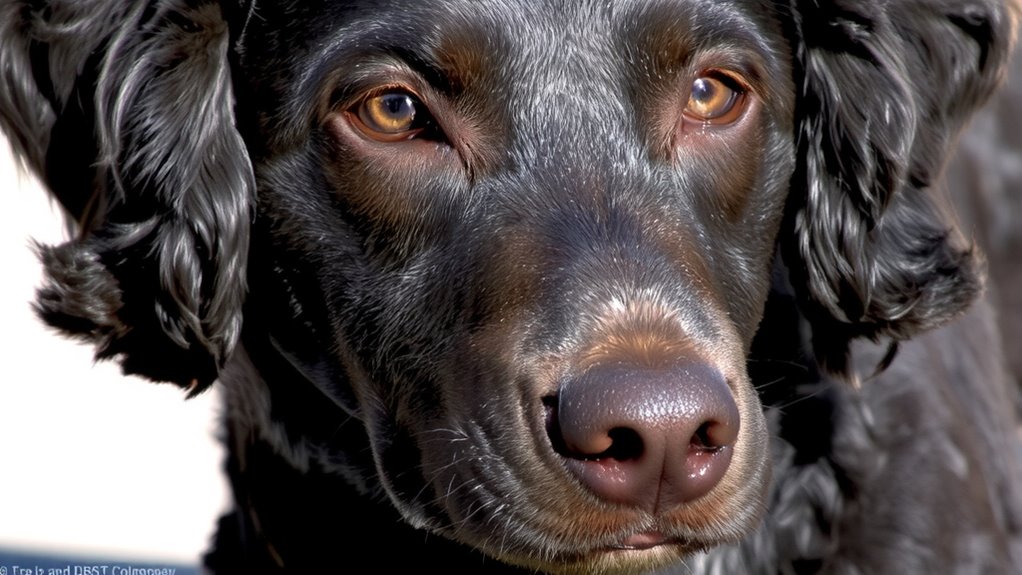
As your poodle ages, its sebaceous glands gradually decrease in both activity and efficiency, leading to reduced sebum production. This condition, known as sebaceous decline, directly impacts the skin’s natural oil balance. Hormonal changes, particularly in thyroid and sex hormones, contribute markedly to this physiological shift. By age 9, sebum output drops an average of 35% compared to younger adults. The lipid composition in the stratum corneum alters, reducing ceramides and fatty acids critical for moisture retention. Hair follicle density decreases, further limiting oil distribution across the coat. These changes occur systemically but are most evident in areas with high gland concentration, like the back and tail base. Sebaceous decline isn’t reversible, but measurable with non-invasive tools like sebumeters. Managing it requires understanding the structural and biochemical shifts at the dermal level-key for effective care planning.
How Dry Skin Harms Aging Poodle Coats
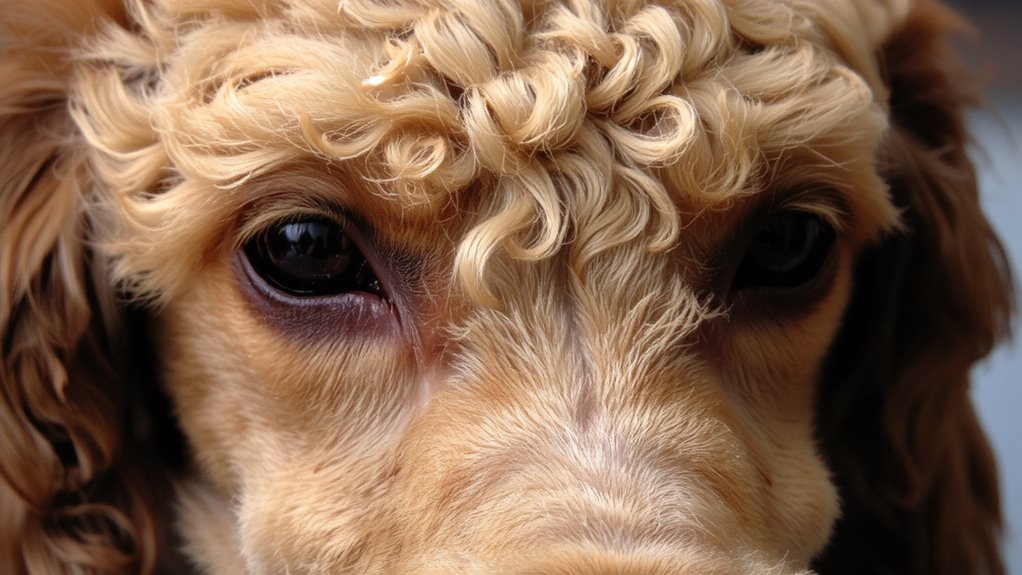
Although sebum production declines with age, its impact on coat health becomes most apparent when dry skin leads to structural damage in the hair and epidermal barrier. You’ll notice coat brittleness as hair shafts lose flexibility, increasing breakage under mechanical stress. Without sufficient lipid protection, the stratum corneum weakens, reducing its ability to retain moisture by up to 40%. This compromised barrier promotes transepidermal water loss, exacerbating dryness. Flaky patches appear as keratinocytes slough prematurely, disrupting normal desquamation. The dermal matrix loses integrity, diminishing tensile strength by 25% in poodles over ten years. Hair follicles receive inadequate nourishment, slowing keratin synthesis and prolonging the telogen phase. Microscopic examination reveals disrupted cuticle layer alignment, increasing friction and matting risk. Environmental irritants penetrate more easily, prompting low-grade inflammation. Cumulative damage reduces coat density and resilience, diminishing both insulation and aesthetic quality. You must address these changes proactively.
Signs of Dry Skin in Senior Poodles
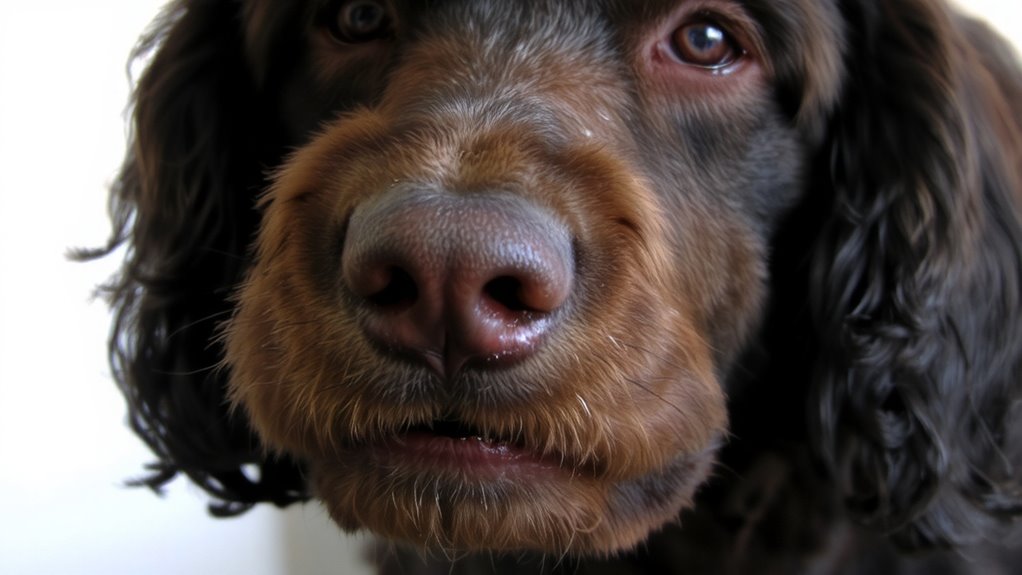
You start noticing your senior poodle’s coat feels rougher, less supple, and visibly flaky-clear indicators of dry skin. Reduced sebum production in aging sebaceous glands leads to compromised epidermal integrity. You may observe increased dandruff, especially along the back and tail base. The skin appears dull, with possible erythema or microfissures. Seasonal changes exacerbate symptoms, particularly in winter when indoor humidity drops below 30%. Low humidity impairs stratum corneum hydration, accelerating transepidermal water loss. Environmental allergens like pollen, mold, and dust mites further irritate at-risk skin. These allergens bind to IgE receptors, triggering mild inflammatory responses that worsen dryness. You’ll notice more scratching, but not necessarily hair loss-at this stage, it’s primarily a barrier dysfunction. Monitoring skin elasticity and coat sheen provides objective assessment. Use a digital moisture meter if available; readings below 35 AU indicate clinically dry skin. Early recognition helps prevent secondary infections. Choosing the right best dog shampoo can significantly improve skin hydration and reduce flaking in senior poodles.
Foods That Fight Dry Skin in Older Poodles
A well-formulated diet can markedly improve skin hydration and coat condition in senior poodles. Omega supplements, particularly those rich in omega-3 and omega-6 fatty acids, support sebum production and reinforce the skin barrier. Look for supplements containing EPA and DHA derived from fish oil, with concentrations of at least 180 mg EPA and 120 mg DHA per capsule. These fatty acids modulate inflammation and enhance lipid content in the stratum corneum. Flaxseed oil provides ALA, a plant-based omega-3, though conversion rates in dogs are low. Pair omega supplements with consistent Hydration tips: provide 50–70 ml of water per kilogram of body weight daily. Dehydration exacerbates dry skin. Moisture-rich foods like canned diets or fresh, steamed vegetables can also augment fluid intake. Avoid fillers such as corn and soy, which offer minimal nutritional support for skin health.
Grooming Mistakes That Worsen Dry Skin
When grooming older poodles, skipping conditioner or using harsh shampoos strips natural oils and worsens dry skin. Harsh shampoos, especially those with sulfates or high pH levels (above 7.5), disrupt the skin’s acid mantle, increasing transepidermal water loss by up to 30%. You should avoid overbathing, which exceeds once every three weeks, as it accelerates lipid depletion in aged skin. Frequent washing removes sebum, reducing the skin’s ability to retain moisture. Use pH-balanced shampoos (6.2–7.0) and always follow with a moisturizing conditioner containing ceramides or fatty acids. Leave-on conditioners with glycerin (2–5% concentration) improve hydration. Limit bathing frequency to preserve natural oil production. Brushes with smooth tips reduce cuticle damage during detangling. Avoid hot water; use lukewarm (37–39°C) to prevent further drying. Proper technique supports barrier function in aging poodle skin. For breeds with dense double coats like Labradors, selecting a shampoo for Labradors can provide insights into maintaining coat and skin health through appropriate product choice.
When to Take Your Poodle to the Vet for Dry Skin
Persistent dry skin in aging poodles often resists home care despite proper grooming and moisturizing routines. When flaking, redness, or itching persists beyond two weeks, veterinary consultation is warranted. Secondary infections may develop, indicated by odor, crusting, or oozing. Skin testing can identify underlying causes like hormonal imbalances, allergies, or seborrhea. Early diagnostic intervention prevents progression and improves treatment outcomes.
| Symptom | Duration | Recommended Action |
|---|---|---|
| Mild flaking | <7 days | Adjust moisturizer, monitor |
| Redness with itching | 7–14 days | Initiate vet evaluation |
| Crusting or sores | >14 days | Schedule skin testing |
| Hair loss (focal) | Any | Rule out endocrine disorders |
| Musty odor | Persistent | Immediate veterinary consultation |
Delaying professional assessment risks chronic dermatitis. Your poodle’s compromised epidermal barrier requires targeted therapy informed by clinical diagnostics.
On a final note
You must address reduced sebum production in aging Poodles to prevent chronic dry skin. Sebaceous gland activity declines by up to 40% in dogs over ten years. This impairs the skin’s lipid barrier, increasing transepidermal water loss (TEWL) by 25–30%. Omega-3 and omega-6 fatty acid supplementation at 1,000 mg EPA/DHA daily restores membrane integrity. Use sulfate-free shampoos with a pH of 6.5–7.5 every 4–6 weeks. Persistent flaking warrants veterinary evaluation.