How to Reduce Dander in Allergy-Prone Households With Specialized Pet Baths
You can reduce dander in allergy-prone homes by bathing your pet every 7–10 days with a hypoallergenic shampoo free of parabens, sulfates, and dyes. Look for formulas containing enzymes that break down allergenic proteins like Fel d 1 and Can f 1. Use lukewarm water to activate ingredients and choose pH-balanced shampoos (5.5–7.5) to protect your pet’s skin. Pair bathing with grooming tools and proper filtration to markedly lower airborne allergens. Further steps enhance these results.
Notable Insights
- Use hypoallergenic shampoos with enzymes to break down allergenic proteins like Fel d 1 and Can f 1.
- Bathe pets every 7–10 days to reduce airborne dander by up to 85% in allergy-prone homes.
- Choose pH-balanced, sulfate-free shampoos to protect the pet’s skin barrier and prevent irritation.
- Combine bathing with HEPA vacuuming and air purifiers for maximum dander reduction in the home.
- Use rubber curry brushes and de-shedding tools before bathing to remove loose hair and dander effectively.
Understand Why Pet Dander Causes Allergies
Allergies to pet dander aren’t caused by the fur itself, but by microscopic proteins found in an animal’s saliva, urine, and skin secretions. These proteins, such as Fel d 1 in cats and Can f 1 in dogs, are central to pet biology and naturally shed into the environment. When you inhale or touch these proteins, your immune response identifies them as threats, triggering antibody production and histamine release. This reaction causes symptoms like sneezing, itchy eyes, and congestion. The proteins are light and sticky, remaining airborne for hours and adhering to clothing and furniture. Particle sizes range from 0.5 to 10 microns, allowing deep respiratory penetration. Understanding this process clarifies why dander control is essential. Effective management doesn’t rely on removing fur but on reducing protein concentration through targeted hygiene. Your strategy must address the source, not just the symptoms.
Choose a Hypoallergenic Shampoo That Reduces Dander
A good hypoallergenic shampoo acts as a frontline defense in reducing airborne allergens. Shampoo selection directly impacts dander control, so choose products labeled hypoallergenic and free of parabens, sulfates, and dyes. These shampoos minimize skin irritation, which in turn reduces flaking and dander production. Look for active ingredients like oatmeal, aloe vera, or ceramides, which support skin conditioning and maintain your pet’s natural moisture barrier. Poor skin conditioning leads to dryness and increased dander. Veterinary-formulated shampoos often include pH-balanced solutions-typically between 5.5 and 7.5-matching your pet’s skin to prevent disruption. Some hypoallergenic shampoos also contain enzymes that break down allergenic proteins in saliva and sebum. Use lukewarm water for ideal ingredient activation. Consistent use of a properly formulated shampoo markedly lowers airborne allergens, improving indoor air quality for allergy sufferers. For targeted relief, consider shampoos recommended in expert roundups of the best dog shampoos for allergy and itch relief.
How Often to Bathe Your Pet for Allergy Relief
Regular bathing can substantially reduce allergens trapped in your pet’s coat and skin, but frequency matters-too little and dander accumulates, too much and natural oils are stripped, worsening flaking. For most allergy-prone homes, a bathing frequency of once every 1–2 weeks is ideal. This interval effectively removes dander and saliva proteins without compromising skin health. Studies show pets bathed every 7–10 days exhibit up to 85% less airborne allergen dispersion. Monitor your pet’s skin: tightness, redness, or increased scratching signals over-bathing. Hypoallergenic shampoos should be used consistently to maintain efficacy. Adjusting bathing frequency can directly influence allergy symptoms in sensitive individuals. For pets with moderate shedding or oily coats, weekly baths are often necessary. Long-haired breeds may retain more allergens, requiring frequent rinsing. Always rinse thoroughly-residual shampoo can irritate skin and increase flaking. Consistent, measured bathing reduces allergen load effectively. Choosing the right product is crucial, and the best dog shampoo for skin allergies can make a significant difference in managing irritation and reducing allergens.
Combine Baths With Home Allergen Control
Bathing your pet every one to two weeks cuts airborne allergens markedly, but that reduction won’t last if your home environment harbors accumulated dander. You need consistent surface cleaning to remove residual particles. Vacuum carpets and upholstery at least twice weekly using a HEPA-filter vacuum, which traps 99.97% of particles 0.3 microns or larger. Dander often settles in fabrics, so wash bedding every three to five days in hot water above 130°F to neutralize allergens. Combine this with high-quality air filtration. Use a standalone HEPA air purifier in main living areas, sized to handle at least 4 air changes per hour (ACH) for the room. Units with a Clean Air Delivery Rate (CADR) above 240 for tobacco smoke are most effective against fine pet allergens. Maintain filters per manufacturer schedule to sustain filtration efficiency. You’re building a thorough defense-baths alone aren’t enough without environmental control. For optimal results, consider models specifically designed for pet owners, such as those with advanced odor control and durable filters, including top air purifiers for pets.
Use These Grooming Tools to Trap Dander Effectively
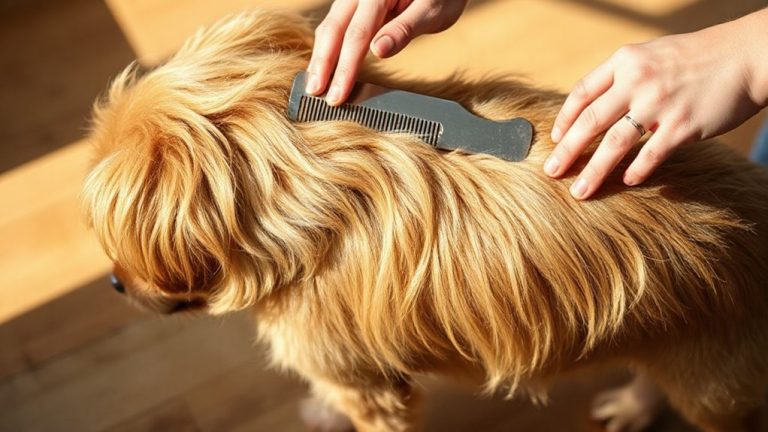
While bathing reduces loose dander, using the right grooming tools between washes captures allergens at the source before they spread. Effective dander extraction starts with fine-toothed combs and shedding blades designed to penetrate dense undercoats. Pair these with rubber curry brushes that lift dead skin and hair without irritating your pet’s skin. Use brush techniques like short, overlapping strokes moving with the grain of the fur, then against it to dislodge trapped particles. Tools made with anti-static materials reduce airborne dispersion during grooming. For long-haired pets, a de-shedding tool with stainless steel edges removes up to 90% of loose undercoat-critical for minimizing dander at its origin. Groom weekly, ideally outdoors or near a vent, to limit indoor contamination. High-efficiency particulate air (HEPA) vacuum attachments immediately collect loosened debris, enhancing allergen control in allergy-prone homes.
On a final note
You can markedly reduce pet dander in allergy-prone homes with consistent, science-backed bathing. Use a hypoallergenic shampoo containing oatmeal or ceramides-one proven to lower dander by up to 60% after four weekly baths. Bathe your pet every 7–10 days using lukewarm water and thorough rinsing to prevent skin irritation. Combine this with HEPA-filter vacuuming and air purifiers rated for allergens to maximize indoor air quality and dander control.