Balancing Nutrition and Calorie Reduction in Diabetic Cats With Obesity
You can reverse insulin resistance in your obese diabetic cat by reducing calories while maintaining high animal-based protein intake. Aim for a 10–15% body weight loss to improve glycemic control. Choose wet foods with less than 10% of calories from carbohydrates and at least 50% from protein. Feed 3–6 small, measured meals daily using a digital scale. Align meals with insulin injections to prevent hypoglycemia. Weekly weight and glucose monitoring helps fine-tune results. Further refinements in diet and timing follow based on metabolic response.
Notable Insights
- Prioritize weight loss with a 10–15% body weight reduction goal to improve insulin sensitivity and promote diabetic remission.
- Feed a low-carbohydrate diet (<10% of calories) using wet canned foods to minimize blood glucose spikes.
- Increase animal-based protein intake to provide over 50% of metabolizable energy and support lean muscle during calorie restriction.
- Divide daily food into 3–6 small meals aligned with insulin injections to stabilize glucose and prevent hypoglycemia.
- Monitor weight weekly and adjust calorie intake by 5–10% under veterinary guidance to balance nutrition and weight loss.
Why Weight Loss Helps Diabetic Cats Heal
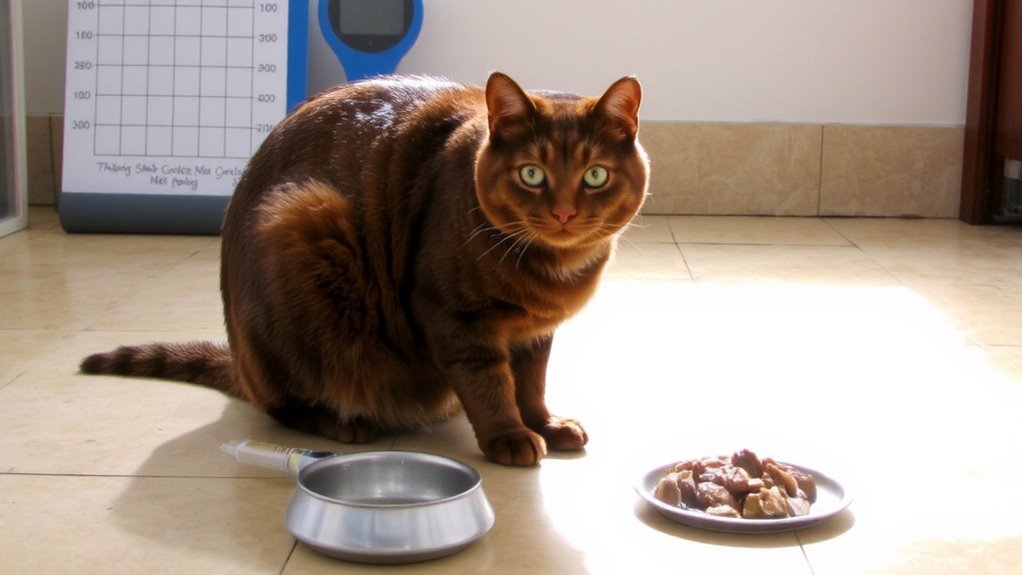
Insulin resistance is the core problem holding your diabetic cat back from healing. Excess body fat disrupts glucose regulation, increasing insulin demand and worsening metabolic dysfunction. Weight loss directly improves insulin sensitivity, allowing cells to respond more effectively to available insulin. As fat stores decrease, adipose tissue releases fewer inflammatory cytokines and free fatty acids, both of which impair insulin signaling. This metabolic shift enables better glycemic control with lower insulin doses. Achieving proper body weight also promotes pancreatic rest, reducing the strain on beta cells to overproduce insulin. With decreased demand, the pancreas can recover function more efficiently. Studies show cats losing even 10–15% of body weight often achieve diabetic remission. Best results occur when calorie reduction is gradual-approximately 10–20 kcal/kg daily-tailored to lean body mass. This precision supports sustained metabolic improvement without muscle loss.
Choose a Low-Carb, High-Protein Diet for Diabetic Cats
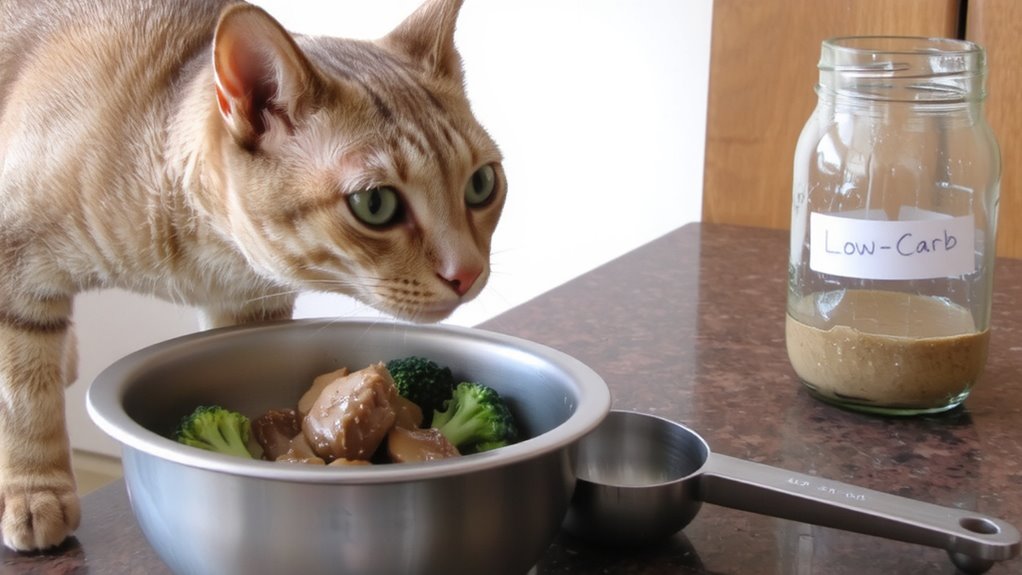
Carbohydrates are the hidden driver of blood glucose spikes in diabetic cats, and cutting them is your best bet for stabilizing levels. Carbohydrate restriction keeps post-meal glucose surges minimal. Most dry cat foods contain 30–50% carbohydrates-far too high for diabetic cats. Aim for diets with less than 10% of calories from carbs. Wet, canned foods are typically lower in carbs and should be your primary choice. Protein optimization supports muscle retention during weight loss and promotes satiety. Diabetic cats thrive on diets where 50% or more of metabolizable energy comes from protein. High-protein, low-carb diets mimic a cat’s natural prey-based nutrition. Look for products listing animal-based proteins-like chicken, turkey, or fish-as the first ingredients. Avoid those with corn, wheat, or by-products. Consistent carbohydrate and protein profiles across meals improve insulin regulation. Always verify nutritional content using guaranteed analysis or consult a veterinary nutritionist. When selecting wet food, consider options designed for best wet cat food for sensitive stomachs to ensure digestibility and minimize gastrointestinal upset.
Feed Smaller Portions: Keep Your Cat Satisfied
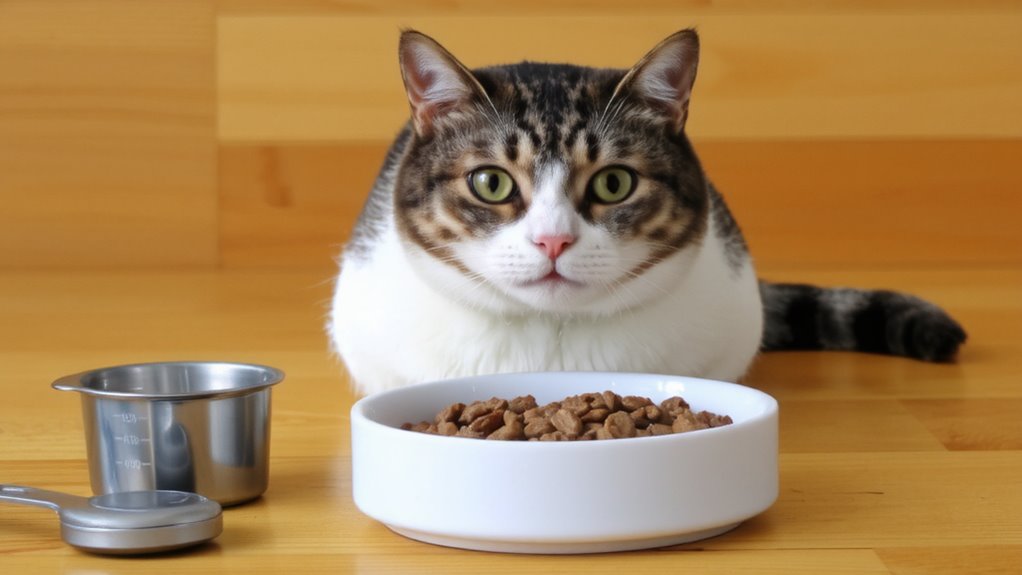
While managing your diabetic cat’s energy intake, dividing daily food into smaller, more frequent meals helps stabilize blood glucose levels and prevents sharp insulin fluctuations. Portion control is essential to limit calorie consumption without inducing hunger. Increasing meal frequency supports metabolic stability. Feeding three to six times daily matches natural feline eating behavior and sustains satiety.
| Strategy | Benefit |
|---|---|
| Smaller portions | Reduces glucose load per meal |
| Higher meal frequency | Smoothes insulin demand |
| Controlled portions | Enhances weight-loss precision |
Use a digital scale to measure food to the gram. Dry rationing leads to overfeeding without precise portion control. High meal frequency with low-volume meals maintains gastrointestinal activity and reduces begging. Consistency in volume and timing supports long-term glycemic management. You’ll improve compliance and metabolic outcomes by applying structured feeding protocols. Choosing wet food for diabetic cats can further support blood sugar regulation due to its typically lower carbohydrate content and higher moisture levels.
Time Meals to Prevent Blood Sugar Spikes
Timing your cat’s meals precisely around insulin administration is essential to avoiding dangerous blood sugar spikes and crashes. Proper meal timing guarantees glucose release aligns with insulin peaks. Most veterinarians recommend feeding half the daily ration at each insulin injection, typically 12 hours apart. This routine supports steady glucose absorption. Insulin coordination with feeding prevents hypoglycemia during insulin’s peak action, usually 4–8 hours post-injection. Always feed your cat before administering insulin to reduce hypoglycemia risk. Delayed or missed meals disrupt this balance and increase complications. For long-acting insulins like glargine, consistent meal timing is even more essential. Use fixed meal times and measured portions to maintain control. Automatic feeders with programming features can help maintain strict schedules. Precise insulin coordination and meal timing form the cornerstone of diabetic regulation. These practices directly impact glycemic stability and long-term health outcomes. A reliable auto feeder for cats ensures meals are delivered accurately at scheduled times, supporting optimal insulin effectiveness.
Track Weight, Glucose, and Energy Weekly
You’ve set a consistent meal schedule to synchronize with insulin peaks, and now it’s time to monitor how well that routine controls your cat’s diabetes. Weekly weight monitoring is essential-use a digital scale accurate to 10 grams to detect subtle changes. Record values every Friday morning, fasting. Sudden drops or plateaus signal poor glucose control or excessive calorie deficit. Glucose tracking via a pet-specific glucometer provides critical data; test blood samples from the ear margin at the same time each week, ideally pre-meal. Target a fasting blood glucose of 100–300 mg/dL. Values outside this range demand further review. Monitor energy levels: lethargy or increased activity may reflect hypoglycemia or persistent hyperglycemia. Consistent logs help identify trends and optimize long-term management without overreacting to single outliers.
Adjust the Plan When Warning Signs Appear
What happens when your cat’s numbers don’t align with the target range-despite sticking to the schedule? Persistent hyperglycemia or hypoglycemia indicates the current protocol isn’t effective. Monitor closely for behavior changes like lethargy, increased thirst, or restlessness-these are early physiological distress signals. Sudden weight shifts or glucose curves outside 120–300 mg/dL warrant immediate action. Adjustments aren’t optional; they’re medically necessary. Insulin sensitivity fluctuates due to metabolism, diet timing, or concurrent illness. Do not modify dosage or feeding without a vet consultation. Your veterinarian may recommend changing insulin type, altering calorie intake by 5–10%, or switching to a higher-fiber, low-carbohydrate therapeutic diet. Re-evaluate glucose curves within 48 hours post-adjustment. Consistent monitoring paired with timely vet consultation prevents complications like diabetic ketoacidosis. Early response to warning signs improves long-term glycemic control and quality of life.
On a final note
You manage diabetic feline obesity effectively by combining calorie control with ideal macronutrient balance. A diet with less than 10% of calories from carbohydrates and over 50% from protein supports glycemic control. Feed 60–70 kcal/kg ideal body weight daily, divided into two measured meals. Monitor weight weekly; aim for 1–2% loss per week. Adjust food volume or insulin if glucose exceeds 300 mg/dL or hypoglycemia occurs.