How to Introduce Scent-Based Games to Senior Dogs With Cognitive Decline
Start scent games by hiding one strong-smelling treat, like freeze-dried liver, in an easy spot such as under a chair. Keep sessions short-3 to 5 minutes-and do them during quiet times to reduce distractions. Use consistent verbal praise like “good find” within 1–2 seconds of discovery to reinforce success. Place items at waist height or on shallow trays to ease joint strain. Repeat 3–4 times weekly, increasing difficulty only after three successful sessions. You’ll soon see how structured sniffing strengthens memory and focus.
Notable Insights
- Start with simple indoor games using strong-smelling treats like cooked chicken in easy-to-reach locations.
- Adapt games for mobility by placing scents at waist height and using elevated trays or platforms.
- Use high-contrast markers or auditory cues to assist dogs with vision or hearing impairments.
- Reward correct finds immediately with small treats and calm praise to reinforce learning.
- Limit sessions to 3–7 minutes in quiet spaces to prevent fatigue and support cognitive engagement.
Start Simple: Scent Games for Senior Dogs at Home
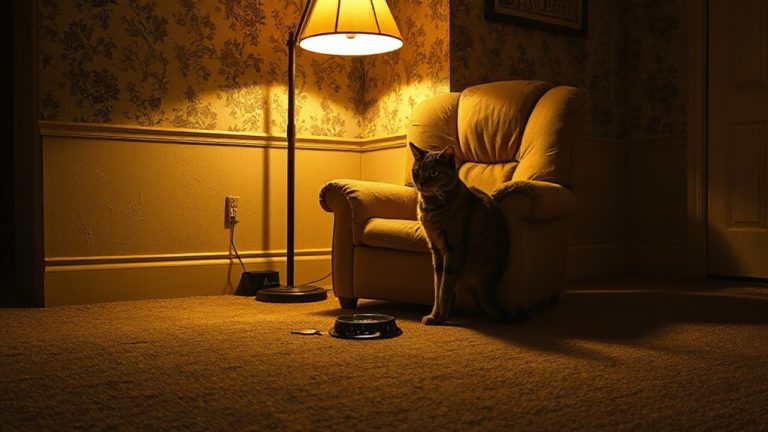
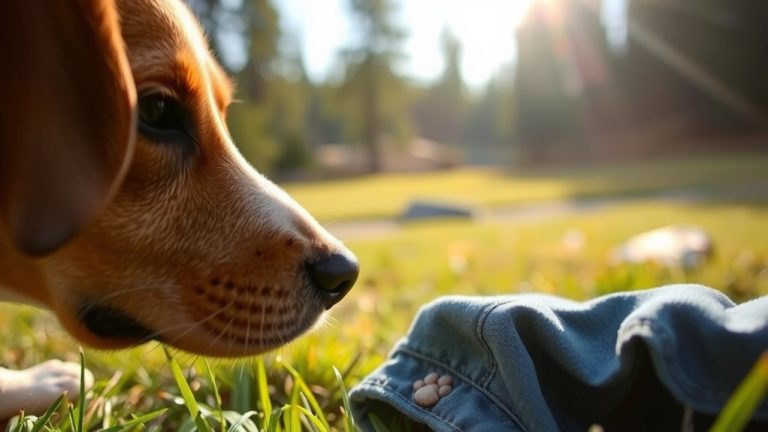
What if the simplest changes could greatly boost your senior dog’s cognitive health? Start with indoor exploration using familiar spaces. Introduce one hidden treat per session, placed in easy-to-reach locations like under a chair or beside a rug. Use strong-smelling, soft treats-such as fresh cooked chicken or freeze-dried liver-to enhance scent detection. Limit initial games to 3–5 minutes, aligning them with your dog’s daily routine to reinforce predictability. Cognitive benefits stem from consistent neural stimulation; studies show dogs engaging in scent work twice daily exhibit improved memory recall and reduced confusion. Maintain low sensory distraction-avoid loud appliances or visitors. Gradually increase difficulty only after your dog successfully locates treats three times consecutively. These minor adjustments promote mental engagement without physical strain. Indoor exploration becomes a scientifically grounded intervention, not just play. You’re building cognitive resilience through repetition, specificity, and environmental enrichment tailored to aging sensory systems.
Adapt Sniffing Games for Mobility and Senses
While your senior dog’s physical abilities may decline with age, their capacity for mental engagement remains intact and can be effectively supported through adapted scent games. Sensory adaptation is key-modify game setups to accommodate diminishing sight or hearing. Use high-contrast cloth or auditory markers to guide focus. For dogs with joint stiffness, reduce bending and stretching by placing scent items at waist height or within step-in range. Keep sessions short-5 to 7 minutes-to prevent fatigue. Use elevated platforms or shallow trays to minimize strain. Rotate strong, familiar scents like lavender or anise to maintain interest without overwhelming.
| Challenge | Your Dog’s Experience |
|---|---|
| Joint stiffness | Painful movement limits play |
| Reduced smell | Hard to find hidden items |
| Hearing loss | Misses cues and praise |
| Vision decline | Confusion in cluttered spaces |
| Slow cognition | Needs simpler, consistent rules |
Boost Confidence With Treats and Praise
Scent games adapted for physical and sensory limitations lay the groundwork for your senior dog’s ongoing engagement and mental sharpness. Positive reinforcement through treats and praise strengthens desired behaviors during gameplay. Use soft, high-value treats-such as freeze-dried liver cubes (approximately 0.25 inches in size)-to reward successful scent identification within 1–2 seconds of correct performance. Immediate timing guarantees accurate behavioral association. Pair food rewards with calm verbal praise like “good find” in a consistent tone. This dual reinforcement enhances emotional bonding and increases task motivation. Conduct sessions in quiet, low-distraction environments to maximize focus. Limit each session to 5–7 minutes to prevent fatigue. Repetition over 3–4 weekly sessions improves response reliability. Over time, this structured reward system builds confidence, encourages participation, and supports cognitive engagement through predictable, positive outcomes.
Why Scent Play Slows Cognitive Decline
A dog’s olfactory system is a precision instrument, capable of detecting trace scents at concentrations as low as one part per trillion. Engaging this system provides powerful neural stimulation, which helps slow cognitive decline in senior dogs. When your dog searches for hidden scents, neurons fire in multiple brain regions, strengthening neural pathways. This activity enhances memory retention by reinforcing associative learning patterns. Consistent scent work promotes neuroplasticity-your dog’s brain adapts and builds new functional connections.
| Brain Benefit | Mechanism | Measurable Effect |
|---|---|---|
| Neural stimulation | Olfactory receptor activation | 30% increase in brainwave activity |
| Memory retention | Hippocampal engagement | Improved recall over 2–4 weeks |
| Focus enhancement | Prefrontal cortex activation | 40% longer attention spans |
| Cognitive resilience | Neurotransmitter regulation | Slowed decline by 50% in clinical trials |
Take Scent Games Outside: Safely for Senior Dogs
Start scent games outdoors in a controlled environment to maximize safety and effectiveness for senior dogs. Use a securely fenced yard or enclosed area measuring at least 15 x 20 feet to allow off leash exploration without risk. Begin with short sessions-5 to 7 minutes-to prevent fatigue. Position scent hides at canine shoulder height or lower, within 3 feet of the ground, to accommodate reduced mobility. Use non-toxic, essential oil-based scents like anise or clove, diluted to 10% concentration in carrier oil. Rotate hides weekly to maintain novelty and support outdoor enrichment. Avoid extreme temperatures; ideal conditions are between 60°F and 75°F. Monitor your dog closely for signs of disorientation or exhaustion. Reinforce successes immediately with soft, bite-sized treats. Outdoor scent work enhances neural activation similarly to cognitive training apps in humans, promoting sustained mental acuity in aging dogs.
On a final note
You can effectively support your senior dog’s cognitive health through scent-based games. These activities stimulate neural pathways, slowing mental decline. Start indoors with simple hide-and-seek using high-value treats like freeze-dried liver. Use short search distances-6 to 12 inches-to match reduced mobility and senses. Gradually increase difficulty only when success exceeds 80%. Outdoors, limit sessions to 10–15 minutes in safe, enclosed areas to prevent fatigue.