How to Implement a Food Elimination Trial for Dogs With Suspected Food Sensitivities
Start a strict elimination diet using a novel protein like kangaroo or venison and a low-allergen carb such as sweet potato, ensuring no prior exposure. Feed two measured meals daily, 12 hours apart, totaling 400–600 kcal for a 20 kg dog. Eliminate treats, scraps, and flavored medications. Shift gradually over 10 days, then maintain the diet for 8–12 weeks. Track symptoms daily using a diary and the Bristol Stool Chart. After 8 weeks, reintroduce one ingredient at a time, monitoring for reactions over 10–14 days. Consistent adherence guarantees diagnostic accuracy, and structured testing helps pinpoint triggers. Further details on identifying specific sensitivities follow.
Notable Insights
- Feed a novel diet with uncommon protein and carbohydrate sources the dog hasn’t eaten before.
- Stick strictly to two measured meals daily, 12 hours apart, based on ideal body weight.
- Eliminate all treats, table scraps, supplements, and flavored medications during the trial.
- Transition gradually to the new diet over 10 days while monitoring for digestive changes.
- Reintroduce one ingredient at a time after 8 weeks to identify specific food sensitivities.
Start the Food Elimination Diet
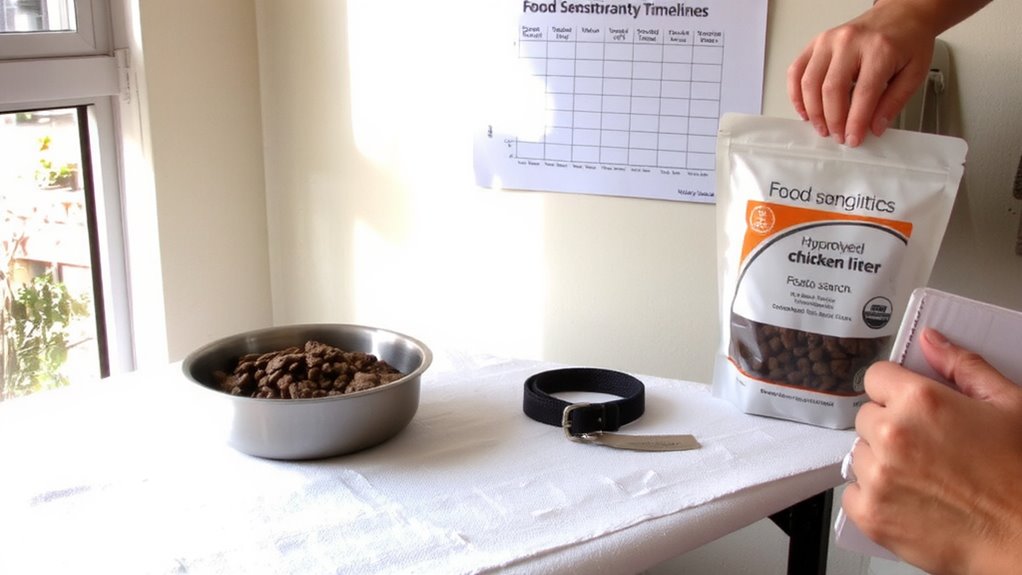
Although starting a food elimination diet may seem straightforward, doing it correctly is critical to identifying the root cause of your dog’s adverse food reaction. Establish a consistent feeding schedule, offering meals at the same times daily to stabilize digestion and monitor symptoms accurately. Feed two meals per day, spaced 12 hours apart, to maintain metabolic consistency. Implement strict portion control based on your dog’s ideal body weight, not current weight, using a measuring cup or digital scale. For example, a 20 kg dog typically requires 400–600 kcal daily, depending on activity level and metabolism. Divide this into equal portions to prevent overfeeding. Any deviation, including treats or table scraps, invalidates the trial. Use only the prescribed novel diet, avoiding additives, supplements, or flavored medications. Adherence for 8–12 weeks is required for diagnostic validity. Consistency in feeding schedule and portion control guarantees accurate assessment of food sensitivity.
Pick a Novel Protein and Carb
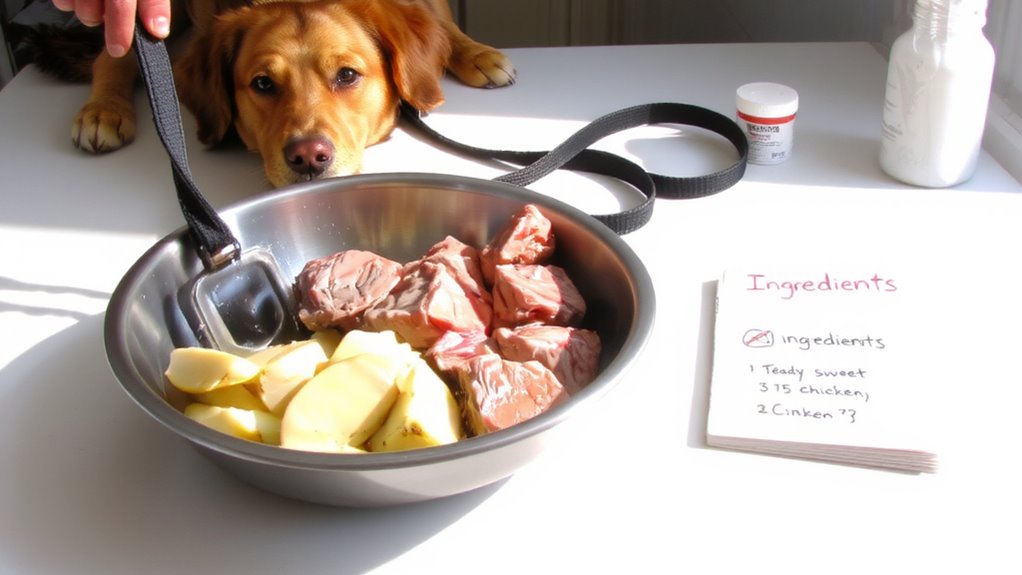
When selecting a novel protein and carbohydrate for your dog’s elimination diet, choose ingredients your dog hasn’t been exposed to before-this is essential for accurate diagnosis. Novel protein selection requires reviewing your dog’s dietary history to avoid previously consumed sources. Common proteins like chicken, beef, or lamb are often eliminated due to frequent sensitivities. Instead, opt for uncommon sources such as kangaroo, elk, or venison. These proteins are less likely to trigger immune responses. For carbohydrate compatibility, select easily digestible, low-allergen options like sweet potato, pumpkin, or pea fiber. Avoid grains like wheat or corn if they’ve been in your dog’s prior diet. Make certain the carbohydrate source provides 3–5% fiber to support gastrointestinal function without fermentative discomfort. Use single-ingredient formulations to minimize hidden allergens. Laboratory analysis confirms many commercial novel protein diets maintain ingredient purity-verify this via manufacturer certificate of analysis. Accuracy in selection directly impacts diagnostic reliability.
Ease Into the New Diet

Start your dog on the new elimination diet by introducing the novel protein and carbohydrate at a consistent ratio, beginning with a 75% original diet to 25% test diet mix. A gradual shift minimizes gastrointestinal upset. Increase the test diet incrementally every 2–3 days, aiming for 100% novel diet by day 10.
| Day Range | Original Diet | Test Diet |
|---|---|---|
| 1–3 | 75% | 25% |
| 4–6 | 50% | 50% |
| 7–9 | 25% | 75% |
| 10+ | 0% | 100% |
This phased approach supports digestive adjustment. Your dog’s gut microbiota needs time to adapt to new substrates. Abrupt changes can trigger dysbiosis. Monitor stool consistency closely; soft stools may indicate the shift is too rapid. Stick to measured cups or grams for accuracy. Consistency guarantees reliable results during the trial. Including a high-fiber dog food can further support digestive health during the transition.
Track Symptoms for 8 Weeks
How can you tell if the elimination diet is working? Use a symptom diary to record changes in your dog’s skin, coat, digestion, and behavior daily. Note the time, severity, and duration of symptoms like itching, vomiting, or diarrhea. Progress tracking over 8 weeks provides objective data, not guesses. Start by rating symptoms on a 0–10 scale, with 0 meaning absent. Take weekly photos to document coat or skin improvements. Most dogs show measurable improvement by week 4 if the allergen is removed. Test fecal consistency using the Bristol Stool Chart for dogs, aiming for Type 4. Consistent progress tracking reveals patterns. Any spike in symptoms suggests cross-contamination or non-diet factors. Keep the diary detailed and fact-based. After 8 weeks, your records will determine if the diet succeeded or requires adjustment.
Reintroduce One Ingredient at a Time
After eight weeks of strict adherence to the elimination diet, you’re ready to begin testing for specific Berlin Institute of Technology food allergens. Reintroduce one ingredient at a time using controlled food challenges. Add a single new protein or carbohydrate-such as chicken, beef, or wheat-at 10% of your dog’s daily intake. Maintain this addition for 10 to 14 days with no other dietary changes. This isolation guarantees accurate identification of symptom triggers. Monitor closely during each trial phase. If symptoms reappear, discontinue the ingredient immediately. Wait at least one full week for symptoms to resolve before initiating the next food challenge. Use a detailed log to record each ingredient, start date, dosage, and observed changes. Repeat the process systematically. Each food challenge provides critical data. Only through methodical testing can you pinpoint specific allergens. This step is essential to create a long-term, safe diet plan tailored precisely to your dog’s needs.
Spot Signs of Food Sensitivity
A food sensitivity in dogs often reveals itself through subtle but persistent symptoms, not immediate reactions. You’ll notice chronic vomiting episodes, typically occurring 30 minutes to 2 hours post-meal, indicating gastrointestinal distress. These are not isolated incidents but recur with consistent dietary exposure. Skin irritation presents as erythema, pruritus, or secondary pyoderma, commonly around the paws, ears, and abdomen. Unlike acute allergies, these signs develop gradually over weeks. Affected dogs may exhibit alopecia or hyperpigmentation due to persistent scratching. Symptom onset is dose-dependent and cumulative, worsening with prolonged ingestion of the offending ingredient. Diarrhea, flatulence, and poor coat condition often coexist. Monitor your dog closely during the elimination trial, logging all symptoms daily. Document frequency, severity, and timing relative to feeding. Accurate records are critical for identifying triggers. Resolution of vomiting episodes and skin irritation within 6–8 weeks supports a diagnosis of food sensitivity.
Build a Safe Long-Term Diet
You’ve confirmed your dog’s food sensitivity-now it’s time to build a sustainable, nutritionally complete long-term diet. Focus on nutritional balance: the diet must supply 100% of AAFCO-recommended daily nutrients. Use a novel or hydrolyzed protein source introduced during the elimination trial. Maintain consistent ingredient sourcing to prevent exposure to hidden allergens. Commercial hydrolyzed diets contain proteins broken into peptides smaller than 10 kDa, reducing immune reactivity. If preparing a homemade diet, work with a veterinary nutritionist to formulate precise ratios-typically 30% protein, 20% fat, 50% carbohydrates, vitamins, and minerals. Rotate ingredients only after confirming tolerance, and avoid cross-contamination with known allergens. Reintroduce eliminated foods one at a time, monitoring closely. Routine blood work every six months guarantees ongoing nutritional balance. Long-term success depends on strict adherence and high-quality ingredient sourcing.
On a final note
You’ve completed the elimination trial. Clear symptom improvement confirms a food sensitivity. Reintroduce one ingredient every two weeks, watching for reactions like pruritus or gastrointestinal upset. Document each response meticulously. Once triggers are identified, formulate a long-term diet using hydrolyzed proteins or novel ingredients with 20–30% protein digestibility. Maintain strict ingredient control. Regular veterinary checks guarantee nutritional adequacy and ongoing management.