How to Brush a Dog With a Water-Resistant Topcoat Without Damaging It
Brush your dog’s water-resistant topcoat with a slicker brush featuring 1–2 mm spaced fine, bent wires or a pin brush with polished tips to preserve the guard hairs. Always brush with the grain using light, even strokes from head to tail. This maintains the hydrophobic cuticle and natural oil layer. Limit sessions to 10–15 minutes, every 7 to 10 days, to avoid stripping sebum. Use a wide-tooth comb for shoulder and tail tangles. A proper technique keeps the coat functional and intact-there’s more to optimizing coat health through targeted tools and timing.
Notable Insights
- Use a slicker or pin brush suited to your dog’s coat texture to avoid damaging guard hairs.
- Brush with the grain using gentle, sweeping strokes from head to tail.
- Focus on high-movement areas like shoulders and tail, where tangles commonly form.
- Limit brushing to 10–15 minutes weekly to preserve natural protective oils.
- Detangle carefully with a wide-tooth comb and moisture-resistant spray, never when coat is wet.
Know Your Dog’s Water-Resistant Coat
Water resistance in your dog’s coat isn’t magic-it’s biology. You’re dealing with natural engineering designed for environmental protection. The key lies in your dog’s coat structure: a dense undercoat traps air for insulation, while guard hairs form a durable outer layer. These guard hairs secrete oils that enhance water repellency, causing moisture to bead and roll off rather than soak in. Each hair shaft has a slightly rough, hydrophobic cuticle that resists wetting. This combination maintains thermal regulation and prevents matting. Coat structure varies by breed-think otterhounds or Portuguese water dogs-but all rely on this dual-layer system. You don’t need products to create water repellency; you just need to preserve it. Improper grooming disrupts oil distribution and damages cuticle integrity. Keep brushing techniques gentle and coat-aligned. Understanding this biology helps you maintain performance without compromising function.
Choose the Right Brush for a Water-Resistant Topcoat
You need the right brush to maintain your dog’s water-resistant topcoat without damaging its natural defenses. Selecting appropriate brush types depends on your dog’s coat texture. Dogs with dense, coarse outer coats and soft undercoats require a slicker brush with fine, bent wires spaced 1–2 mm apart to penetrate layers without friction. For longer water-resistant coats, a pin brush with widely spaced, polished tips prevents tugging and maintains guard hairs. Avoid bristle brushes on double-coated breeds-they compress the topcoat, compromising water resistance. Instead, opt for a rake-style undercoat tool with dual-length teeth (12 mm and 19 mm) to remove dead hair beneath the topcoat. Match the tool to your dog’s specific coat texture: tightly packed guard hairs need flexible-wire brushes, while looser textures benefit from stiffer pins. Proper brush types preserve structural integrity, extend coat functionality, and reduce grooming stress. When traveling, ensure your grooming tools fit securely in a carry-on, such as those approved for use with airline-approved pet carriers.
Brush Without Stripping Natural Oils
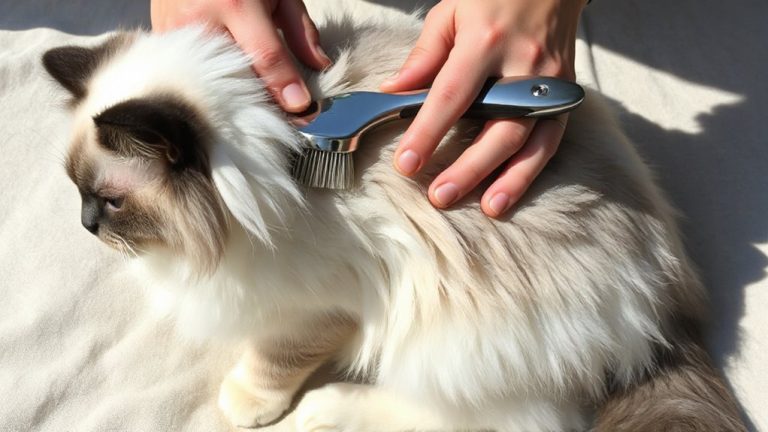
Starting with the right technique guarantees you’re not wiping away the protective oils that keep your dog’s coat water-resistant. Use gentle, sweeping strokes from head to tail, following the hair’s natural lay. Over-brushing generates excess friction, which strips essential oils-limit sessions to 10–15 minutes, depending on coat length. For ideal coat conditioning, choose a bristle brush with rounded, polished tips; boar bristle variants distribute sebum evenly, mimicking the scalp’s natural oil spread. Apply detangling techniques only when necessary: mist a leave-in conditioner and comb with a wide-tooth metal comb, starting at the ends. Never yank through knots-this disrupts the cuticle and removes protective lipids. Frequency matters: brushing once or twice weekly maintains coat integrity without overstimulation. These methods preserve the topcoat’s hydrophobic properties, ensuring it stays resilient, conditioned, and functionally water-repellent.
Target Tangles at Shoulders and Tail Gently
The shoulders and tail are high-movement zones where tangles form due to friction and overlapping coat layers. Detangle carefully using a stainless-steel comb with wide and narrow teeth. Start at the tangle’s edge, working outward to reduce stress on the hair shaft. Use short, controlled strokes to loosen knots without pulling.
| Area | Tool Recommendation |
|---|---|
| Shoulders | Wide-tooth comb, 1/4″ spacing |
| Tail Base | Slicker brush, soft pin type |
| Mid-Tail | Narrow-tooth comb, 1/8″ spacing |
| Shoulder Joint | Detangling spray with argan oil |
Apply minimal pressure to avoid breakage. Coat integrity depends on preserving the cuticle structure. Use a 5% humidity-resistant detangler for maximum slip. Work in 1-inch sections to guarantee complete, gentle release. For best results, consider using one of the top small pet grooming brushes recommended for precision and coat protection.
Brush With the Grain to Protect the Topcoat
A proper brushing technique preserves the structural integrity of a dog’s water-resistant topcoat by following the natural lay of the hair. Brush direction matters-always move the brush in the same direction the hair grows. This maintains coat alignment and prevents breakage. Working against the grain can disrupt the protective layer, damaging guard hairs and reducing water resistance. Use a slicker or pin brush with rounded tips to minimize friction. Start at the shoulders and work toward the tail, applying light, even pressure. Proper brush direction guarantees debris is lifted without disturbing the follicle. Maintain consistent stroke patterns to support natural oil distribution. The topcoat functions like shingles on a roof-proper alignment directs moisture away. Preserving this structure guarantees thermal regulation and weather protection. Never rush through thick areas; slow, deliberate strokes keep the coat intact. Correct technique extends coat longevity and preserves its functional design.
How Often to Brush a Water-Resistant Topcoat
Generally, brushing your dog’s water-resistant topcoat once every 7 to 10 days maintains ideal coat function without overhandling. This interval preserves natural oils that support water resistance while preventing matting. Overbrushing strips protective sebum; underbrushing compromises coat integrity. Your dog’s specific activity level and environment may require minor adjustments. Bathing frequency directly affects brushing needs-each wash removes oils, so limit full baths to once every 4–6 weeks. Use water-resistant coat-specific shampoos to minimize disruption. After exposure to moisture, employ proper drying techniques: blot with a microfiber towel, then air-dry away from direct heat. Never use high-heat blow dryers; they degrade keratin structure. Instead, use cool airflow at 30–40 CFM for even drying. This preserves the topcoat’s hydrophobic layer and supports long-term resilience. Regular, spaced grooming sustains performance like waterproof fabric maintenance. For optimal results, use a high-quality slicker brush designed for water-resistant coats.
On a final note
You maintain a water-resistant topcoat’s integrity by brushing strategically. Use a slicker brush with fine, bent wires spaced 2–3 mm apart to lift debris without breaking guard hairs. Always brush with the grain to preserve the coat’s natural lay and water-shedding ability. Limit sessions to 10–15 minutes weekly, focusing on friction zones like shoulders and tail. Avoid over-brushing; it strips essential oils. A well-kept topcoat repels water effectively, maintaining thermal regulation and skin protection.