Avoiding Bloat in Deep-Chested Dogs: Controlled Feeding Volume and Frequency Tips
You can prevent bloat in deep-chested dogs by feeding two measured meals daily, spaced 10–12 hours apart. Dogs fed once daily face 2.5 times higher GDV risk. Smaller portions reduce gastric distension and maintain steady emptying rates, cutting torsion risk. Use slow-feed bowls to limit air swallowing. Choose kibble with beet pulp and animal-based proteins, avoiding citric acid and fermentable ingredients. A controlled routine stabilizes gastric pressure and motility-consistency here sets the foundation for even stronger protection.
Notable Insights
- Feed deep-chested dogs two or more smaller meals daily to reduce bloat risk compared to one large meal.
- Divide total daily food into equal portions spaced 10–12 hours apart for consistent gastric emptying.
- Limit meal size to prevent stomach distension and lower the chance of gastric torsion.
- Use slow-feed bowls to slow eating speed and minimize air swallowing during meals.
- Avoid vigorous exercise and large water intake for at least two hours after eating.
What Is Bloat and Why Deep-Chested Dogs Are at Risk
Gastric dilatation-volvulus (GDV), commonly known as bloat, is a life-threatening condition where a dog’s stomach fills with gas and twists on itself, cutting off blood flow and risking shock. You need to understand that anatomy factors play a critical role-deep-chested breeds have a higher thoracic width-to-depth ratio, allowing the stomach more room to rotate. This structural trait increases torsion risk markedly. There’s also a strong breed predisposition; Great Danes, German Shepherds, and Standard Poodles are among the most susceptible. Studies show Great Danes face a 20% lifetime risk, far above average. The combination of vertical stomach suspension and a spacious abdominal cavity promotes displacement. You can’t change your dog’s skeletal frame or genetic background, but recognizing these inherent risks helps guide prevention. Early recognition of restlessness, unproductive vomiting, and abdominal distension is essential. Immediate veterinary intervention improves survival rates from 50% to over 80%.
How Feeding Frequency Helps Prevent Bloat
You can reduce the risk of bloat by adjusting how often your dog eats. Feeding timing plays a critical role in managing stomach activity. Dividing your dog’s daily intake into two or more meals stabilizes gastric motility. Frequent meals prevent prolonged fasting, which can lead to excessive gas buildup. When the stomach remains inactive for hours, digestive secretions accumulate, increasing torsion risk. Regular feeding intervals maintain consistent stomach activity, promoting gradual digestion. Studies show dogs fed once daily have a 2.5 times higher bloat risk than those fed twice. Controlled feeding frequency regulates intragastric pressure. It also minimizes air swallowing associated with rapid consumption. For deep-chested breeds, maintaining predictable meal times supports digestive integrity. Proper timing prevents overdistension, a precursor to volvulus. You’re not just scheduling meals-you’re stabilizing physiology. Consistent feeding frequency is a proven, measurable defense against life-threatening bloat episodes.
Why Smaller Meals Reduce Bloat Risk
While large meals may seem convenient, they considerably increase the risk of bloat in deep-chested dogs. Smaller meals support safer digestion and reduce stomach stress. Portion control limits air intake and fermentation, decreasing gas buildup. Proper meal timing prevents overfilling and improves motility. Feeding two or more small meals daily maintains consistent gastric emptying rates.
| Factor | Large Meal | Smaller Meal |
|---|---|---|
| Stomach Distension | High (↑ pressure) | Low (↓ pressure) |
| Gastric Emptying Time | 6–8 hours | 3–4 hours |
| Bloat Risk | Increased | Reduced |
This approach promotes gradual nutrient absorption. You lower intragastric volume, which minimizes torsion likelihood. Controlled portions also stabilize abdominal contractions. You’re not just managing food-you’re managing physiology. With portion control and strategic meal timing, you directly influence digestive safety. Consistency is key.
Choose Dog Food That Lowers Bloat Risk
Many commercial dog foods contribute to bloat risk, but selecting the right formula can reduce it. Look for kibble with ingredients that support fermentation control, such as beet pulp or rice bran, which stabilize hindgut microbial activity. Foods high in fermentable fibers increase gas production, raising bloat risk. Opt for moderate-fat formulas-studies show diets with 11–17% fat on a dry matter basis optimize gastric emptying. Fast gastric emptying reduces stomach distension time, lowering torsion likelihood. Choose dog foods where animal proteins are the first ingredients, as they digest more efficiently than plant-based proteins. Avoid soy, brewer’s yeast, and citric acid, known fermentation accelerants. Dry kibble size and shape also influence eating speed and air intake. Use formulas designed for deep-chested breeds, validated by gastrointestinal transit studies. These specifics improve digestion timing and decrease bloat probability markedly. Consider trying best dog food without peas to minimize legume-related fermentation risks.
Avoid These Feeding Mistakes That Cause Bloat
Could something as simple as meal timing influence bloat risk in your deep-chested dog? Yes-feeding one large meal daily increases gastric dilatation-volvulus (GDV) risk by up to 300% compared to two smaller meals. Avoid overexertion after meals; physical activity within one hour post-feeding elevates GDV likelihood due to stomach torsion during gastric motility. Restrict vigorous exercise for at least two hours after eating. Never allow rapid water consumption or intense play immediately after a meal. Stress induced eating-when dogs eat quickly due to environmental anxiety-promotes air ingestion (aerophagia), contributing to gastric distension. Use a slow-feed bowl to reduce consumption speed, ideally limiting intake to 15–20 minutes. Elevated feeders may increase risk; ground-level feeding is currently recommended. Avoid large kibble batches that encourage gulping. These corrections directly reduce intragastric pressure and improve digestive stability.
Build a Daily Feeding Schedule for At-Risk Breeds
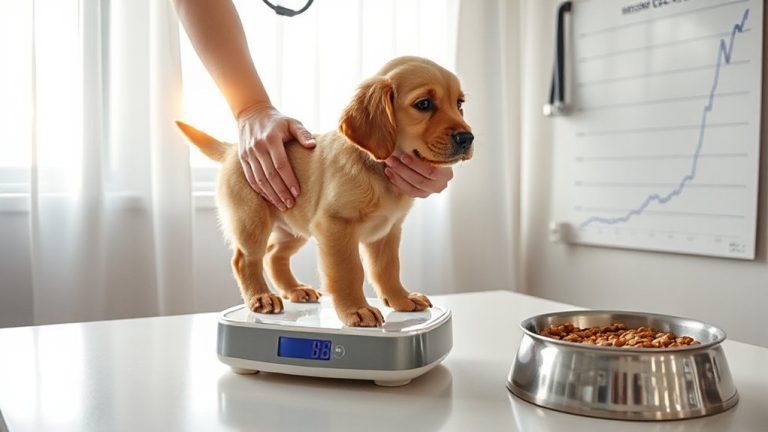
Feeding your deep-chested dog twice daily in controlled portions is a proven strategy to reduce bloat risk. Proper feeding timing prevents excessive gastric dilation. Divide your dog’s daily caloric intake into two equal meals, spaced 10–12 hours apart-consistency matters. Use portion control to limit meal volume, reducing intra-abdominal pressure. Most large-breed adult dogs need 20–30 kcal per pound of body weight daily; adjust based on activity, age, and metabolism. For a 70 lb dog, that’s roughly 1,400–2,100 kcal split into two 700–1,050 kcal meals. Measure food with a digital kitchen scale or marked scoop for accuracy-eyeballing leads to overfeeding. Avoid feeding within one hour of vigorous activity. Use slow-feed bowls to extend meal duration, mimicking natural foraging. This regulated approach stabilizes digestion and lowers bloat probability by minimizing air ingestion and stomach distension. Stick to the schedule-precision saves lives.
On a final note
You must control feeding volume and frequency to prevent bloat in deep-chested dogs. Large meals increase gastric dilatation-volvulus (GDV) risk by 2.9 times. Divide daily food into 2–3 small portions, spaced 8–12 hours apart. Use a slow-feed bowl to reduce ingestion speed. Dry food with at least 20% moisture content lowers risk. Avoid vigorous activity 1 hour before and after meals.