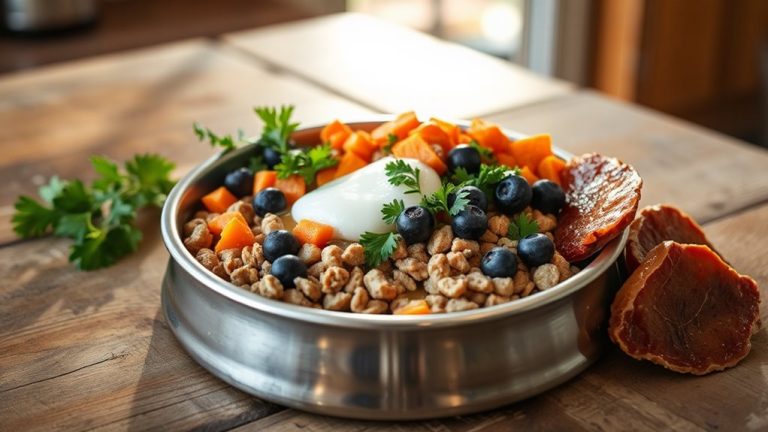
Best Dog Food Without Peas and Legumes for Health-Conscious Pups
Choose dog foods like Natural Balance Salmon & Sweet Potato or VICTOR Beef & Brown Rice to eliminate peas and legumes while ensuring 21–24% crude protein from named animal sources. These formulas use digestible carbs like sweet potatoes and brown rice, providing 2–4% fiber for gut health. Probiotics, prebiotics, and omega fatty acids support microbiome balance and skin integrity. Made in the USA or New Zealand, they undergo batch testing and use human-grade or traceable ingredients. Selecting nutrient-dense, animal-first recipes minimizes allergens and optimizes long-term wellness-one step further reveals how each ingredient actively contributes to your dog’s health.
We are supported by our audience. When you purchase through links on our site, we may earn an affiliate commission, at no extra cost for you. Learn more. Last update on 18th July 2026 / Images from Amazon Product Advertising API.
Notable Insights
- Choose dog foods with named animal proteins like salmon, lamb, or beef as the first ingredient for optimal muscle support.
- Opt for pea- and legume-free formulas to reduce allergy risks and support digestive health in sensitive dogs.
- Look for diets with 2–4% fiber from sweet potatoes, oats, or pumpkin to aid digestion without legumes.
- Select brands that include probiotics, prebiotics, and balanced omega fatty acids for gut and skin health.
- Prioritize foods meeting AAFCO standards and made with transparent, traceable, U.S.-sourced ingredients for overall wellness.
Natural Balance Salmon & Sweet Potato Dog Food

If you’re looking for a reliable option among the best dog foods without peas and legumes, Natural Balance Salmon & Sweet Potato Dog Food stands out, especially for small-breed dogs with sensitive digestion or food intolerances. I rely on salmon as the first ingredient, providing 21% crude protein to maintain lean muscle. Sweet potatoes offer 4% fiber, promoting consistent digestion. The formula uses a single animal protein source and excludes grains, soy, gluten, and artificial additives. Kibble size measures 8mm, ideal for small jaws. Every batch undergoes pathogen and nutrient testing through the Feed with Confidence program. Results are traceable online or via customer support staffed by Registered Veterinary Technicians.
Best For: Small-breed dogs with sensitive digestion or food intolerances seeking a grain-free, limited-ingredient diet without peas or legumes.
Pros:
- Features salmon as the first ingredient, providing 21% crude protein to support lean muscle maintenance
- Contains sweet potatoes for 4% fiber, promoting healthy digestion and using a grain-free, limited-ingredient formula
- Kibble size is 8mm, ideal for small jaws, with batch testing through the Feed with Confidence program for safety and transparency
Cons:
- Limited to a single protein source, which may not suit dogs needing variety or novel proteins over time
- Higher fiber content may not be appropriate for dogs with certain gastrointestinal sensitivities
- Availability may be limited compared to more mainstream dog food brands
VICTOR Super Premium Dog Food (Beef & Brown Rice)

VICTOR Super Premium Dog Food (Beef & Brown Rice) stands out as a superior choice for dogs with sensitivities to peas, legumes, or poultry. I rely on beef meal as the first ingredient, delivering 24% protein for lean muscle and sustained energy. It’s free of gluten, chicken, peas, and legumes-ideal for allergy-prone pets. Omega-3 and omega-6 fatty acids and vitamin E support skin and coat health. Prebiotics and probiotics enhance digestion and immunity. The proprietary VPRO blend boosts nutrient absorption and immune function. Made in Texas with traceable, U.S.-sourced ingredients.
Best For: Dogs with sensitive skin, stomachs, or allergies to chicken, peas, legumes, or gluten.
Pros:
- High-quality beef meal as the first ingredient supports lean muscle and sustained energy
- Free from common allergens like chicken, peas, legumes, and gluten-ideal for sensitive dogs
- Fortified with prebiotics, probiotics, Omega-3/6, and the VPRO blend for optimal digestion, skin health, and immunity
Cons:
- Limited protein variety may not suit dogs needing rotational diets
- Beef-based formula may not be ideal for dogs with specific beef allergies
- Higher price point compared to conventional dog food brands
Natural Balance Salmon & Sweet Potato Dog Food

Natural Balance Salmon & Sweet Potato Dog Food stands out for dogs with food sensitivities, particularly those needing a clean, limited-ingredient diet free of peas and legumes. I rely on salmon as the primary animal protein, delivering essential amino acids for lean muscle maintenance. Sweet potatoes provide highly digestible fiber, supporting gastrointestinal health without grains. This single-protein formula excludes soy, gluten, artificial additives, and common allergens. It’s nutritionally complete for adult dogs, promoting skin, coat, and immune function. Every batch undergoes rigorous testing through Natural Balance’s Feed with Confidence program, ensuring safety and ingredient traceability via online batch validation.
Best For: Dogs with food sensitivities or allergies that require a limited-ingredient, grain-free diet free from peas, legumes, and common allergens.
Pros:
- Single animal protein (salmon) helps minimize food sensitivities and supports muscle maintenance
- Grain-free formula with sweet potatoes and fiber for easy digestion and gut health
- Backed by a rigorous batch-testing program for safety, transparency, and ingredient traceability
Cons:
- Limited protein variety may not suit dogs needing rotational diets or those who develop a salmon sensitivity
- Higher price point compared to conventional dog food brands
- Not intended for puppies, pregnant, or nursing dogs-limited to adult maintenance
Natural Balance Lamb & Brown Rice Dog Food

This formula stands out as an ideal choice for dogs requiring a simplified diet free of peas and legumes, especially those with sensitivities to common allergens. I rely on lamb as the first ingredient to deliver high-quality protein and essential amino acids for muscle maintenance. Brown rice provides digestible fiber to support gastrointestinal health. My limited ingredient profile excludes soy, gluten, and artificial additives. I’m formulated for all dog types, not just sensitive ones, ensuring balanced nutrition without excess complexity. Each 4-pound bag undergoes rigorous batch testing through Natural Balance’s Feed with Confidence program, guaranteeing safety and consistency.
Best For: Dogs needing a limited ingredient diet free of peas, legumes, soy, and artificial additives, especially those with sensitivities or allergies.
Pros:
- Lamb is the first ingredient, providing high-quality protein for muscle maintenance
- Includes brown rice for digestible fiber to support gastrointestinal health
- Rigorous batch testing through the Feed with Confidence program ensures safety and quality
Cons:
- Limited to a single animal protein source, which may not suit all dietary preferences
- Only available in a 4-pound bag, which may be small for larger dogs or multi-dog households
- May not be suitable for dogs requiring grain-free diets due to inclusion of brown rice
A Better Treat Lamb Dog Food

If your dog struggles with food sensitivities or a history of grain and poultry allergies, A Better Treat Lamb Dog Food stands out as a precise nutritional solution designed for pets needing a clean, restricted-ingredient diet. I rely on lamb as the sole animal protein-no chicken, no grains, no meal fillers. Real freeze dried raw lamb, pumpkin, and green beans retain 61% more nutrients than cooked alternatives. Visible whole ingredients support digestion and Omega-3 intake. Kibble is AAFCO-approved, formulated by a Ph.D. in Animal Nutrition, with salmon as the #1 ingredient. It blends allergy-friendly kibble and freeze dried raw pieces in one resealable, USA-made bag-complete nutrition for all life stages.
Best For: Dogs with food sensitivities, grain allergies, or poultry intolerances needing a clean, single-protein, grain-free diet.
Pros:
- Uses lamb as the only animal protein source with no chicken, grains, or meal fillers
- Freeze dried raw ingredients preserve 61% more nutrients compared to cooking or dehydration
- Combines AAFCO-approved kibble and freeze dried raw pieces in one complete, balanced meal for all life stages
Cons:
- Salmon is listed as the #1 ingredient despite lamb being the primary protein claim
- Limited protein variety may not suit dogs needing rotational diets
- Higher cost compared to conventional kibble due to raw, whole-food ingredients
Honest Kitchen Chicken & Oat Dog Food

When choosing a pea- and legume-free dog food that meets high standards for ingredient quality and nutritional completeness, Honest Kitchen Chicken & Oat stands out for pet owners seeking a human grade option. I use only human-grade ingredients like cage-free chicken, whole grain oats, and fresh vegetables. There’s no feed-grade material, meat meals, or artificial preservatives. Each 1 lb bag rehydrates to 4 lbs with warm water, ready in 3 minutes. It’s nutritionally balanced for all life stages, including puppies and breeding females. Made in the USA with globally sourced components, I meet human food safety standards. I’m also a Certified B Corp, committed to sustainable sourcing and environmental responsibility.
Best For: Pet owners seeking a human-grade, pea- and legume-free dog food made with whole, transparent ingredients for dogs of all life stages.
Pros:
- Made with human-grade, cage-free chicken and whole grain oats, free from feed-grade ingredients, meat meals, and artificial preservatives
- Rehydrates quickly (3 minutes) and expands to 4x its weight, offering convenient meal preparation and versatile feeding options
- Nutritionally balanced for all life stages and certified by a B Corporation for sustainability and responsible sourcing
Cons:
- Requires rehydration before serving, which may be less convenient than traditional dry kibble
- Higher price point compared to conventional dry dog foods due to human-grade standards
- Uses globally sourced ingredients, which may concern buyers preferring fully local sourcing
The Honest Kitchen Grain-Free Chicken Dog Food (1 lb)

The Honest Kitchen Grain-Free Chicken Dog Food (1 lb) stands as a top pick for pet owners who treat their dog’s diet like a grocery list meant for their own kitchen. I use only human-grade ingredients-no fillers, meat meals, or artificial preservatives. Cage-free chicken is the first ingredient, providing high-quality protein. The recipe features dry food clusters made with real muscle meat and liver for ideal nutrient absorption. It contains salmon oil rich in Omega-3 and Omega-6 fatty acids, supporting skin and coat health. Live probiotics aid digestion. L-carnitine promotes healthy metabolism. Made in a facility meeting human food safety standards.
Best For: Pet owners seeking human-grade, minimally processed dog food with high-quality protein and no artificial additives.
Pros:
- Made with 100% human-grade ingredients, including cage-free chicken as the first ingredient
- Contains salmon oil, probiotics, and L-carnitine to support skin, digestion, and metabolism
- Produced in a facility meeting human food safety standards for maximum quality and trust
Cons:
- Higher price point compared to conventional dry dog foods
- Limited to grain-free diets, which may not suit all dogs
- Smaller 1 lb size may require frequent repurchasing for larger dogs
Blackwood Sensitive Skin & Stomach Dog Food

I consider Blackwood Sensitive Skin & Stomach Dog Food an ideal choice for pet owners seeking a pea- and legume-free diet that supports dogs with food sensitivities, especially those prone to skin irritation or gastrointestinal issues. It uses lamb meal and brown rice as primary ingredients, providing highly digestible protein and complex carbohydrates. The formula includes prebiotics and probiotics to balance gut flora and enhance nutrient absorption. Zinpro ProPath minerals-zinc, manganese, iron, and copper-support enzyme function and immune response. Omega 6 and 3 fatty acids nourish skin and reduce flakiness. Slow-cooked in small batches in the USA, it preserves vitamins and guarantees quality across all life stages.
Best For: Dogs with sensitive skin, stomach issues, or food allergies, especially those needing a pea- and legume-free diet.
Pros:
- Formulated with lamb meal and brown rice for highly digestible protein and carbohydrates
- Includes prebiotics, probiotics, and Zinpro ProPath minerals to support gut health and immunity
- Rich in Omega 6 and 3 fatty acids to promote healthy skin and a shiny coat
Cons:
- Limited protein variety may not suit dogs needing rotational diets
- Smaller bag size (4.5 lb) may require frequent repurchasing
- Higher price point compared to conventional sensitive stomach formulas
Inception Dry Dog Food Fish Recipe (4 lb)

Finding a reliable dog food without peas and legumes means prioritizing clean, nutrient-dense ingredients that support sensitive systems. I rely on Inception Dry Dog Food Fish Recipe for its protein-first formula-whitefish and catfish are the top two ingredients. Sourced from Washington and Georgia, they deliver DHA, EPA, selenium, and high-quality protein. This formula omits legumes, potatoes, corn, wheat, and soy, reducing allergen risks. It includes oats, millet, and milo from North America for digestible fiber and essential minerals. Ground flaxseed provides plant-based omega-3s. Taurine, L-carnitine, and human-grade vitamins guarantee complete, AAFCO-balanced nutrition for all life stages except large-breed puppies.
Best For: Dogs with food sensitivities or allergies who thrive on a legume-free, fish-based diet rich in protein and essential nutrients.
Pros:
- Features whitefish and catfish as the first two ingredients, providing high-quality protein and omega-3 fatty acids for skin, coat, and immune health
- Legume-free, grain-inclusive formula excludes common allergens like peas, potatoes, corn, wheat, and soy, ideal for sensitive dogs
- Contains wholesome grains like oats, millet, and milo for digestible fiber and essential minerals, plus added taurine, L-carnitine, and human-grade vitamins for balanced nutrition
Cons:
- Not suitable for large-breed puppies (70 lb. or more as adults) due to nutritional limitations for growth stages
- Limited protein variety with only fish sources, which may not appeal to all dogs
- Regional ingredient sourcing may lead to variability in availability or consistency over time
ZIWI Peak Beef & Pumpkin Dog Food

High-protein needs define the ideal candidate for ZIWI Peak Beef & Pumpkin Dog Food-think active dogs, growing puppies, or seniors requiring muscle maintenance without the burden of legumes or peas. I rely on its 90% meat content, including grass-fed beef, organs, and bone, to deliver complete amino acid profiles. The Steam & Dry process gently cooks ingredients at low temperatures, preserving nutrients while ensuring pathogen-free safety. Natural fibers from pumpkin, chicory root, and beets support digestion. This grain-free, pea-free formula includes added vitamins for balance. I use it as a complete meal or topper. Ethically sourced in New Zealand, it meets strict quality and welfare standards.
Best For: Active dogs, growing puppies, and senior dogs needing high-protein, grain-free nutrition with optimal digestibility and muscle support.
Pros:
- High 90% meat content from grass-fed beef, organs, and bone for complete amino acid profiles
- Steam & Dry process preserves nutrients while ensuring safety and easy digestion
- Ethically sourced from New Zealand with no artificial hormones or peas, supporting digestive health with natural fibers
Cons:
- Higher price point compared to conventional dry dog foods
- Limited to a single protein source, which may not suit all dietary rotations
- Availability may be limited in some regions due to regional sourcing and distribution
Factors to Consider When Choosing Dog Food Without Peas and Legumes
You need to prioritize high-quality protein sources when selecting dog food without peas and legumes. Look for named meats like deboned chicken or lamb as the first ingredient, providing at least 25–30% crude protein to support muscle maintenance. Also consider grain inclusion for added fiber and balanced nutrition, as formulas with brown rice or oats can enhance digestibility and supply essential amino acids.
Protein Source Quality
Protein quality begins with transparency. You need to see specific animal sources-like salmon, lamb, or beef-listed as the first ingredient. Vague terms like “meat” or “by-products” lack precision and often signal lower nutritional value. When whole meat, organs, or single-animal meal lead the label, you get a dense, biologically appropriate protein profile. These animal-based proteins deliver all essential amino acids, supporting muscle maintenance and metabolic efficiency. Unlike plant-based fillers, they’re highly digestible and rich in bioavailable nutrients. Pea protein and legume derivatives dilute this quality, reducing overall protein integrity. Prioritize foods where named animal ingredients dominate the formula. This guarantees ideal amino acid composition and minimizes reliance on incomplete, plant-sourced alternatives. You’re not just feeding protein-you’re fueling your dog’s biology with precision. Choose clarity, completeness, and carnivore-appropriate formulation every time.
Grain Inclusion Benefits
Whole grains bring more to the bowl than just bulk-they deliver measurable nutritional benefits that support long-term health in dogs. You’ll find that grains like oats and brown rice provide soluble fiber, including beta-glucan, which helps regulate blood sugar and supports consistent energy. They are rich in B-vitamins, iron, magnesium, zinc, and linoleic acid-nutrients essential for skin health, coat condition, and efficient energy metabolism. When you choose grain-inclusive formulas, you’re giving your dog digestible complex carbohydrates that fuel sustained activity, especially important for active breeds. Grains also contribute to firm, well-formed stools and promote regular gastrointestinal motility. Contrary to popular belief, grain allergies are rare; most canine sensitivities stem from animal proteins, not grains. Including whole grains diversifies the diet’s nutrient profile, improving overall balance and long-term wellness.
Digestive Health Support
When selecting a dog food free of peas and legumes, prioritizing digestive health means focusing on ingredients that promote a stable gut environment and efficient nutrient utilization. Choose formulas with guaranteed levels of live probiotics (at least 100 million CFUs per pound) and prebiotic fibers like chicory root to fuel beneficial gut bacteria. High digestibility-above 85%-ensures more nutrients are absorbed and less waste is produced. Opt for single animal protein sources such as venison or duck to lower the risk of triggering food sensitivities. Include wholesome carbohydrates like oats or brown rice, which offer soluble and insoluble fiber for balanced stool formation. Natural fiber sources such as pumpkin and sweet potatoes support consistent motility and improve fecal quality. These components work synergistically to maintain gastrointestinal efficiency and long-term digestive wellness.
Allergen Elimination Priority
Because peas and legumes are among the most common dietary allergens in dogs, removing them from your pet’s food can substantially reduce the risk of adverse reactions, especially in dogs with known sensitivities. You’ll minimize exposure to lectins and phytoestrogens, compounds that may disrupt gut integrity and hormone balance. Eliminating these ingredients also reduces intake of oligosaccharides, complex sugars dogs lack enzymes to break down, which often cause gas and bloating. Dogs with chronic skin irritation or digestive upset frequently improve on legume-free diets. Additionally, avoiding peas and legumes lowers the risk of diet-associated dilated cardiomyopathy (DCM), as some legume-rich formulations interfere with taurine synthesis or bioavailability. Choose foods with transparent ingredient panels and no pulse crop fillers. Prioritize animal-based proteins and clinically tested formulas to support long-term health.
Nutrient Density Focus
Nutrient density drives the success of any legume-free dog food. You need every calorie to deliver measurable nutritional value, especially when skipping peas and legumes often used as fillers. Prioritize formulas with high-quality animal proteins-aim for 18–22% crude protein-to sustain muscle and metabolism without depending on plant-based sources. Ideal fatty acid balance is essential; look for omega-6 and omega-3 in a 2.5:1 to 5:1 ratio to support skin, coat, and natural inflammation control. Replace legume-derived fiber with 2–4% crude fiber from sweet potatoes, oats, or flaxseed to maintain digestion. Don’t overlook gut health: include prebiotics and probiotics to aid nutrient absorption and microbiome stability. These elements guarantee your dog gets thorough nutrition without relying on legume-based ingredients. Precision in formulation makes all the difference.
Transparent Ingredient Sourcing
A trustworthy dog food brand won’t hide where its ingredients come from. You need clear, verifiable sourcing details for every component in the bag. Transparent brands provide traceable supply chains, often with batch-specific testing to confirm ingredient authenticity and reduce contamination risks. They specify exact forms-like “chicken meal” instead of vague terms such as “meat” or “animal digest”-so you know precisely what you’re feeding. Look for farming disclosures: grass-fed, free-range, or wild-caught practices impact nutrient quality and safety. Full transparency also helps you spot hidden peas or legumes, which may appear under alternative names like pea protein isolate or lentil flour. Reliable labels list not just ingredients but their origins-country of harvest, processing methods, and certification data. This level of detail guarantees you avoid unwanted fillers while confirming high standards. You can’t afford guesswork when your dog’s health depends on what’s in the bowl.
Frequently Asked Questions
Can Peas and Legumes Cause Allergies in Dogs?
Yes, peas and legumes can cause allergies in dogs. You might notice itching, gastrointestinal upset, or ear infections. These ingredients contain lectins and storage proteins that trigger immune responses in sensitive animals. While not common, legume-related allergies are well-documented. Diagnosis requires elimination diets and veterinary supervision. If you suspect a reaction, remove all legumes and monitor symptoms. Always confirm with allergy testing before making long-term dietary changes.
Are Legume-Free Dog Foods Suitable for All Breeds?
Yes, legume-free dog foods are suitable for all breeds. You can feed them to small, medium, or large dogs safely. These formulas meet AAFCO nutrient profiles for all life stages. They use alternative carbohydrate sources like sweet potatoes or tapioca. Protein comes from named meats such as chicken, turkey, or lamb. Most contain 18–26% crude protein and 8–16% fat. Always check labels to match your dog’s energy needs and activity level.
Do Pea-Free Diets Help With Dog Digestion Issues?
Yes, pea-free diets can help with dog digestion issues. Peas contain lectins and oligosaccharides that some dogs struggle to break down, leading to gas or bloating. By removing peas, you reduce fermentable substrates in the gut. This decreases the risk of dysbiosis. A pea-free diet with highly digestible proteins like turkey or salmon supports nutrient absorption. Fiber sources like pumpkin aid motility without irritating sensitive systems.
Is Grain-Free the Same as Legume-Free Dog Food?
No, grain-free isn’t the same as legume-free. You’ll often see brands replace grains with peas, lentils, or chickpeas-common legumes. That means a grain-free label doesn’t guarantee legume-free. If your dog has sensitivities, check the ingredient list. Look for foods using alternative carbs like sweet potatoes or tapioca. Always verify formulation details to avoid unintended legume inclusion.
How Do I Transition My Dog to a Legume-Free Diet?
You shift your dog gradually over 7–10 days to prevent digestive upset. Start by mixing 25% new legume-free food with 75% current food. Increase the new food by 25% every two days. Monitor stool consistency, energy levels, and appetite. Sudden changes can disrupt gut microbiota. Use a consistent feeding schedule. Weigh portions accurately-typically 1 cup per 20 lbs of body weight daily, adjusted for activity level and metabolism.