Managing Nutrition for Pets With Cognitive Dysfunction Syndrome
You can slow cognitive decline in your pet with targeted nutrition. Start with antioxidants like vitamin E (20–40 IU/kg/day) and selenium to reduce oxidative brain damage. Add omega-3s-30–50 mg EPA/DHA per pound daily-from purified fish oil to lower neuroinflammation. Use MCT oil (5–10% of diet) for ketone fuel that supports aging neurons. Include B vitamins and phosphatidylserine for neurotransmitter and membrane health. Commercial therapeutic diets offer balanced, reliable formulations. Adjusting meal timing and using puzzle feeders may further enhance mental clarity and daily function. More advanced strategies build on these foundations.
Notable Insights
- Provide antioxidants like vitamin E and C to reduce oxidative brain damage in pets with cognitive dysfunction.
- Supplement with EPA and DHA from fish oil at 30–50 mg per pound daily for neuroprotection.
- Use veterinary therapeutic diets such as Hill’s b/d to ensure balanced, brain-supportive nutrient levels.
- Incorporate phosphatidylserine (2–3 mg/kg/day) to maintain brain cell membrane integrity and cognitive function.
- Feed smaller, frequent meals aligned with active periods to stabilize glucose and support mental clarity.
What Causes Cognitive Decline in Aging Pets?
Why do older pets start to seem confused or forget routines they once knew so well? Cognitive decline in aging pets results from neurological changes, including brain atrophy and oxidative damage. You’ll notice symptoms like disorientation or altered sleep cycles. Genetic predisposition plays a key role-certain breeds, like Border Collies or Persian cats, show higher susceptibility due to inherited metabolic vulnerabilities. Neuronal cell loss progresses faster in these animals, especially after age 10. Environmental enrichment slows decline markedly. Studies show pets exposed to novel toys, structured training, and sensory stimulation maintain synaptic density up to 30% better than control groups. Enriched environments increase BDNF (brain-derived neurotrophic factor) levels, supporting neuron survival. You can implement puzzle feeders, daily interaction, and scent-based games. These strategies don’t reverse damage but improve functional longevity. Combine them with clinical evaluation for best outcomes.
Top Nutrients for Supporting Pet Brain Health
Aging pets face increasing oxidative stress, and countering it starts with targeted nutrition. Antioxidants like vitamin E and selenium neutralize free radicals, reducing neuronal damage. You’ll see measurable cognitive improvements when vitamin E is provided at 20–40 IU/kg daily. B vitamin benefits include supporting neurotransmitter synthesis and myelin maintenance; deficiencies impair nerve signaling. Supplementing with B1 (thiamine), B6, and B12 enhances metabolic efficiency in brain cells. A balanced amino acid profile is critical-L-tryptophan and tyrosine serve as precursors for serotonin and dopamine. Maintain plasma ratios of essential amino acids to sustain synaptic plasticity. Including phosphatidylserine at 2–3 mg/kg/day supports membrane fluidity. These nutrients work synergistically to stabilize mitochondrial function and reduce neuroinflammation. Consistent dosing and bioavailable forms guarantee reliable absorption. You don’t need drastic changes-small, sustained nutritional adjustments yield detectable improvements in alertness and sleep-wake cycles over 6–8 weeks. Best Cognitive Support for Senior Pets can include a combination of these key nutrients to maximize brain health in aging animals.
Best Food Sources of Omega-3s for Cognitive Support
Omega-3 fatty acids are non-negotiable for maintaining neuronal integrity in aging pets. You’ll want to prioritize highly bioavailable sources rich in EPA and DHA, the most neuroprotective omega-3s. Fish oil is the gold standard, delivering 180 mg EPA and 120 mg DHA per gram in most concentrated supplements. These long-chain fatty acids integrate directly into brain cell membranes, enhancing fluidity and synaptic signaling. Your pet can’t efficiently convert ALA to DHA, so flax seeds-though high in ALA-offer limited cognitive benefit despite their 57% ALA content by weight. Plant sources like flax are inadequate alone. For measurable support, choose molecularly distilled fish oil with third-party purity testing. Dosage should range between 30–50 mg combined EPA/DHA per pound of body weight daily. Consistent, long-term use improves neural function in pets with cognitive dysfunction. Among the top choices for high-potency formulas is Top Omega-3 Supplements for Pets.
How Antioxidants Protect Your Pet’s Brain
You’re not alone in wanting to shield your pet’s brain from the effects of time, and antioxidants play a key role in that defense. They neutralize free radicals, unstable molecules that accelerate brain aging. Left unchecked, these compounds damage neurons and promote neural inflammation, impairing cognitive function. Antioxidants like vitamin E, vitamin C, and selenium reduce oxidative stress by donating electrons to stabilize free radicals. Clinical studies show pets fed diets with 20–30 IU/kg vitamin E daily exhibit slower cognitive decline. Flavonoids from blueberries and spinach also inhibit pro-inflammatory cytokines, reducing neural inflammation by up to 40% in aged dogs. These ingredients cross the blood-brain barrier, targeting oxidative damage at its source. Consistent dietary antioxidant intake supports long-term neural integrity. You can find ideal levels in veterinary therapeutic diets such as Hill’s b/d or Purina Senior 7+. Preventing oxidative damage early helps maintain mental clarity as your pet ages. Top antioxidant supplements for pets can further enhance cognitive support when dietary intake is insufficient.
Why MCTs Help Keep Pets Mentally Sharp
While glucose remains the brain’s primary fuel, medium-chain triglycerides (MCTs) offer a valuable alternative energy source that supports cognitive function in aging pets. MCTs are rapidly absorbed and metabolized by the liver, producing ketone energy that neurons can efficiently use, especially when glucose metabolism declines. This shift enhances fatty acid metabolism, improving mental clarity and focus. Ketones bypass impaired glucose pathways, delivering immediate fuel to brain cells.
| Benefit | Mechanism | Source |
|---|---|---|
| Ketone energy production | Liver converts MCTs into ketones | Coconut oil, MCT oil supplements |
| Improved neuronal function | Ketones fuel brain cells efficiently | C8 and C10 fatty acids |
| Enhanced fatty acid metabolism | Faster oxidation in mitochondria | 5–10 mL/day for dogs |
| Reduced cognitive decline | Sustained energy supply to brain | Clinically tested in senior pets |
You can support your pet’s cognitive health by including MCTs in their daily nutrition.
Commercial vs. Homemade Diets for CDS Pets
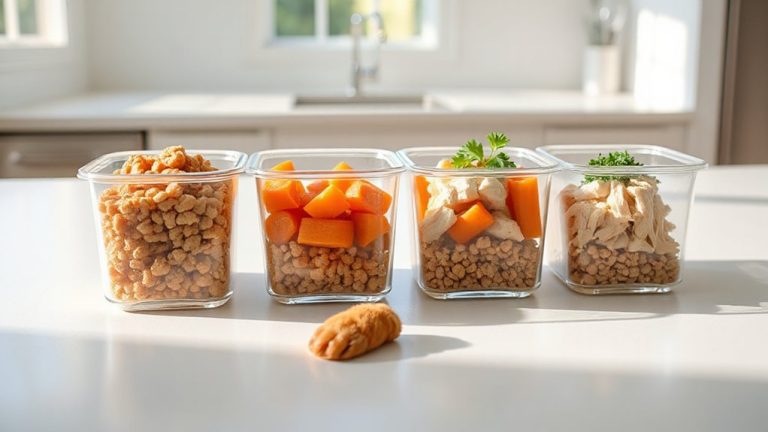
Including MCTs in your pet’s diet supports cognitive function, but choosing the right delivery method matters just as much as the ingredients themselves. Commercial diets formulated for cognitive support offer precise MCT concentrations, typically 5–10% by weight, ensuring consistent daily intake. These diets undergo rigorous testing for diet safety, meeting AAFCO nutrient profiles and pathogen limits. Homemade diets may include MCT oil, but lack standardized dosing, increasing risk of gastrointestinal upset or nutrient imbalance. Feeding consistency is critical; fluctuations in nutrient delivery can worsen cognitive symptoms. Commercial foods provide batch-to-batch uniformity, while homemade versions vary unless strictly measured and supervised by a veterinary nutritionist. Long-term management requires reliability. For CDS pets, the stability of commercial formulations often outweighs the customization potential of homemade meals. Always consult your vet before making dietary changes.
Easy Meal Tweaks to Boost Your Pet’s Cognition
How can you enhance your pet’s cognitive health without overhauling their entire diet? Start with consistent feeding routines, which stabilize blood glucose and support brain function. Feed smaller, more frequent meals-divide your pet’s daily portion into three or four servings to maintain steady energy. Practice portion control to prevent obesity, a risk factor for cognitive decline. Measure food accurately using a calibrated scoop or kitchen scale. Add omega-3-rich supplements like fish oil; aim for 100 mg EPA+DHA per 10 lbs of body weight daily. Incorporate antioxidant-laced snacks such as blueberries or spinach, which combat neuronal oxidative stress. Limit treats to 10% of daily caloric intake. Use puzzle feeders to stimulate mental engagement during meals. These tweaks-grounded in metabolic regulation and neuroprotective nutrition-support cognitive processing with minimal disruption to current feeding practices.
On a final note
You must prioritize targeted nutrition to manage cognitive dysfunction in pets. Diets rich in DHA, at recommended levels of 40–80 mg/kg body weight daily, support neuronal membrane integrity. Antioxidants like vitamin E (20–40 IU/kg) reduce oxidative stress. MCTs provide ketones, an alternative brain fuel. Use commercially formulated diets with AAFCO validation or vet-supervised homemade plans to guarantee precision. Consistent nutrient profiles improve cognitive test scores in 60% of dogs within 8 weeks.