Step-by-Step Guide to Teaching Your Cat to Use a Scratch Post Instead of Furniture
You need a scratching post that’s at least 30 inches tall and has a stable 16×16-inch base to prevent tipping. Choose solid wood or metal frames wrapped in 4–6 mm density sisal rope, which resists claw pull-out better than carpet. Place it within 3 feet of your cat’s favorite nap spot, ideally near the couch they’re damaging. Use catnip or treats to reward use immediately. Posts with replaceable pads last longer and keep texture ideal for scent-marking via paw pheromones. Position near windows to boost appeal through environmental stimulation. Matching texture and location encourages consistent use over furniture. Solutions improve when you understand how territorial signals and claw maintenance drive behavior.
Notable Insights
- Place a sturdy scratch post near your cat’s favorite resting spot and existing scratching furniture.
- Choose a post at least 30 inches tall with a wide base and wrapped in durable sisal rope.
- Encourage use by sprinkling catnip or attaching a dangling toy to the post.
- Immediately reward your cat with treats or praise when they scratch the post.
- Cover damaged couch areas with coarse sisal fabric and trim claws every 10–14 days.
Why Your Cat Scratches the Couch
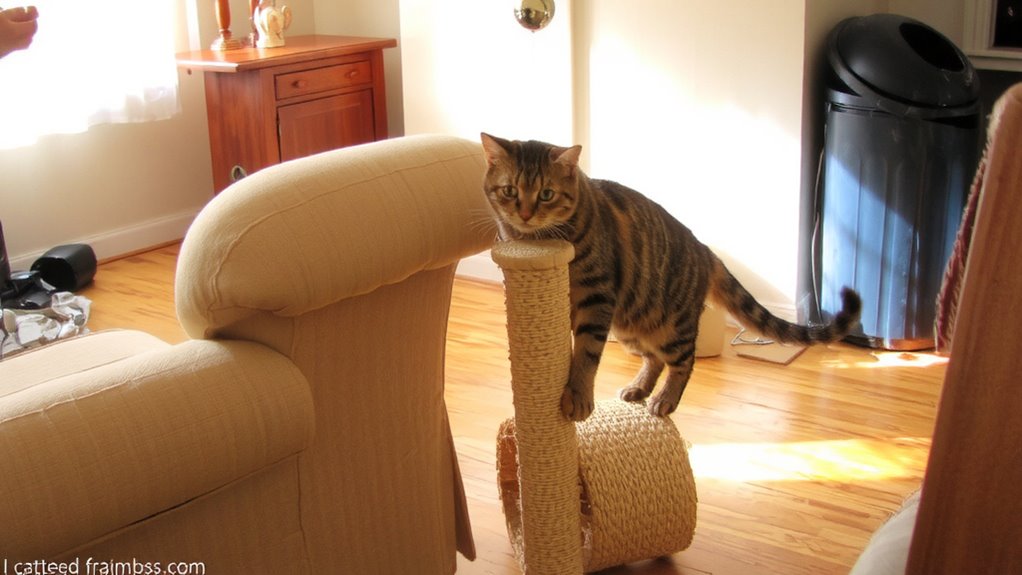
Why does your cat insist on shredding the couch? Scratching is instinctual, driven by two primary biological needs: territorial marking and claw maintenance. Your cat’s paw pads contain scent glands; each scratch deposits pheromones, creating a visible and olfactory signal to other animals-this is territorial marking. Simultaneously, the act removes the outer layer of the claw, approximately 0.2–0.5 mm thick, exposing a sharper, healthier surface underneath-this supports claw maintenance. The couch, often centrally located and made of textured fabric like a tightly woven 100% cotton twill, provides ideal resistance. Height and stability matter: best scratching surfaces are at least 32 inches tall and anchored to prevent tipping. The angle of approach, typically 70–90 degrees, matches feline ergonomic preference. Understanding these behaviors allows for targeted intervention.
Pick a Scratching Post Your Cat Will Actually Use
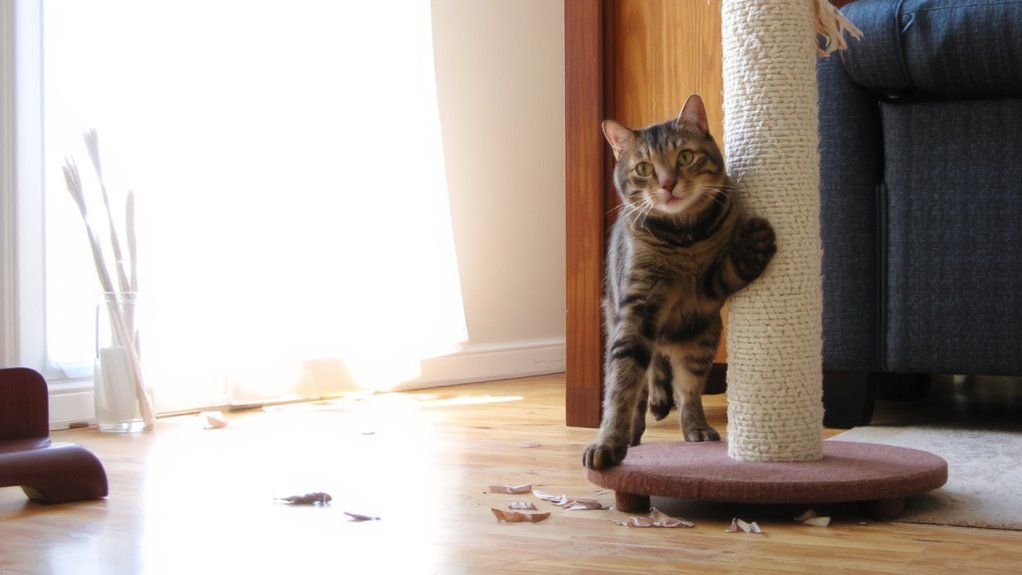
The right scratching post starts with height and stability-your cat needs a structure that won’t wobble when they lean into a full stretch. Height suitability is critical; posts should be at least 30 inches tall to allow full extension. A base measuring 16×16 inches or larger enhances stability. Sturdy materials like solid wood or metal frames prevent tipping during vigorous use. Material preference varies, but most cats favor coarse textures like sisal rope or corrugated cardboard. Sisal, with a fiber density of 4–6 mm, resists shredding better than softer fabrics. Some cats prefer horizontal scratchers, others vertical or angled. Choose models with replaceable pads for longevity. Avoid plush carpeting-it encourages scratching but lacks durability. Selecting the correct material preference and ensuring ideal height suitability increases acceptance. A well-built post supports your cat’s natural behavior without compromising safety or function. Top Cat Scratch Posts for Happy Cats offer a variety of designs that cater to these preferences and needs. Top Cat Scratch Posts for Happy Cats
Put the Scratcher Right Where Your Cat Likes
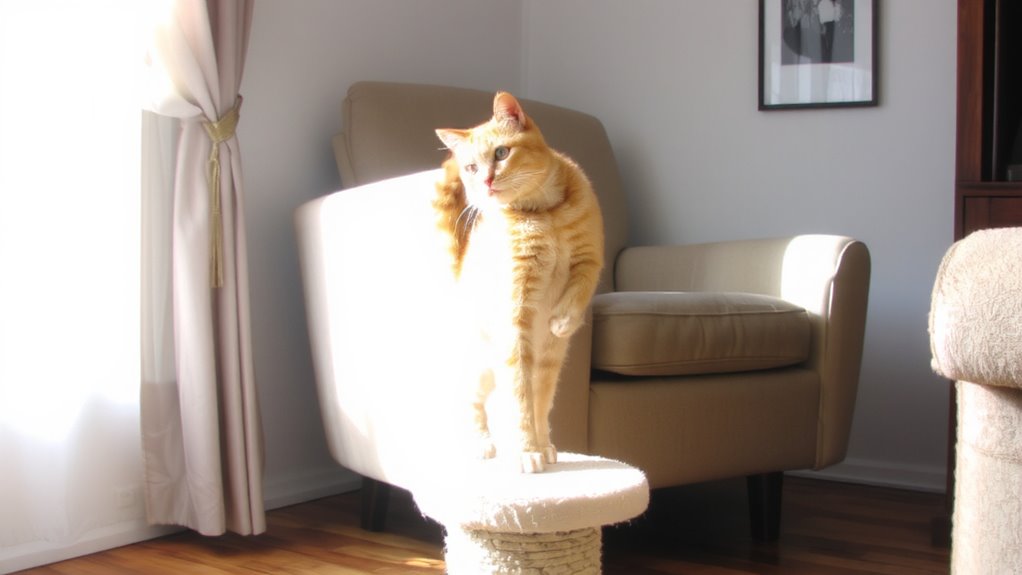
Place the scratcher where your cat already shows interest-ideally within 3 feet of their favorite resting spot or near a frequently used piece of furniture they scratch. Your cat’s location preference is instinctive and tied to territory marking. Positioning the post in a high-traffic area reinforces its use. Cats prefer vertical scratching surfaces near entryways, windows, or sleeping zones. Match the surface texture to your cat’s preference: sisal rope, cardboard, or carpet. Sisal, with a 3/8-inch tightly woven diameter, offers durable resistance for effective claw shedding. Cardboard, layered at 1/4-inch thickness, provides a fibrous texture cats readily engage with. Avoid placing the post in isolated corners or low-activity zones. Proximity to the targeted furniture increases redirection success. Correct location and appropriate surface texture are critical variables in habit substitution. Tall cat trees with sturdy bases and multi-level platforms can also serve as excellent scratching alternatives, especially when placed in best tall cat trees locations around the home.
Teach Your Cat to Scratch the Post, Not the Couch
While your cat may already show interest in the scratch post’s location, actively guiding their behavior guarantees proper use. Use positive reinforcement immediately after they scratch the post-offer treats or praise to solidify the association. Choose a post at least 30 inches tall with tightly wound sisal (8–10 mm diameter fibers) to support full-stretch scratching. Encourage use by attaching catnip or dangling a toy. Daily interaction with the post strengthens habit formation. Perform regular claw trimming every 10–14 days to minimize furniture damage during training. Trim only the clear tip, avoiding the pink quick. Sharp claws are more likely to snag fabrics, increasing couch appeal. A well-trimmed cat relies less on scratching for nail maintenance, making the post more attractive. Combine tactile satisfaction with routine upkeep to redirect behavior efficiently. Consider placing the scratch post near a window to increase its appeal, as cats are naturally drawn to elevated views and sunlight, similar to how a best cat window perch supports both comfort and stimulation.
Stop Couch Scratching: Without Scolding Your Cat
Why does your cat return to the couch despite having a proper scratch post? Cats scratch for sensory, territorial, and stretching needs; if the post doesn’t meet behavioral requirements, the couch remains preferable. Use positive reinforcement immediately after your cat uses the post-offer treats or affection to strengthen the desired behavior. Environmental enrichment reduces unwanted scratching by addressing underlying stimuli. Place posts near couches, oriented vertically or horizontally based on preference. Opt for posts at least 32 inches tall with sturdy bases (minimum 18” x 18”) to prevent tipping. Cover surfaces with coarse sisal fabric (8–10 lb tensile strength) for best grip. Rotate post locations every 2–3 weeks to maintain novelty. Avoid scolding-it increases stress and worsens scratching. Instead, redirect with toys or treats, reinforcing acceptable behavior.
On a final note
You’ve successfully redirected your cat’s scratching behavior. Position the post firmly in high-traffic areas, at least 30 inches tall for full stretch. Use sisal rope, minimum ½-inch diameter, tightly wound. Encourage use with catnip or dangling toys. Trim nails every 10–14 days. Consistency and placement are critical. Furniture protection is now proactive, not reactive.