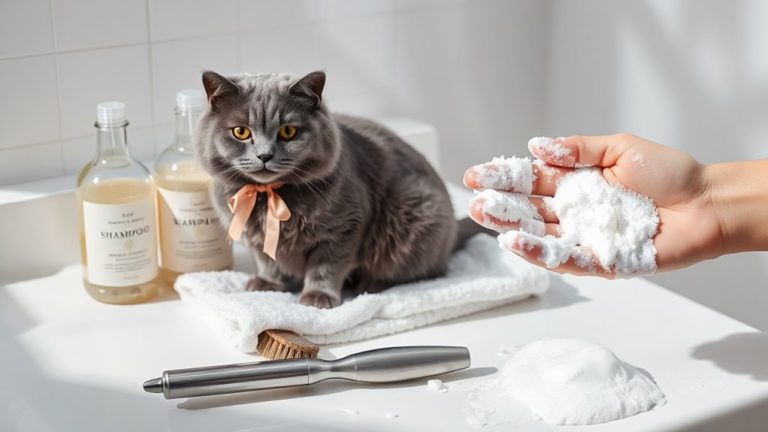
Coat Care 101: A Guide to Understanding and Managing Different Coat Types
Your dog’s coat type-single, double, or wire-is determined by genetics and dictates its care routine. Smooth coats need weekly brushing with a rubber curry brush and bathing every 4–6 weeks. Long silky coats require daily detangling with a wide-tooth comb and slicker brush. Double coats shed heavily; use an undercoat rake with 1.5-inch curved teeth during seasonal blows. Wire coats need hand-stripping or clippers with a #10 blade. Adjust tools and frequency with seasons. Ideal coat health relies on proper grooming tools, shampoo dilution ratios, and EPA/DHA supplementation. Specific techniques and product choices make all the difference in maintaining condition and minimizing shedding-knowing which ones saves time and improves results.
Notable Insights
- Identify your dog’s coat type-single, double, or wire-to tailor grooming and care routines effectively.
- Brush smooth coats weekly with a rubber curry brush to remove loose hair and distribute natural oils.
- Prevent matting in long silky coats by daily brushing with a wide-tooth comb and slicker brush.
- Manage double coats with daily undercoat raking, especially during seasonal shedding periods in spring and fall.
- Avoid shaving double-coated breeds; maintain insulation and skin protection with regular brushing and proper shampoos.
How to Identify Your Dog’s Coat Type
Coat type is the foundation of effective grooming. You must identify your dog’s coat correctly to apply proper care techniques. Coat genetics determine whether your dog has single, double, or wire coats. These genes influence shedding patterns, growth cycles, and maintenance needs. Texture variation appears across breeds and even within litters. You’ll see differences ranging from silky and straight to tightly curled or wiry. Evaluate your dog’s coat by touch and visual inspection. Note the density, length, and undercoat presence. A double coat includes a soft underlayer and coarser outer guard hairs. Single coats lack this underlayer, affecting insulation and shedding. Wire coats have stiff, bristly hair with minimal shedding. Recognizing these traits guarantees accurate classification. Use this knowledge to select appropriate tools, such as slicker brushes for tangles or undercoat rakes for dense fur. Accurate identification prevents grooming errors and supports coat health. For double-coated breeds, using the right tool like an undercoat de-shedding tool can significantly reduce loose fur and improve coat condition.
Smooth Dog Coats: Low-Maintenance Care
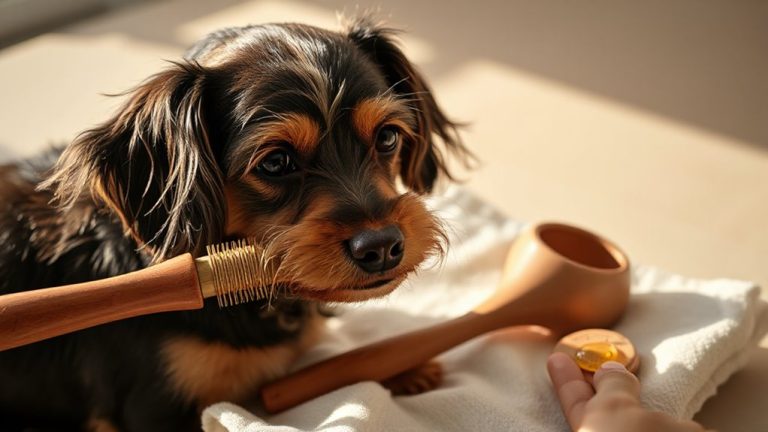
Smooth coats are sleek, tight-lying, and often glossy, offering a polished look with minimal upkeep. These coats consist of short, dense hairs lying close to the skin, reducing matting and tangle risks. Weekly brushing with a rubber curry brush removes dead hair and distributes skin oils. Bathing is needed only every 4–6 weeks, using a mild canine shampoo to preserve natural moisture. Coat feeding-providing omega-3 and omega-6 fatty acids through diet or supplements-enhances shine and skin health. A typical effective regimen includes 300 mg of EPA/DHA daily for a 30-pound dog. Smooth trimming maintains neat edges around ears, paws, and tail base, typically requiring only scissors or a #10 blade clipper. This light shaping improves appearance without altering coat function. Minimal shedding occurs year-round, manageable with routine wiping using a chamois cloth. Proper care guarantees durability and weather resistance, typical of breeds like Boxers and Dobermans.
Long Silky Coats: Why Daily Brushing Matters
You’ll almost always need to brush a long silky coat daily to prevent tangles and maintain its luster. Without consistent grooming, fine hairs mat easily, especially around friction zones like the ears and tail. Proper detangling techniques start at the tips, working upward with a wide-tooth comb, then finishing with a slicker brush. Static prevention is essential in dry environments-use a light conditioning spray or anti-static wipe. For short-haired breeds, however, a bristle brush or rubber curry can effectively remove loose hair and distribute natural oils without over-stripping the coat. Below are key grooming tools and their functions:
| Tool | Purpose |
|---|---|
| Wide-tooth comb | Separates knots with minimal hair breakage |
| Slicker brush | Removes loose hair and small tangles |
| Detangling spray | Lubricates strands for easier combing |
| Anti-static wipe | Reduces cling and flyaways in low humidity |
Brush in downward strokes, aligning with hair growth. Daily care preserves silkiness, reduces static buildup, and supports skin health by distributing natural oils.
Double Coats: Managing Heavy Shedding
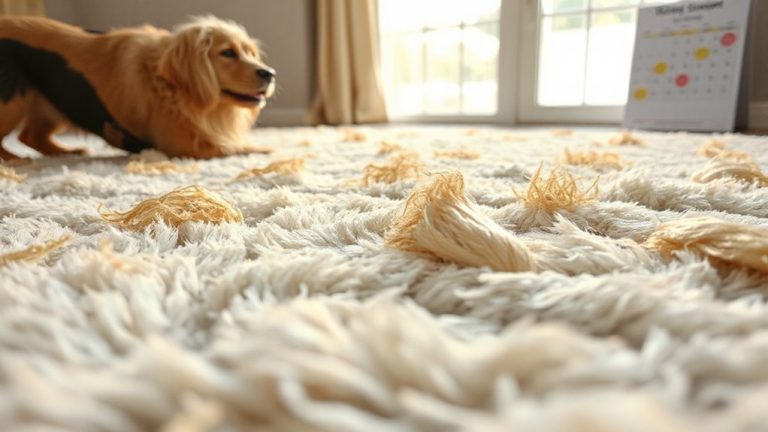
When dealing with double-coated breeds, managing heavy shedding requires a targeted approach to prevent matting and support healthy coat turnover. You’ll notice increased shedding twice a year during shedding cycles, especially when undercoat blowing occurs. This natural process releases the dense winter undercoat, making way for seasonal regrowth. Daily brushing with a dematting tool or undercoat rake removes loose fur effectively. Use a rake with 1.5-inch curved teeth spaced 0.25 inches apart to penetrate the topcoat without damaging the skin. Regular grooming reduces household fur by up to 80%. Bathe every 4–6 weeks with a deshedding shampoo containing omega-3 fatty acids to loosen undercoat debris. Avoid clipping unless medically necessary-double coats regulate temperature and protect from UV exposure. Consistent maintenance aligns with your dog’s biological rhythm, ensuring coat health without disrupting natural insulation. For optimal results, consider using one of the best deshedding tools recommended for double coats.
Curly and Wiry Coats: Care for Thick Texture
Texture is a defining trait of curly and wiry coats, demanding specialized grooming to prevent matting and maintain structural integrity. You need regular brushing-three to four times weekly-with a slicker brush and metal comb to guarantee effective tangle prevention. These coats trap dead hair and debris, so thorough detangling down to the skin is essential. Use a moisturizing conditioner or spray that supports coat hydration, ideally containing ceramides or hyaluronic acid to strengthen the hair shaft and reduce brittleness. Clipper blades must be sharp and cooled frequently during trimming to avoid snagging thick, resilient fur. Hand-stripping, required for some wiry breeds, removes loose guard hairs without altering texture. Trim every six to eight weeks to preserve shape. Avoid over-bathing, which strips natural oils; limit it to every four to six weeks using a sulfate-free shampoo. Consistent care preserves the coat’s spring and density while minimizing skin irritation and breakage.
When to Adjust Grooming by Season
A dog’s coat responds dynamically to seasonal shifts, and your grooming routine must adjust accordingly to support healthy skin and fur. Seasonal shedding peaks in spring and fall, triggered by changes in daylight and temperature. During these periods, increase brushing frequency to 4–5 times weekly to manage loose hair and prevent matting. In warmer months, trim moderately to aid climate adaptation, but never shave double-coated breeds-doing so disrupts natural insulation and UV protection. Winter demands reduced bathing to preserve skin oils, critical for moisture retention in dry air. Use a humidifier indoors if relative humidity drops below 30%. Grooming tools should match coat density: slicker brushes for undercoat removal, de-shedding tools with teeth 1–2 cm apart for topcoats. Adjust techniques based on observed hair loss and skin condition, ensuring ideal coat function year-round.
Best Brushes and Shampoos by Coat Type
Your dog’s coat type determines the best grooming tools and products for maintaining its health and appearance. Short, smooth coats benefit from rubber curry brushes and fine-tooth combs; use shampoos diluted at a 10:1 water ratio. For double coats, de-shedding tools like slicker brushes with 1.5-inch bent wire pins reduce undercoat buildup. Apply shampoo dilution methods to prevent residue-typically 5:1 for thick coats. Long, silky coats require pin brushes with rounded tips and wide-tooth combs to prevent matting. Trim stray hairs with precision scissors, integrating coat trimming techniques every 6–8 weeks. Wavy or curly coats need detangling sprays and low-flow conditioner. Use a 3:1 dilution to preserve natural oils. Avoid over-bathing, which disrupts pH balance. Always towel-dry first, then finish with low-heat blow-drying to maintain cuticle integrity and reduce frizz.
On a final note
You now understand your dog’s coat type and its specific care needs. Smooth coats require weekly brushing with a rubber curry brush-removes loose hair and distributes oils. Long silky coats tangle easily; use a stainless steel comb daily. Double-coated breeds shed heavily; deshedding tools reduce fur by up to 90%. Curly and wiry coats need hand-stripping or clipping every 4–6 weeks. Use pH-balanced, coat-specific shampoos at 6.2–7.5 for ideal skin health.