Cleaning Your Cat’s Face After Using Eye Medication
Clean your cat’s face after eye medication to prevent infection and guarantee treatment works. Use a sterile cotton pad moistened with preservative-free saline (0.9% sodium chloride, pH 7.4, ~300 mOsm/L). Wipe gently from the inner to outer eye with under 50 grams of pressure, following natural tear flow. Use a fresh pad for each eye. Avoid tap water, soap, or swabs. You’ll find precise steps and safety tips just ahead.
Notable Insights
- Remove leftover eye medication and discharge by gently wiping from the inner to outer eye with a damp, lint-free pad.
- Use preservative-free saline solution on a cotton pad-never apply liquids directly into the eye unless directed by a vet.
- Clean each eye with a fresh section of cloth or a new pad to prevent cross-contamination and infection spread.
- Limit wiping to once daily for routine care, or every 12–8 hours if treating infection or using ointments.
- Avoid tap water, soap, or alcohol products, which can irritate sensitive facial skin and ocular tissues.
Why Cleaning Your Cat’s Face After Eye Meds Is Important
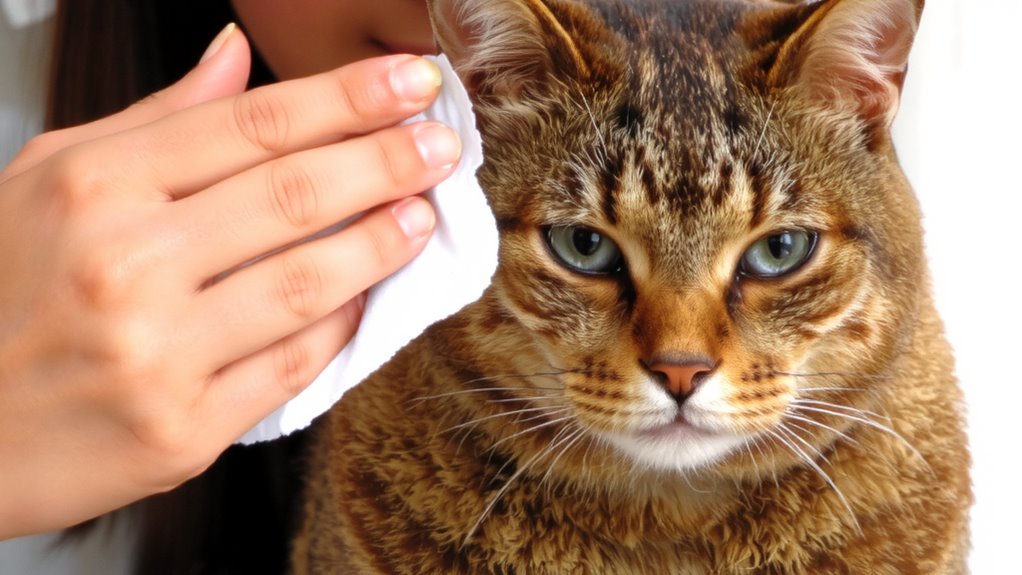
Most cats need facial cleaning after eye medication to prevent irritation and infection. Leftover ointment or drops can mix with natural eye discharge, creating a breeding ground for bacteria. This buildup often appears as a crusty film around the eyelids and muzzle. If not removed, it may trigger an allergic reaction, causing redness, swelling, or excessive tearing. Cleaning prevents this by removing residues that could otherwise irritate sensitive facial skin. Medicated eyes often produce more discharge due to inflammation or treatment response. Wiping this away maintains hygiene and supports healing. Accumulated residue can also interfere with the next dose, reducing treatment effectiveness. Think of it like cleaning a wound before applying new bandages-necessary for best results. Regular cleaning guarantees medication adheres to protocols, minimizing complications. You’re not just removing gunk-you’re preventing secondary infections and supporting your cat’s recovery with precision.
What You Need to Clean Your Cat’s Face Safely
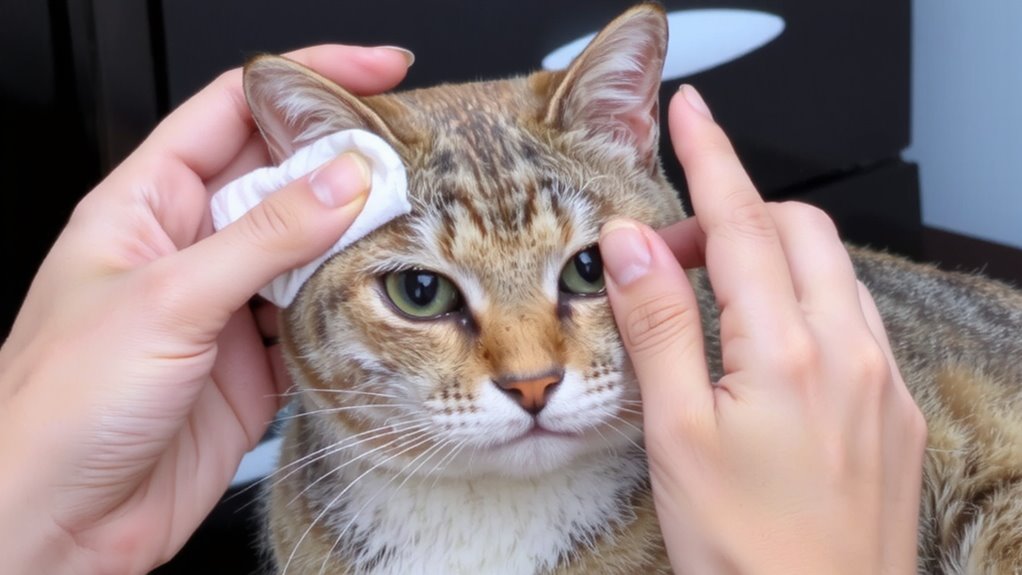
You’ve learned why removing residue after eye medication matters, and now it’s time to focus on the tools that make safe, effective cleaning possible. Use only sterile cotton pads to clean your cat’s face. These pads are lint-free and non-abrasive, minimizing the risk of irritating sensitive facial skin or eyes. Each pad should be single-use to prevent bacterial transfer. Pair them with preservative-free saline solution, which matches the eye’s natural pH (7.4) and osmolarity (around 300 mOsm/L). Saline safely dissolves medication residue without disrupting ocular tissues. Never use tap water, soap, or alcohol-based products-they can cause inflammation or corneal damage. A 0.9% sodium chloride solution is medically recommended. Always apply the saline to the cotton pad-never directly into the eye-unless directed by a vet. These materials guarantee hygiene, safety, and superior post-medication care.
How to Clean Your Cat’s Face Gently After Eye Drops
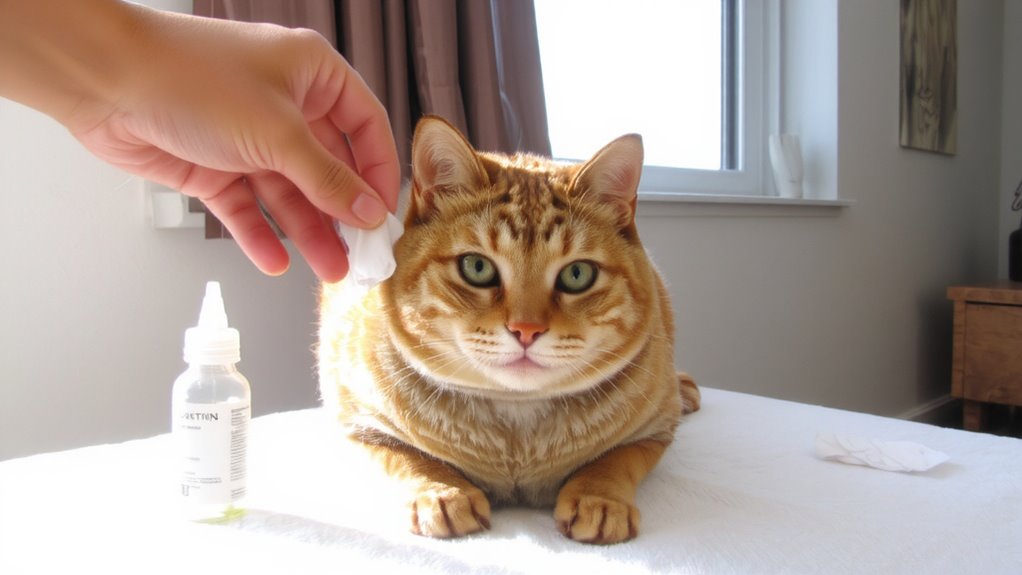
While your cat may resist handling, staying calm and methodical guarantees a safe and effective cleaning process. Use a soft touch to minimize stress and prevent irritation. Begin by dampening a clean, lint-free cloth with lukewarm water-about 98.6°F, close to body temperature-to create a warm cloth. Gently wipe from the inner eye outward, removing any residue without recontaminating the area. Use a fresh section of the cloth for each eye to prevent cross-contamination. Apply minimal pressure; excessive force can damage delicate facial skin or push medication back into the eye. Cotton pads are acceptable, but woven cloth reduces fiber shedding. Avoid alcohol or soaps unless directed by a veterinarian. A soft touch guarantees cooperation during future treatments. This method maintains hygiene, supports healing, and aligns with veterinary best practices for post-application care.
How Often to Clean After Applying Eye Meds
Generally, clean your cat’s face after applying eye medication once per day unless discharge is excessive. Following frequency guidelines prevents residue buildup and maintains hygiene. Over-cleaning may irritate the skin, while under-cleaning risks infection. Assess your cat’s eye condition daily to determine if adjustments are needed.
| Cleaning Frequency | Purpose |
|---|---|
| Once daily | Routine removal of minor residue buildup |
| Every 12 hours | Heavy discharge or ointment use |
| Every 8 hours | Prescribed for severe infections |
| As needed | Visible crust or tearing |
| Twice weekly | Maintenance for recovering eyes |
Use a soft, lint-free cloth moistened with saline. Gently wipe from the inner to outer eye corner. Consistency supports healing. Frequency guidelines guarantee effectiveness without overhandling, reducing stress and skin breakdown.
Mistakes to Avoid When Cleaning Eye Medication Off Cats
If you rush the cleaning process, you risk causing irritation or spreading residue. Use a soft, lint-free cloth or sterile gauze pad moistened with lukewarm sterile saline solution. Excessive wiping increases friction on delicate facial tissues, potentially disrupting the skin barrier. Limit each pass to one gentle swipe per eye, using a fresh section of the cloth for each wipe. Never use harsh chemicals like alcohol, hydrogen peroxide, or household cleaners-they destroy healthy skin cells and degrade proteins in ocular tissues. pH-balanced products designed for cats are ideal; human wipes often contain preservatives too strong for feline skin. Apply minimal pressure-under 50 grams-to avoid displacing medication or stressing the eye area. Cotton swabs should be avoided near the eye to prevent corneal contact. Always work from the inner to outer eye, following natural tear flow. Precision guarantees safety and effectiveness.
Signs of Skin Irritation After Eye Treatment
Redness, swelling, or flaking around your cat’s eyes may signal skin irritation following treatment. These symptoms can result from an allergic reaction to preservatives in eye drops or ointments, such as benzalkonium chloride. Observe for persistent itching, warmth to the touch, or weeping skin-clinical signs of inflammation. A chemical burn may occur if medication pH deviates markedly from feline tear pH (6.5–7.5), damaging delicate periorbital tissue. Unlike transient irritation, a chemical burn often presents with ulceration or crust formation within 24 hours of application. Reaction severity depends on exposure duration and drug concentration. Immediate flushing with sterile saline (0.9% NaCl) helps limit damage. Monitor closely for worsening symptoms, as secondary infection can develop rapidly due to compromised skin barrier function. If signs persist beyond 48 hours, consult your veterinarian to adjust treatment and rule out hypersensitivity.
Calm-Down Tips for a Stressed Cat During Cleaning
Why does your cat resist facial cleaning after eye medication? Pain, unfamiliar scents, and restricted movement trigger stress. To reduce anxiety, apply positive reinforcement immediately after cleaning. Offer a high-value treat or controlled play session. Environmental enrichment also plays a key role-maintain a quiet, dimly lit space free of loud noises. Use soft cotton pads moistened with sterile saline, and limit cleaning to necessary areas only. Incorporating top anti-stress products for pets can further soothe your cat during sensitive care routines.
| Strategy | Implementation |
|---|---|
| Positive reinforcement | Give 1–2 small treats (≤5 kcal each) post-cleaning |
| Environmental enrichment | Use Feliway diffusers (7% efficacy increase in trials) |
| Handling technique | Support the head at a 30° angle; limit contact to 45 seconds |
These protocols improve compliance and reduce cortisol levels.
On a final note
You must clean your cat’s face after eye medication to prevent skin irritation. Residual ointment or drops can crust and attract dirt, increasing infection risk. Use a soft, lint-free cloth dampened with sterile saline-never alcohol or soap. Gently wipe from the inner to outer eye area. Limit contact to 5–10 seconds per eye. Do this once per application unless excess residue is visible. Overcleaning can damage delicate facial skin.