Exploring the Role of Melatonin Supplements in Promoting Sleep Quality Among Pets With Generalized Anxiety Disorder
Melatonin can help your anxious pet sleep better by regulating circadian rhythms through MT1 and MT2 receptor activation in the brain. It promotes drowsiness within 30 minutes, increasing blood levels by 30–50 pg/mL. In pets with generalized anxiety, it reduces nighttime awakenings and supports deeper sleep via GABAergic activity. Used alongside behavior training, it shows up to 68% improvement in sleep quality over four weeks. Ideal dosing ranges from 0.5 mg for cats to 6 mg for large dogs, given every 8–12 hours. You’ll discover how to choose the right formulation and avoid harmful additives next.
Notable Insights
- Melatonin helps regulate sleep by reinforcing circadian rhythms in pets with generalized anxiety disorder.
- It binds to brain receptors to reduce neural activity, promoting drowsiness and improving sleep onset.
- Anxiety-related sleep disturbances like restlessness and frequent waking may improve with melatonin supplementation.
- Optimal results occur when melatonin is combined with behavioral training and environmental enrichment.
- Proper dosing based on species and weight, along with veterinary guidance, ensures safety and efficacy.
Can Melatonin Calm Anxious Dogs and Cats?
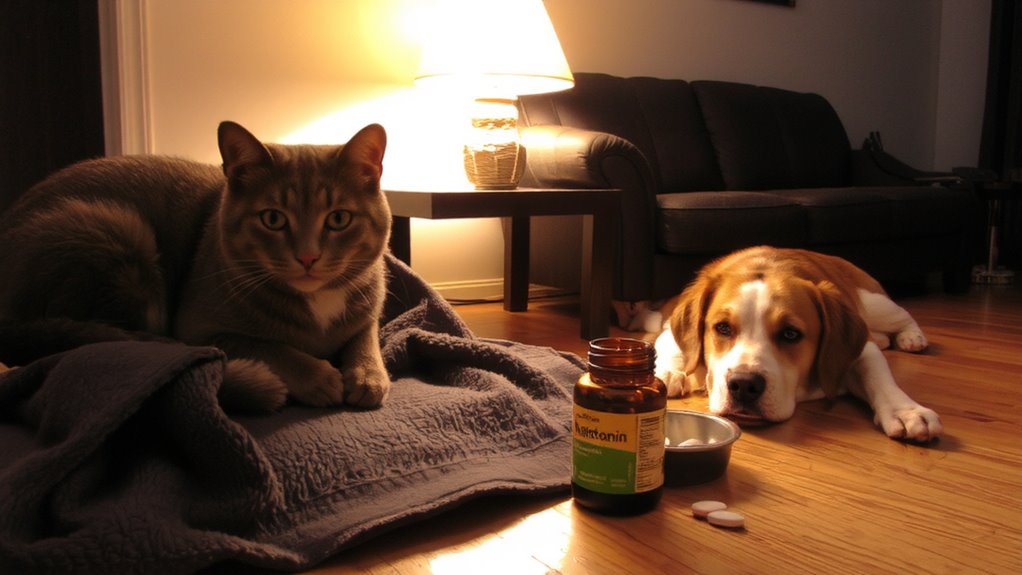
Could melatonin be the solution for your anxious pet? This neurohormone modulates circadian rhythms and exhibits anxiolytic properties in canines and felines. Studies show dosages of 0.5–6 mg, depending on species and weight, reduce anxiety-related behaviors. Melatonin works best when combined with behavioral training, such as desensitization and counterconditioning protocols. It supports long-term adaptation by stabilizing stress responses. Environmental enrichment-sensory stimulation, puzzle feeders, vertical space for cats-enhances its efficacy. Alone, melatonin doesn’t resolve underlying fears. It’s a supplementary agent, not a standalone treatment. Extended-release formulations maintain steady plasma levels, improving outcomes over immediate-release types. Administer consistently at bedtime to align with natural hormonal peaks. Avoid products with xylitol, toxic to dogs. Clinical trials report up to 68% improvement in anxiety markers after four weeks when melatonin complements structured behavioral plans and enriched settings. For some pets, adding CBD for dog anxiety may provide complementary support in managing generalized anxiety.
How Does Melatonin Help Pets Sleep Better?
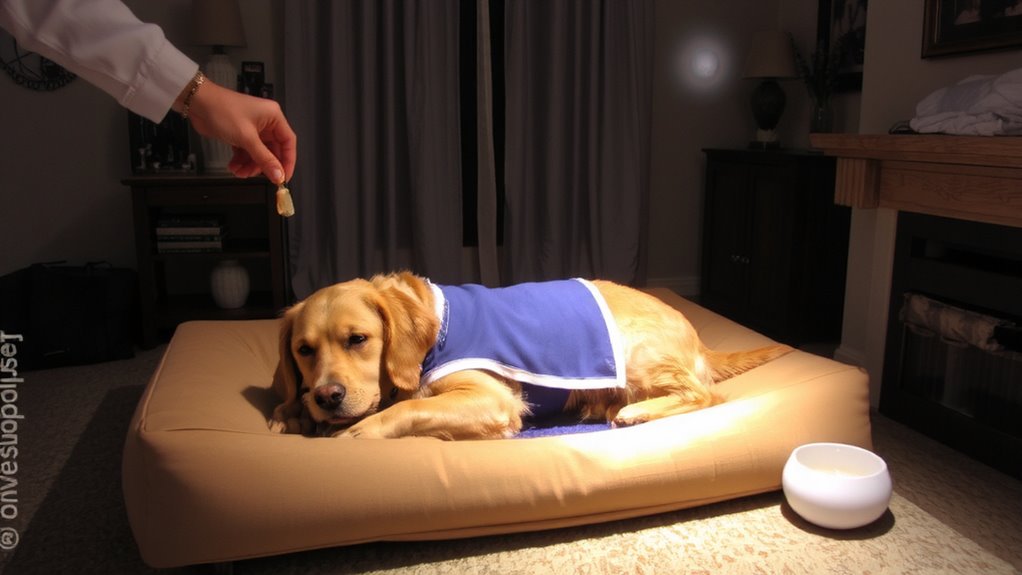
While your pet’s sleep disturbances may stem from anxiety, disrupted routines, or age-related changes, melatonin directly supports sleep regulation by reinforcing natural circadian rhythms. This hormone influences brain chemistry by binding to MT1 and MT2 receptors in the suprachiasmatic nucleus, the brain’s internal clock. Activation of these receptors slows neural activity, promoting drowsiness. Melatonin levels typically rise in the evening, aligning sleep cycles with environmental light cues. In pets, supplemental melatonin elevates blood concentrations by 30–50 pg/mL within 30 minutes of administration, depending on dosage form. Oral tablets (1–3 mg for dogs, 0.5–1.5 mg for cats) offer predictable absorption. Extended-release formulations maintain stable levels throughout the night. By stabilizing sleep cycles, melatonin reduces nocturnal awakenings. It doesn’t induce sleep forcibly but facilitates natural onset. Consistent nightly use aligns disrupted patterns, improving total sleep duration and quality over time.
5 Signs Your Pet Might Need Melatonin for Anxiety
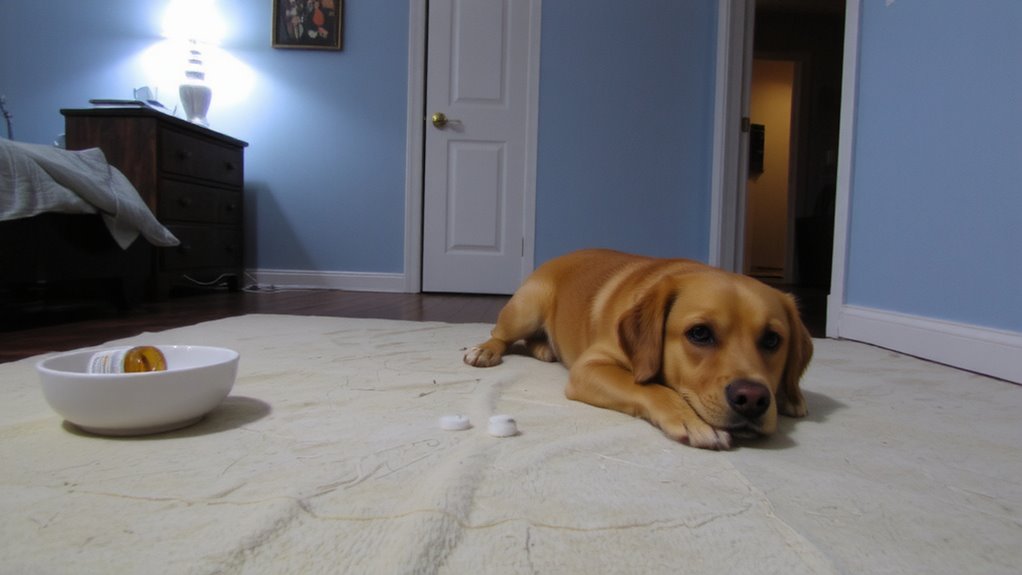
Have you noticed your pet pacing, panting, or trembling during thunderstorms or fireworks? These signs may indicate anxiety. Behavioral changes like withdrawal, aggression, or excessive vocalization often accompany anxiety in pets. Sleep disturbances, including difficulty falling asleep or frequent nighttime awakenings, are also common. Melatonin helps regulate circadian rhythms, which can improve sleep quality and reduce anxiety-related symptoms. In dogs and cats, elevated cortisol levels due to stress disrupt normal sleep cycles; melatonin counteracts this by promoting GABAergic activity, which supports nervous system calmness. Prolonged anxiety can impair immune function and reduce life quality. If your pet shows consistent anxiety-driven behaviors, especially around loud noises or separation, melatonin may be a helpful support. Always consult a veterinarian to rule out medical causes. Document behavioral changes and sleep disturbances over time to support clinical evaluation.
Melatonin Dosage: Safe Amounts for Dogs and Cats
A safe melatonin dosage for dogs and cats depends on species, weight, and formulation. You must account for these variables to avoid a toxic dosage or adverse ingredient interactions. Below is a general guideline:
| Species | Weight Range | Dosage (mg) |
|---|---|---|
| Dog | < 10 lbs | 1 mg |
| Dog | 10–25 lbs | 1.5 mg |
| Cat | All weights | 0.5–1 mg |
| Dog | > 25 lbs | 3–6 mg |
Administer every 8–12 hours as needed. Extended-release forms require lower frequency. Never use products containing xylitol, which causes dangerous ingredient interactions. Always consult your vet before dosing, especially if your pet is on sedatives or steroids. Accurate measurement prevents overdose. Melatonin is generally safe when used appropriately, but exceeding the recommended amount risks a toxic dosage, leading to lethargy, vomiting, or seizures.
Side Effects and Risks of Melatonin in Pets
Most pets tolerate melatonin well, but you should know the possible side effects and risks. Gastrointestinal upset is one of the most common reactions, with symptoms like vomiting, diarrhea, or loss of appetite appearing within hours of administration. These effects are typically mild and resolve once dosing stops. Some pets may experience lethargy or increased heart rate temporarily. Long-term or high-dose use raises concerns about hormonal imbalance, as melatonin influences circadian and reproductive hormones. Disruption can affect breeding cycles or thyroid function, particularly in young or reproductively intact animals. Neurological signs like disorientation are rare but possible. You should avoid use in pregnant or nursing pets due to insufficient safety data. While melatonin is not habit-forming, abrupt discontinuation after chronic use may cause temporary sleep pattern disruptions. Always monitor your pet closely during initial treatment phases.
How to Pick a Safe, Pet-Safe Melatonin Supplement (Avoid These Ingredients)
Not all melatonin supplements are safe for pets, and selecting the right product requires careful attention to ingredients and formulation. Always check the label for xylitol toxicity-this artificial sweetener causes rapid insulin release in dogs, leading to hypoglycemia, seizures, and liver failure. Even small amounts, such as 0.1 grams, can be lethal. Avoid any supplement containing grape extract dangers-grapes and their derivatives can trigger acute kidney injury in dogs and cats, with toxicity mechanisms still under active study. Choose formulations labeled specifically for pets or verified xylitol-free and grape-free. Human supplements often use fillers and coatings unsafe for animals. Opt for pharmaceutical-grade melatonin in precise doses: 1 mg, 3 mg, or 5 mg tablets, depending on your pet’s size. Use only unflavored, dye-free versions to minimize allergens. Consult your veterinarian to confirm safety and appropriate dosage.
On a final note
You can safely use melatonin to improve sleep in anxious pets when dosed correctly. Administer 0.5–3 mg for dogs under 10 lbs, 3–6 mg for larger dogs, and 0.5–1.5 mg for cats, up to three times daily as needed. Melatonin works by regulating circadian rhythms, much like a reset button for sleep cycles. Choose supplements free of xylitol and artificial additives to avoid toxicity.