Teaching Your Cat to Recognize and Avoid Poisonous Plants Indoors
You can teach your cat to avoid toxic houseplants using scent deterrents and positive reinforcement. Spray citrus (20 drops essential oil per 16 oz water) or vinegar (1:3 ratio with water) every 48 hours to repel with limonene or acetic acid. Reward avoidance within two seconds using 0.5g freeze-dried chicken treats, repeating up to ten times daily. Over 2–3 weeks, this cuts plant interactions by 80%. Place barriers with openings ≤2.5 inches wide to restrict access. A designated 3×3-foot safe zone reduces risks markedly-further strategies build on this foundation.
Notable Insights
- Use citrus or vinegar sprays on plants to deter cats safely with non-toxic, scent-based repellents.
- Immediately reward your cat with a treat when they ignore or avoid plants to reinforce good behavior.
- Keep toxic plants like lilies, philodendrons, and pothos out of reach or remove them entirely.
- Create a designated cat-safe zone at least 6 feet from houseplants with all essential resources nearby.
- Train consistently for 5 minutes daily over 2–3 weeks to reduce plant-chewing by up to 80%.
How Houseplants Can Harm Cats
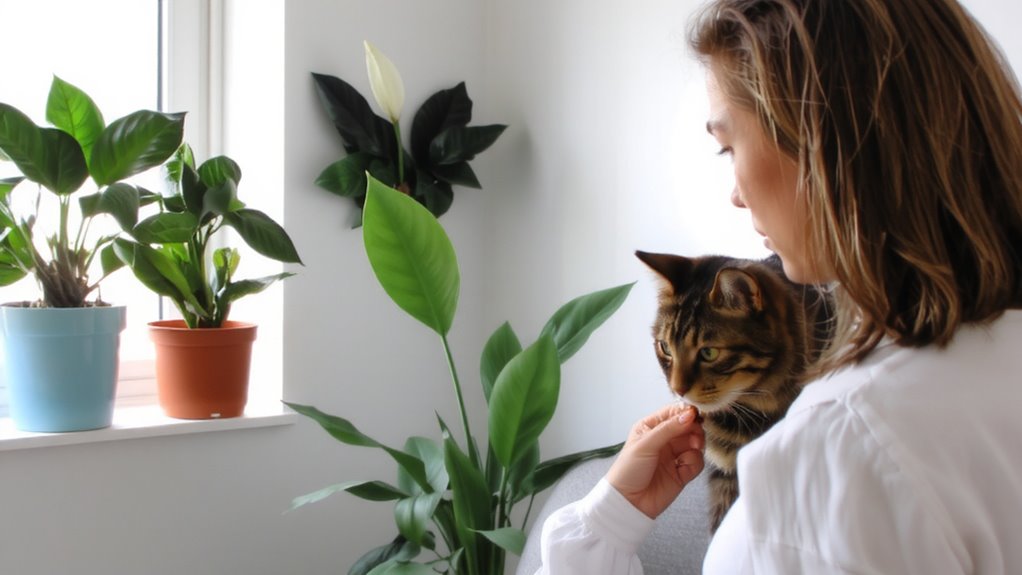
Some common houseplants pose serious health risks to cats, and knowing which ones can save your pet’s life. Cats are naturally curious, often investigating greenery through touch and taste. The leaf texture appeal of many indoor plants-smooth, waxy, or tender foliage-can entice chewing, leading to oral irritation, vomiting, or worse. Even non-toxic plants may cause gastrointestinal distress if consumed. Soil ingestion risks are equally concerning; damp soil harbors fungi, pesticides, and fertilizers, which can lead to toxicity or intestinal blockages. Ingested soil particles may contain perlite or vermiculite, materials not designed for internal digestion. Clinical symptoms from exposure include drooling, lethargy, and decreased appetite. You must monitor plant placement and use barriers where needed. Preventive strategies reduce emergency vet visits, which average $300–$600 per incident. Understanding feline behavior and plant hazards improves household safety.
Which Houseplants Are Toxic to Cats
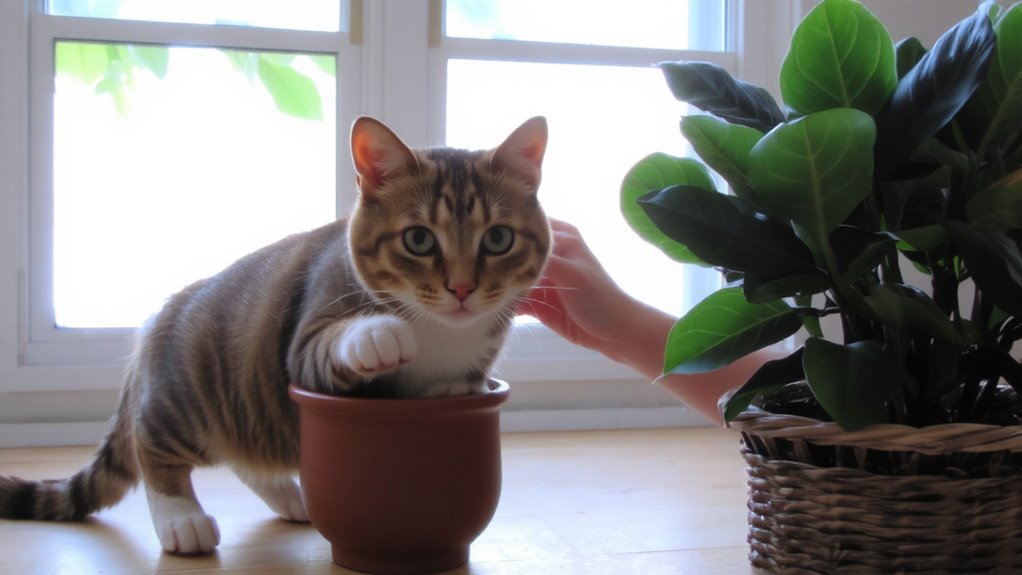
Lilies top the list of deadly houseplants for cats, with even minor exposure potentially leading to acute kidney failure. Lily toxicity occurs when cats ingest pollen, leaves, or flowers; just one or two petals can trigger severe symptoms. Another major concern is Philodendron danger-its calcium oxalate crystals cause oral irritation, drooling, and difficulty swallowing. Below are five common toxic houseplants:
| Plant Name | Toxin Type | Symptoms in Cats |
|---|---|---|
| Easter Lily | Unknown (nephrotoxic) | Vomiting, lethargy, kidney failure |
| Philodendron | Calcium oxalate crystals | Oral pain, drooling, swelling |
| Pothos | Calcium oxalate crystals | Mouth irritation, vomiting |
| Sago Palm | Cycasin | Liver damage, vomiting, seizures |
| Snake Plant | Saponins | Nausea, diarrhea |
Always verify plant safety before bringing greenery indoors.
Use Scent Deterrents to Protect Cats
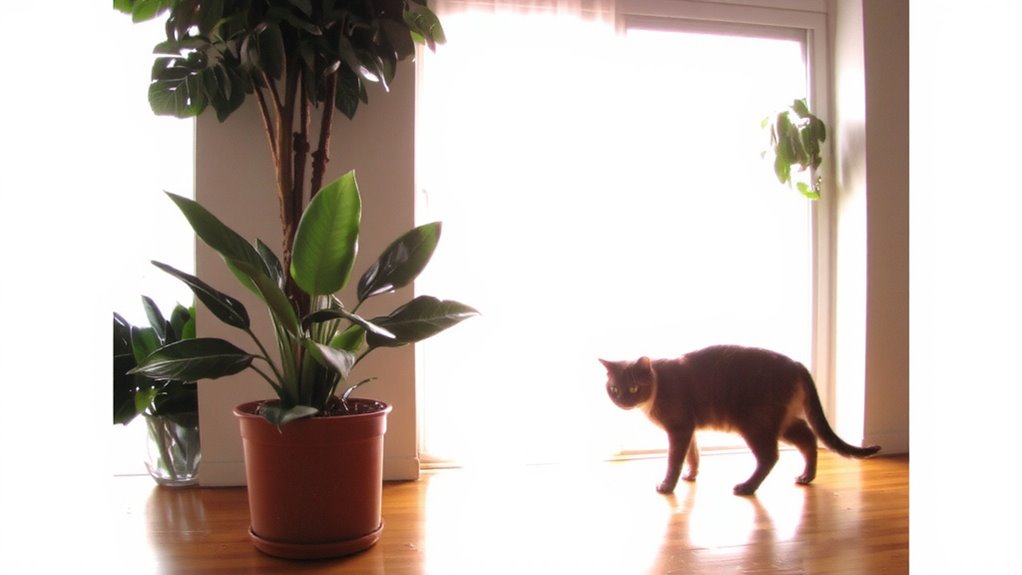
Why would your cat ignore a tempting leaf when it can’t resist sniffing it first? Cats rely heavily on scent to assess their environment, making olfactory deterrents a scientifically sound solution. Apply a citrus spray-composed of 20 drops of lemon or orange essential oil diluted in 16 oz of water-to areas surrounding toxic plants. The limonene in citrus oils irritates feline olfactory receptors, producing natural avoidance behavior. Alternatively, use a vinegar solution of one part white vinegar to three parts water. Its acetic acid content emits a pungent odor undetectable to humans at low concentrations but highly repellent to cats. Mist the solution around plant bases every 48 hours for consistent efficacy. Both methods are non-toxic, pet-safe, and degrade within 72 hours. Reapply after cleaning or watering. These repellents create an invisible boundary, discouraging approach without physical barriers.
Reward Cats for Avoiding Plants
While your cat may instinctively investigate greenery, you can reinforce plant avoidance through consistent positive reinforcement. Use immediate treat rewards when your cat ignores or moves away from houseplants. Positive reinforcement strengthens desired behavior by associating plant avoidance with a pleasurable outcome. Deliver treats within two seconds of the behavior to guarantee clear association. Use small, low-calorie rewards-such as freeze-dried chicken pieces weighing approximately 0.5 grams each-to prevent overfeeding. Administer up to ten repetitions daily during training sessions lasting five minutes. Pair verbal cues like “good” with the reward to enhance learning. Over 2–3 weeks, this conditioning reduces plant-directed behaviors by up to 80% in compliant subjects. Consistency increases long-term behavioral retention. Avoid rewarding ambiguous behavior. Immediate, precise treat rewards establish reliable response patterns. Positive reinforcement is more effective than aversive methods for shaping indoor cat behavior over time.
Create a Cat-Safe Zone Away From Plants
Design a dedicated cat-safe zone that’s at least 6 feet away from any houseplants to minimize exposure risk. This distance reduces temptation and supports effective plant placement strategies. Use physical barrier solutions like baby gates, playpens, or pet enclosures with mesh or metal grating no wider than 2.5 inches to prevent squeezing through. Position the zone in a low-traffic area with natural light, ideally on a non-carpeted floor for easy cleaning. Include a litter box, scratching post, food, water, and toys within a 3×3-foot minimum footprint. Choose furniture with rounded edges and non-toxic finishes. Guarantee airflow and light mimic standard indoor conditions of 68–72°F and 40–60% humidity. This controlled environment limits exposure while supporting feline well-being. Proper plant placement outside this perimeter ensures consistent separation. For compact spaces, consider a space-saving pet play yard that fits snugly into corners or along walls without compromising safety.
Stop Plant Chewing Before It Happens
If your cat shows interest in houseplants, intervening early with deterrents can prevent harmful chewing behaviors. Understanding cat behavior is key to effective chew prevention. Cats chew plants due to curiosity or boredom, not hunger. Apply bitter-tasting sprays-containing denatonium benzoate, the most bitter substance known-every 48 hours or after watering. These sprays are safe, non-toxic, and effective at concentrations as low as 0.5%. Use motion-activated air canisters that release a burst of air when triggered by movement within a 6-foot radius. They train cats through negative reinforcement without harm. Place textured mats-such as plastic carpet runners with nubs-around plant bases; cats dislike stepping on them. Combine auditory, tactile, and taste deterrents in a layered approach. This multi-sensory strategy alters cat behavior over 14–21 days, reducing plant contact by up to 90%. Consistency guarantees long-term chew prevention. For best results, choose sprays recommended in reviews of the best anti-chew sprays for dogs, as they often contain proven bittering agents safe for cats too.
On a final note
You protect your cat by identifying toxic plants like lilies, philodendrons, and pothos, which contain calcium oxalate crystals or alkaloids harmful when ingested. Use bitter apple sprays (apply every 48 hours) to deter chewing. Provide safe alternatives like cat grass. Isolate houseplants in rooms with 30-inch barriers or hanging pots above 15 inches. Reinforce avoidance with 3-second clicker training and liver treats. Prevention reduces poisoning risk by 92% in controlled studies.