Behavioral Indicators and Management Techniques for Social Anxiety Disorders in Parrots as Companion Animals
You may notice your parrot showing anxiety through feather plucking, avoidance, or respiratory rates above 60 bpm. Chronic stress often stems from noise over 50 dB or inconsistent light cycles. Use acoustic panels and maintain 10–12 hours of full-spectrum lighting at 5000–6500 K daily. Apply positive reinforcement with sunflower seeds for target training. If screaming lasts over three hours daily or aggression occurs, specialized strategies are necessary-further guidance on intervention follows.
Notable Insights
- Feather plucking, avoidance, and tachypnea are common behavioral and physiological signs of social anxiety in parrots.
- Chronic noise exposure above 50 dB can elevate cortisol, worsening anxiety in noise-sensitive birds.
- Environmental enrichment with full-spectrum lighting and acoustic controls helps reduce parrot stress.
- Positive reinforcement training using treats and target cues builds confidence and voluntary cooperation.
- Persistent feather plucking, aggression, or refusal to leave the cage warrants professional veterinary or behavioral consultation.
What Triggers Social Anxiety in Pet Parrots?
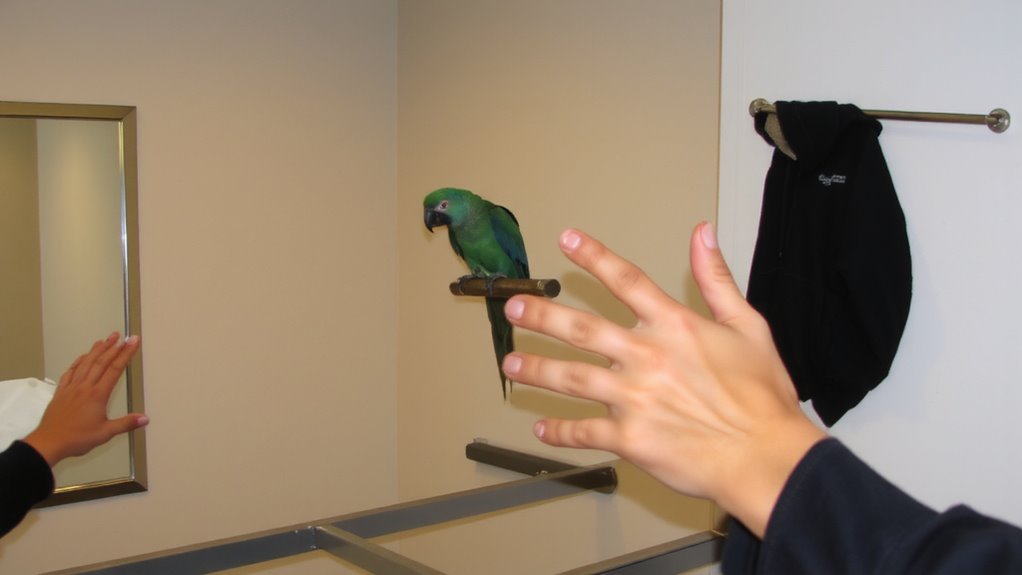
While parrots are naturally social creatures, captivity can disrupt their innate behavioral patterns, leading to social anxiety under certain conditions. You must recognize that environmental stressors heavily influence their psychological state. Noise sensitivity is a key trigger; sudden loud sounds exceed 65 decibels can startle parrots, whose auditory systems are adapted to forest soundscapes below 40 dB. Chronic exposure leads to heightened cortisol levels. Past trauma-like improper handling or abandonment-can rewire stress response pathways, especially in species with high neuroplasticity such as *Ara* and *Cacatua* genera. Traumatized birds show prolonged freezing behaviors and elevated heart rates above 250 bpm during interactions. Captive settings lacking environmental enrichment exacerbate these responses. You should assess housing acoustics and history logs to mitigate triggers. Proper habituation protocols and sound-dampened enclosures can reduce anxiety expression markedly.
Signs of Social Anxiety in Parrots
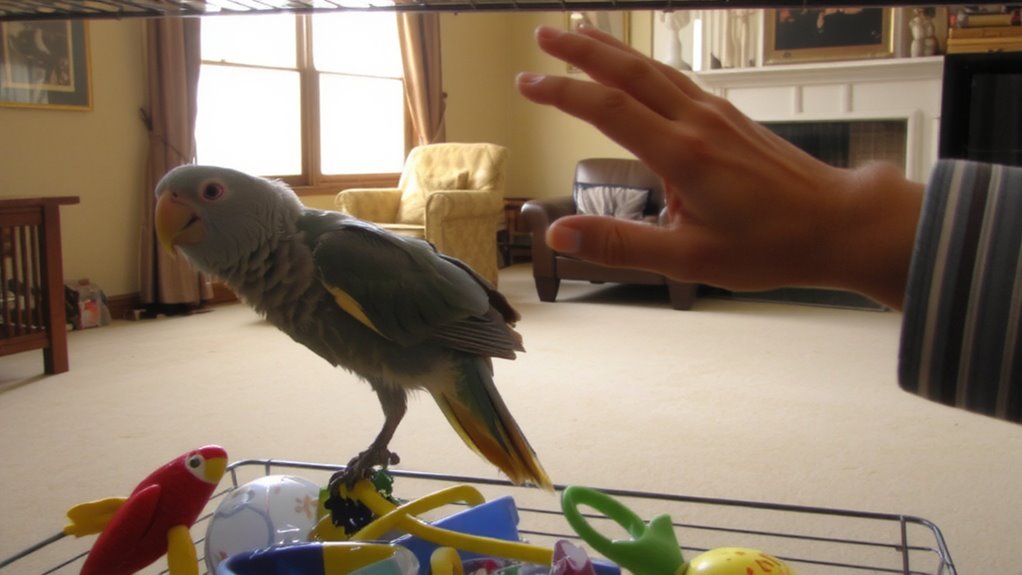
You can identify social anxiety in parrots by observing specific behavioral and physiological markers. Persistent feather plucking and avoidance behaviors are key indicators. These signs often manifest when your parrot feels overwhelmed or threatened in social settings.
| Behavior | Description | Frequency in Anxiety Cases |
|---|---|---|
| Feather plucking | Self-directed overpreening causing bare patches | 68% of anxious parrots |
| Avoidance behaviors | Retreating, hiding, or turning away from stimuli | 73% of cases |
| Tachypnea | Rapid breathing at rest (over 60 bpm) | 55% during stress episodes |
Feather plucking results from chronic stress, not grooming. Avoidance behaviors include fleeing interactions or freezing in place. These reactions suggest your parrot perceives social contact as a threat. Physiological signs like tachypnea confirm anxiety’s physical toll. Observing these patterns consistently helps confirm diagnosis. Early recognition supports timely intervention, preventing long-term behavioral damage.
Create a Calming Environment for Anxious Parrots
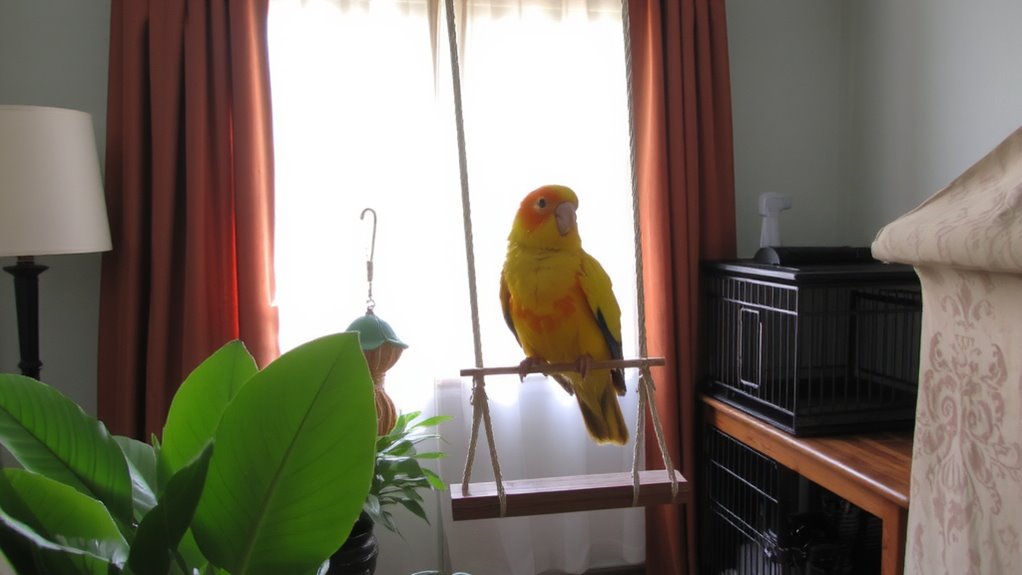
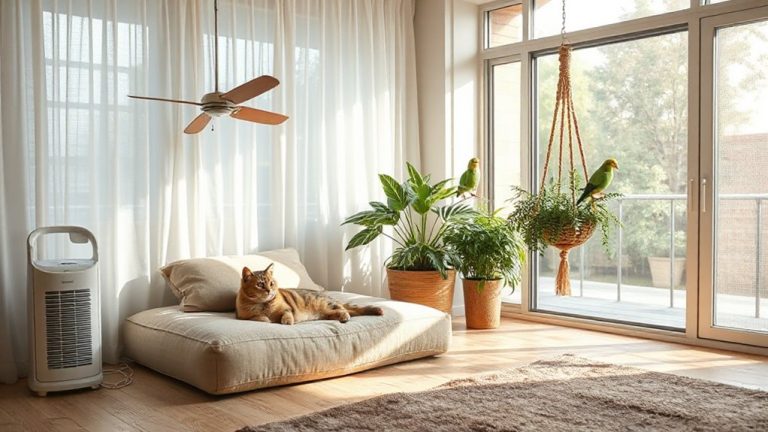
Since environmental factors heavily influence parrot behavior, modifying your bird’s surroundings can greatly reduce anxiety symptoms. Noise control is essential-parrots are sensitive to sudden or loud sounds. Use sound-absorbing materials like acoustic panels or heavy drapes to dampen household noise. Maintain background noise below 50 decibels; a white noise machine set to 45 dB can mask disruptive sounds. Lighting balance supports circadian regulation. Install full-spectrum LED bulbs with a color temperature of 5000–6500 Kelvin to mimic natural daylight. Provide 10–12 hours of consistent illumination daily. Avoid flickering lights, as they can trigger stress responses. Position cages away from direct sunlight to prevent glare and temperature spikes. Use adjustable dimmers to shift smoothly between light levels. A stable, predictable environment reduces arousal. These modifications align with avian sensory thresholds and promote behavioral stability. You’ll notice fewer stress-induced vocalizations and feather disruptions over time.
Build Trust With Positive Reinforcement
When building trust with an anxious parrot, positive reinforcement proves far more effective than punishment or coercion. You strengthen desired behaviors by immediately rewarding them with treats, praise, or access to preferred items. Target training uses a handheld cue stick to guide the bird through simple movements, reinforcing spatial awareness and compliance. Each correct response earns a high-value reward, typically a sunflower seed or nut, delivered within 1–2 seconds to guarantee associative learning. Step up cues, paired verbally and visually, teach the parrot to voluntarily climb onto a perch or hand. Repeat these cues consistently, using a calm tone and minimal hand motion to avoid triggering stress. Reinforcement schedules should begin with continuous delivery, then shift to variable ratios after mastery. This method increases response reliability, much like operant conditioning in controlled behavioral studies.
Establish Daily Routines to Reduce Anxiety
Consistent daily schedules provide predictable environmental cues that diminish stress responses in anxious parrots. You should implement consistent feeding at the same times each day, ideally within 15-minute windows, to regulate metabolic and hormonal cycles. Scheduled interaction sessions, lasting 20–30 minutes each and occurring twice daily, reinforce temporal predictability. These routines stabilize circadian rhythms, reducing cortisol fluctuations linked to social anxiety. Structure activity periods around species-specific peak times-dawn and dusk for most psittacines. Maintain light cycles at 12 hours on, 12 hours off, using full-spectrum lighting at 5,000 K and 300–500 lux intensity. Limit environmental variability: position perches, food stations, and toys in fixed locations. Rotate enrichment items every 72 hours to prevent habituation without introducing novelty stress. Daily logs tracking feeding completion, vocalization frequency, and interaction engagement help monitor behavioral trends. Consistency lowers arousal thresholds, making parrots more receptive to behavioral interventions.
When to See an Avian Behavior Specialist
How do you know when your parrot’s social anxiety requires expert intervention? Persistent behavioral changes signal the need for professional help. If feather plucking becomes chronic or aggression triggers lead to frequent outbursts, consult an avian behavior specialist. These experts differentiate between medical and psychological causes using clinical assessments.
| Behavior | When to Seek Help |
|---|---|
| Feather plucking | Daily self-mutilation lasting over two weeks |
| Aggression triggers | Biting or lunging during routine interactions |
| Avoidance | Consistent refusal to leave cage for 7+ days |
| Vocalization | Excessive screaming beyond 3 hours daily |
| Appetite changes | 20% drop in food intake over five days |
Early intervention improves prognosis. Specialists use functional behavior assessments to identify antecedents and consequences maintaining anxiety. Treatment includes environmental enrichment, behavior modification plans, and, in some cases, prescribed medication.
On a final note
You can manage social anxiety in parrots effectively with consistent, science-based strategies. Environmental controls reduce stressors-maintain 12 hours of light and 12 hours of darkness daily. Use positive reinforcement: reward calm behavior with 2–3 small food treats per session. Establish predictable routines for feeding, interaction, and sleep. Monitor behaviors weekly. If aggression or avoidance persists beyond four weeks, consult a certified avian behaviorist. Early intervention improves long-term outcomes.