Addressing Chew Toy–Induced Lip Lacerations in Puppies Safely
You can manage minor chew toy–induced lip lacerations by first checking for visible cuts, swelling, or blood-tinged drool. Safely inspect the area under good light, using gentle restraint. Clean the wound with sterile saline or 0.05% chlorhexidine, avoiding hydrogen peroxide. Apply pressure with sterile gauze for 3–5 minutes if bleeding persists. Seek veterinary care for wounds longer than ½ inch, prolonged bleeding, or signs of infection. Proper toy selection-like BPA-free rubber with Shore A hardness 50–80 and smooth, seamless molding-reduces injury risk. Ideal texture depth should be less than 1mm to prevent gum and lip trauma. Further details on creating a safe chewing environment follow.
Notable Insights
- Inspect your puppy’s lips promptly if they show signs like drooling, pawing, or swelling after chewing toys.
- Clean minor lip lacerations with sterile saline or 0.05% chlorhexidine, avoiding harsh agents like hydrogen peroxide.
- Apply gentle pressure with sterile gauze for 3–5 minutes to control bleeding from fresh wounds.
- Seek veterinary care if the cut is over ½ inch, involves gums, or if bleeding lasts more than 10 minutes.
- Prevent injuries by using smooth, durable chew toys free of sharp edges and inspecting them daily for wear.
Spot the Signs of Puppy Lip Lacerations
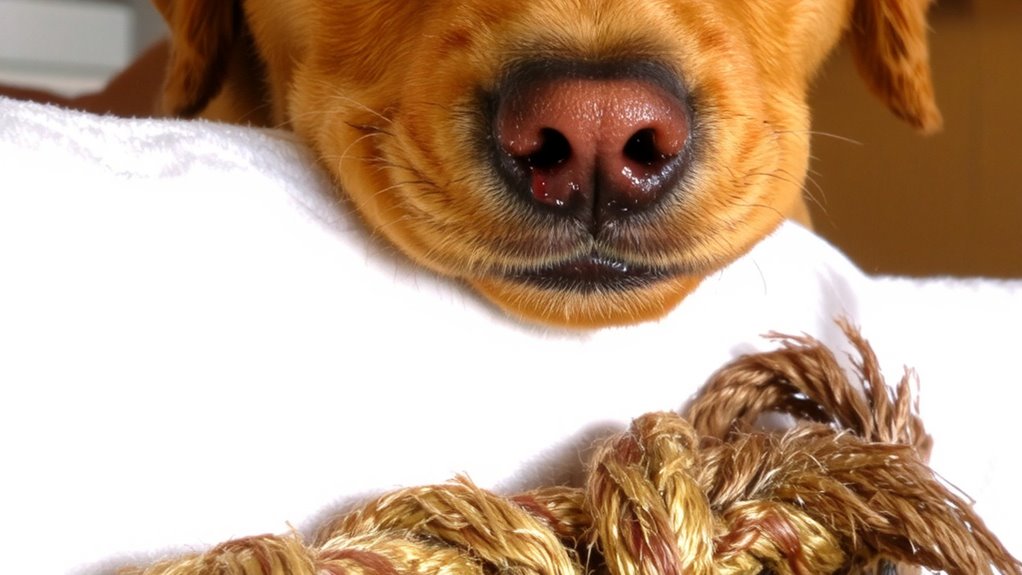
How can you tell if your puppy has a lip laceration from chewing a toy? You’ll notice visible cuts or splits on the lip margin, often accompanied by swelling. Swollen gums may indicate underlying irritation or infection, especially if the wound is near the gum line. Your puppy may be drooling excessively, a clear sign of oral discomfort. Saliva might appear tinged with blood. The injury site could show redness,局部 warmth, or raised tissue. Puppies often paw at their mouth or avoid chewing on one side. Check for symmetry in lip closure-distortion suggests trauma. Minor lacerations measure under 0.5 cm and involve only superficial tissue. Deeper wounds exceed 1 cm, affect muscle layers, and may require veterinary suturing. Drooling excessively combined with refusal to eat solid food warrants immediate evaluation. Monitor for signs over 24 hours. Early detection improves recovery outcomes.
Stay Calm and Check the Injury Safely
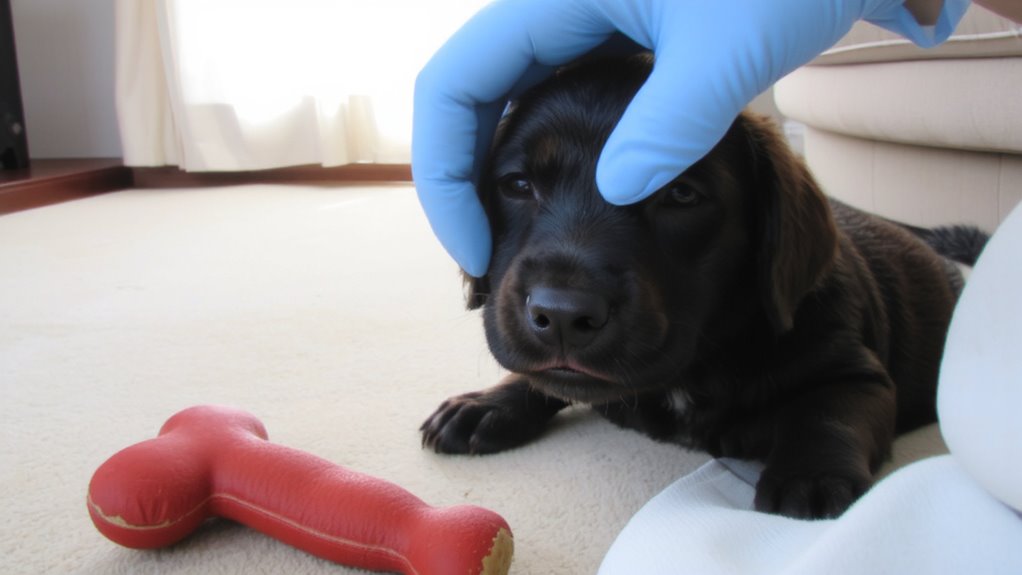
While your puppy may be agitated, staying composed allows you to assess the injury effectively and prevent further distress. Observe puppy behavior closely-pawing at the mouth or excessive drooling signals discomfort. Approach gently, using a soft voice and slow movements to avoid triggering fear-based reactions. Restrain only as needed: cup the muzzle lightly with your hand, ensuring airflow remains unobstructed. Inspect the lips under good lighting, parting them carefully to reveal hidden lacerations. Most chew toy–induced cuts occur along the labial frenulum or lateral lip margins. Accurate assessment aids injury prevention during recovery. Note wound length, depth, and bleeding severity-superficial cuts measure under 5 mm; deeper lacerations exceed this and may require veterinary intervention. Document findings to inform treatment decisions and monitor progression. Your calm response directly influences outcome.
Clean and Treat Chew Toy Cuts at Home
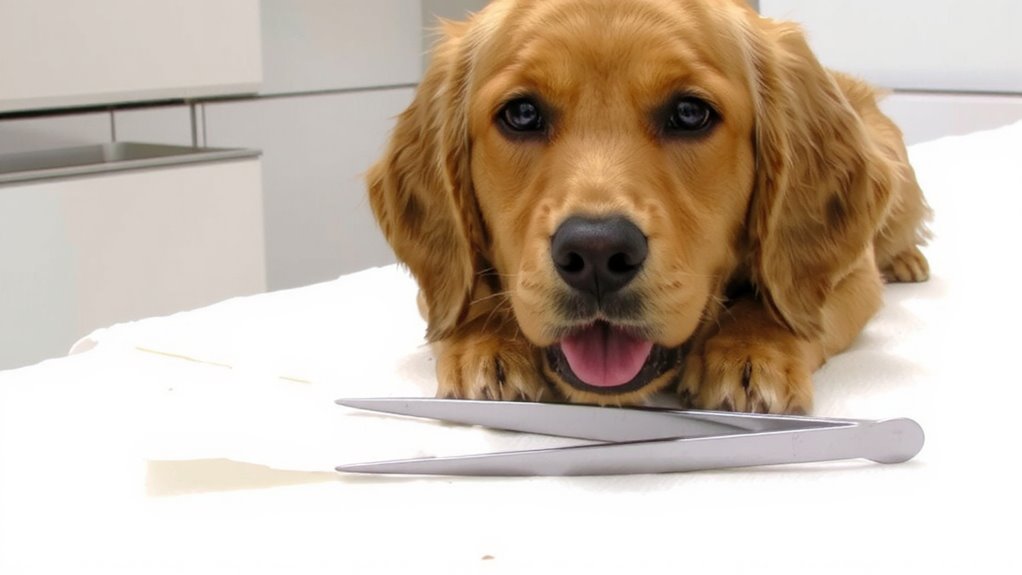
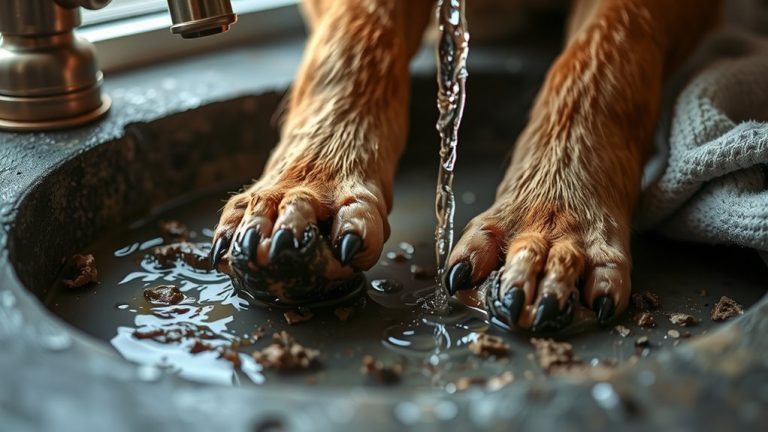
A clean wound heals faster, and prompt home care reduces the risk of infection in puppy lip lacerations. Begin by gently rinsing the area with sterile saline to remove debris. Avoid hydrogen peroxide caution is essential; it damages healthy tissue and delays healing. Instead, use a veterinary-approved antiseptic like chlorhexidine solution (0.05% concentration). Pat the area dry with sterile gauze. Apply the gauze pressure technique: place a clean, non-adherent pad over the cut and hold firm, light pressure for 3–5 minutes to control bleeding. Use minimal restraint to reduce puppy stress. Do not suture or glue wounds at home. Keep the injury site dry and monitor for swelling or discharge. Prevent further trauma by removing chew toys temporarily. Clean the wound twice daily until healed.
When to Call the Vet for a Lip Injury
You’ve cleaned the wound and applied antiseptic, but not all lip lacerations can be managed at home. Seek veterinary care if bleeding persists beyond 10 minutes despite direct pressure. Lip swelling that worsens after 24 hours may indicate infection or deeper tissue damage. Deep cuts longer than ½ inch or those extending into the gum line require sutures to prevent improper healing. If your puppy shows signs of puppy anxiety-such as constant whining, refusal to eat, or pawing at the mouth-the injury may be more painful than initially assessed. Also, lacerations near salivary ducts or the frenulum need professional evaluation. Untreated wounds risk abscess formation or restricted jaw movement. Monitor for discharge, increased redness, or foul odor-clinical indicators of bacterial proliferation. Immediate veterinary intervention guarantees proper pain management, wound closure, and antibiotic therapy when necessary. Do not delay care if function or feeding is impaired.
Choose Chew Toys That Prevent Cuts
Your puppy’s chewing habits directly impact oral safety, so selecting the right chew toy isn’t just about durability-it’s a critical injury prevention step. Prioritize material safety: choose non-toxic, BPA-free rubber or FDA-compliant nylon. Avoid brittle plastics or recycled materials that fracture into sharp edges. Opt for toys with smooth, rounded contours and no protrusions. Ideal toy design features seamless molding, eliminating cracks where bacteria hide or lips snag. Look for products labeled specifically for teething or soft mouths, often rated for moderate chewers. The AAP recommends toys with a Shore A hardness of 50–80 to balance flexibility and resistance. Textured surfaces should be shallow-under 1mm-to stimulate gums without cutting. Size matters: select toys larger than your puppy’s muzzle to prevent pinching. Always inspect for wear. Replace if grooves or rough patches develop.
Set Up a Safe Chewing Area for Your Puppy
While chewing is instinctive, managing where it happens greatly reduces injury risks. Establishing designated chewing zones helps control exposure to unsafe objects. Confine your puppy to areas free of sharp edges, small ingestible parts, or toxic materials. Use baby gates or pens to define boundaries that support effective supervision. Chewing zones should include only approved toys verified for toy safety-no household items like shoes or sticks. Rotate durable rubber, nylon, and non-toxic vinyl toys every 48 hours to maintain interest and hygiene. Clean toys weekly with pet-safe disinfectant, and inspect daily for wear. Choosing chew-proof dog toys can significantly reduce the risk of lip lacerations and other oral injuries.
| Zone Feature | Purpose | Recommended Product Example |
|---|---|---|
| Non-slip mat | Stabilizes toys during chewing | Kong® Classic Rubber Base (6″ diameter) |
| Enclosed space | Limits access to hazards | Midwest® Exercise Pen (48″ H x 96″ W) |
| Shade + ventilation | Prevents overheating | Mesh-sided play yard (UV-resistant) |
| Chew toy dispenser | Controls toy availability | Petmate® Treat-Release Vault (BPA-free) |
| Washable flooring | Eases sanitation | Vinyl tile (0.125″ thick, antimicrobial) |
On a final note
You must act promptly to prevent infection in puppy lip lacerations. Clean minor cuts with saline solution using a sterile gauze pad. Apply light pressure with a clean compress if bleeding persists. Avoid hydrogen peroxide-it damages tissue. Choose soft rubber chew toys with smooth edges, like those made from FDA-approved thermoplastic elastomer. Monitor healing daily. Seek veterinary care for wounds deeper than 3 mm or showing redness, swelling, or discharge.