How to Clean Your Pet’s Eyelids to Prevent Crusting and Infection
Clean your pet’s eyelids daily using a sterile 2” x 2” cotton pad dampened with preservative-free isotonic saline (0.9% NaCl, pH 6.8–7.4). Wipe gently from inner to outer eye with under 10 grams of pressure to avoid tissue damage. Use a fresh section for each pass to prevent contamination. This removes debris and bacteria that cause crusting, reducing the risk of conjunctivitis and tear duct blockage. Proper technique disrupts microbial colonization before infection develops-and consistent practice supports long-term ocular health.
Notable Insights
- Use a damp, lint-free cloth or cotton pad with preservative-free saline to gently wipe from the inner to outer eye.
- Apply minimal pressure-no more than 10 grams-to avoid tissue damage during cleaning.
- Clean once daily to remove debris and bacteria, preventing biofilm and crust formation.
- Use a fresh section of the pad for each pass to prevent recontamination of the eyelid margin.
- Seek veterinary care if you notice persistent discharge, redness, swelling, or squinting lasting over 24 hours.
How to Clean Pet Eyelids Safely
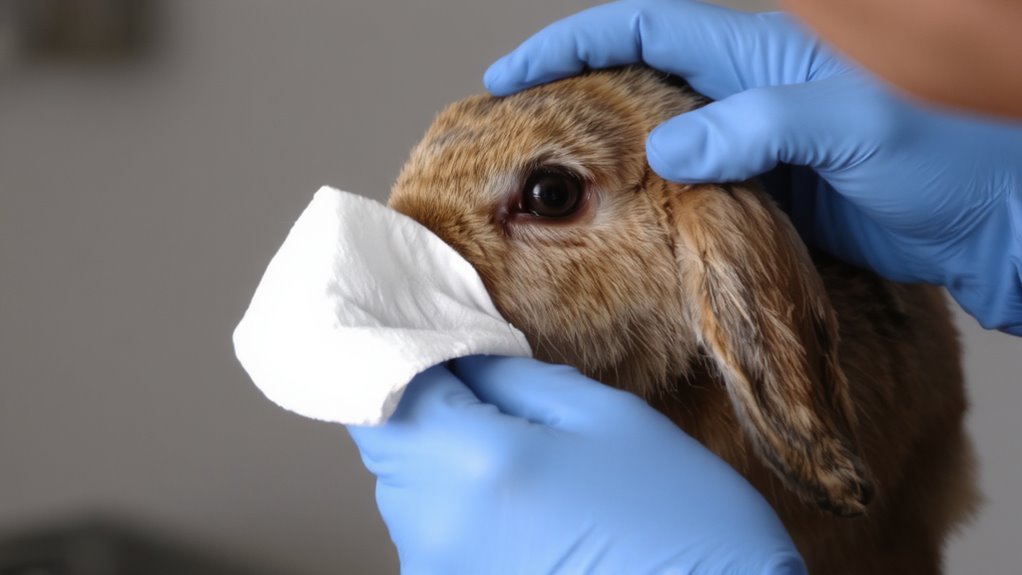
Your pet’s eyelid health starts with proper hygiene-neglect increases the risk of infections like conjunctivitis or blepharitis. Use gentle wiping motions with a damp, lint-free cloth to remove debris without irritating sensitive tissues. Apply minimal pressure-excessive force can damage the delicate eyelid margin. Maintain proper positioning by securing your pet’s head with one hand while cleaning with the other. Elevate your pet slightly if needed to achieve a neutral neck angle, reducing strain. Work in a quiet, stable environment to limit movement. Always wipe from the inner to outer eye to prevent spreading contaminants toward the tear duct. Use sterile, pH-balanced solutions only. Avoid alcohol or harsh chemicals. Consistent technique reduces micro-abrasions and supports long-term ocular health. Monitor for redness or discharge post-cleaning. Immediate veterinary consultation is advised if signs of infection persist beyond 24 hours.
Supplies You Need for Eye Cleaning
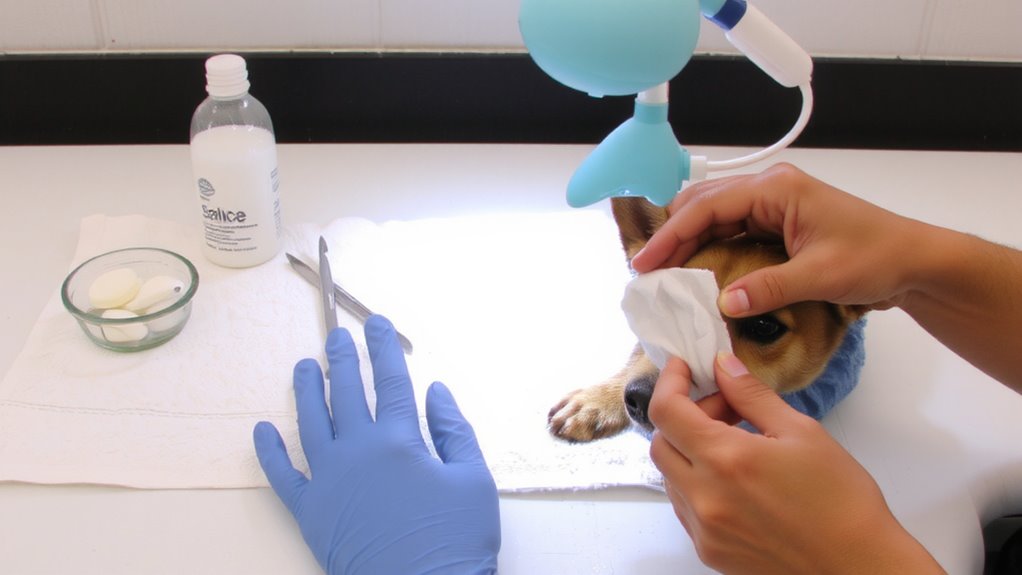
Gather the right tools before starting, as proper supplies guarantee effective and safe eyelid cleaning. Use only sterile materials designed for ocular use to avoid irritation. Cotton pads are essential-they’re soft, lint-free, and ideal for delicate eyelid surfaces. Pair them with preservative-free saline solution to safely loosen debris without chemical irritation. Avoid tap water or homemade mixtures, which can disrupt your pet’s natural tear film.
| Item | Purpose | Specification |
|---|---|---|
| Cotton pads | Gentle wiping of eyelids | Sterile, non-abrasive, 2” x 2” size |
| Saline solution | Flush debris and crusts | Isotonic (0.9% NaCl), preservative-free |
| Disposable gloves | Prevent contamination | Latex or nitrile, powder-free |
| Treats | Reward cooperation | Small, low-moisture, easy to consume |
Avoid Stress: Common Cleaning Mistakes
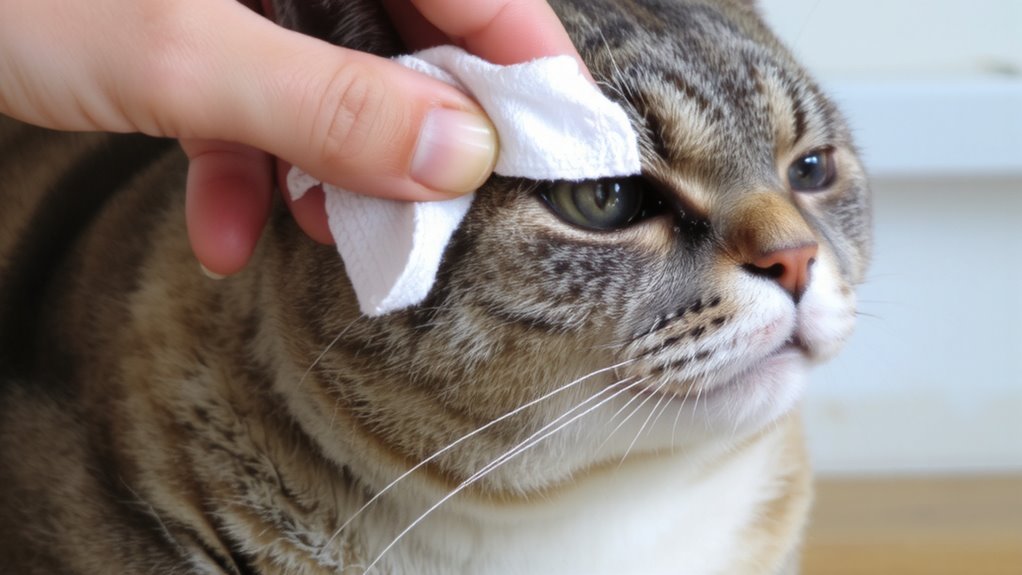
While stress can compromise both cooperation and ocular health, mistakes during eyelid cleaning often stem from rushed or improper technique. Using excessive pressure or inappropriate materials causes overcleaning irritation, damaging delicate periocular tissues. Always apply minimal force-no more than 10 grams of pressure-with a moistened cotton pad or non-woven swab. An improper technique, such as scrubbing horizontally across the lid margin, disrupts natural tear film distribution and may induce corneal exposure. Instead, wipe gently from the inner to outer canthus using a fresh section of the pad for each pass. Limit cleaning to once daily unless directed otherwise, as overcleaning irritation increases vulnerability to inflammation. Guarantee your pet remains restrained but calm; sudden movements increase injury risk. Use only veterinarian-approved solutions with isotonic pH (6.8–7.4) to maintain ocular surface integrity. Proper execution prevents complications and supports consistent hygiene.
Why Eyelid Cleaning Prevents Infections
Because the eyelid margins harbor bacteria, debris, and allergens that accumulate daily, routine cleaning plays a critical role in blocking infection pathways. You reduce bacterial buildup, which can lead to conjunctivitis and blepharitis if left unchecked. Crusts and discharge provide a breeding ground for pathogens, especially in brachycephalic breeds with shallow eye anatomy. Regular wiping with a sterile, lint-free pad removes biofilm and minimizes inflammation. Debris near the medial canthus can contribute to tear duct blockage, impairing tear drainage and increasing moisture-ideal conditions for infections. Use a veterinarian-approved, pH-balanced solution applied gently along the lid margins. Cleaning prevents occlusion of the nasolacrimal system by minimizing mucus and foreign particulates. Preventing tear duct blockage supports consistent tear flow, flushing out irritants. Consistent hygiene disrupts microbial colonies before colonization escalates. Daily maintenance is more effective than reactive treatment. You’re not just removing grime-you’re stopping disease at its entry point.
When to Call the Vet for Eye Issues
What if the signs you’re seeing point to something more serious than dirt or mild irritation? Persistent eye discharge, especially if yellow, green, or thick, signals potential infection. Clear, watery discharge may indicate allergies, but sudden onset or increased volume warrants vet evaluation. Vision changes-like bumping into objects or reluctance to jump-suggest underlying pathology. Corneal ulcers, glaucoma, or uveitis can develop rapidly and require immediate treatment. Redness, swelling, or squinting lasting over 24 hours are red flags. Some conditions progress in hours, not days. For instance, intraocular pressure in acute glaucoma can exceed 40 mmHg, causing irreversible optic nerve damage. If you observe third eyelid protrusion or cloudiness on the cornea, seek care immediately. Early intervention prevents complications. Do not apply over-the-counter drops without veterinary guidance-some contain steroids that worsen ulcers. When in doubt, call your vet. Timely diagnosis is critical.
On a final note
You must clean your pet’s eyelids regularly to prevent crusting and infection. Use sterile saline solution and a clean, lint-free gauze pad. Gently wipe from the inner to outer eye, using a fresh section for each pass-reducing bacterial transfer. Avoid cotton, which leaves fibers. Clean daily if your pet has hairy breeds or existing eye conditions. Discontinue if redness or swelling occurs. Consult a veterinarian promptly for excessive tearing, discharge, or squinting.