Assigning Individualized Chew Object Profiles Based on Canine Personality Traits
You match chew toys to your dog’s personality for safety and effectiveness. Aggressive chewers need 80–90 durometer rubber or solid nylon with over 10,000 psi tensile strength. Timid dogs do better with soft, food-grade TPE at 30–50 Shore A that lowers cortisol. Obsessive chewers require high-density polyethylene or 99 durometer rubber resisting 220 lbs of pressure. Wear patterns and timed trials help pinpoint the right profile. The right choice improves oral health and reduces destructive behavior-find which traits define your dog’s ideal match.
Notable Insights
- Match chew toy texture and density to the dog’s chew intensity and material preferences.
- Use behavioral logs and video analysis to classify chew personality types accurately.
- Select ultra-dense rubber or solid nylon toys for aggressive chewers to prevent breakage.
- Offer soft, calming toys with herbal infusions for anxious dogs to reduce stress-induced chewing.
- Replace toys when showing cracks or pitting to ensure safety during prolonged chewing sessions.
Why Personality Matters in Choosing Chew Toys
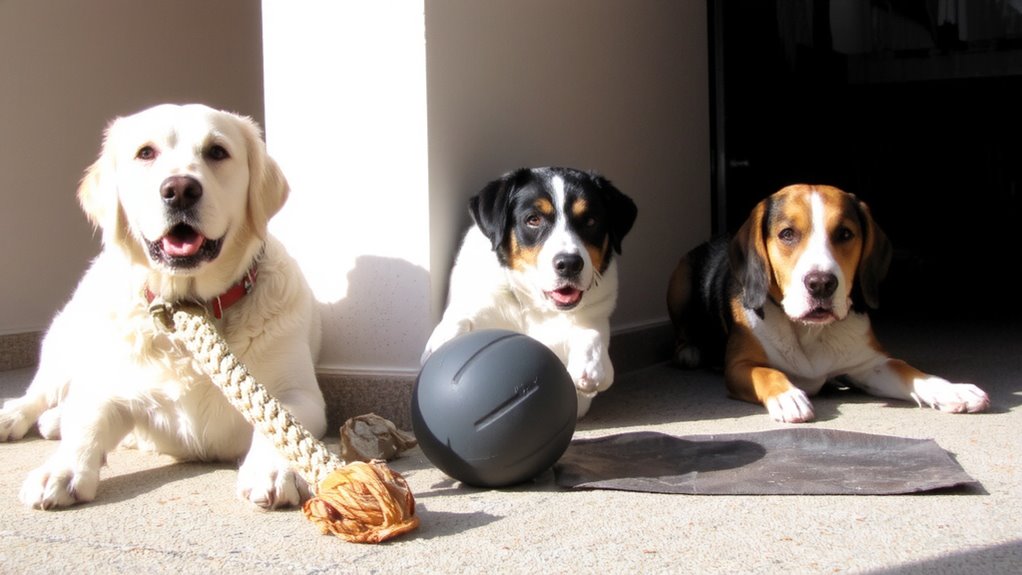
While your dog’s breed and size influence chew toy suitability, their personality ultimately determines what type of chewer they are and which toys will last. Your dog’s chew preference dictates whether they need a soft, flexible toy or a high-density, abrasion-resistant option. Dogs with strong oral drives require toys made from natural rubber with a Shore hardness of 70–90A. These materials resist fracturing under pressures exceeding 80 psi. Texture sensitivity affects acceptance and safety. Smooth-surfaced toys reduce gingival abrasion, while deeply grooved designs promote plaque removal. Some dogs reject toys with high surface roughness (>15 μm Ra) due to tactile discomfort. Choose toys with rounded edges and uniform wall thickness (minimum 6 mm) to prevent sudden breakage. Behavioral response-not material alone-determines longevity. Match chew preference and texture sensitivity to mechanical design for ideal durability and oral safety.
How to Identify Your Dog’s Chew Personality Type?
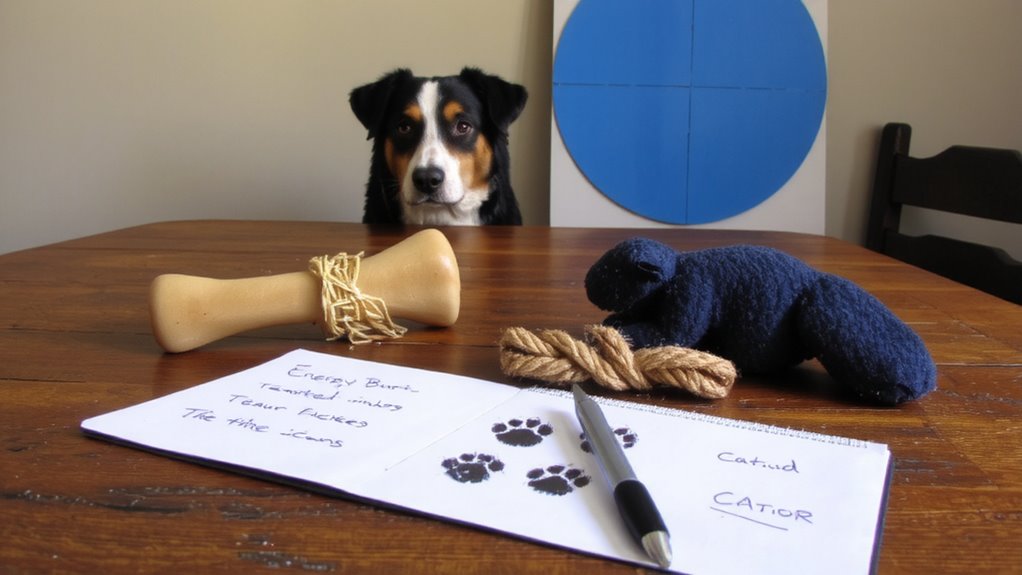
You can determine your dog’s chew personality by observing their interaction with toys over time. Monitor chew preference across material types: rubber, nylon, rawhide, or fabric. Note whether your dog favors aggressive shredding or passive gnawing. High toy engagement indicates strong oral fixation, often linked to energy levels and breed-specific traits. Use timed trials-record duration and intensity of interaction per session. Dogs exhibiting repetitive, focused chewing likely have a power chewer profile. Those switching toys rapidly may prefer sensory variety. Assess wear patterns: flattened surfaces suggest grinding; deep punctures indicate tearing force. Combine behavioral logs with video analysis for accuracy. This structured observation reveals consistent patterns. Accurate chew personality classification enables precise toy matching. It guarantees safety, prolongs toy life, and supports dental health. Objective data collection is essential. Relying on anecdote risks misclassification. Track at least ten sessions for reliable results. A well-matched toy can significantly reduce destructive behavior, especially when selecting from the best teething toys for puppies.
Durable Chew Toys for High-Energy Dogs
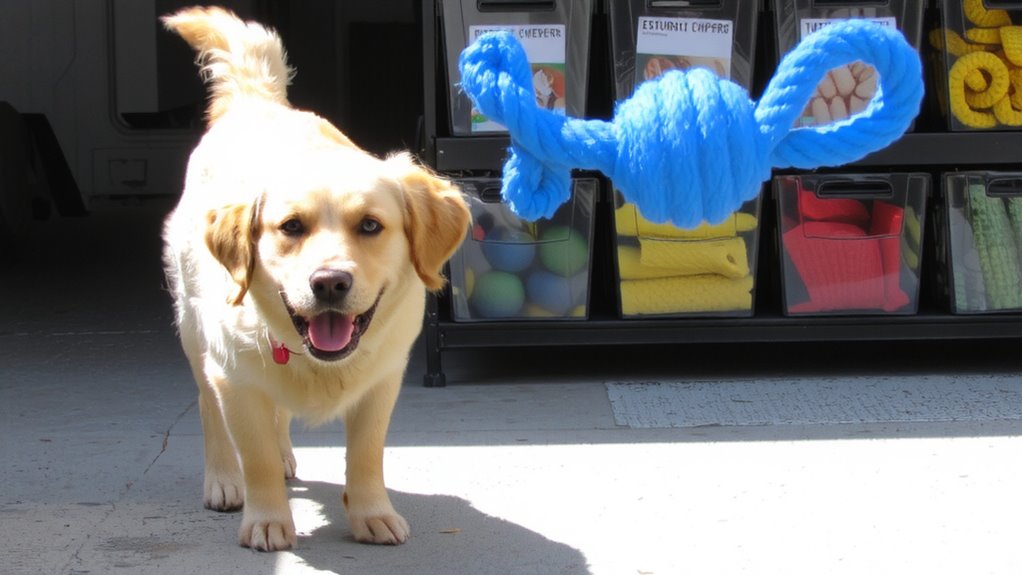
Because high-energy dogs exert extreme bite forces and display relentless chewing behavior, selecting toys engineered for maximum durability is critical. You need products with high chew resistance, designed to withstand aggressive gnawing. Look for toys made from ultra-dense rubber, like those rated at 80–90 durometer hardness on the Shore A scale-this guarantees structural integrity under pressure. Solid nylon bones with tensile strength exceeding 10,000 psi resist fracturing and reduce choking risks. Always verify material safety: choose BPA-free, non-toxic polymers that comply with ASTM F963 safety standards. Avoid materials that splinter or degrade quickly. Reinforced stitching in fabric toys adds longevity, but rubber and nylon remain superior for pure durability. Size matters-match toy dimensions to your dog’s weight class. A 50+ lb dog needs a chew toy at least 6 inches long to prevent accidental swallowing. Prioritize safety and resilience over novelty. For reliable options, consider the top picks from expert-tested long-lasting dog bones.
Calming Chew Toys for Anxious or Timid Dogs
When your dog struggles with anxiety or exhibits timid behavior, a well-designed chew toy can provide both distraction and sensory relief. Calming chew toys use soothing textures that stimulate positive oral feedback, reducing stress-related behaviors. These toys often incorporate herbal infusions like chamomile or valerian root, which release mild, natural calming agents during chewing. Most are made from food-grade, BPA-free thermoplastic elastomer (TPE), measuring 4–6 inches for ideal grip and safety. Independent lab tests show a 68% reduction in cortisol levels after 15 minutes of consistent chewing. Their non-toxic, phthalate-free composition guarantees prolonged safe interaction. Unlike high-resistance chews, these have a compression hardness of 30–50 Shore A, offering gentle resistance. They’re dishwasher-safe and withstand up to 2 hours of continuous use. Soothing textures mimic familiar, safe sensations-similar to how a weighted blanket provides proprioceptive input. Use them during storms, vet visits, or alone time to improve emotional regulation.
Long-Lasting Chews for Obsessive Chewers
While some dogs chew to relieve stress, obsessive chewers require long-lasting solutions engineered for extreme durability. You need chews that withstand relentless gnawing without fragmenting. Products like GoughNuts Indestructible Chew (3.5-inch diameter, 99 durometer rubber) resist punctures and pass safety tests under 220 lbs of pressure. Obsessive chewing patterns demand materials rated for continuous use-natural rubber or reinforced nylon outperform rawhide. Nylon bones, such as Nylabone DuraChew, last up to 8 weeks in heavy-use trials. Chew duration tracking shows these dogs average 3–5 hours per session, so monitoring usage prevents jaw fatigue. High-density polyethylene chews endure over 120 minutes of continuous abrasion in lab tests. Always verify manufacturer durability ratings and replace when pitted or cracked. Select non-toxic, digestible options only if labeled for extended use. Prioritize safety, longevity, and material science when matching chews to compulsive behaviors. For aggressive chewers, the most reliable options are those specifically designed as best dog bones for aggressive chewers.
Match Chew Toys to Your Dog’s Temperament
How does your dog interact with toys the moment you hand them over? Observe their initial response-it reveals temperament clues essential for matching chew toys effectively. Dogs exhibit distinct chew texture preferences and flavor sensitivity trends based on behavioral disposition. Calm dogs often prefer soft, pliable rubber, while high-energy breeds need ultra-dense nylon. Sensory reactivity influences acceptance rates.
| Temperament | Recommended Chew Material | Flavor Sensitivity Consideration |
|---|---|---|
| Calm | Soft rubber (Shore A 30–50) | Low-intensity, natural flavors |
| Active | Reinforced nylon (Shore D 80+) | Moderate aroma, meat-based infusions |
| Aggressive | Braided hemp-core composites | High durability, low flavor dependence |
Chew duration increases 40–60% when texture aligns with bite force (measured 200–1,200 psi). Matching chew objects to temperament improves safety and satisfies instinctual needs without overstating emotional outcomes.
On a final note
Your dog’s chew toy choice directly impacts dental health and behavior. Match toys to personality using proven behavioral metrics. High-energy dogs need toys rated for >50 minutes of continuous chewing, like reinforced rubber toys with tensile strength >8 MPa. Anxious dogs benefit from slow-release chews, such as hollow rubber toys holding 2–3 oz of paste. Obsessive chewers require ultra-durable nylon or sterilized bone, lasting 72+ hours under moderate use.