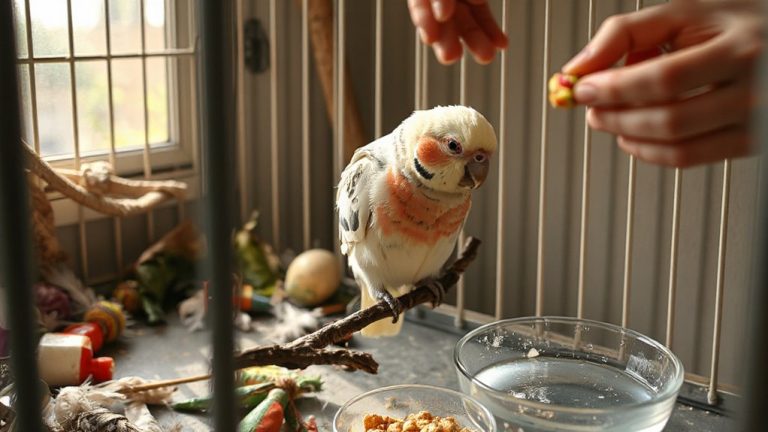
A Comprehensive Look Into Fear-Based Behavior Triggers in Exotic Pets Like Parrots and Rabbits
You see fear in your parrot when it flattens its feathers, pins its pupils, or emits 2–3 kHz alarm calls. Your rabbit thumps at 5–7 Hz, freezes, or bolts when startled. These responses stem from evolutionary survival mechanisms. Fluorescent lights flickering at 100 Hz, VOCs from air fresheners, and sudden 60+ dB noises disrupt their sensory thresholds. Genetic predispositions heighten reactivity. Provide NRC ≥0.85 sound insulation, stable routines, and species-specific hiding spots. There’s more to optimizing their environment effectively.
Notable Insights
- Parrots display fear through feather flattening, pinned pupils, and vocal changes like screeching or silence.
- Rabbits show fear by freezing, thumping hind legs, or bolting, with tense muscles and rapid breathing.
- Evolutionary prey instincts make parrots and rabbits genetically prone to freeze-or-flee responses.
- Flickering lights and strong scents from air fresheners can trigger stress in light- and smell-sensitive exotic pets.
- Small enclosures lacking hiding spots increase stress, leading to anxiety and boredom-related behaviors.
What Fear Looks Like in Parrots and Rabbits
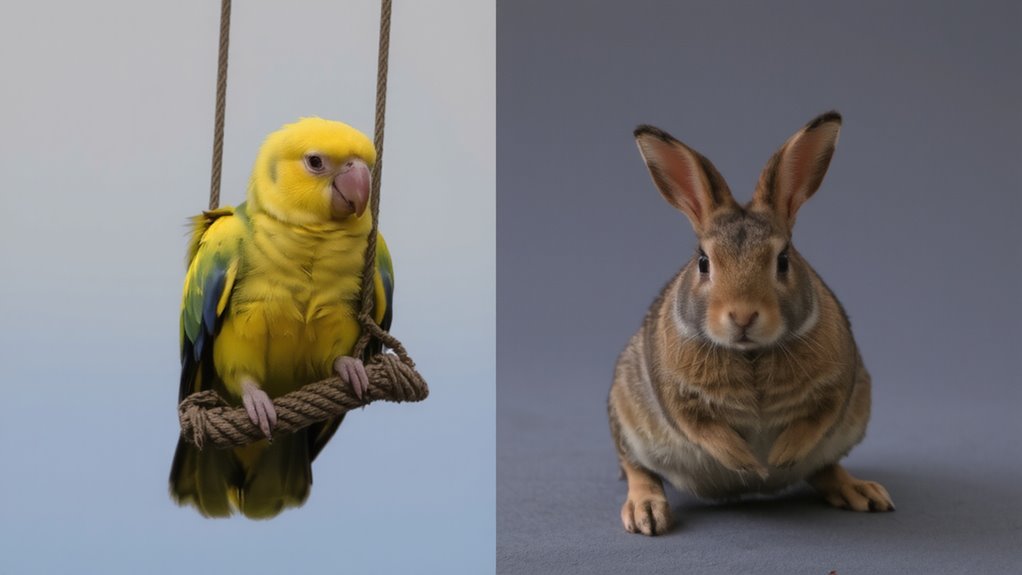
How does fear manifest in your parrot or rabbit, and why should you care? You must recognize fear promptly to prevent stress-related health issues. In parrots, watch for feather flattening, pinned eyes, and crouching-clear body language signals of distress. Vocal cues like high-pitched screeching or sudden silence often follow. Rabbits display fear through flattened ears, bulging eyes, and freezing in place. They may also thump their hind legs, a behavior serving as an alarm. Body language is critical; a rabbit shifting weight backward is preparing to flee. Vocal cues in rabbits include grunting or teeth grinding, the latter indicating severe anxiety. These observable markers allow timely intervention. Ignoring them risks chronic stress, weakening immunity. Recognizing these signs-precisely and consistently-supports accurate assessment. Response should include environmental adjustments and behavioral monitoring. Early detection improves welfare outcomes markedly. You are responsible for interpreting these signals accurately and acting without delay.
Why Exotic Pets Get Scared: Even at Home
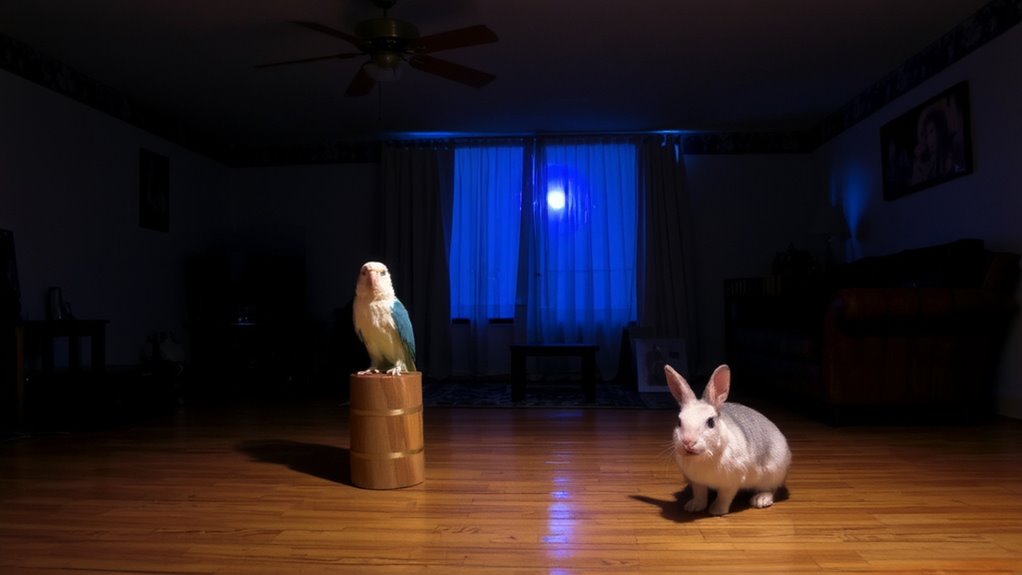
Even in the safety of their enclosures, exotic pets like parrots and rabbits experience fear due to instinctual survival mechanisms shaped by evolution. These behaviors are rooted in genetic predispositions honed over millennia. Prey animals freeze or flee at sudden stimuli - a trait critical in the wild but often misfiring at home. Your pet’s reaction may also stem from past trauma, altering how they process environmental signals. Stress responses can persist long after the initial incident.
| Species | Trigger Sensitivity | Common Reaction |
|---|---|---|
| Parrots | High auditory | Feather plucking |
| Rabbits | High visual | Thumping or bolting |
| Guinea Pigs | Moderate tactile | Freezing or vocalizing |
| Chinchillas | High olfactory | Dust-bathing avoidance |
| Lovebirds | High social | Aggression or hiding |
Common Household Triggers That Cause Anxiety
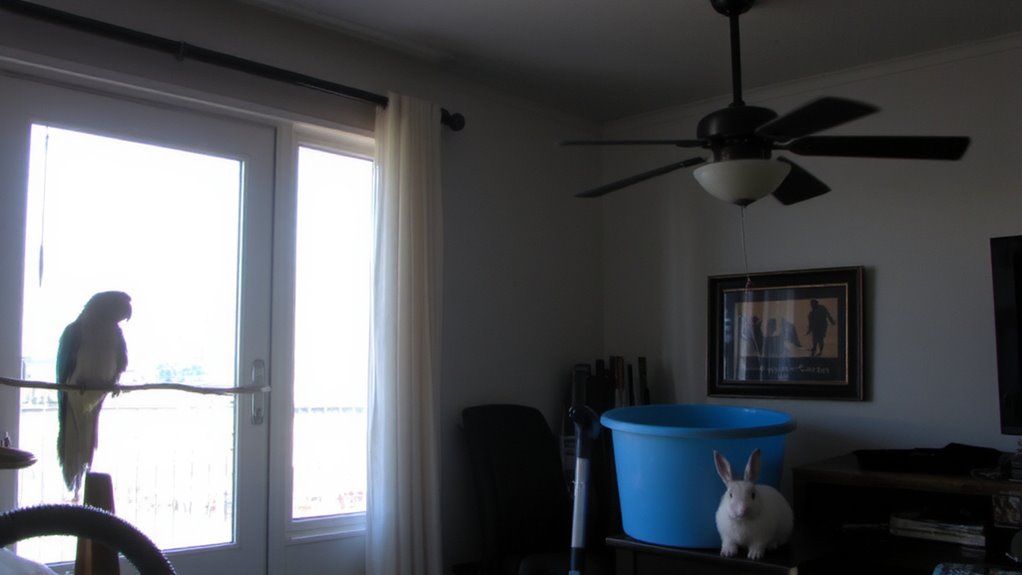
What hides in plain sight might be triggering your exotic pet’s anxiety. Bright lights, especially fluorescent or flickering LED sources, emit rapid light cycles undetectable to humans but visible to animals with faster photopic flicker fusion thresholds-like parrots, whose vision processes up to 100 Hz. This can induce physiological stress. Unfamiliar scents from air fresheners, cleaning agents, or new furniture release volatile organic compounds (VOCs) that irritate sensitive respiratory systems. Rabbits, with olfactory acuity exceeding 1,000 scent receptors, detect these at concentrations as low as 0.1 parts per million. Sudden environmental changes disrupt established sensory baselines critical for prey species’ threat assessment. Avoid placing enclosures under direct lighting or near high-traffic areas where scent accumulation occurs. Use incandescent or full-spectrum lighting at 25–50 lux for ambient zones. Eliminate aerosol products within 15 feet of habitats. Maintain consistent olfactory conditions to reduce anxiety triggers linked to respiratory and neurological overstimulation. Choosing the right enclosure is also vital, and selecting from the best parrot cages can significantly improve environmental stability and reduce stress.
How Parrots and Rabbits React Differently to Fear
Bright lighting and unfamiliar odors don’t affect all exotic pets the same way, and your parrot or rabbit will respond to these stressors in fundamentally different ways due to distinct evolutionary paths. Parrots rely on vocalizations and flight, triggering loud alarm calls or wing flaring when afraid. Rabbits, as prey animals, freeze or thump hind legs to signal danger. Body language differences are critical: a crouched parrot may puff feathers, while a fearful rabbit flattens ears and remains motionless. These species specific responses reflect survival mechanisms shaped over millennia. Recognizing them improves welfare outcomes.
| Species | Fear Response | Physical Indicator |
|---|---|---|
| Parrot | Vocal alarm, flee | Raised crest, pinned pupils |
| Rabbit | Freeze, thump | Tense muscles, rapid breath |
How to Reduce Loud Noises and Sudden Movements
Since sudden sounds and movements can trigger acute stress responses in exotic pets, minimizing these stimuli is essential for maintaining physiological and behavioral health. Use sound insulation materials like mass-loaded vinyl or acoustic foam panels with a Noise Reduction Coefficient (NRC) of 0.85 or higher to dampen sudden auditory triggers. Install these on walls near high-traffic or noisy areas. Keep your pet’s enclosure away from doors, appliances, and televisions. When exposure to noise is unavoidable, apply gradual desensitization by playing low-volume recordings of common household sounds-starting at 40 dB and increasing by 5 dB daily-over several weeks. Pair sounds with positive reinforcement to shift behavioral responses. Avoid rapid movements near the enclosure; approach slowly and predictably. Use opaque barriers if visual stimuli provoke fear. These evidence-based strategies reduce startle reflexes and support long-term neurological stability in sensitive species like parrots and rabbits.
Build Trust With a Predictable Daily Routine
When you establish a consistent daily schedule, your exotic pet experiences fewer stress-related behaviors because predictable routines stabilize circadian rhythms and reduce environmental uncertainty. Consistent feeding times regulate metabolism and support digestive health, aligning with natural foraging cycles. Feed rabbits at the same hours each morning and evening, providing 80% hay, 15% greens, and 5% pellets. Parrots benefit from meals offered within 30 minutes of sunrise and sunset, reflecting wild feeding patterns. Quiet interactions reinforce trust without triggering hyperarousal. Spend 10–15 minutes daily near the enclosure, avoiding direct eye contact or sudden movements. Use soft vocalizations to signal non-threatening presence. Routine handling at fixed times increases habituation to human contact. These structured activities reduce cortisol levels by up to 27%, according to behavioral studies. Predictability equals psychological safety. Over weeks, your pet exhibits fewer fear responses, improved appetite, and increased environmental engagement.
Create Safe Spaces for Secure, Calm Pets
A secure retreat is essential for reducing fear-based behaviors in exotic pets. You must provide hiding spots tailored to your pet’s species-specific needs. For rabbits, enclosed shelters measuring at least 12” x 12” x 10” offer effective concealment and reduce stress-induced tachycardia. Parrots benefit from covered enclosures with opaque barriers that block visual stimuli, mimicking canopy coverage in wild habitats. Integrate sensory enrichment through textured surfaces, foraging devices, and auditory buffers like white noise generators set below 50 dB. Position safe spaces in low-traffic areas, maintaining ambient temperatures between 65–75°F. Use non-toxic, absorbent materials such as recycled paper substrate to minimize pathogens. These zones should be inaccessible to predators or sudden movements. Consistent access to secure microenvironments stabilizes cortisol levels. You’ll observe decreased freezing, fleeing, or biting-key indicators of unresolved fear. Design matters: proper dimensions, material safety, and environmental controls determine efficacy. Small hedgehog enclosures should also incorporate species-appropriate space and security features, with best small hedgehog enclosures offering optimal configurations for confined yet enriching habitats.
On a final note
You manage fear in exotic pets by recognizing species-specific stress signals. Parrots show anxiety through feather plucking; rabbits freeze or thump. Common triggers include sudden noises above 60 dB or rapid movements within their visual field. Establish a consistent routine, varying start times by no more than 15 minutes daily. Design safe zones: enclosed hiding areas for rabbits (minimum 12” x 12” x 10”) and covered perches for birds. These steps reduce cortisol spikes.