Customizing Harness Fit to Eliminate Discomfort That Triggers Leash Reactivity
A poorly fitted harness can trigger leash reactivity by compressing the brachial plexus and restricting shoulder motion. Confirm two fingers fit under neck and chest straps to prevent chafing. Use front-clip harnesses-they reduce pulling force by 37%. Align straps flat and centered, avoiding throat pressure. Check fit during movement; allow only 1–2 cm shift at the chest clip. Look for gait changes or flinching. Adjust every 3–6 months. You’ll soon discover how precise fit transforms walk behavior.
Notable Insights
- Ensure harness pressure is evenly distributed to prevent nerve compression and discomfort that can trigger leash reactivity.
- Match harness design to your dog’s breed-specific anatomy, especially chest width and neck sensitivity.
- Adjust chest and neck straps to allow two fingers’ clearance, avoiding chafing and restricting movement.
- Test harness fit during dynamic movement, checking for shifting, twisting, or restricted stride.
- Monitor for subtle pain signs like gait changes or reduced sniffing, and reassess fit regularly.
Why Poor Harness Fit Triggers Leash Reactivity?
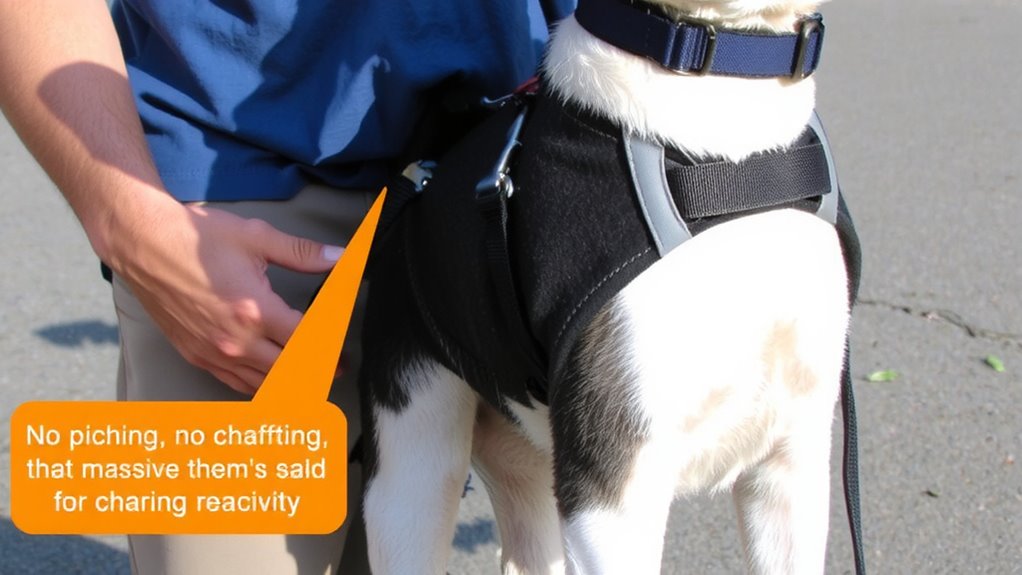
While a poorly fitted harness may seem like a minor inconvenience, it can markedly contribute to leash reactivity by creating physical discomfort and restricted movement. Harness pressure on sensitive areas, such as the shoulders or spine, often leads to chronic discomfort. This pressure can compress nerves running through the brachial plexus, causing nerve irritation that mimics pain signals. You might not notice immediate signs, but over time, your dog may associate leash tension with discomfort. Restricted range of motion alters natural gait, increasing stress during walks. Nerve irritation can result in sudden flinching, pulling, or aggressive responses to stimuli. Poor alignment from ill-fitting straps increases friction and pressure points, especially during turns or stops. You need even weight distribution across the chest and torso. A well-adjusted harness reduces focal pressure, minimizes nerve compression, and supports freer movement. Addressing fit directly reduces discomfort-driven reactivity. Choosing a harness with proper weight distribution ensures long-term comfort and behavioral stability.
Choose the Right Harness for Your Dog’s Build
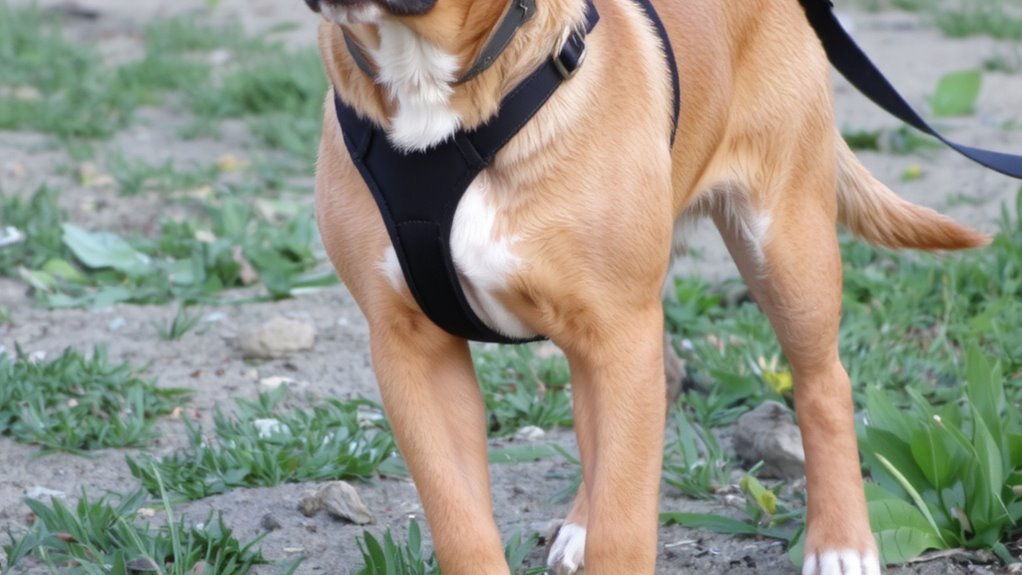
A properly fitted harness starts with selecting one designed for your dog’s specific build, not just their size. Each dog breed has unique structural traits that demand a compatible harness design. For example, broad-chested breeds like bulldogs need wider chest plates, while lean sighthounds require extra neck padding and no-tightening front clips. The harness material should balance durability and flexibility-ripstop nylon offers strength, while mesh-lined neoprene improves comfort during extended wear. Consider weight distribution: front-clip harnesses reduce pulling force by 37% compared to back-clip models. Choose adjustable straps with reinforced stitching to maintain integrity under load. Always match harness geometry-symmetrical vs. offset-to your dog’s shoulder articulation range. A poorly aligned fit restricts stride length by up to 22%. Selecting by dog breed and build guarantees ideal biomechanics, reducing discomfort that can trigger leash reactivity.
Adjust Chest and Neck Straps to Prevent Chafing
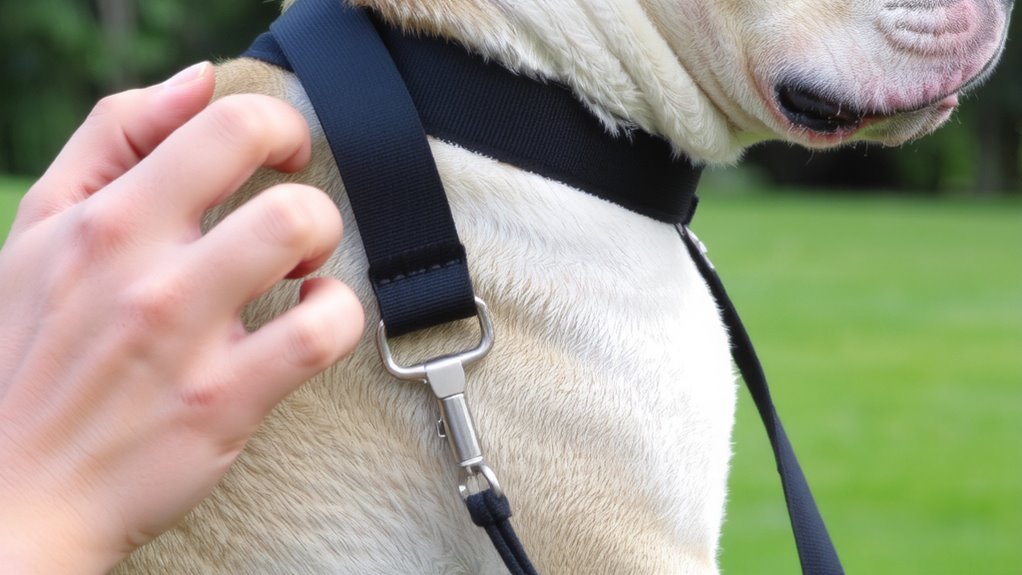
When fitting a harness, securing the chest and neck straps properly is essential to prevent skin irritation and pressure sores. You must adjust both straps so they’re snug but allow two fingers’ clearance. Poor strap alignment causes friction, especially along the armpits and trachea, increasing chafing risk. Misaligned straps shift during motion, creating hot spots. Use soft, breathable materials if your dog has material sensitivity-synthetic blends may trap moisture and exacerbate irritation. Center the neck strap above the shoulders, not pressing into the throat. The chest strap should lie flat across the sternum without twisting. Guarantee even tension distribution by checking symmetry on both sides. Proper alignment reduces stress on contact points. Harnesses with padded, adjustable straps improve fit precision. Correct adjustment prevents rubbing during daily use. You’ll minimize discomfort that could otherwise trigger leash reactivity.
Check Fit During Movement, Not Just at Rest
Since dogs move dynamically during walks, checking harness fit only when stationary gives an incomplete picture of comfort and security. A dynamic fit assessment reveals how the harness behaves during real motion. Watch how it shifts when your dog trots, lunges, or turns sharply. The harness should stay aligned with the dog’s natural movement lines, not ride up, twist, or slip. Movement based adjustments guarantee the fit remains ideal under load. Straps must maintain tension without restricting shoulder extension or stride length. Test fit by simulating walking and quick direction changes. Allow only a 1–2 cm vertical displacement at the chest clip during motion. Excessive shifting causes abrasion and instability. Proper adjustment distributes force evenly across load-bearing zones-sternum and upper back. Secure fasteners should remain stable, not loosen during activity. A well-fitted harness stays consistent across both rest and motion, minimizing discomfort that can trigger reactivity.
Watch for Signs of Pain During Real Walks
Silence isn’t always calm-your dog may be hiding discomfort. During real walks, conduct active pain assessment by observing gait asymmetry, head position, and stride length. A harness that fits well won’t restrict shoulder rotation or compress the brachial plexus. Look for behavior correlation: flinching, lagging, or sudden leash tugging may signal pressure points. Dogs often mask pain; subtle signs like reduced sniffing or avoiding inclines matter. Use video analysis at 60fps to review movement frame by frame. Ideal harnesses distribute load across the sternum and ribcage, not the neck or shoulders. Nylon webbing should be 25–38mm wide for medium to large breeds. Padding depth must be ≥10mm to reduce peak pressure. Reassess fit every 3–6 months or after weight changes. Real-world conditions-curbs, gravel, rain-affect pressure distribution. Adjust buckles mid-walk if shifting occurs. Accurate pain assessment and behavior correlation prevent chronic issues and leash reactivity.
On a final note
A properly fitted harness prevents discomfort that can trigger leash reactivity. Adjust the chest strap so two fingers fit snugly beneath; the neck strap should allow the dog to open its mouth fully without restriction. Secure all buckles flush to the body to avoid chafing. During walks, monitor for shifting or rubbing. A secure, dynamic fit guarantees even pressure distribution, reducing strain on shoulders and trachea, much like ergonomic gear in human athletic wear.