How to Read Pet Food Labels to Identify Low-Calorie, High-Protein Options
Look for named animal proteins like “chicken meal” or “deboned salmon” in the first two ingredients to guarantee high-quality protein. Choose foods with at least 30% crude protein (dry matter basis) and verify calorie density: under 3,000 kcal/kg for dry food, under 1,000 kcal/kg for wet. Aim for a protein-to-calorie ratio of at least 70g per 1,000 kcal. Avoid vague terms like “meat” or “natural”-they don’t guarantee nutrition. You’ll find even more precise ways to compare formulas ahead.
Notable Insights
- Look for named animal proteins like “chicken meal” or “deboned salmon” in the first two ingredients to ensure high-quality protein.
- Choose dry foods with at least 30% crude protein and aim for a protein-to-calorie ratio of 70+ grams per 1,000 kcal.
- Check the guaranteed analysis for protein content and calculate protein density by comparing grams of protein per 1,000 kcal.
- Verify low-calorie content by selecting dry foods with less than 3,000 kcal/kg and wet foods under 1,000 kcal/kg.
- Avoid misleading terms like “natural” or “grain-free” and prioritize specific meat sources over plant-based proteins or fillers.
How Protein Fuels Energy and Weight Control
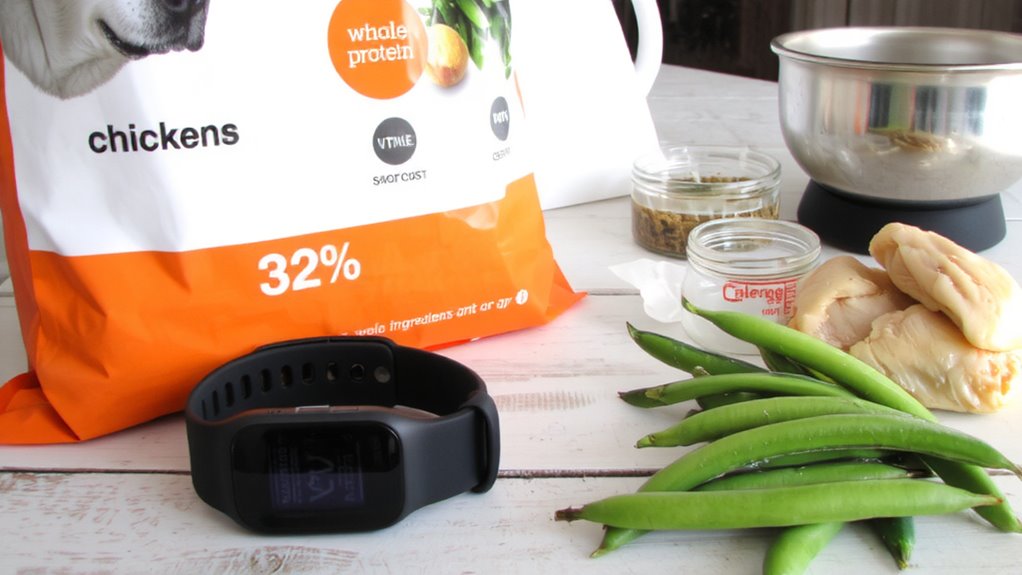
While carbohydrates often get the spotlight for energy, protein plays a crucial role in fuel钋ng your pet’s metabolism and managing weight. Protein provides essential amino acids that support tissue repair and enzyme production. A diet rich in high-quality protein delivers a metabolism boost by increasing the thermic effect of food-up to 30% more energy is expended during digestion compared to fats or carbs. This elevated metabolic rate helps maintain lean body mass. Protein also enhances satiety levels, reducing hunger-driven overeating. Studies show pets on high-protein diets consume fewer calories spontaneously. Balanced amino acid profiles, especially leucine and lysine, optimize muscle synthesis. For weight control, aim for diets with 25–30% protein for dogs and 30–40% for cats on a dry matter basis. These levels sustain energy without excess caloric intake, supporting long-term metabolic health and ideal body condition.
Where to Find High-Quality Protein on Pet Food Labels
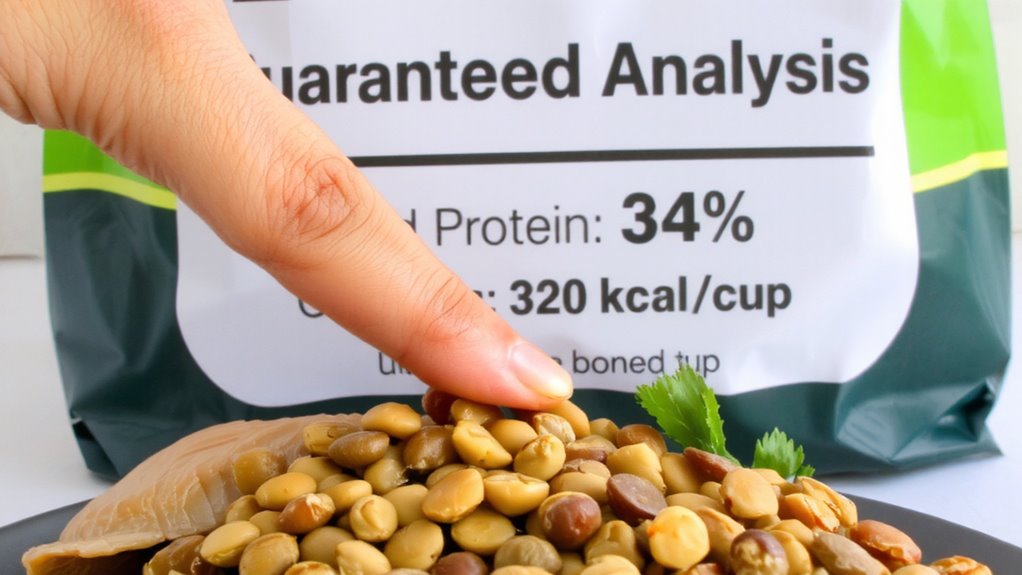
Protein quality starts with ingredient transparency-your pet deserves nothing less. Look for specific protein sources like “chicken meal” or “deboned salmon,” not vague terms such as “meat” or “animal protein.” High-quality formulas list the source origin, such as “US-raised chicken” or “wild-caught fish,” ensuring traceability and reduced contamination risk. Ingredient transparency means clean, understandable labels with no hidden fillers or by-products. Prioritize foods where named animal proteins rank first and second in the ingredient list. These proteins deliver complete amino acid profiles-essential for lean muscle and sustained energy. A minimum crude protein level of 30% in dry food indicates concentration. Avoid plant-based proteins as primary ingredients-they lack full biological value for carnivorous pets. Know that “meat meals” are concentrated, with up to 300% more protein than fresh meat by weight due to moisture removal. Source origin and ingredient transparency matter.
How to Spot Truly Low-Calorie Pet Foods
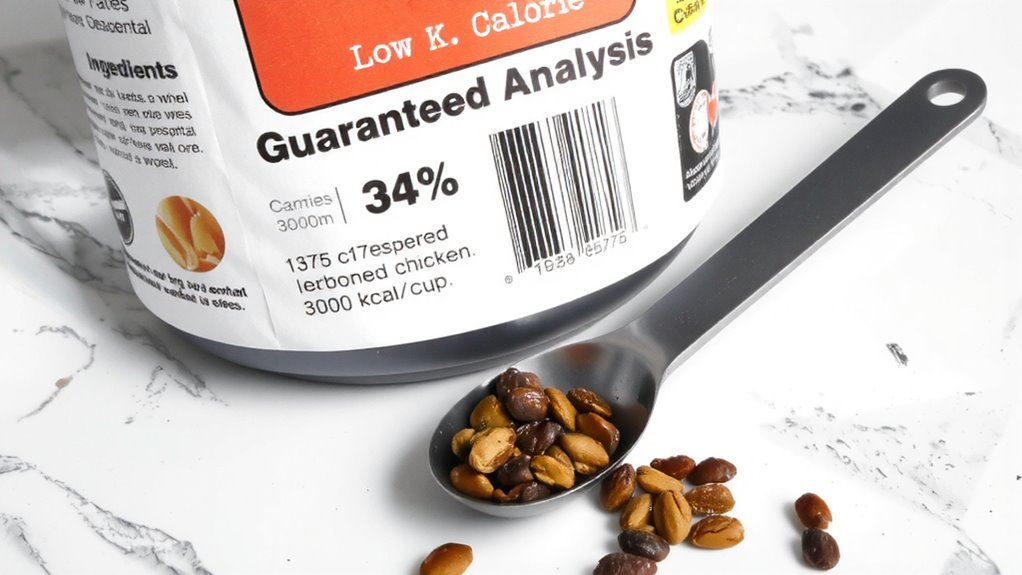
How can you tell if a pet food is truly low-calorie? Look for the calorie content listed in kilocalories per kilogram (kcal/kg) on the label. Truly low-calorie options typically contain fewer than 3,000 kcal/kg for dry food and under 1,000 kcal/kg for wet food. Calorie counting helps you compare products accurately across brands. Check the feeding guidelines to assess serving size and total daily intake. Smaller portions with lower total kcal mean better portion control. Foods high in fiber or moisture often provide volume without excess energy. Avoid assuming “light” or “reduced-calorie” means low-verify actual kcal values. Always use a measuring cup or scale for portion control, since free-feeding undermines calorie counting. Consistency in measuring guarantees accurate intake.
Spot the Best Protein-to-Calorie Ratio
You’ve learned how to identify genuinely low-calorie pet foods by checking kcal/kg values and managing portion sizes. Now, focus on the protein-to-calorie ratio-this determines how much muscle-supporting nutrition your pet actually gets per calorie. Aim for foods with at least 70 grams of protein per 1,000 kcal. High-quality animal proteins deliver essential amino acid profiles, vital for tissue repair and maintaining lean mass. These amino acids fuel metabolic rate more efficiently than carbohydrates or fats. A higher protein-to-calorie ratio means more amino acids without excess energy intake, supporting satiety and metabolic health. For example, a food with 80 g protein/1,000 kcal outperforms one with 50 g/1,000 kcal, even if both are low-calorie. Prioritize foods listing specific meats, eggs, or fish as first ingredients. Avoid plant-based proteins as primary sources-they lack complete amino acid profiles. This ratio is a precise metric for nutritional efficiency.
Decode Misleading Labels That Hide Low Nutrition
What makes a pet food label seem nutritious when it’s really not? False claims and hidden fillers distort the nutritional reality. Marketing terms like “premium” or “natural” lack legal definitions and don’t guarantee quality. What matters is the ingredient list and guaranteed analysis. Hidden fillers-like corn gluten meal, soybean hulls, and wheat by-products-inflate volume without adding meaningful protein or nutrients. These ingredients dilute protein concentration, lowering the protein-to-calorie ratio you’re seeking.
| Term on Label | Real Meaning | Watch For |
|---|---|---|
| “Grain-Free” | No corn, wheat, rice | May contain potato or pea starch |
| “With Real Chicken” | Contains >4% chicken | Not the first ingredient |
| “High in Protein” | Meets minimum standard | Could be plant-based, low quality |
| “Holistic” | No legal definition | Often a false claim |
Always verify with AAFCO standards and ingredient order.
On a final note
You now know how to identify high-protein, low-calorie pet foods. Check the guaranteed analysis for crude protein-aim for 30% or higher. Look at kcal/cup; choose options under 350 for adult maintenance. Calculate the protein-to-calorie ratio: divide protein percentage by kcal per 100 kcal. A value above 7 indicates efficiency. Avoid fillers like corn and soy that inflate calories without nutrients. Always compare labels using dry matter basis to assess true nutritional value.