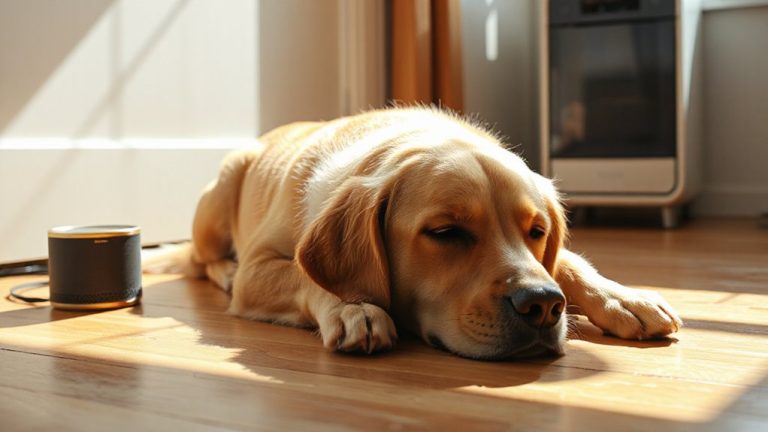
The Role of Pheromones in Reducing Stress in Dogs With Separation Anxiety
Pheromones help reduce stress in dogs with separation anxiety by mimicking natural signals of safety. Synthetic dog-appeasing pheromones (DAP) bind to the vomeronasal organ, triggering calming neural responses within 15–30 minutes. Devices like Adaptil collars release pheromones steadily for up to four weeks, while diffusers cover 700 sq ft for 30 days at 1.5 mg per 24 hours. Clinical studies show 50–70% less barking, chewing, and pacing within two weeks. Effects are non-sedative but support behavioral conditioning. You’ll discover how to maximize results when combining these tools with structured training techniques.
Notable Insights
- Calming pheromones mimic those from mother dogs, signaling safety and reducing stress in anxious dogs.
- Synthetic dog-appeasing pheromones (DAP) bind to the vomeronasal organ, triggering rapid relaxation responses within 15–30 minutes.
- Pheromone diffusers and collars reduce separation anxiety behaviors like barking and chewing by 50–70% over two weeks.
- Devices provide continuous exposure, with diffusers covering large areas and collars offering targeted, long-lasting relief for four to six weeks.
- Used with training, pheromones enhance learning by lowering stress, supporting desensitization, and improving behavioral outcomes over 30 days.
What Are Calming Pheromones for Dogs?
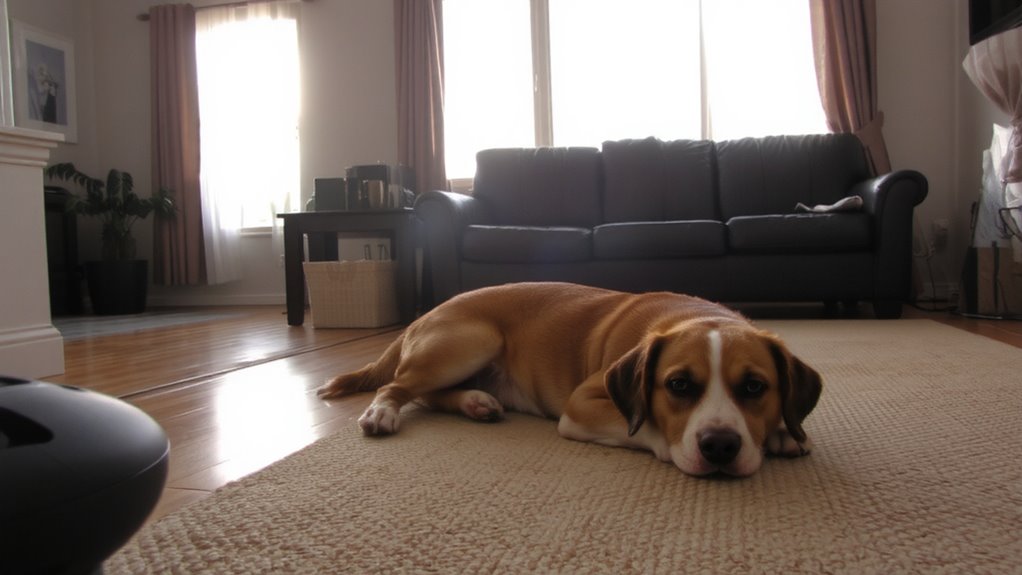
Pheromones are chemical messengers produced naturally by animals, including dogs, to communicate signals related to comfort, safety, and social bonding. Calming pheromones mimic those released by mother dogs to soothe puppies. In pheromone science, these compounds are classified as species-specific olfactory signals. They bind to the vomeronasal organ, triggering neural responses that promote relaxation. Synthetic versions, like dog-appeasing pheromones (DAP), replicate this effect. Devices such as diffusers emit consistent concentrations-typically 1.5 mg over 24 hours-covering up to 700 square feet. Pheromone collars release lower doses steadily for four weeks. Clinical studies show DAP reduces stress-related behaviors by 60–70% in controlled environments. Olfactory signals act rapidly, with effects often observed within 15–30 minutes. These tools don’t sedate; they support behavioral conditioning. Efficacy depends on proper placement and environmental factors. You can integrate them into training protocols safely.
Does Your Dog Have Separation Anxiety?
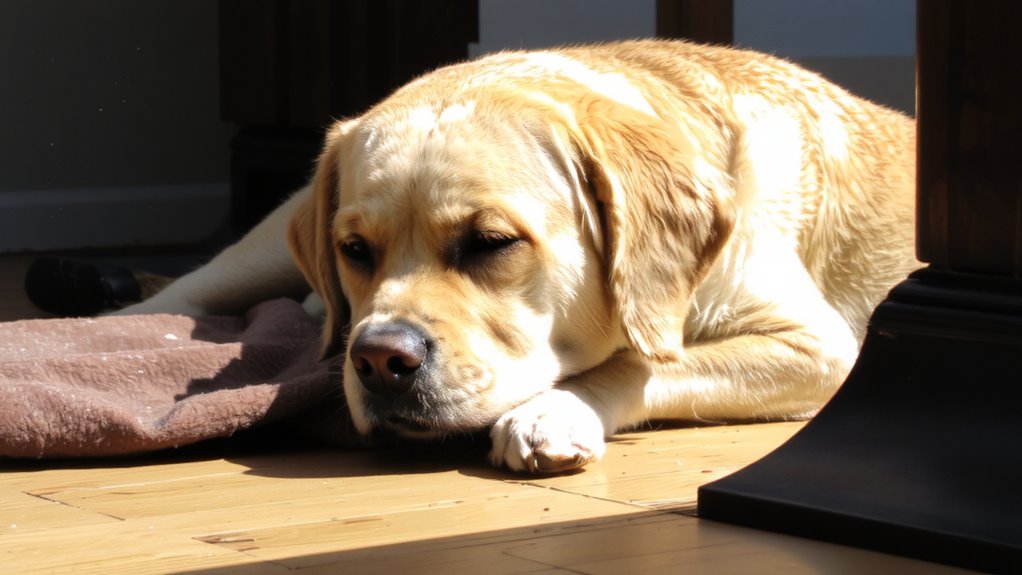
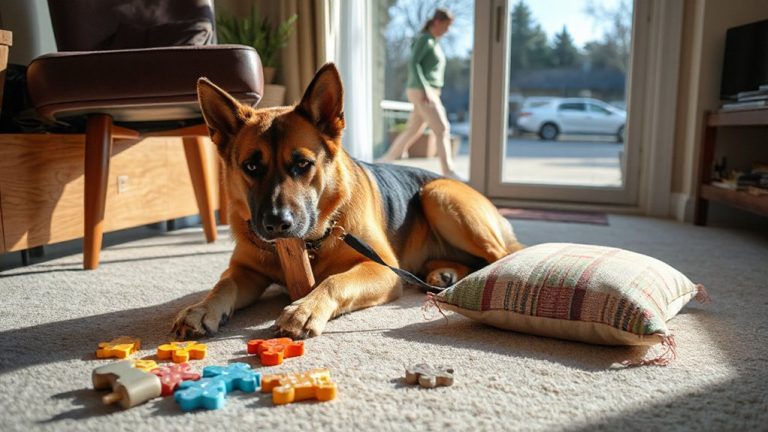
Your dog’s behavior when left alone can reveal whether they’re struggling with separation anxiety. Excessive barking is a common symptom, often occurring within minutes of your departure. This isn’t casual noise-it’s persistent, high-pitched, and can last 30 minutes or more. Destructive chewing frequently accompanies it, focused near entry points like doors and windows. Dogs may chew door frames, destroy furniture, or injure themselves trying to escape. These behaviors are not acts of defiance; they signal distress. A 2020 study found 73% of dogs with separation anxiety exhibited at least two of these symptoms consistently. Physiological signs include elevated cortisol levels and increased heart rate, measurable via veterinary assessment. Diagnosing separation anxiety requires ruling out medical causes and observing behavior patterns over several episodes. Video monitoring helps document frequency, duration, and intensity. Accurate diagnosis guarantees appropriate treatment, as symptoms overlap with other behavioral conditions. Some pet owners find relief using calming supplements for pets as part of a broader behavioral management plan.
Do Pheromone Collars and Diffusers Really Work?
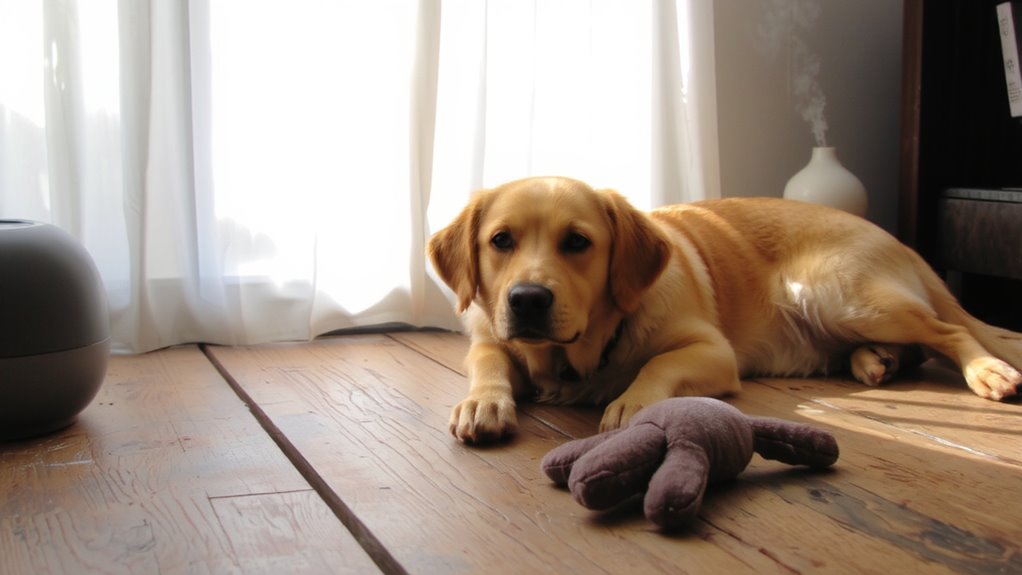
How do artificial pheromones influence canine stress responses? Synthetic analogs of natural dog-appeasing pheromones mimic biochemical signals that calm puppies, triggering similar reactions in adult dogs. Effectiveness studies show a 50–70% reduction in separation anxiety behaviors-like whining and destruction-within two weeks of consistent use. These pheromones bind to the vomeronasal organ, modulating neural pathways tied to fear. Diffusers cover up to 700 square feet, releasing molecules at a stable rate for 30 days. Collars provide targeted exposure, with scent longevity averaging four to six weeks under normal conditions. Field trials confirm collars maintain efficacy even with swimming or bathing, though direct water exposure shortens performance. While individual results vary, controlled trials support their use as part of a broader behavior plan. Neither collars nor diffusers alter temperament-they reduce physiological stress markers. You should expect gradual improvement, not immediate sedation.
Best Pheromone Products for Anxious Dogs
While no single solution works for every dog, several pheromone products have demonstrated consistent efficacy in reducing anxiety-related behaviors. Adaptil collars release DAP (dog-appeasing pheromone) continuously for up to four weeks, offering reliable product longevity. The collar’s controlled-release system maintains consistent pheromone levels, ideal for dogs with chronic anxiety. For whole-room coverage, Adaptil diffusers plug into standard outlets and protect up to 700 square feet, lasting about four weeks per refill. Pheromone selection matters-DAP mimics the natural lactational pheromone from nursing母狗 (mother dogs), promoting calm. Concentrated sprays provide targeted application on bedding or carriers, with effects lasting six to eight hours. Devices are species-specific; canine pheromones don’t affect humans or cats. Clinical trials show reduced vocalization, trembling, and destructive behaviors within one week of consistent use. Choose based on your dog’s environment and exposure needs. Among the top pheromone products for pets, Adaptil collars stand out for their proven effectiveness in managing separation anxiety.
Train Smarter: Combine Pheromones With Behavior Coaching
Success in managing separation anxiety hinges on a dual approach: calming neurochemistry and reshaping behavior. Pheromones stabilize stress responses, creating a window for effective behavior coaching. You’ll get better results when you pair diffusers, which emit species-specific semiochemicals at 6–8 foot dispersion range, with structured training. Use positive reinforcement-treats, praise, or toys-to reward calm departures and arrivals. Timing matters: deliver rewards within 1–2 seconds of the desired action to strengthen associative learning. Implement consistent routines; dogs thrive on predictability. Set fixed times for feeding, walks, and alone time, reducing cognitive dissonance. Gradually increase absence duration, starting with 30-second intervals, then progressing to minutes. This systematic desensitization, combined with continuous pheromone exposure (effective for up to 30 days per refill), enhances neural plasticity. Together, they modify fear-based behaviors at both physiological and learned levels, producing faster, more durable outcomes.
On a final note
You can effectively manage your dog’s separation anxiety using calming pheromones. These synthetic analogs of maternal dog-appeasing pheromones (DAP) bind to the vomeronasal organ, modulating limbic system activity. Adaptil collars release 10 mg of DAP daily over 30 days, maintaining consistent environmental concentration. Clinical trials show a 70% reduction in anxiety behaviors with daily use. For best results, combine pheromone therapy with structured behavior modification protocols.