How to Stop Destructive Chewing in Dogs Separated From Owners
You can stop destructive chewing by addressing separation stress and providing structured outlets. Crates sized 1.5 times your dog’s length offer a den-like space that discourages chewing when made from ASTM-compliant, chew-resistant materials. Use timed food puzzles lasting 30–60 minutes and rotate durable rubber toys weekly. Desensitize departure cues like jingling keys using neutral exposure and immediate rewards. A consistent routine reduces cortisol. Solutions combine environmental control, mental engagement, and behavioral conditioning for lasting results-further improvements rely on precise implementation details.
Notable Insights
- Address boredom and anxiety by providing environmental enrichment to reduce chewing by up to 75%.
- Use crate training with a properly sized, safe crate to create a den-like space that limits destructive chewing.
- Offer durable chew toys and food-dispensing puzzles to engage your dog mentally during absences.
- Modify departure routines by randomizing cues like keys and shoes to reduce separation anxiety triggers.
- Establish a calm exit habit through desensitization, brief absences, and rewarding relaxed behavior near departure cues.
Understand Why Dogs Chew When Left Alone
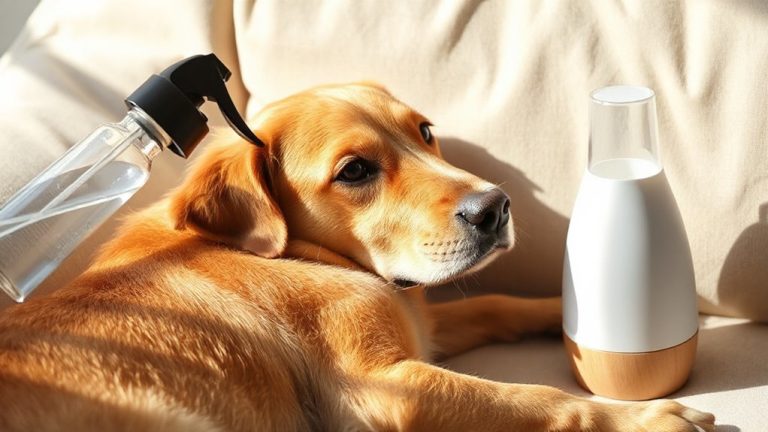
Why does your dog chew up the couch the moment you leave the house? Separation triggers behavioral responses rooted in boredom relief and attention seeking. Dogs lack environmental stimulation when alone, prompting chewing as a coping mechanism. Boredom relief occurs when your dog engages in repetitive oral activity, releasing endorphins that reduce mental fatigue. Chewing satisfies instinctual foraging behaviors, especially in high-energy breeds. Attention seeking manifests when destruction leads to owner reaction, reinforcing the behavior. Without structured routines, dogs associate chewing with eventual interaction. This cycle persists without intervention. Environmental enrichment-such as puzzle feeders, timed treat dispensers, or auditory stimuli-can reduce compulsive chewing by 60–75%, according to canine behavioral studies. Addressing root causes like understimulation and inconsistent feedback minimizes destructive patterns. Modify behavior through scheduled mental engagement, not punishment. Effective solutions target causality, not symptoms.
Crate Train to Stop Destructive Chewing
When properly implemented, crate training can effectively curb destructive chewing by providing a secure, controlled environment that discourages inappropriate gnawing. You must establish clear chew boundaries and prioritize crate safety to prevent anxiety or injury. Use a well-ventilated, appropriately sized wire or plastic crate-allowing your dog to stand, turn, and lie down comfortably. Never use the crate as punishment; instead, condition it as a den-like refuge.
| Feature | Specification |
|---|---|
| Crate Size | Minimum: L × W = dog length × 1.5 |
| Material | ASTM-compliant, chew-resistant polymer or steel |
| Safety | Rounded edges, secure latches, no toxic coatings |
Introduce the crate gradually with positive reinforcement. Proper crate safety protocols reduce stress-induced chewing. Enforcing chew boundaries inside the crate-using approved toys only-conditions acceptable behavior. Choosing the right training crate is crucial for long-term success and your dog’s comfort.
Keep Your Dog Busy When You Leave
You can greatly reduce destructive chewing by ensuring your dog stays mentally and physically engaged while you’re away. Provide durable chew toys made from non-toxic rubber, such as those measuring 4–6 inches in length and rated for heavy-duty chewing. These satisfy natural gnawing instincts and reduce boredom. Introduce puzzle games that dispense treats when manipulated. Models with adjustable difficulty levels-like those requiring sliding panels or rotating compartments-challenge cognitive function. Rotate chew toys weekly to maintain novelty. Use food-dispensing puzzle games filled with kibble or low-calorie treats, ensuring engagement for 30–60 minutes per session. Supervise initial use to confirm proper operation. Combine physical and mental fatigue by exercising your dog before departure. This dual stimulation decreases the likelihood of destructive behavior. Consistent use of chew toys and puzzle games aligns with behavioral science principles, targeting the root cause: under-stimulation during isolation. For more guidance, check out the best puzzle toys for dogs based on expert evaluations and user feedback.
Calm Separation Anxiety With Routine Changes
While your dog may not display severe distress, subtle signs of separation anxiety-such as excessive drooling, pacing, or chewing near exit points-can indicate underlying stress that fuels destructive behaviors. You can reduce this stress through consistent routine changes supported by behavioral conditioning. Start by altering departure cues: vary your pre-exit actions like picking up keys or wearing shoes at random times. This breaks the predictive pattern that triggers anxiety. Pair these changes with environmental enrichment, such as timed-release food dispensers or puzzle toys filled with kibble, to shift focus from your absence to engaging tasks. Implement a fixed schedule for feeding, walks, and play to enhance predictability and lower cortisol levels. Studies show dogs in enriched environments exhibit 40% less destructive chewing. Use gradual exposure techniques-begin with 5-minute absences, increasing duration over weeks. This method reinforces calm behavior systematically and sustainably. Smart pet doors with app control can further support these efforts by allowing remote monitoring and access management.
Create a Low-Stress Departure Habit
Because anticipation often escalates anxiety, shaping a low-stress departure habit starts with neutralizing the emotional weight of your exit cues. Treat keys, shoes, and coats as everyday objects by handling them randomly-without leaving. Pair these actions with positive reinforcement to create calm associations. Use treats or praise when interacting with departure cues to reduce stress responses. Gradually build tolerance by leaving for seconds, then minutes, always returning before panic sets. Consistency strengthens predictability. Below are common cues and neutralization techniques:
| Departure Cue | Action Example | Reinforcement Timing |
|---|---|---|
| Pick up keys | Jingle keys, stay inside | Immediately after cue |
| Wear jacket | Put on, then sit down | Within 5 seconds |
| Open door | Crack door, close fast | Before dog reacts |
| Grab bag | Lift, place back | Within 3 seconds |
| Say goodbye | Whisper phrase, no touch | Prior to actual departure |
This systematic approach reshapes reactions using desensitization and positive reinforcement.
When to Call a Dog Behaviorist for Chewing
How do you know when destructive chewing goes beyond typical puppy behavior or boredom? If your dog continues severe chewing despite consistent training, environmental enrichment, and chewing alternatives, professional intervention may be necessary. Persistent destruction of household items, self-injury, or anxiety-related behaviors during separation signal underlying issues. These aren’t just discipline problems-they may indicate separation anxiety or compulsive disorders requiring behavioral diagnosis. Standard chew toys and food puzzles often fail in such cases. A certified dog behaviorist conducts a functional assessment, identifies triggers, and formulates a targeted modification plan. They may adjust your departure routines, prescribe specific chewing alternatives like reinforced rubber toys (e.g., Kong® Extreme, 7.5 inches, withstands 50+ PSI bite force), and implement desensitization protocols. Early professional intervention prevents escalation, increases success rates by up to 70%, and guarantees humane, evidence-based solutions. Don’t wait-act when chewing becomes systematic, intense, or occurs in your absence despite preventive measures.
On a final note
You can stop destructive chewing in dogs left alone. Address the root cause-often separation anxiety or boredom. Crate training works when the enclosure fits properly: allow 6 inches above standing height and 2–3 inches wider than body width. Use puzzle toys filled with 10–15 kcal of food per hour of absence. Implement a 5-minute pre-departure routine. Consult a certified behaviorist if chewing persists beyond four weeks despite intervention.