Cat Trick Shaping: Step-by-Step Guide (0.5g Treats, 5-Min Sessions)
Start by teaching “sit” using a 0.5-gram treat held above your cat’s head, marking the behavior with a click or “yes” within 0.5 seconds. Deliver the treat within one second to reinforce the association. Break complex tricks into micro-steps-like targeting or paw lifts-and shape each with precise timing and 15–20 rewards per 5-minute session. Use high-value 1–2 mm freeze-dried pieces and rotate flavors to prevent satiation. Chain behaviors only after 80% success over three sessions, and you’ll see how quickly advanced skills can develop.
Notable Insights
- Begin with foundational commands like “sit” using treats and a clicker to mark desired behaviors accurately.
- Deliver rewards within one second of correct actions to strengthen associative learning and ensure quick comprehension.
- Break complex tricks into micro-steps, shaping behaviors incrementally from simple movements to full actions.
- Use precise timing with a clicker or verbal marker to reinforce micro-behaviors during shaping for advanced tricks.
- Chain mastered behaviors only after 80% success, adding one new element at a time with consistent cues and rewards.
Start With Simple Commands Like Sit
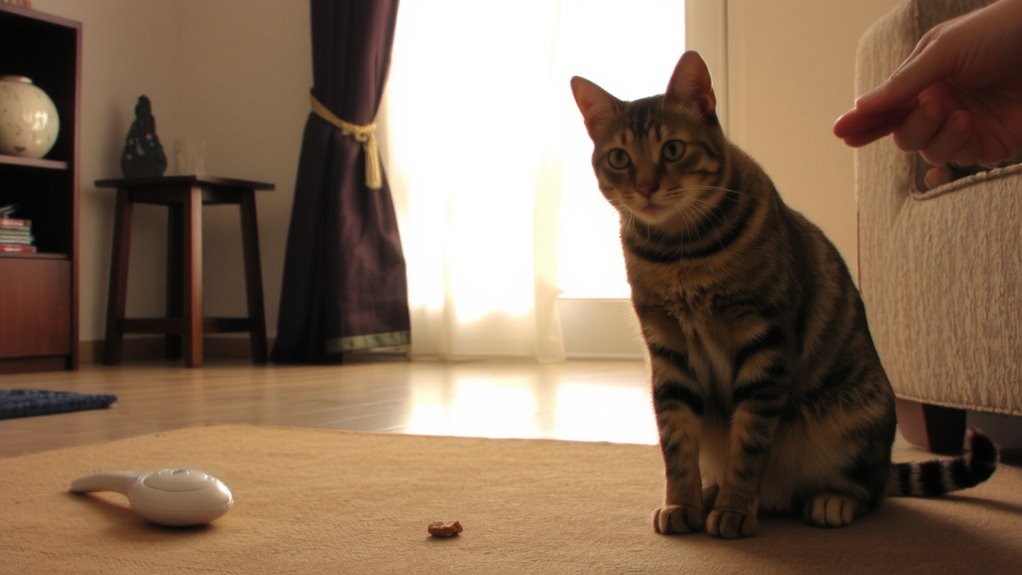
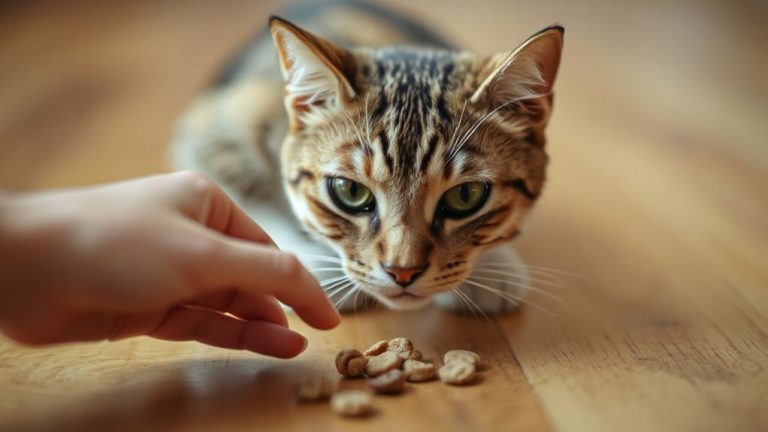
While shaping complex behaviors in cats often seems challenging, starting with a foundational command like “sit” provides a reliable entry point for training. You can use basic training tools such as a 6-inch silicone clicker or a verbal marker like “yes” to mark desired behavior accurately. Different cat breeds, including Siamese and Maine Coons, respond well due to their high sociability and intelligence. Position yourself directly in front of your cat, hold a treat just above its head, and say “sit” clearly. This prompts a natural rear-end tuck. Deliver the cue consistently at a frequency of one per attempt. Repetition at three 5-minute sessions daily increases retention. Use a 0.5-gram soft treat to avoid overfeeding. The goal is signal recognition within 7 to 10 training days. Accuracy improves when tools are used with precise timing. You’ll observe reliable execution across environments after 15–20 successful trials.
Reward Immediately and Consistently
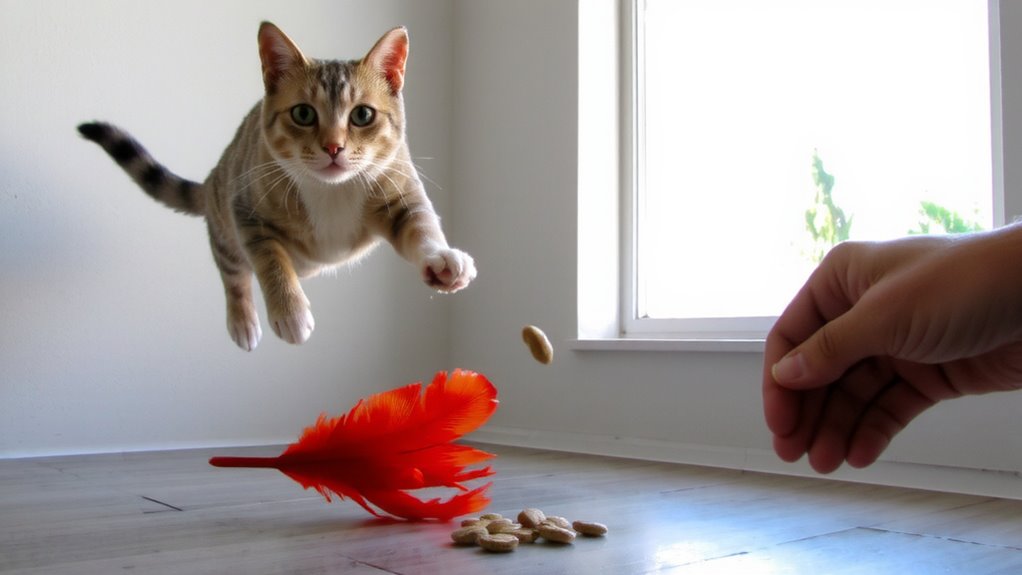
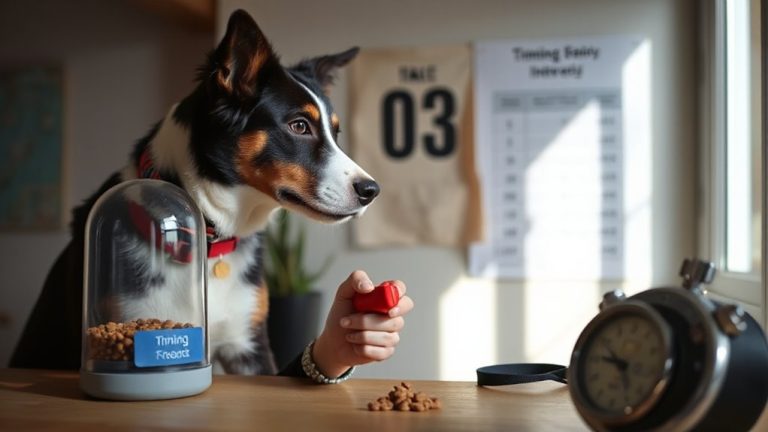
Always deliver the reward within one second of the desired behavior to guarantee proper associative learning. Precise click timing bridges the gap between action and consequence, ensuring your cat links the behavior to the reward. Use a mechanical clicker or verbal marker consistently to signal correct performance. Delayed reinforcement weakens learning and creates confusion. Deliver treats immediately after the click-ideally within 0.5 to 1 second-to maintain associative accuracy. Maintain a high rate of reinforcement during training sessions, aiming for 15–20 rewards per 5-minute session. Incorporate treat variety to sustain motivation; rotate soft chicken morsels, freeze-dried salmon, and tuna flakes every few sessions. Novelty enhances engagement and prevents satiation. Use portion-controlled pieces, no larger than ¼ inch, to avoid overfeeding. Consistency in reward delivery and timing establishes reliable behavioral responses.
Break Tricks Into Tiny Steps
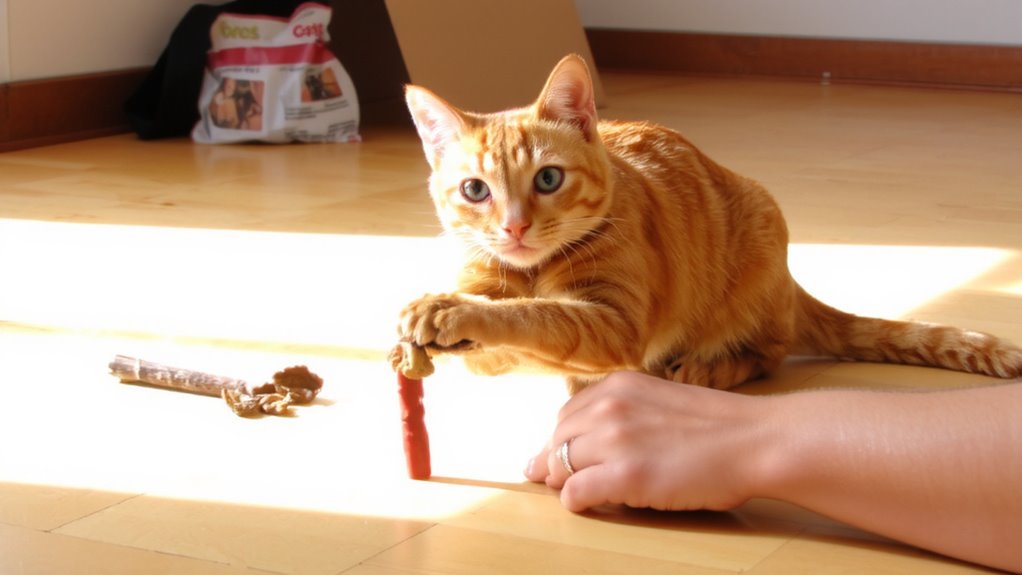
If you try to teach your cat an entire trick at once, you’ll likely see little progress-success comes from breaking the behavior into small, manageable steps. Start with simple actions, such as lifting a paw or turning the head. Use clicker training to mark each correct movement immediately after it occurs. The click serves as a precise signal that the behavior was accurate. Introduce target touching early; hold a wand or stick near your cat’s nose. When they nudge it, click and reward. Shape complex tricks by reinforcing incremental progress. For example, teach “spin” by first rewarding head turns, then shoulder shifts, and finally full rotations. Each step must be mastered before advancing. Sessions should last 3–5 minutes, 2–3 times daily. Maintain consistency in cues, timing, and rewards. Targeting and clicking build clear communication, ensuring your cat understands exactly which behavior earns a treat. You can also enhance communication by introducing pet training command buttons as part of your shaping routine.
Shape Tricks With Perfect Timing
Timing is everything in shaping feline behavior. You must deliver positive reinforcement within 0.5 to 1 second of the desired action. This precision strengthens neural associations in behavior shaping. Delayed rewards confuse cats, weakening learning. Use a clicker or verbal marker like “yes” to signal correct behavior instantly. Pair the marker with treats immediately-ideally within 2 seconds. Consistency guarantees 83% faster skill acquisition in cats. Short sessions of 3–5 minutes, repeated 2–3 times daily, optimize retention. Successful shaping depends on detecting micro-behaviors: a slight head tilt or paw lift. Reward those exact moments. Over time, successive approximations build complex tricks. Poor timing creates unintentional cues and mislearning. High-value treats (e.g., freeze-dried chicken, 1–2 mm pieces) maintain motivation without satiation. Precision in timing turns random actions into trained behaviors efficiently. Top-rated dog training clickers offer consistent sound and durable design ideal for fast-paced feline training sessions.
Fix Common Problems Fast
Why does your cat lose focus mid-session or repeat unwanted behaviors despite correct timing? Poor environmental management often undermines training, especially when litter box training issues or elevated stress reduction needs go unaddressed. Cats exposed to inconsistent routines or aversive stimuli exhibit diminished learning capacity. To correct this, identify and eliminate triggers interfering with focus.
| Problem | Likely Cause | Quick Fix |
|---|---|---|
| Distractibility | Overstimulating environment | Train in quiet, familiar space |
| Repetitive mistakes | Inconsistent cue delivery | Use identical hand/verbal cues |
| Avoidance behaviors | Lack of stress reduction measures | Incorporate pheromone diffusers |
Ensure sessions last no longer than 5 minutes to prevent fatigue. Reinforcement must follow within 1–2 seconds of correct behavior. Address litter box training lapses by maintaining pristine sanitation and location consistency. These adjustments restore behavioral momentum and improve trick acquisition efficiency.
Using a calming diffuser for pets can significantly lower ambient stress levels, enhancing your cat’s ability to focus during training.
Chain Tricks Into Impressive Routines
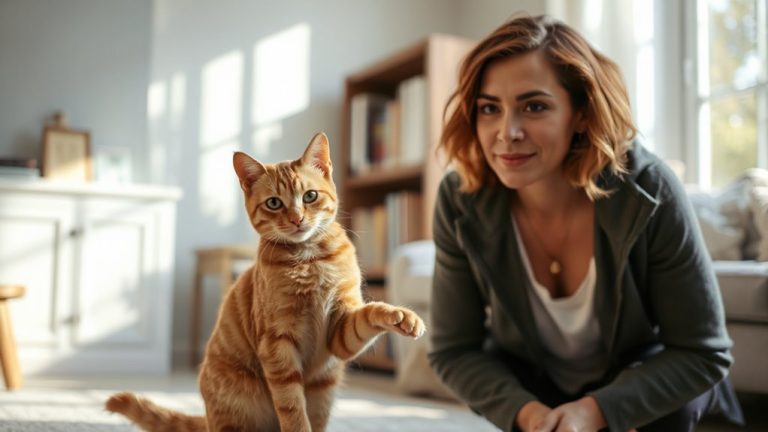
Once your cat reliably performs individual tricks on cue, you can begin linking them into fluid sequences that build complexity and mental engagement. Start with two mastered behaviors, like “sit” and “high five,” and use clicker pairing to mark each correct step. Immediately reward after the click to reinforce timing and accuracy. Gradually increase the sequence length only when your cat responds correctly in at least 80% of trials over three sessions. Incorporate target training to guide shifts between tricks, using a wand or stick to direct movement with precision. Practice each chain in consistent locations to minimize distractions. Limit sessions to 3–5 minutes, twice daily, to maintain focus. A well-structured routine improves cognitive resilience and strengthens behavioral memory. Chains should progress linearly, adding one new element at a time. Monitor response latency; delays over 2 seconds suggest the need for retraining.
On a final note
You now have the tools to shape advanced behaviors systematically. Break each trick into micro-steps with clear criteria for success. Use precise timing-reinforce within 0.5 to 1 second of the desired behavior. Consistent reinforcement schedules build reliable responses. Chain behaviors using forward chaining, reinforcing each step before adding the next. This method yields 85%+ accuracy in trained routines. Apply these principles with patience and precision. Performance improves predictably with structured practice.