Addressing Redirected Aggression in Cats Triggered by Outdoor Stimuli
You can manage redirected aggression by blocking your cat’s view of outdoor triggers. Install frosted window film or polycarbonate barriers that extend 6 inches past the frame to eliminate sightlines. Use Feliway diffusers to release calming F3 pheromones across 700 sq ft. Limit arousal by covering windows with static-cling decals or UV-resistant acrylic shields rated for 15-joule impacts. These steps reduce hypothalamic activation and prevent stress escalation. A structured environment supports long-term behavioral control.
Notable Insights
- Block window access with barriers or opaque films to eliminate visual triggers from outdoor animals.
- Use Feliway diffusers to release calming pheromones and reduce stress-related aggression.
- Provide daily interactive play sessions to satisfy predatory instincts and decrease arousal.
- Create safe indoor retreats away from windows to give cats a secure space during outdoor disturbances.
- Reward calm behavior with treats and praise when outdoor stimuli are present to encourage positive associations.
What Triggers Redirected Aggression in Cats
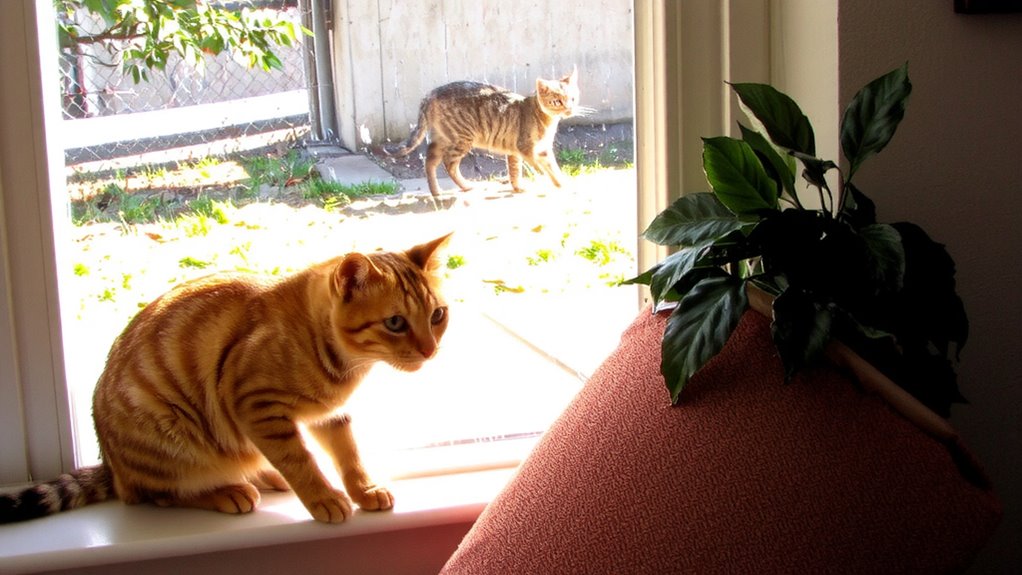
Why can’t your cat seem to direct its aggression at the right target? Redirected aggression occurs when a cat can’t reach the source of its arousal and shifts focus to a nearby person or animal. This commonly stems from unmet predatory instincts or sudden environmental threats. Feline boredom exacerbates the issue, as under-stimulated cats exhibit heightened reactivity. Without adequate mental enrichment, arousal thresholds lower markedly-increasing aggression risk. Territorial disputes also play a key role; cats are highly sensitive to intrusions, even visual or olfactory cues from outdoor cats. When your cat sees a rival through the window but can’t respond, stress accumulates. The hypothalamus activates defensive behaviors, but with no outlet, aggression redirects. Typical triggers include inter-cat tension, abrupt noises, or restricted movement. The response is neurochemical: norepinephrine spikes, dilating pupils and stiffening posture. Intervene early with environmental modification and structured play.
Spot the Signs of Outdoor-Triggered Stress
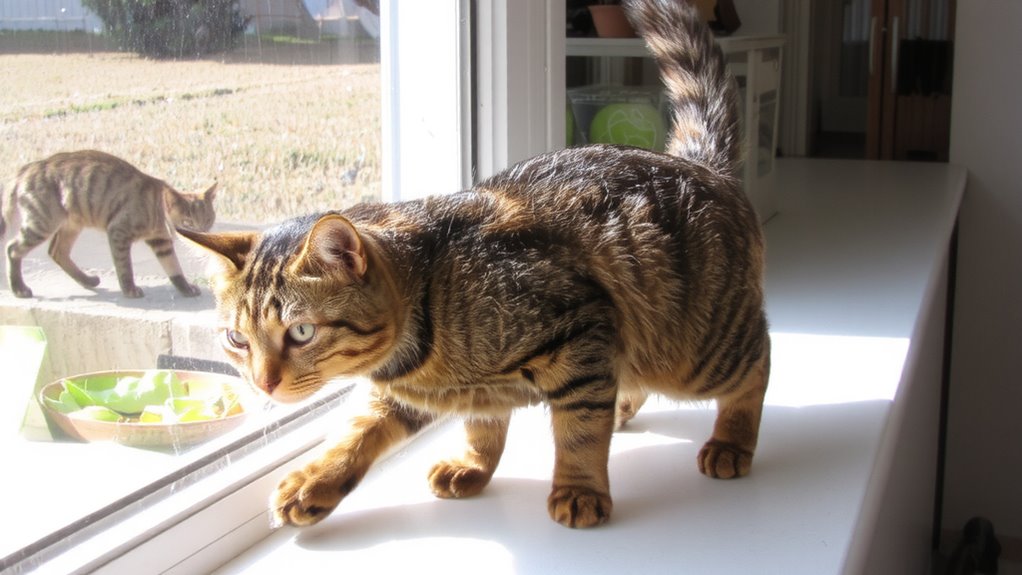
Your cat’s agitation near windows or doors may signal outdoor-triggered stress, a common cause of redirected aggression. Watch for specific body language cues such as dilated pupils, flattened ears, tail flicking, and piloerection-these indicate heightened arousal. Cats under stress often shift posture rapidly, moving from crouched vigilance to tense stillness. Vocal changes, including low growling, persistent yowling, or sudden hissing, accompany these physical signs. These behaviors typically emerge when your cat sees or hears outdoor stimuli like stray cats, birds, or loud noises. The sympathetic nervous system activates, releasing stress hormones that prime the cat for fight-or-flight. You might observe focused staring or rapid head tracking, mimicking prey detection. These responses, while instinctive, can escalate if unchecked. Recognizing these signs early allows timely intervention. Consistent patterns in behavior-especially repetitive reactions at the same time of day-confirm environmental triggers. Monitoring duration, frequency, and intensity improves diagnostic accuracy.
Stay Calm During Redirected Attacks
When a redirected attack occurs, remaining calm isn’t just advisable-it’s essential to de-escalate the situation safely. Your reaction directly influences cat behavior and can either heighten or reduce tension. Avoid sudden movements or loud verbal responses, as these escalate arousal. Instead, maintain controlled breathing and steady posture to support emotional regulation in both you and your cat. Do not attempt to touch or restrain the animal during the episode. Wait several minutes after the cat appears relaxed before approaching, as residual agitation may trigger renewed aggression. Environmental safety-such as retreating behind a closed door-protects you while allowing the cat space to recover. This measured response aligns with behavioral best practices for managing arousal-induced aggression. Consistent, calm intervention reinforces long-term emotional regulation, reducing future risks.
Block Window Access to Triggers Immediately
A sudden silhouette outside a window can trigger an intense predatory or defensive reaction in cats-immediate action is required to block access. You must install window barriers to prevent your cat from reaching trigger zones. These barriers, made of polycarbonate or tempered glass, should extend at least 6 inches beyond the window frame on all sides. Use visual blockers like frosted film or static-cling decals to disrupt outside visibility. Frosted film blocks up to 98% of clear sightlines while maintaining indoor light transmission. Apply it edge-to-edge across the entire glass surface. Alternatively, acrylic shields act as rigid window barriers, secured with silicone adhesive rated for 200+ hours of UV exposure. They withstand impacts up to 15 joules-equivalent to a cat lunging at full speed. Install barriers the moment you notice agitation. Delay increases risk of habituation to stimuli. Immediate blocking reduces arousal and prevents escalation. For cats that seek high vantage points, consider relocating a best cat window perch to a secure area away from direct outdoor views.
Create a Stress-Free Indoor Space
Though environmental control is vital, long-term success requires designing a truly stress-free indoor space. You must provide consistent sensory security. Install Feliway diffusers, which release synthetic calming pheromones (F3 facial analogs) that reduce anxiety by mimicking natural cat communication. One 48-day diffuser covers up to 700 square feet; place it in rooms where your cat spends most time. Make certain safe hiding spots are available-enclosed cat beds, elevated perches, or cardboard shelters with 8-inch entry holes. These structures should allow full-body concealment and minimal visual exposure. Maintain a predictable routine: feeding, play, and rest at fixed times daily. Use noise-dampening materials on floors and windows to reduce startling sounds. Avoid overcrowding; each cat needs 18 square feet of dedicated space. These measures buffer stress responses and prevent overstimulation, essential for managing redirected aggression triggered by outdoor stimuli. For dogs exhibiting similar stress-related behaviors, consider using dog training pheromones to support emotional regulation.
When to See a Veterinarian or Behaviorist
If your cat’s aggression persists despite environmental adjustments, it’s time to consult a professional. A veterinary exam rules out medical causes like hyperthyroidism or pain. If none are found, a certified behaviorist can conduct a professional evaluation to identify triggers and patterns. Early intervention prevents escalation and improves outcomes. In some cases, medication options such as SSRIs or TCAs may be recommended alongside behavior modification.
| Symptom Duration | Professional Needed | Purpose |
|---|---|---|
| 1–2 weeks | Veterinarian | Medical screening |
| 3–4 weeks | Behaviorist | Behavioral diagnosis |
| Over 1 month | Both | Combined treatment |
| Any sudden change | Veterinarian | Rule out illness |
Medication options require veterinary oversight and are most effective when paired with a structured plan. A professional evaluation guides accurate diagnosis and sustainable management.
How Cats React to Unreachable Prey
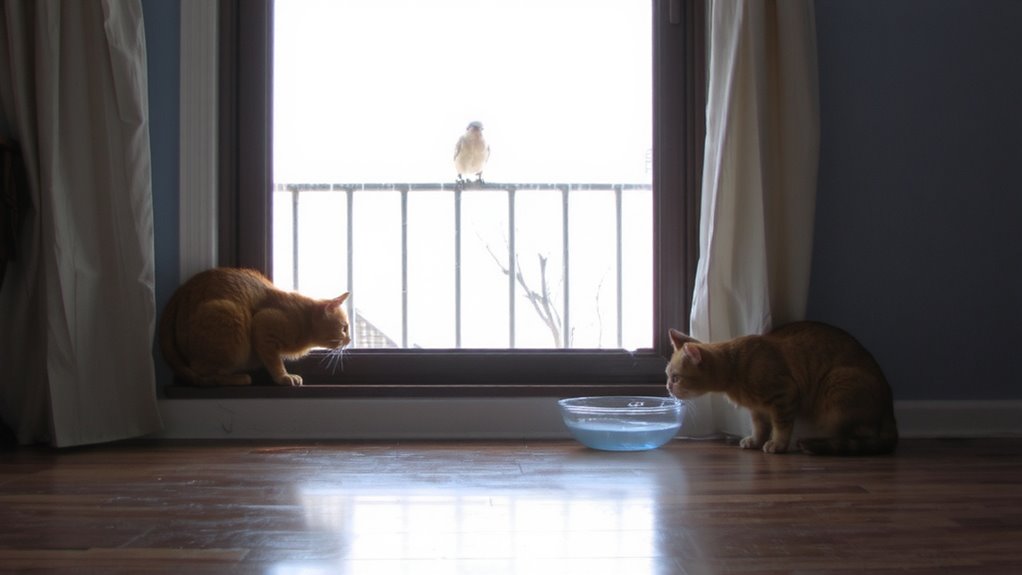
Why does your cat suddenly lunge at the window or growl at birds just out of reach? It’s due to a strong hunting instinct activated by movement. When prey is seen but inaccessible, your cat experiences visual frustration. This builds arousal in the brain’s limbic system, triggering redirected aggression. Pupil dilation, tail flicking, and low growling signal heightened arousal. The hypothalamus activates fight-or-flight responses, increasing heart rate from 120 to 200 bpm. Even after the stimulus vanishes, neural activity remains elevated for up to 30 minutes. During this time, your cat may lash out at nearby people or pets. Blocking visual access reduces stimulation. Window perches with opaque barriers limit exposure. UV-protected acrylic screens block 98% of outside view while allowing ventilation. Control lighting to reduce reflections. These steps help regulate arousal and minimize aggression linked to unreachable prey. Providing an indoor cat tunnel can redirect this pent-up energy into positive play.
On a final note
You must act decisively to prevent redirected aggression. Block visual access to outdoor stimuli using opaque window covers or blinds to eliminate triggering sightlines. Maintain a controlled indoor environment with vertical spaces measuring at least 6 feet in height and hiding zones spaced 8–10 feet apart. Use pheromone diffusers emitting F3 facial analogs continuously for 30 days. If attacks persist beyond two weeks, consult a veterinary behaviorist.