Why Senior Dog Endocrine Panels Include ACTH Stimulation Testing
Your senior dog’s endocrine panel includes ACTH stimulation testing because aging increases the risk of adrenal disorders like Addison’s or Cushing’s disease. The test measures cortisol levels before and exactly one hour after synthetic ACTH injection. A normal response produces post-stim cortisol between 5.5 and 20 µg/dL. Subnormal results indicate adrenal insufficiency; elevated levels suggest Cushing’s. This dynamic assessment detects dysfunction with over 90% sensitivity. You’ll see how your dog’s hormone response aligns with clinical signs and what the next steps reveal.
Notable Insights
- Senior dogs are at higher risk for adrenal disorders due to age-related endocrine decline.
- ACTH stimulation testing accurately detects Addison’s or Cushing’s disease with over 90% sensitivity.
- The test evaluates adrenal responsiveness by comparing cortisol levels before and after stimulation.
- It differentiates adrenal dysfunction from other conditions like hypothyroidism or diabetes.
- Early detection through screening supports timely treatment and improved metabolic balance.
What Is the ACTH Test for Dogs?
Why might your veterinarian recommend an ACTH stimulation test for your senior dog? This diagnostic measures how well your dog’s adrenal glands respond to adrenocorticotropic hormone (ACTH). A baseline blood sample checks cortisol levels, then synthetic ACTH is administered by injection. One hour later, a second blood draw evaluates cortisol response. Dogs with adrenal fatigue show low pre- and post-stimulation cortisol. The test confirms or rules out conditions like Addison’s or Cushing’s disease. Adrenal fatigue isn’t a standard veterinary diagnosis, but the term may describe reduced adrenal output. Hormone imbalance is confirmed when results fall outside reference ranges: normal post-ACTH cortisol is typically 5–20 µg/dL. Accurate sample timing is essential. False results occur if glucocorticoids were recently used. The test’s sensitivity exceeds 90% for detecting adrenal dysfunction.
Why Senior Dogs May Need the ACTH Test
Could age-related changes in hormone regulation be affecting your senior dog’s health? As dogs age, endocrine function often declines, increasing the risk of adrenal disorders. The ACTH stimulation test helps detect these issues early. It assesses adrenal response by measuring cortisol levels before and one hour after ACTH administration. Baseline and post-stimulus values are compared to reference ranges (typically <2 μg/dL pre-test, >5 μg/dL post-test). Abnormal results may indicate adrenal insufficiency. Since thyroid function and insulin levels also decline with age, overlapping symptoms like lethargy or weight changes can mislead diagnosis. The ACTH test distinguishes adrenal dysfunction from hypothyroidism or diabetes. Older dogs, especially breeds predisposed to endocrine disease, benefit from regular screening. Early detection supports timely treatment, maintaining metabolic balance and improving long-term outcomes through precise hormone evaluation.
How the ACTH Test Diagnoses Addison’s and Cushing’s
How does one test pinpoint two opposite adrenal disorders? The ACTH stimulation test evaluates your dog’s adrenal response by measuring cortisol levels before and after synthetic ACTH injection. In Addison’s disease, the adrenals can’t produce adequate cortisol-baseline levels are low, and post-injection cortisol remains flat. This reflects adrenal fatigue, where glands underperform due to autoimmune damage or atrophy. In Cushing’s, the opposite occurs: excessive baseline cortisol rises further after stimulation, confirming a hormone imbalance from overactive adrenals or a pituitary tumor. The test’s precision lies in its dynamic assessment-static levels can mislead, but the response curve distinguishes between dysfunction types. Normal post-stim cortisol ranges from 5.5 to 20 µg/dL. Results outside this, paired with clinical signs, confirm diagnosis. It’s an essential tool for accurate, actionable endocrine insight.
What to Expect During the ACTH Test
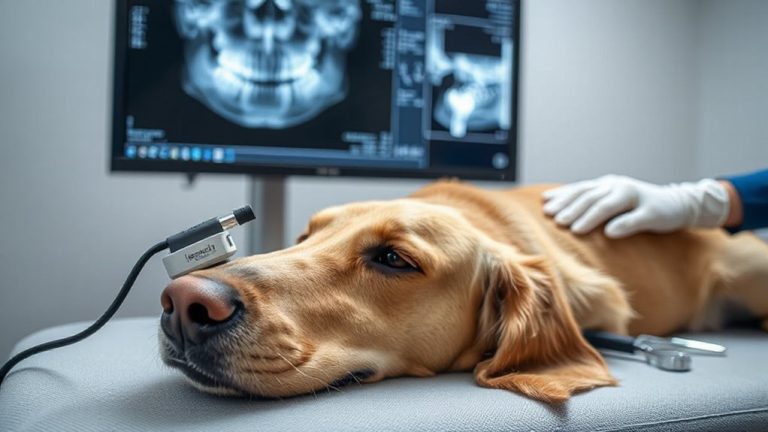
What goes through your vet’s mind when scheduling an ACTH stimulation test? They’re considering test timing to guarantee accuracy. The test begins with a baseline blood draw, followed by an injection of synthetic ACTH. Exactly one hour later, a second blood sample is collected. This strict timing is critical-deviations can skew cortisol measurements and impact result interpretation. Your dog must remain calm and fasted to avoid stress-related cortisol spikes. The lab measures cortisol levels pre- and post-stimulation. In healthy dogs, cortisol rises markedly. With Addison’s, the response is weak. In Cushing’s, the baseline is often high, with exaggerated post-stimulation levels. The entire process takes about 90 minutes in-clinic. Your vet uses these precise cortisol deltas to assess adrenal function. Proper protocol adherence guarantees reliable endocrine evaluation.
Understanding Your Dog’s ACTH Test Results
Once the final blood sample is collected and sent to the lab, your vet shifts focus from test execution to interpreting the cortisol response. The ACTH stimulation test measures your dog’s adrenal cortisol production before and one hour after ACTH administration. Normal dogs show a clear increase in cortisol-typically a post-stim level above 20 µg/dL. A subnormal rise suggests adrenal insufficiency, often linked to Addison’s disease. Though “adrenal fatigue” isn’t a recognized canine diagnosis, vets evaluate true hormone balance disruptions. Low pre- and post-stim cortisol values indicate inadequate adrenal output. Conversely, elevated post-stim levels may point to Cushing’s disease. Your vet uses these precise cortisol concentrations to evaluate adrenal function objectively. Accurate interpretation requires comparing baseline and stimulated values using species-specific reference ranges. This test remains the gold standard for evaluating adrenal responsiveness and diagnosing endocrine disorders in senior dogs.
Signs Your Dog Needs an ACTH Test
Why might your senior dog suddenly seem weak despite eating well? Lethargy and weakness are key indicators your dog may need an ACTH test. These symptoms often signal adrenal dysfunction, such as Addison’s disease. A drop in cortisol production impairs stress response and energy regulation. You might also notice weight loss despite normal appetite, because metabolic imbalance prevents proper nutrient utilization. Appetite changes aren’t always obvious, but when paired with muscle wasting, they strengthen suspicion of endocrine disease. The ACTH stimulation test measures adrenal response by comparing baseline and post-ACTH cortisol levels. A normal peak response exceeds 5.5 µg/dL; values below indicate hypoadrenocorticism. Early detection through this test allows precise hormone replacement. Monitoring these signs improves diagnostic accuracy. Don’t ignore subtle declines in activity. Persistent lethargy warrants endocrine evaluation. Timely testing supports effective management.
On a final note
You need the ACTH test to confirm adrenal disorders in senior dogs. It measures cortisol levels before and after synthetic ACTH administration. A low baseline cortisol that fails to rise post-stimulation indicates Addison’s disease. Excessively high post-stimulation cortisol confirms Cushing’s. The test uses 5 μg/kg IV cosyntropin. Results guide treatment with precision. Early detection improves long-term outcomes. This standardized protocol guarantees diagnostic accuracy in geriatric canine endocrinology.