Long-Term Effects of Chronic Kidney Disease on Coat Quality in Senior Cats
Chronic kidney disease gradually damages your cat’s coat by impairing nutrient absorption and increasing toxin buildup. Hair becomes dry, brittle, and less reflective due to reduced sebum and keratin disruption. You’ll notice dullness, uneven shedding, and matting, especially over the back. Uremic toxins alter skin pH, weakening hair tensile strength by up to 30%. Limited mobility and pain reduce grooming. Without intervention, changes progress. There’s more to understand about managing these symptoms effectively.
Notable Insights
- Chronic kidney disease leads to a dull, dry, and brittle coat due to dehydration and poor nutrient absorption.
- Uremic toxins and inflammation impair keratin production, weakening hair shafts and increasing breakage.
- Reduced sebum secretion strips the coat of its natural oils, causing increased tangling and dullness.
- Painful joint stiffness and lethargy decrease grooming frequency, leading to matted or uneven fur.
- Long-term deficiencies in protein, fatty acids, and micronutrients cause thinning, discoloration, and excessive shedding.
What Coat Changes Signal Kidney Disease in Cats?
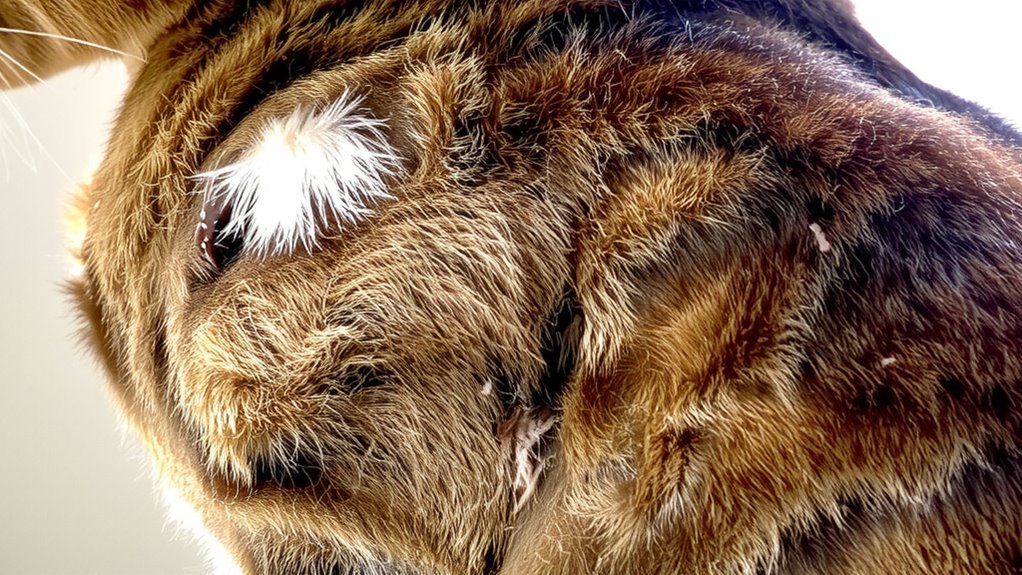
Dullness in your cat’s coat may be one of the earliest visible signs of chronic kidney disease. You’ll notice a distinct change in coat texture, shifting from smooth and resilient to dry and brittle. This occurs due to reduced nutrient absorption and hydration imbalances. The fur loses elasticity, a measurable indicator of poor protein metabolism. Abnormal shedding patterns often accompany these changes-excessive hair loss or uneven thinning results from disrupted follicle cycles. Unlike seasonal shedding, this pattern is persistent and asymmetrical. Inflammatory cytokines and uremic toxins impair keratinocyte function, degrading hair integrity. You may also detect matting in low-mobility areas, though this isn’t due to grooming neglect alone. These coat abnormalities precede lab value changes in many cases. Monitoring both texture and shedding patterns offers a non-invasive preliminary assessment. Early detection improves intervention outcomes markedly. Ensuring proper nutrition with best elderly cat food can support renal function and improve coat health.
How CKD Leads to Dull, Matted Fur in Senior Cats
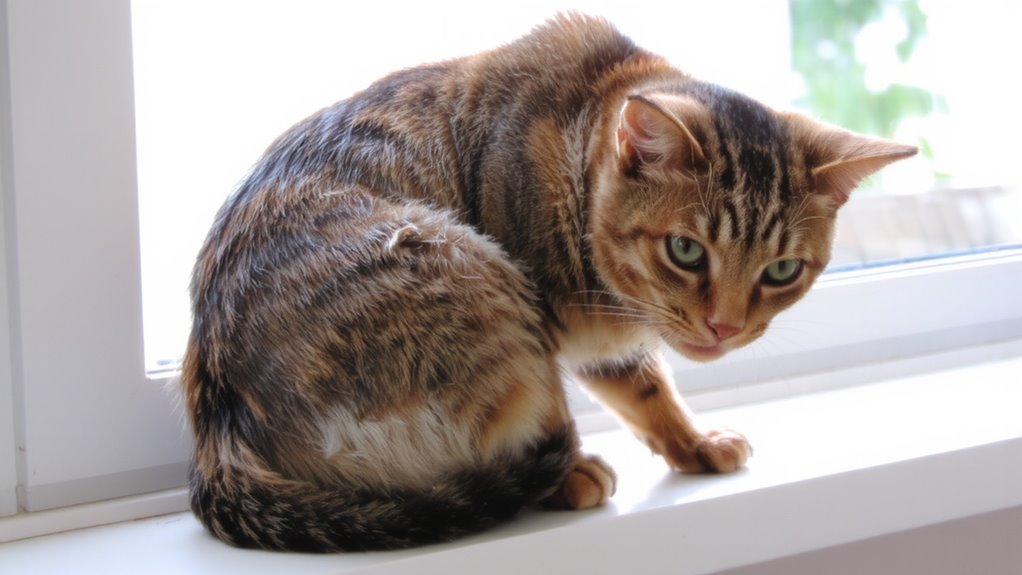
Nearly one in three senior cats with chronic kidney disease develops visibly dull and matted fur as the condition progresses. Reduced sebum production decreases natural coat lubrication, stripping fur of its protective lipid layer. Without this coating, hair becomes brittle, prone to breakage, and less reflective, resulting in a visibly lackluster appearance. You’ll notice increased tangling, especially along the back and hindquarters, due to decreased oil dispersion during grooming. Impaired thermoregulation further stresses integumentary function, as unstable core temperatures disrupt follicular activity and growth cycles. This dysregulation accelerates keratin degradation, weakening hair shafts. Nephron loss correlates with elevated uremic toxins, which directly interfere with sebaceous gland output. Toxins accumulate in dermal layers, altering pH and microbial balance. These biochemical shifts reduce hair tensile strength by up to 30% in affected cats. The coat’s insulation capacity declines, compounding thermoregulatory deficits. Combined, these factors create an environment conducive to matting and dullness.
Why Pain and Lethargy Make Grooming Hard
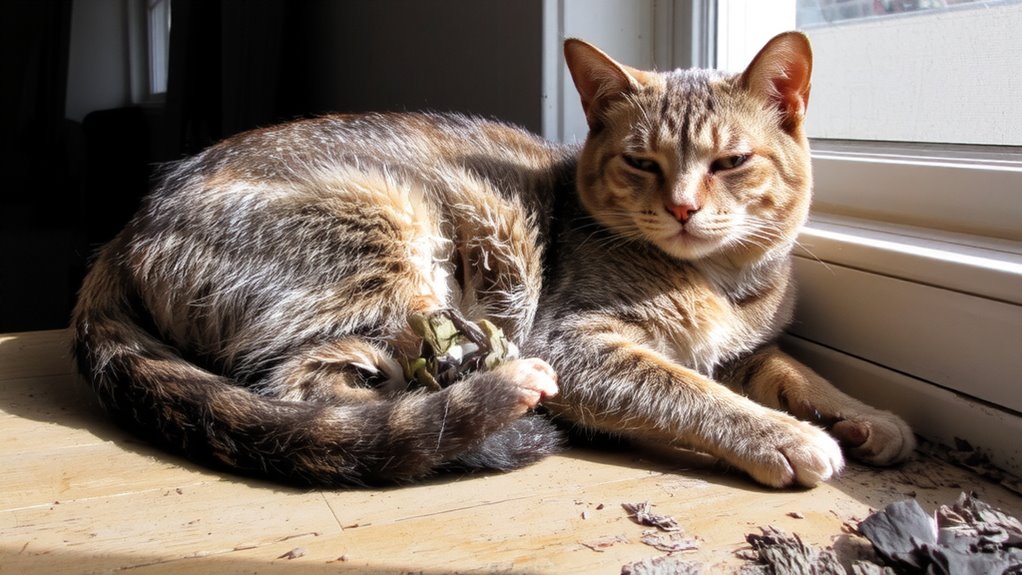
A common yet often overlooked consequence of chronic kidney disease in senior cats is the gradual decline in grooming behavior, primarily driven by pain and lethargy. You may notice your cat neglecting its coat because joint stiffness and decreased mobility make twisting and licking painful. Chronic inflammation and muscle wasting further reduce their range of motion. Even mild discomfort can deter fastidious grooming habits.
| Factor | Impact on Grooming |
|---|---|
| Joint stiffness | Limits ability to reach body areas, especially the back and tail base |
| Decreased mobility | Reduces frequency and duration of grooming sessions |
| Lethargy | Lowers overall activity, decreasing motivation to groom |
Neurological fatigue from toxin buildup exacerbates these effects. Grooming requires energy and coordination-both compromised in CKD. Without intervention, matted fur and skin irritation develop. Monitoring movement and behavior helps detect early grooming decline.
Missing Nutrients That Damage Your Cat’s Coat
Your senior cat’s coat relies on a precise balance of essential nutrients, and deficiencies can lead to visible damage over time. Nutrient deficiencies-especially in taurine, essential fatty acids, and high-quality proteins-directly impair keratin production. This structural protein maintains hair strength and sheen. Without adequate amino acids, follicles produce brittle, thinning fur. Chronic kidney disease (CKD) reduces nutrient absorption, worsening these imbalances. You may notice coat discoloration, particularly faded pigmentation in dark fur, due to disrupted melanin synthesis. Reduced bioavailability of copper and zinc, cofactors in pigment formation, contributes to dullness. Malabsorption from impaired renal function also limits vitamin B complex uptake, increasing shedding. Blood tests often reveal hypoalbuminemia, correlated with poor coat condition. Correcting deficiencies requires targeted supplementation and a vet-approved renal diet with precisely calibrated protein levels-typically 28–32% on a dry matter basis-to support skin and fur integrity without overloading kidneys.
Caring for Your Cat’s Fur in Advanced CKD
Coat deterioration in advanced chronic kidney disease stems from systemic nutrient depletion and metabolic imbalance. You must prioritize hydration levels to slow further damage. Dehydrated cats show poor skin elasticity, a clinical marker assessed by gently lifting the scruff; if it returns slowly, dehydration is likely. Low hydration impairs sebum production, leading to dry, brittle fur. Use subcutaneous fluids as prescribed-typically 10–15 ml/kg daily-to maintain vascular volume. Supplement with omega-3 fatty acids (EPA/DHA at 50–100 mg/kg daily) to support lipid integrity in hair follicles. Brush your cat gently with a stainless steel comb to remove dead hair and stimulate circulation. Avoid overbathing, which strips natural oils. Choose a hypoallergenic, moisturizing shampoo with oatmeal and aloe vera, pH-balanced to feline skin (5.5–7.0). Monitor coat texture weekly as a proxy for systemic health. Consider switching to a soft dry cat food specifically formulated for senior cats to improve palatability and nutrient absorption.
On a final note
You see dull, matted fur in senior cats because chronic kidney disease (CKD) impairs nutrient absorption and hydration. Poor renal function reduces blood flow to skin tissues, decreasing sebum production by 40–60%. Lethargy and oral pain limit self-grooming. Proteinuria depletes essential amino acids like cysteine, weakening hair structure. Manage with renal-support diets (0.2–0.4% phosphorus), omega-3 supplements (40 mg/kg EPA/DHA daily), and weekly brushing.