Using Slippery Elm Bark to Soothe Inflamed Digestive Tracts in Cats
You can use slippery elm bark to soothe your cat’s inflamed digestive tract. Its mucilage content-over 10%-forms a protective gel when mixed with water. This gel coats the gastrointestinal lining, reducing irritation and buffering stomach acid. Use 1/4 to 1/2 tsp of powder per 2 parts warm water, let it sit 5–10 minutes, and give it every 8–12 hours. Administer via syringe or mix into wet food. Choose vet-formulated, additive-free products with third-party testing. Rare side effects include vomiting or allergies. There’s more to know about proper use and safety.
Notable Insights
- Slippery elm bark contains mucilage that coats and soothes the inflamed digestive tract in cats.
- It helps buffer stomach acid and supports healing of irritated gastrointestinal tissues.
- Use only vet-approved, additive-free slippery elm formulated for cats.
- Mix powder with warm water before administering to prevent throat irritation and ensure proper gel formation.
- Monitor for rare side effects like vomiting or allergic reactions, and consult a vet if they occur.
How Slippery Elm Helps Cats With Upset Stomachs
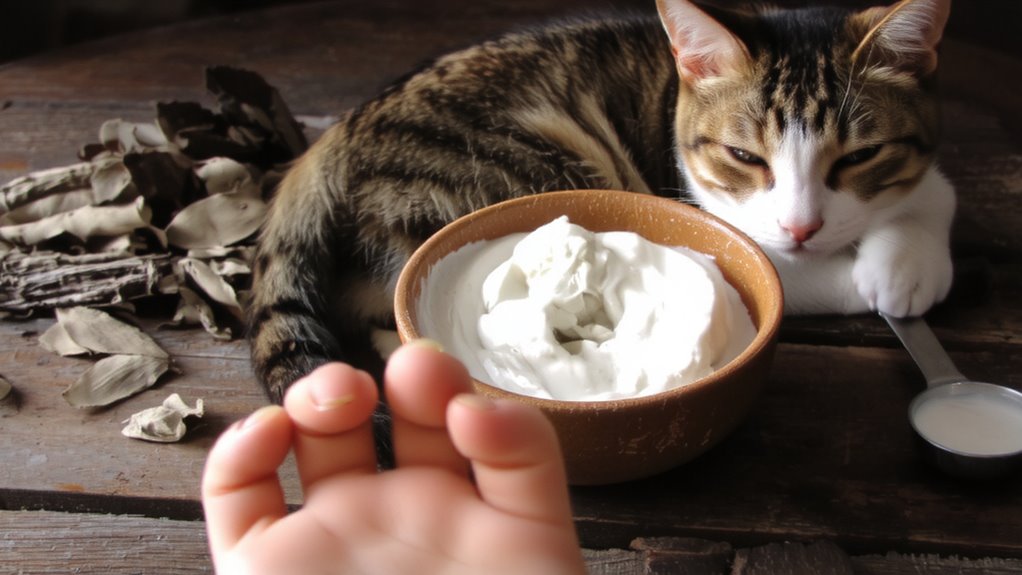
While your cat’s digestive system is sensitive, slippery elm bark can provide targeted relief for upset stomachs due to its high mucilage content. This gel-like substance forms when mixed with water, coating the gastrointestinal lining to promote digestive comfort. Mucilage reduces irritation and protects tender tissues, acting like a natural bandage. You can give it orally in powder form-typically ¼ tsp per 10 lbs of body weight, twice daily. It buffers stomach acid and supports consistent gut health by maintaining mucosal integrity. Slippery elm is non-toxic and gentle, making it ideal for short-term use. It doesn’t absorb systemically; instead, it works locally within the digestive tract. Always mix it with water before administration to activate mucilage. Guarantee your cat drinks enough fluids. Consult your vet before use, especially if your cat is on medication, as it may delay absorption.
Common Causes of Cat Digestive Inflammation
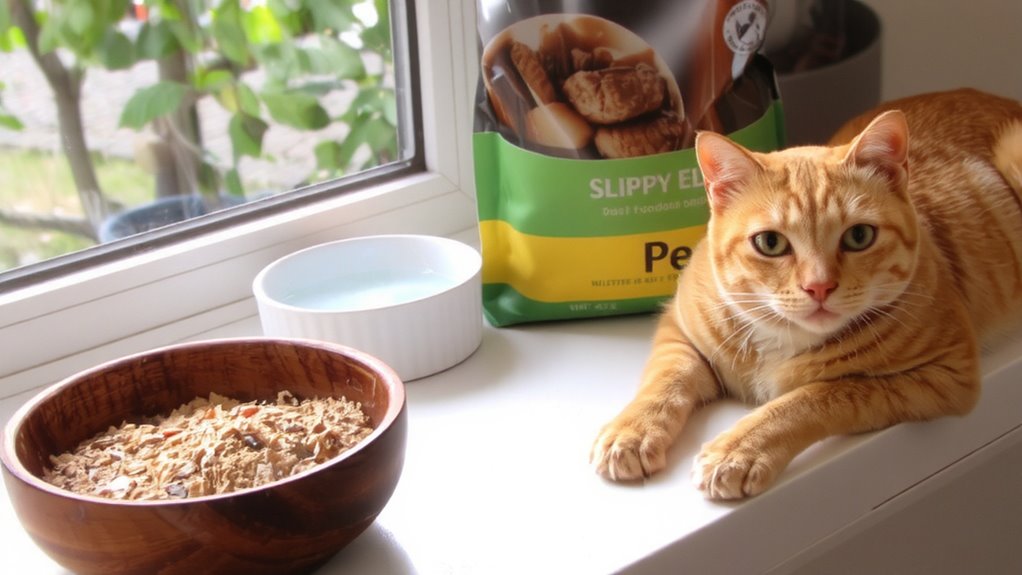
Because your cat’s digestive tract is highly sensitive to internal and external triggers, inflammation can develop rapidly in response to various conditions. Sudden diet changes disrupt gastrointestinal equilibrium, often causing mucosal irritation and motility issues. Abrupt shifts in protein sources or fiber content alter gut microbiota composition, increasing permeability and inflammation risk. Food allergies represent another common cause, with common allergens including beef, dairy, and fish proteins. These trigger hypersensitivity reactions, activating immune cells in the intestinal lining. Chronic exposure leads to eosinophilic or lymphocytic infiltration, damaging epithelial integrity. Inflammatory markers like TNF-alpha and IL-6 elevate, worsening symptoms. Poor-quality fillers and artificial additives in commercial foods exacerbate immune responses. Environmental stressors and medications can compound these effects. Monitoring your cat’s reaction to new foods is critical. Gradual diet changes over 7–10 days reduce inflammation risk. Identifying and eliminating specific food allergens through elimination diets improves long-term digestive health.
Choose the Right Slippery Elm for Cats
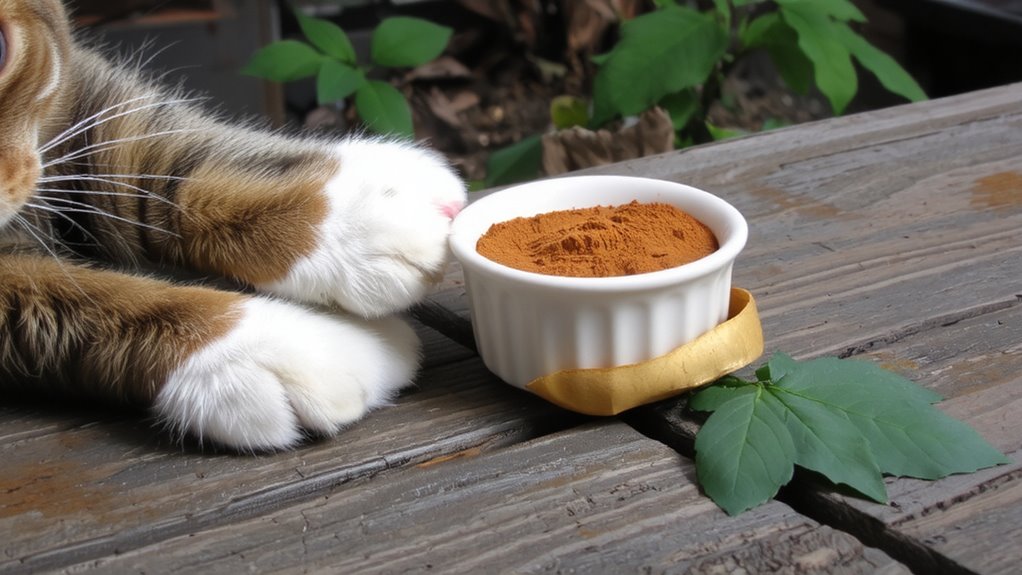
Pick a high-quality slippery elm bark product specifically formulated for cats to guarantee safety and effectiveness. Sourcing quality matters-choose bark harvested sustainably from mature elm trees, with no additives or fillers. Check for third-party testing to confirm purity and potency. Always follow the proper dosage based on your cat’s weight.
| Form | Dosage (per 10 lbs body weight) |
|---|---|
| Powder | 1/4 tsp mixed with water |
| Capsule (opened) | 100–200 mg |
| Liquid extract | 1–2 drops per lb |
| Chewable tablet | As directed by vet |
| Granules | 1/8 to 1/4 tsp |
Manufacturers must standardize mucilage content above 10% for therapeutic benefit. Avoid products with artificial flavors or preservatives. Consistent particle size guarantees uniform dosing. Verify expiration dates to maintain efficacy.
How to Give Slippery Elm to Your Cat
When administering slippery elm bark to your cat, proper preparation guarantees ideal mucilage activation and digestive soothing effects. Mix 1/4 to 1/2 teaspoon of powdered bark with warm water (1:2 ratio) and let it sit for 5–10 minutes to form a gel. This method optimizes mucilage release. For precise dosage frequency, administer every 8–12 hours, depending on symptom severity. Most cats receive treatment twice daily. Use consistent administration methods: mix the gel into wet food or deliver orally via a syringe. Capsules (size 00) can be opened and blended into meals if your cat tolerates them. Never give dry powder directly-it may irritate the throat. Adjust dosage frequency only under veterinary guidance. Accurate water ratios and timing guarantee maximum viscosity and gastric adherence. Proper technique enhances bioavailability and therapeutic outcomes.
Watch for Side Effects and Call Your Vet
Monitor your cat closely after administering slippery elm bark, as adverse reactions-though rare-can occur. Watch for vomiting episodes, which may signal gastrointestinal intolerance. While slippery elm is generally well-tolerated, excessive doses can lead to digestive upset due to its mucilaginous fiber content. Allergic reactions are uncommon but possible; symptoms include facial swelling, itching, or hives. Discontinue use immediately if these appear. Since herbal supplements aren’t FDA-regulated, product purity varies-choose powdered bark free of additives. Administer the recommended dose of ¼ tsp per 10 lbs body weight, up to twice daily. Onset of action typically occurs within 30 minutes. If vomiting episodes persist beyond 24 hours or worsen, contact your veterinarian. Always consult your vet before combining slippery elm with medications, as it may slow absorption due to delayed gastric emptying. Safety during pregnancy hasn’t been established.
On a final note
You can use slippery elm bark safely to soothe your cat’s inflamed digestive tract. It forms a gel when mixed with water, coating the GI lining. Give 1/4 tsp per 10 lbs of body weight, up to three times daily. Mix with water or food. Choose pure, organic, powdered bark without additives. Consult your vet before use, especially if your cat takes other medications or has chronic conditions.