Designing a High-Calorie, Easy-to-Chew Diet for Toothless Dogs
You need high-calorie, soft-textured food to meet your toothless dog’s energy needs without chewing. Aim for 450–550 kcal per cup and at least 25–35% fat for caloric density. Use wet foods or soften kibble with warm water (2:1 ratio) to a mashed potato consistency. Choose options with hydrolyzed proteins and ≥90% digestibility for better nutrient absorption. Add safe, energy-rich toppers like xylitol-free peanut butter (1 tbsp max daily) or coconut oil (start with 1 tsp). Formulate meals to reach 1.5–2.0 kcal/mL in blended form. Include prebiotics like FOS to support gut health. Opt for commercial diets such as Hill’s Science Diet 11+ or Royal Canin Recovery RS, which meet precise metabolizable energy and PFTS ≤2.1 standards. Avoid excess liquid to reduce aspiration risk. A properly balanced diet prevents malnutrition while supporting ideal body condition. The right formulation guarantees your dog gets maximum nutrition in minimal volume-with smart adjustments making all the difference.
Notable Insights
- Use high-calorie wet foods with at least 1,000 kcal/kg and 8% crude fat for energy-dense, easy-to-chew meals.
- Rehydrate kibble with warm water using a 2:1 ratio to achieve a soft, mashed potato-like consistency.
- Blend homemade diets into a pâté using boiled turkey, rice, sweet potatoes, and plain pumpkin for digestibility.
- Add safe calorie boosters like xylitol-free peanut butter (1 tbsp max daily for small dogs) or coconut oil (start with 1 tsp).
- Choose commercial soft diets such as Hill’s Science Diet 11+ or Royal Canin Recovery RS with high metabolizable energy and PFTS ≤2.1.
Why Toothless Dogs Need High-Calorie Food
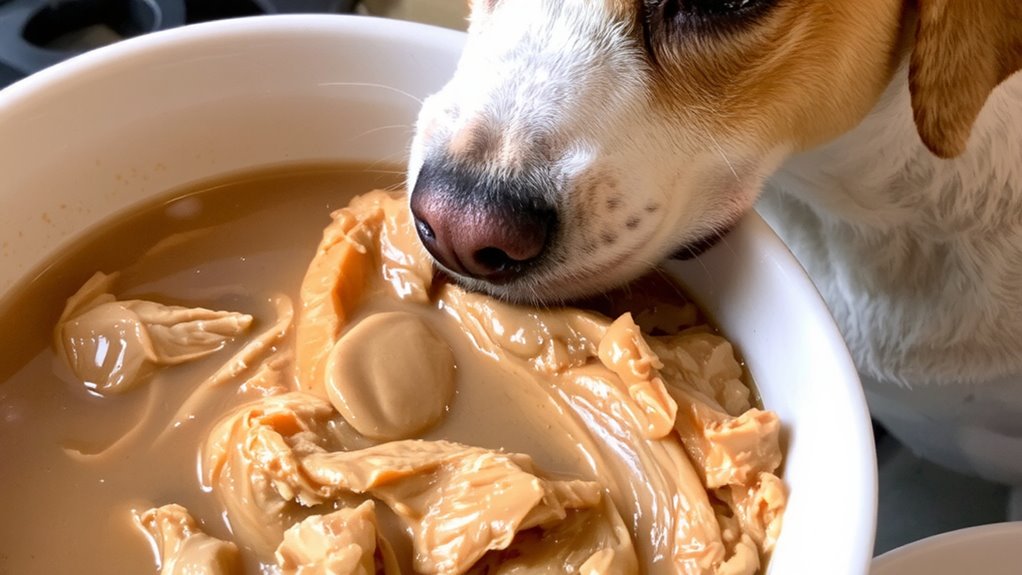
Energy demand. Toothless dogs often struggle to consume enough calories due to chewing limitations, putting them at risk for weight loss and muscle wasting. You need to provide a high-calorie diet that compensates for reduced food intake. These diets typically contain 450–550 kcal per cup, with 25–35% metabolizable energy from fat. High-calorie foods enhance nutrient absorption by reducing the energy cost of digestion. They’re formulated for peak digestive health, using prebiotics like fructooligosaccharides (FOS) and highly digestible proteins (≥90% digestibility). Without effective chewing, food enters the gut largely intact, so maximizing nutrient absorption per gram is essential. You’ll want a diet with an energy density that supports maintenance without requiring large meal volumes. These formulations guarantee your dog receives adequate protein, fat, and micronutrients even with low intake. Consider opting for best soft dog foods specifically designed for toothless dogs to ensure optimal palatability and ease of consumption.
Best Soft Foods for Toothless Dogs
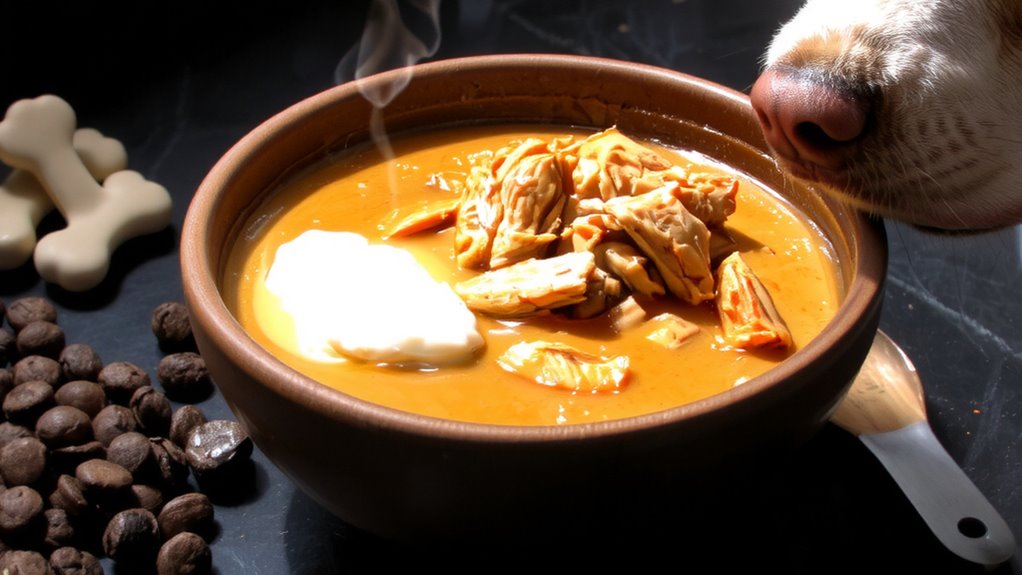
You already know your toothless dog needs more calories per bite to meet daily energy demands, given their limited ability to chew and reduced food intake. Wet snacks are ideal-they retain moisture, soften quickly, and require minimal oral processing. Look for options with at least 1,000 kcal/kg metabolizable energy and 8% minimum crude fat to boost caloric density. Blended treats, when mixed with warm water or broth, form a paste that’s easy to swallow and digest. These should contain 70% or more moisture to prevent choking and support hydration. Use products with hydrolyzed proteins for improved nutrient absorption. Avoid fiber-heavy fillers; instead, choose those fortified with taurine and omega-3s. Calorie concentration is critical-aim for 1.5–2.0 kcal/mL in reconstituted blended treats. Monitor intake volume daily to guarantee your dog meets resting energy requirements without strain. Consistency matters-uniform texture prevents gagging.
Turn Kibble Into a Soft, Easy-To-Swallow Meal
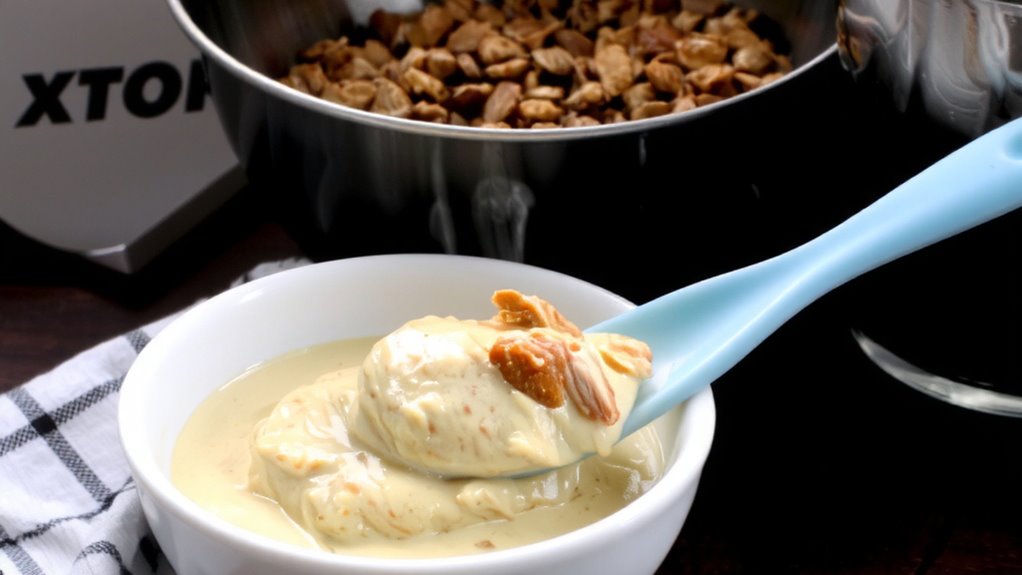
Softening kibble transforms hard dry food into a manageable meal for toothless dogs without sacrificing caloric density or nutritional balance. You can achieve proper texture adjustment using simple soaking methods. Add warm water to kibble at a 2:1 liquid-to-food ratio by volume. Let it sit for 10–15 minutes until the pieces fully expand and soften to a mashed potato-like consistency. Avoid boiling water; it can degrade heat-sensitive nutrients. Use a slotted spoon to drain excess liquid if needed, minimizing choking risk while preserving calories. For dogs with weakened swallowing function, aim for uniform texture without hard fragments. Rehydrated kibble retains its original guaranteed analysis for protein, fat, and fiber. You may refrigerate unused portions up to 48 hours. Proper soaking methods maintain shelf-stable benefits while adapting physical form to support safe, effective consumption in edentulous dogs.
Add These 5 High-Calorie Toppers Safely
A few well-chosen toppers can substantially boost the caloric density of your toothless dog’s meals without compromising safety or nutrition. These additions enhance palatability and energy intake while remaining gentle on digestion. Use measured portions to prevent gastrointestinal upset.
| Topper | Caloric Contribution |
|---|---|
| Peanut butter (unsalted, xylitol-free) | 94 kcal per tablespoon |
| Coconut oil (virgin, unrefined) | 117 kcal per tablespoon |
Peanut butter provides fats and protein, improving meal consistency and flavor. Limit to 1 tbsp daily for small dogs. Coconut oil contains medium-chain triglycerides that support metabolic health. Start with 1 tsp daily to assess tolerance. Both toppers adhere well to softened kibble, aiding ingestion. Introduce one at a time over 5–7 days. Monitor stool quality and weight. Never exceed recommended amounts, as excess fat may trigger pancreatitis. Rotate toppers weekly for nutrient diversity. When selecting peanut butter, always choose a xylitol-free formula to avoid toxicity risks in dogs.
Easy Homemade Meals for Toothless Dogs
Creating balanced homemade meals for toothless dogs requires careful attention to texture, nutrient density, and digestibility. You must blend ingredients to a slurry or pâté-like consistency for effortless swallowing. Combine boiled ground turkey, cooked white rice, and mashed sweet potatoes for a calorie-dense base. Incorporate pumpkin puree benefits-its soluble fiber supports bowel regulation and adds energy with minimal digestive strain. Use only plain, unsweetened pumpkin, not pie filling. Enhance palatability and hydration with warm turkey broth options; avoid commercial broths with added salt or onions. Opt for homemade, strained broth to eliminate solids. Provide 1/4 cup broth per 10 lbs of body weight daily. Include omega-3-rich fish oil (1000 mg per 30 lbs) and a canine multivitamin to meet AAFCO nutrient profiles. Monitor stool consistency daily. Adjust ingredient ratios if loose stools persist beyond 48 hours. Perform weekly body condition scoring to track caloric adequacy.
Top Store-Bought Diets for Toothless Dogs
While your toothless dog can’t chew kibble, you still need to provide complete nutrition in a form they can safely consume-fortunately, several commercial diets meet this need with scientifically formulated, easily ingestible textures. Hill’s Science Diet Adult 11+ Senior Soft Savories uses a mousse-like consistency ideal for toothless dogs, with a texture analysis score of 2.1 on the Pet Food Texture Scale (PFTS), indicating minimal resistance. Each 3-oz can delivers 225 kcal, supporting high-calorie needs. Royal Canin Veterinary Diet Recovery RS features a liquid-pureed formula with 18% protein and 5% fat, optimized for digestion and energy. Grain content is minimal-less than 2% in both products-to reduce digestive strain. Purina Pro Plan Veterinary Diets NF Kidney Function has a blended paste texture (PFTS 1.8) and is fortified with omega-3s. All three undergo rigorous texture analysis to guarantee safe swallowing and consistent nutrient delivery. These diets provide precise caloric density and manageable grain content for long-term use.
7 Dangerous Feeding Mistakes to Avoid
How often do you assume soft food alone prevents choking in toothless dogs? Soft texture doesn’t eliminate risk if consistency is poor. Always guarantee food is mashed to a uniform, pudding-like viscosity-particles larger than 2 mm can obstruct airways. Improper portioning leads to malnutrition or obesity; feed 2–3% of ideal body weight daily, split into two meals. Overfeeding by just 15% can result in a 20-pound weight gain in a year for a 50-pound dog. Avoid toxic ingredients like xylitol, onions, and chocolate. Xylitol, even in 0.1 mg per pound of body weight doses, causes hypoglycemia. Check labels for sweeteners and preservatives. Never feed cooked bones-they splinter easily, causing gastrointestinal perforation. Use calorie-dense, vet-approved formulas with at least 400 kcal per cup. Monitor intake and consistency closely.
On a final note
You must prioritize caloric density and texture when feeding toothless dogs. Soft, energy-rich foods like canned puppy diets or blenderized meals deliver 1.5–2.0 kcal/ml, supporting maintenance needs. Use warm water to rehydrate kibble, achieving a gruel consistency of 3:1 liquid-to-dry ratio. Avoid sticky or large-particle foods. Monitor weight weekly to adjust intake, ensuring ideal body condition score (BCS 4–5/9).