Fragrance-Free Product Selection Critical for Respiratory Issues in Elderly Bulldogs
Your senior bulldog’s narrowed airways and reduced lung capacity make it highly sensitive to airborne irritants. Fragranced products release volatile organic compounds (VOCs) that inflame respiratory tissues and worsen breathing effort. Choose only fragrance-free, veterinary-formulated shampoos with pH 5.5–7.0 and avoid “unscented” labels, which may still contain masking agents. Use cleaners with <5 g/L VOCs, like diluted vinegar or Castile solutions. A strict scent-free routine reduces respiratory stress-further strategies follow.
Notable Insights
- Elderly bulldogs have reduced airway capacity due to age-related anatomical changes, increasing sensitivity to respiratory irritants like fragrances.
- Fragranced products release VOCs that inflame airways and may worsen brachycephalic obstructive airway syndrome (BOAS) in senior bulldogs.
- “Fragrance-free” labels are critical; terms like “parfum” or “aroma” often hide synthetic irritants even in natural or unscented products.
- Use certified fragrance-free grooming products with oatmeal and ceramides to soothe skin without triggering respiratory issues.
- Clean living areas with low-VOC solutions and HEPA filtration to minimize airborne irritants and support elderly bulldog respiratory health.
Why Elderly Bulldogs Are at Risk for Breathing Problems
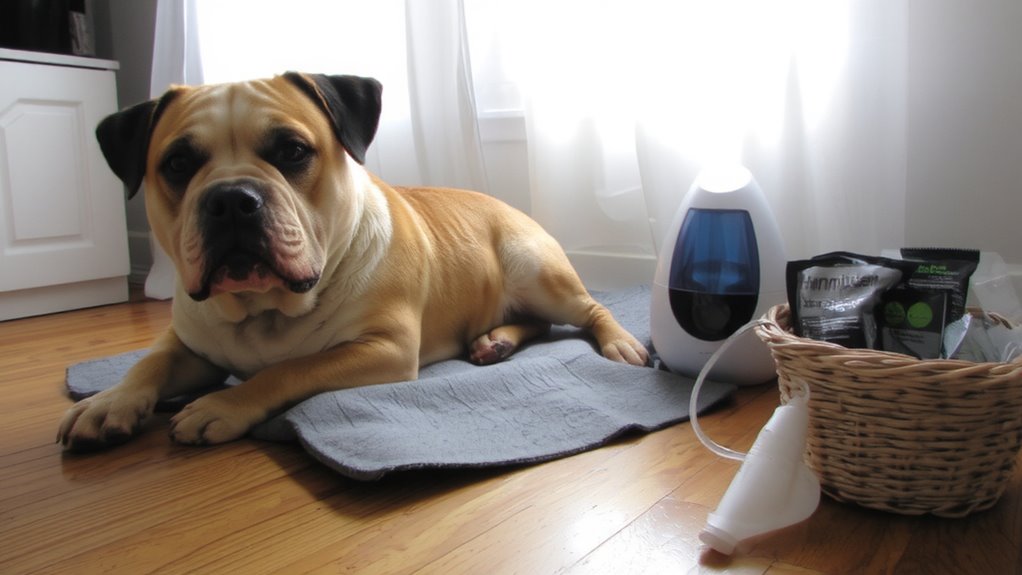
Age-related changes in airway structure and function put elderly bulldogs at higher risk for breathing problems. Your bulldog’s brachycephalic anatomy-shortened skull, narrow nostrils, elongated soft palate-already restricts airflow. As your dog ages, an age related decline in tracheal cartilage integrity reduces airway rigidity, increasing collapse risk during inhalation. Nasal passages narrow further due to diminished mucociliary clearance and weakened diaphragmatic strength. Studies show inspiratory flow rates in senior bulldogs drop 30–40% compared to younger adults. Brachycephalic obstructive airway syndrome (BOAS) symptoms worsen with age, with 75% of bulldogs over eight showing clinical signs. Laryngeal function declines, reducing oxygen saturation under stress. Even mild exertion can trigger hypoxia. Structural limitations combined with progressive tissue degeneration create cumulative respiratory vulnerability. You must anticipate reduced pulmonary reserve. Early intervention with environmental controls is critical. Fragrance-free products minimize additional irritation. Using a pet-safe air freshener can help maintain a clean environment without exposing your bulldog to harmful chemicals.
How Fragrances Trigger Respiratory Irritation in Senior Bulldogs
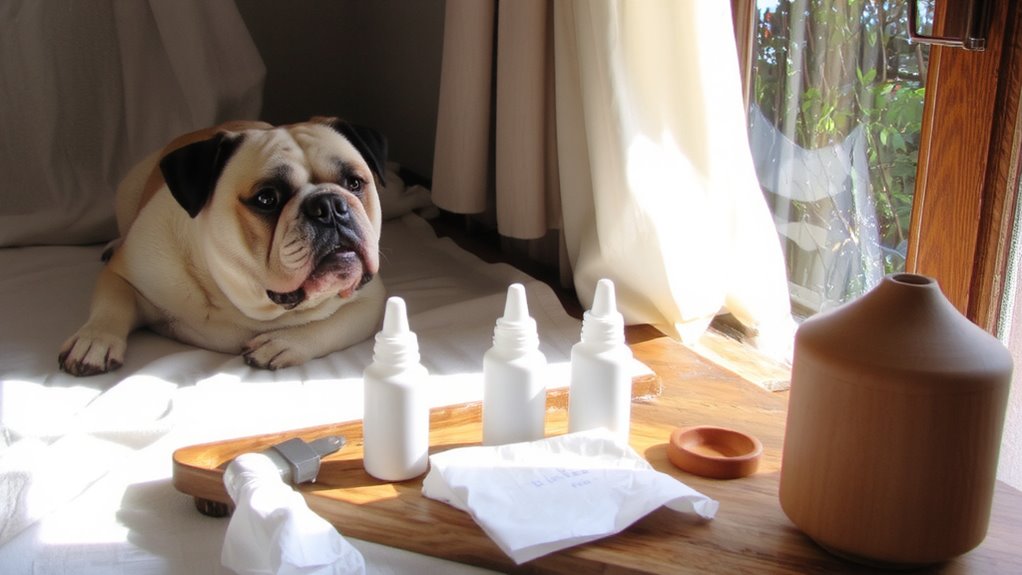
While their flattened faces give bulldogs their distinctive look, that same anatomy makes them highly sensitive to airborne irrit🚚ants like fragrances. You’ll notice breathing becomes labored when air quality declines. That’s because senior bulldogs have narrowed airways and reduced lung capacity, worsening their chemical sensitivity. Fragranced products release volatile organic compounds (VOCs), which inflame mucous membranes and constrict air passages. Exposure leads to coughing, wheezing, and increased respiratory effort. Studies show indoor VOC concentrations can be 2–5 times higher than outdoor levels. Even small amounts trigger symptoms in dogs with compromised respiratory function. Their olfactory system processes irritants more intensely, amplifying discomfort. Poor air quality doesn’t just cause short-term distress-it can lead to chronic bronchitis or secondary infections. You must control environmental triggers. Eliminating synthetic fragrances reduces airborne irritants markedly. Improved air quality lessens respiratory strain. Managing chemical sensitivity is critical for maintaining your senior bulldog’s breathing efficiency and overall health.
Reading Labels Like a Pro: Spot Hidden Fragrances in Everyday Products
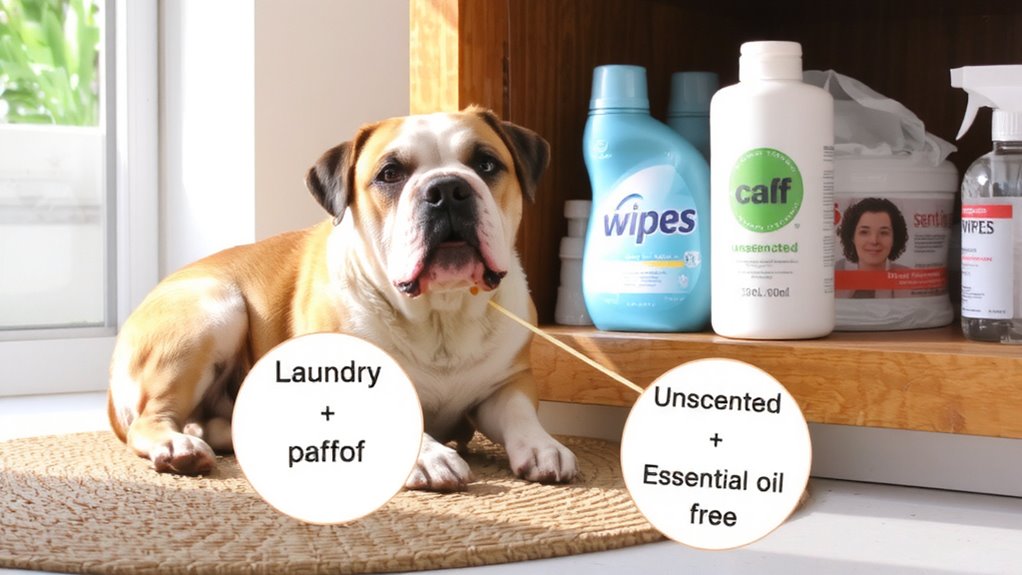
How can you tell if a product contains hidden fragrances that could harm your senior bulldog? Check labels for terms like “fragrance,” “parfum,” or “aroma,” which often mask synthetic compounds. Even products labeled “natural” may contain irritants. Natural extracts and essential oils are common culprits; while derived from plants, they emit volatile organic compounds (VOCs) that can inflame sensitive airways. For example, limonene (from citrus) and linalool (from lavender) degrade into formaldehyde. These substances persist in indoor air, increasing exposure risk. A true fragrance-free product contains zero added scent chemicals, unlike “unscented” versions, which may use odor-masking agents. Verify ingredients through third-party certifications like ECOCERT or the National Eczema Association. Avoid anything listing essential oils-even plant-based ones-since their chemical volatility poses respiratory hazards. Accuracy in labeling protects your bulldog’s compromised lung function.
Top Fragrance-Free Alternatives for Bulldog Grooming Products
A clean coat starts with the right shampoo-one that prioritizes your elderly bulldog’s respiratory health without sacrificing cleaning power. Choose veterinary-formulated, fragrance-free shampoos with a neutral pH (5.5–7.0) to preserve skin barrier integrity. Products containing colloidal oatmeal (1–3%) soothe dryness linked to hypothyroidism awareness, a common condition affecting coat quality. Avoid sulfates and alcohol, which strip natural oils. Use lukewarm water (98–102°F) and gentle massaging to support joint mobility exercises during grooming sessions. Hypoallergenic conditioners with ceramides (0.2–0.5%) help retain moisture and reduce scaling. Opt for tear-free, soap-free formulas proven in clinical trials to reduce airborne particulates by up to 40%. Brands like Vet’s Best and Douxo offer metered-pump dispensers ensuring consistent dosage (2–3 ml per 10 lbs body weight). These alternatives minimize respiratory triggers while maintaining dermatological efficacy, essential for geriatric bulldogs with compromised organ function.
Choosing Safe, Scent-Free Home Cleaners for Sensitive Bulldogs
Why risk irritating your elderly bulldog’s airways with ordinary cleaners packed with synthetic fragrances and volatile organic compounds (VOCs)? These chemicals can exacerbate respiratory conditions common in senior bulldogs. Switch to scent-free, non-toxic cleaners to maintain a safe environment. Use natural wipes for quick cleanups-they’re free of alcohols and fragrances that could trigger irritation. Pair your cleaning regimen with HEPA-filter air purifiers to reduce airborne irritants. Below are recommended options:
| Product Type | Key Feature | VOC Emission Level |
|---|---|---|
| Vinegar Solution | 5% acetic acid, diluted 1:1 with water | Near-zero |
| Castile Cleaner | Plant-based, biodegradable | <5 g/L |
| Hydrogen Peroxide | 3% concentration, disinfectant | Zero |
| Natural Wipes | Fragrance-free, compostable fibers | Zero |
| Air Purifiers | True HEPA + activated carbon filter | N/A (removes VOCs) |
Choose wisely-your bulldog’s breathing depends on it.
Creating a Low-Irritant Routine for Your Senior Bulldog’s Daily Care
While your senior bulldog’s sensitive respiratory system demands careful environmental management, daily care routines play an equally critical role in minimizing irritation. Use fragrance-free wipes with a pH of 5.5–7.0 to clean facial folds daily, reducing bacterial accumulation. For bedtime hygiene, gently cleanse wrinkled areas with a hypoallergenic, alcohol-free solution to prevent micro-inflammation. Apply a thin layer of veterinary-approved, lanolin-free ointment to maintain skin barrier integrity. Choose fragrance-free, dye-free laundry detergent for all bedding, rinsed twice to eliminate residue. Incorporate dietary supplements such as omega-3 fatty acids (EPA/DHA at 500–1000 mg per 20 lbs body weight daily) to support skin health. Glucosamine-chondroitin supplements (15 mg/kg/day) may reduce joint stiffness, aiding mobility. Restrict outdoor exposure during high-pollen hours. Use HEPA-filtered air purifiers set to ≤0.3 microns for continuous particulate reduction.
On a final note
Your elderly bulldog’s respiratory health depends on strict fragrance avoidance. Fragrances contain volatile organic compounds (VOCs) that exacerbate brachycephalic airway syndrome. Choose grooming and cleaning products labeled “fragrance-free,” not “unscented,” which may still contain masking scents. Opt for hypoallergenic, pH-balanced shampoos with non-ionic surfactants. Use cleaners with EPA Safer Choice certification. Maintain indoor air with HEPA filters rated for particles 0.3 microns or larger.