How to Socialize Your Puppy to Accept Being Carried in a Bag
Set up a padded, ventilated bag with reinforced stitching and a rigid base measuring at least 18”L x 10”W x 12”D. Let your puppy explore it freely on the floor for 3–5 minutes daily. Lure with 5-gram treats placed just inside the low-entry opening. Lift the bag for only 3–5 seconds at first, rewarding immediately. Use a carrier under 3 lbs with mesh panels and 50-lb zippers. Continue this structured approach to build lasting comfort and trust.
Notable Insights
- Set up a safe, well-ventilated bag with padded walls, a rigid base, and chew-resistant, non-toxic fabric to create a secure environment.
- Let your puppy explore the open bag at their own pace to build positive associations through self-guided tactile interaction.
- Lure your puppy into the bag with high-value treats, rewarding voluntary entry to encourage willingness without force.
- Practice brief lifts of the bag, immediately rewarding your puppy to build comfort with movement and handling.
- Take short outdoor walks with your puppy in the bag, gradually increasing duration while monitoring for signs of stress.
Set Up the Bag as a Safe Space
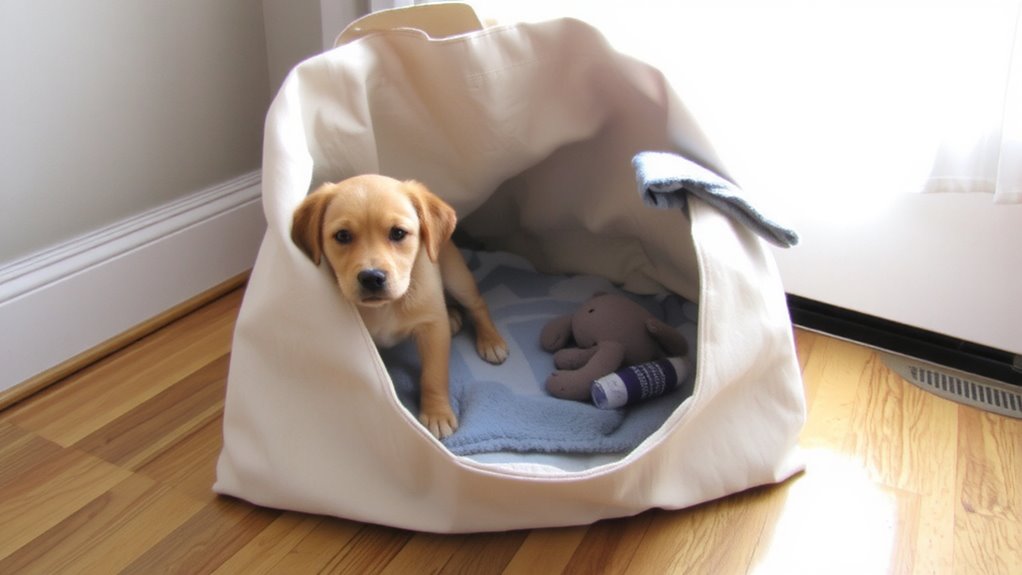
Comfort begins with setup. Choose a bag design that supports your puppy’s weight distribution and allows head-up positioning, ideally with padded walls and ventilation on at least two sides. Structural integrity matters: select bags with reinforced stitching and weight-tested zippers (minimum 50-lb capacity for small breeds). Material safety is non-negotiable-use non-toxic, chew-resistant fabrics meeting ASTM F963-17 toy safety standards. Avoid phthalates, lead, and off-gassing plastics. Line the interior with a machine-washable, hypoallergenic pad (minimum 1-inch foam density) to cushion joints during movement. Guarantee the base is rigid enough to prevent collapse-ideal depth is 10–12 inches for puppies under 15 lbs. Reflective trim increases visibility. Position handles and straps ergonomically to reduce shifting. Proper setup prevents stress-related behaviors and supports physiological stability during transport. For air travel, ensure the carrier meets airline standards by selecting an airline-approved pet carrier that fits under the seat and complies with IATA Live Animal Regulations.
Let Your Puppy Explore the Bag First
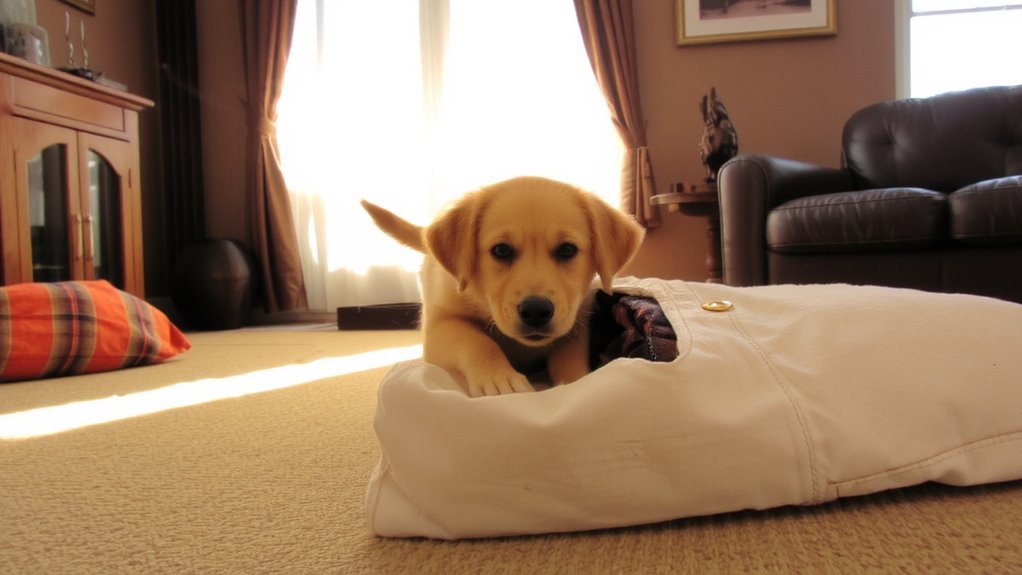
Curiosity drives acceptance. Allow your puppy to investigate the bag at their own pace, ensuring the environment remains calm and pressure-free. Sensory exposure begins with sight and smell-place the bag on the floor, open and accessible. Let them approach, sniff, and peer inside. The interior fabric should be non-slip and breathable, with smooth seams to prevent snagging. Use a nylon or canvas tote with rigid structure to maintain consistent shape, measuring at least 18” long, 10” wide, and 12” deep for small to medium breeds. Gradual acclimation means no forced entry. Allow tactile interaction-paws touching the lining, head dipping in. Monitor body language: relaxed ears and loose posture indicate comfort. Keep sessions brief-3 to 5 minutes-and repeat multiple times daily. This phase builds neural associations between the bag and safety, forming the behavioral foundation for future handling.
Lure With Treats to Enter Willingly
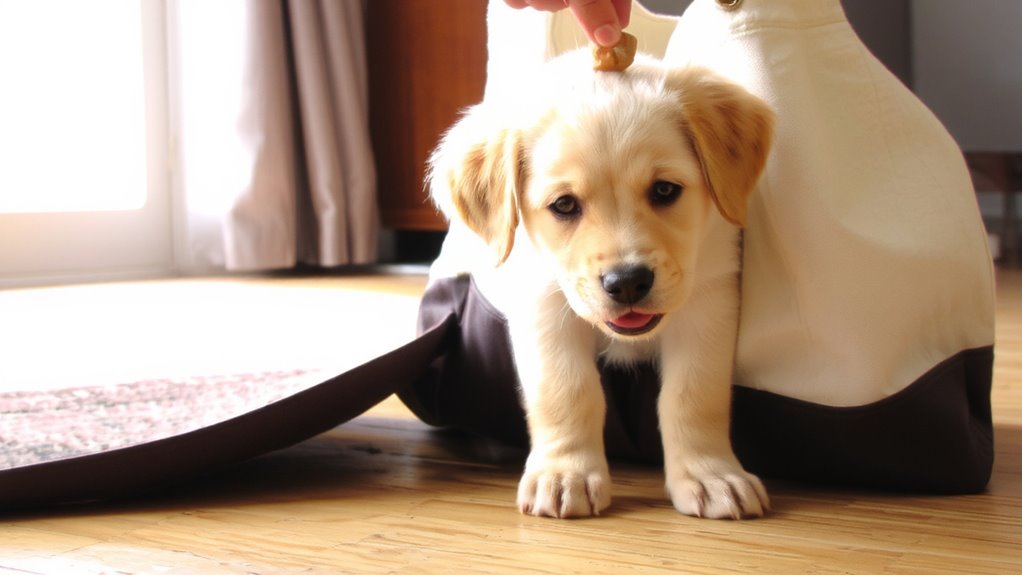
A single treat can make all the difference in shaping your puppy’s willingness to enter the bag. Use positive reinforcement by offering a high-value treat near the bag’s entrance. Position the treat just inside so your puppy must step in to reach it. Reward immediately upon entry to reinforce the behavior. This method relies on gradual exposure, starting with short sessions of 2–3 minutes, conducted 2–3 times daily. Choose training treats weighing less than 5 grams to avoid overfeeding during repeated trials. Maintain consistency in treat type and timing to strengthen the association. Use a flat, low-entry bag with a rigid base, no taller than 30 cm, to prevent intimidation. Over 7–10 days, increase proximity and depth of entry. Monitor body language-relaxed ears and tail indicate receptiveness. Avoid force, as it disrupts conditioning. Successful trials yield voluntary entry within two weeks.
Try Brief Lifts With Immediate Rewards
Start with lifts lasting no more than 3 to 5 seconds to minimize stress and build acceptance. Use positive reinforcement immediately after setting your puppy down. Offer a treat or verbal praise within two seconds to create a strong association between being lifted and reward. This timing aligns with operant conditioning principles, ensuring the behavior is accurately reinforced. Apply gradual exposure by increasing lift duration by one-second increments only after three consecutive successful trials. Perform sessions two to three times daily, limiting each to five repetitions to prevent habituation. Support your puppy’s torso and hindquarters evenly, mimicking the carry position used in the bag. Maintain a neutral expression and calm tone to avoid emotional overstimulation. Consistency in technique and timing enhances predictability, helping the puppy adapt efficiently. Avoid prolonged lifts until baseline compliance is achieved across five sessions.
Take the Bag on Short Outdoor Walks
Once your puppy accepts being lifted and held in the bag indoors without signs of stress, you can begin acclimating them to outdoor environments. Start with brief outdoor exposure, limiting initial walks to five minutes in quiet, low-traffic areas. Maintain consistent bag comfort by using a ventilated, padded carrier with a breathable mesh front and secure zipper closures. Position your puppy so its head remains uncovered, allowing visual and auditory stimulation without overheating. Keep walks short but frequent, gradually increasing duration by two minutes per session. Ideal carriers measure 18”L x 11”W x 12”H for small breeds, weighing under 3 lbs empty. Monitor heart rate and respiration; a stressed puppy exceeds 120 bpm. Use positive reinforcement with treats at walk’s end. Repeat daily to reinforce calm behavior during movement. A high-quality pet travel bag ensures safety, comfort, and proper ventilation during these early outdoor experiences.
On a final note
You now have a structured method for acclimating your puppy to bag transport. Begin by establishing the bag as a secure environment, free from drafts and noise. Use a soft-sided carrier with internal dimensions of 18″ x 10″ x 11″ for small breeds. Guarantee ventilation ports measure 0.5″ in diameter and are spaced every 3 inches. Reinforced stitching and a five-point harness attachment guarantee safety. Acclimation takes 10–14 days with consistent 5-minute daily sessions.