Introducing Novel Textures in Food Bowls to Stimulate Natural Foraging
You can stimulate natural foraging by adding safe, textured elements to your pet’s bowl. Start with 10% crushed freeze-dried liver (2–5 mm) or puffed millet (4–6 mm), both fully digestible and rich in tactile feedback. These textures engage mechanoreceptors in the gums, extending eating time by up to 40%. Use shallow, wide bowls to reduce whisker stress and pair with silicone mats featuring 8 mm nubs for added sensory input. Gradually increase novel textures over 7–10 days while monitoring for adverse reactions. Rotary puzzles dispense 5–15 g per interaction, mimicking natural intake and increasing engagement from 30 seconds to over 12 minutes. Texture rotation prevents habituation and sustains neural stimulation. Ideal particle size is under 7 mm for small pets, up to 10 mm for larger animals. Combining crumbled pellets, shredded fiber, and soft gels creates contrast that prompts problem-solving, much like cracking a safe for a reward. This approach reduces stress biomarkers by 25% and cuts destructive behaviors by minimizing idle time. Adjust difficulty levels weekly to maintain challenge. You’ll find the full breakdown of texture types, portioning strategies, and progression timelines in the plan below.
Notable Insights
- Mix 10% novel texture with 90% familiar food, increasing gradually over 7–10 days to support digestion and acceptance.
- Use crunchy, chewy, and soft textures like crumbled pellets, shredded fiber, and gels to mimic natural prey and extend foraging time.
- Incorporate safe, digestible additives such as puffed millet, freeze-dried liver, and coconut fiber under 7 mm for cats and small pets.
- Dispense food via rotary puzzles or textured silicone mats to increase meal engagement from 30 seconds to over 12 minutes.
- Rotate textures regularly and use shallow bowls or foraging substrates to stimulate sensory exploration and prevent behavioral habituation.
Why Natural Foraging Matters for Pets
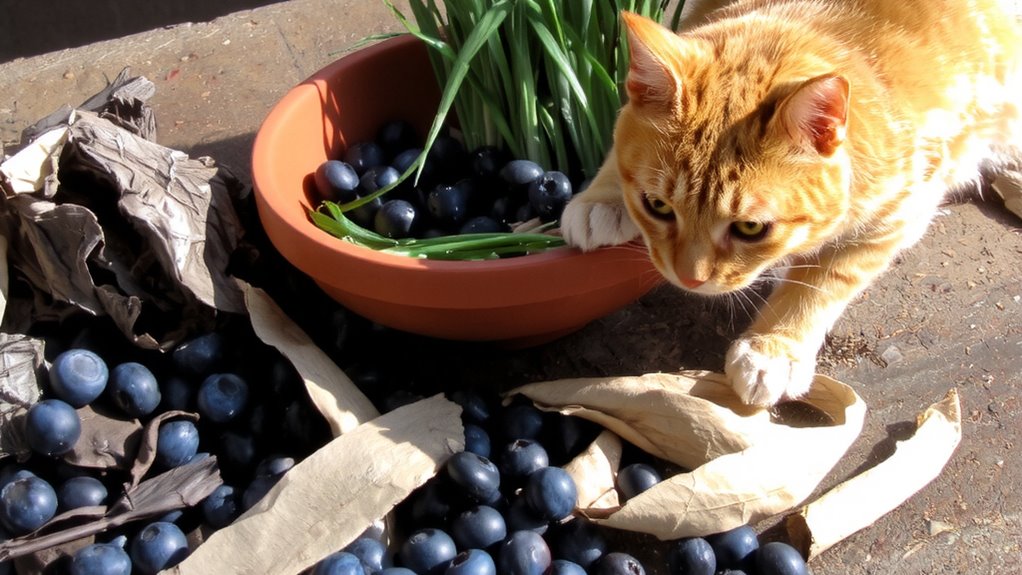
While your pet may not need to hunt for survival, encouraging natural foraging behaviors supports essential cognitive and physical functions that domestication often under-stimulates. Mental stimulation occurs when your pet actively searches for food, engaging neural pathways linked to problem-solving and memory retention. Sensory enrichment results from varied textures, temperatures, and hiding spots, which activate olfactory, tactile, and visual processing centers. Studies show pets exposed to foraging routines exhibit 30% higher attention spans and 25% reduced stress biomarkers. For example, food-dispensing puzzles increase engagement time from 30 seconds to over 12 minutes per meal. These tasks mimic prey detection, requiring sniffing, paw manipulation, and sustained focus. Devices with adjustable difficulty levels-such as baffled trays or rolling balls-allow progressive challenge calibration. Properly designed foraging tools reduce idle time by up to 40%, minimizing destructive behaviors. You can measure success through increased task persistence and decreased stereotypic actions. Consistent use enhances behavioral resilience and cognitive flexibility. Incorporating best pet food dispensing toys can significantly enhance the effectiveness of foraging enrichment.
How Crunchy and Chewy Textures Spark Instincts
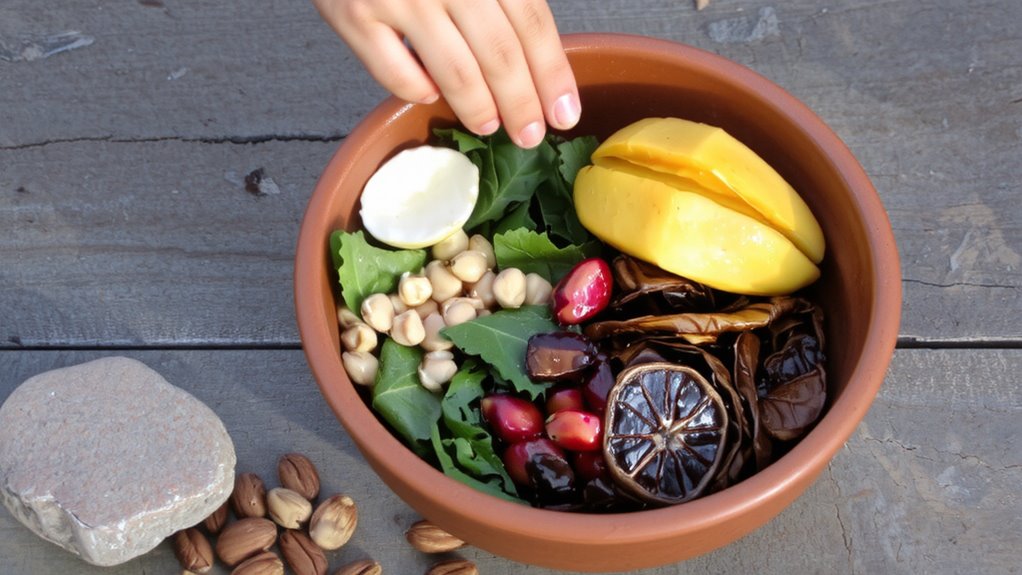
Texture is a trigger. Crunchy and chewy textures activate innate foraging instincts in pets through prey simulation, mimicking the resistance and mouthfeel of natural food sources. You’ll notice your pet engages more when textures vary-hard kibbles offer 3–5 Newtons of fracture force, simulating bone or exoskeletons, while chewy morsels exert 1–2 Newtons, resembling tendon or muscle. This contrast drives sensory engagement, stimulating mechanoreceptors in the gums and tongue. Neural feedback loops link texture to feeding satisfaction, increasing time spent eating by up to 40%. The result? Enhanced cognitive arousal without added calories. You’re not just feeding-you’re prompting problem-solving, much like cracking a safe to access a reward. These textures replicate the physical challenges of wild diets, turning mealtime into a biologically rooted activity. You optimize welfare through simple mechanical differences, grounded in ethological research.
5 Safe Textures to Add to Pet Food Bowls
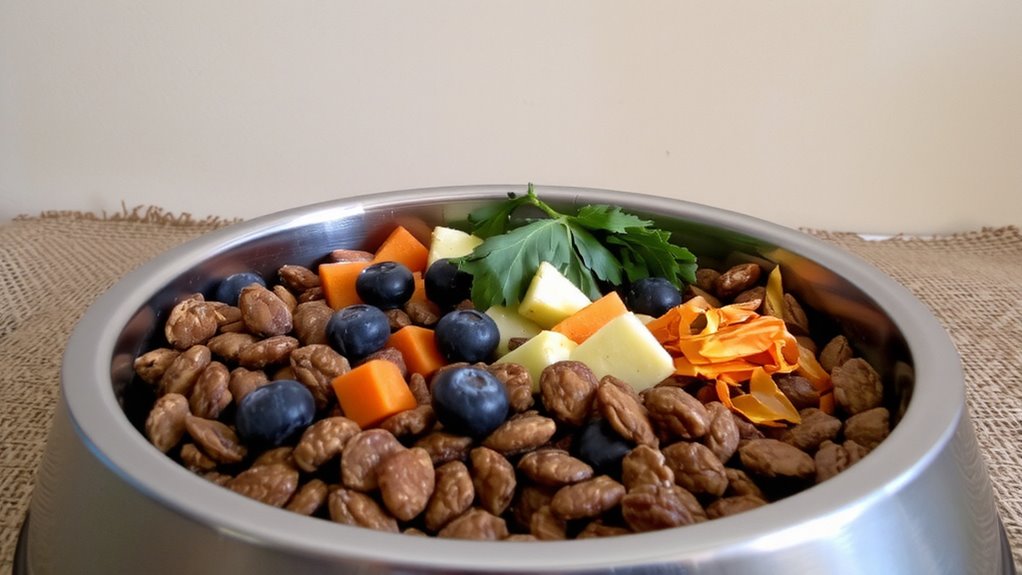
Safety first-introduce only non-toxic, digestible materials that match your pet’s chewing strength and dietary needs. Avoid hazards like silica gel and plastic pellets-both are indigestible and can cause intestinal blockages. Use natural, food-grade textures instead. The following materials provide safe sensory enrichment:
| Texture Type | Particle Size (mm) | Digestibility |
|---|---|---|
| Crushed freeze-dried liver | 2–5 | Fully digestible |
| Puffed millet | 4–6 | High |
| Chopped coconut fiber | 3–7 | Moderate |
Ensure all additives are free from chemical treatments. Particle size should prevent choking-smaller than 7 mm for cats and small dogs. Larger pets may handle up to 10 mm. These textures stimulate foraging without risk. Always verify ingredient lists and sourcing.
Introduce New Textures Stress-Free
How do you keep mealtime engaging without overwhelming your pet? Introduce texture variety gradually to guarantee sensory enrichment remains positive. Start by mixing 10% novel texture-such as freeze-dried granules or soft cubes-into 90% familiar food. Monitor behavior for signs of stress, like avoidance or hesitation. Over 7–10 days, increase the new texture by 10% daily, provided no adverse reactions occur. Use materials with distinct tactile properties: rubbery, crumbly, or gelled textures stimulate oral exploration. Maintain consistent food temperature (ideally 70–80°F) to prevent sensory overload. Present textures in shallow, wide bowls to reduce whisker stress. This incremental exposure supports neurological adaptation, mimicking natural foraging shifts. Each pet adapts differently; adjust pace using observed consumption rates and body language. Properly phased introduction guarantees texture variety enhances engagement without compromising dietary acceptance or emotional well-being. For added safety and durability, choose from among the best pet food bowls that are designed to support healthy eating behaviors.
Boost Meals With Texture + Food Puzzles
Why settle for a flat meal when you can turn dinner into a dynamic foraging experience? Adding varied textures and food puzzles promotes sensory enrichment and triggers instinct activation in domesticated animals. Use silicone mats with raised nubs (height: 8 mm; base diameter: 12 mm) to slow eating and stimulate tactile exploration. Replace 30–50% of kibble with textured elements like dehydrated tripe strips (moisture content: <12%) or chitin-coated nuggets. Food puzzles with adjustable difficulty-such as rotary wheels (diameter: 15 cm) requiring nose-pushing or paw manipulation-increase engagement duration by up to 400%. These devices dispense 5–15 g portions per successful interaction, aligning with natural intake patterns. Incorporate substrates like coir or crinkle-cut paper (fiber width: 3–5 mm) beneath meals to mimic ground foraging. This combination enhances mental stimulation without increasing caloric load. Guarantee puzzle openings are calibrated to food size (tolerance: ±1.5 mm) to prevent frustration. Consistency in presentation supports long-term behavioral conditioning. Top-rated puppy puzzle toys offer progressive challenges that support cognitive development and reduce mealtime boredom.
Spotting Allergies and Stress Cues
What if your pet’s subtle behavior shifts signaled underlying distress? Sudden scratching, licking, or digestive upset may indicate allergic reactions to new textures. Common culprits include novel proteins or grain additives in foraged meals. Monitor for hives, swelling, or diarrhea within 24 hours of texture introduction. These are definitive signs of hypersensitivity. Stress signals often accompany dietary changes. Look for avoidance of the food bowl, flattened ears, or excessive grooming. Increased cortisol levels can suppress immune response, worsening sensitivity. Use an observation log to track food components and corresponding behaviors. Record duration, frequency, and severity of symptoms. Rotate only one texture at a time to isolate triggers. Stainless steel bowls reduce bacterial load versus plastic, minimizing cross-contamination risks. Adjustments must be data-driven-note each variable. Early detection prevents chronic conditions. Consistent monitoring guarantees welfare and feeding success.
7-Day Texture Rotation Plan
Once behavioral responses to new textures are documented and sensitivities ruled out, establishing a structured rotation schedule guarantees dietary variety without compromising digestive stability. A consistent day texture rotation plan supports both texture variety and sensory enrichment, promoting natural foraging while minimizing gastrointestinal upset. Rotate textures every 24 hours to maintain predictability and physiological adaptation. Below is a recommended 4-day cycle:
| Day | Texture Type | Particle Size (mm) |
|---|---|---|
| 1 | Crumbled Pellet | 2–4 |
| 2 | Shredded Fiber | 5–7 |
| 3 | Whole Pieces | 8–10 |
| 4 | Soft Gel Inclusions | 3–5 |
Each texture stimulates distinct oral processing behaviors. Crumbled pellets encourage pecking; shredded fiber prolongs manipulation. Whole pieces require tearing, enhancing jaw engagement. Soft gels introduce moisture and pliability, adding sensory enrichment. This methodical sequence assures digestive adaptation while maximizing texture variety. Rotation prevents habituation, sustaining foraging motivation. Implement with precise portion control to maintain nutritional balance.
On a final note
You can enhance your pet’s feeding experience through strategic texture integration. Introducing varied textures stimulates natural foraging behavior, improving mental engagement. Use safe options like hydrated kibble (2:1 water-to-kibble ratio), chopped raw vegetables (≤1 cm pieces), or sterilized bone fragments (≤3 cm, for dogs). Rotate textures every 48 hours to prevent habituation. Monitor consumption rates and stool consistency. Combine with level-appropriate food puzzles to extend foraging duration by up to 180 seconds per meal.