Step-By-Step Guide to Introducing Prebiotic Fiber Into Your Cat’s Diet Safely
Start with a vet-approved prebiotic like chicory root inulin or FOS, giving your cat just 1/8 teaspoon daily. This low dose supports gut health without overwhelming digestion. Gradually increase to 1/4 teaspoon by week two if stools remain firm and your cat shows no discomfort. Monitor stool consistency closely-ideal output resembles moist modeling clay. Adjust the dose up by 0.1 g or down by 0.05 g based on results. Persistent diarrhea, vomiting, or signs of pain mean you should stop and consult a vet immediately. Ideal intake ranges from 0.2 to 0.5 grams per 10 lbs body weight. Commercial diets often include 0.1% to 0.5% prebiotics for safe, consistent delivery. You’ll find more precision in how timing, source quality, and individual response shape long-term success.
Notable Insights
- Choose vet-approved prebiotics like inulin or FOS, avoiding fermented foods unsuitable for cats.
- Start with 1/8 teaspoon daily to allow your cat’s digestive system to gradually adapt.
- Monitor stool consistency, frequency, and appetite closely during the first week.
- Adjust dosage by small increments based on stool results, not exceeding 0.5 grams per 10 lbs.
- Seek veterinary care if vomiting, diarrhea, lethargy, or abdominal pain persists beyond 48 hours.
Pick Safe Prebiotic Sources for Cats
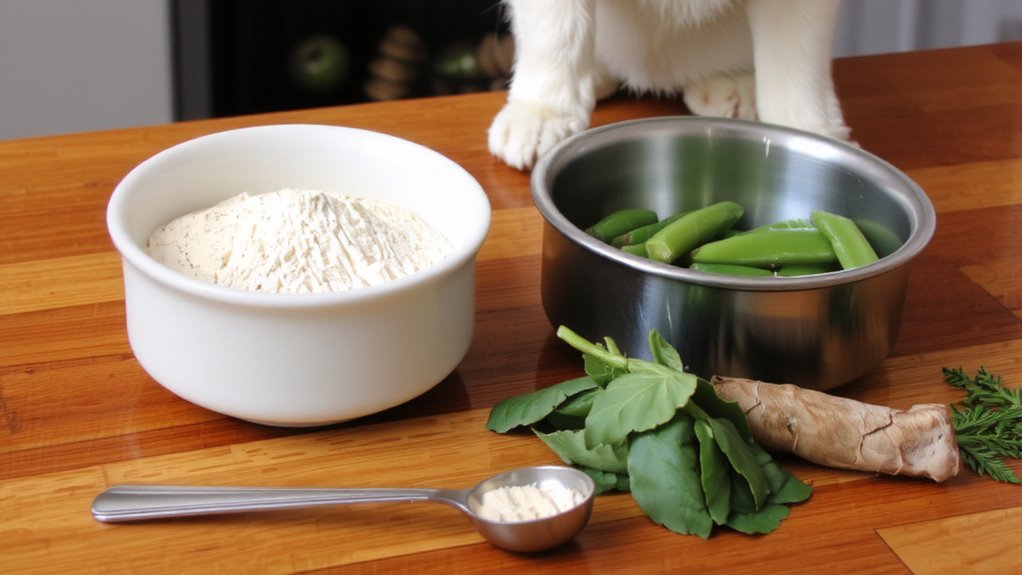
Where can you find prebiotics that are truly safe for your cat? Stick to vet-approved prebiotic sources like inulin from chicory root or fructooligosaccharides (FOS), which are well-studied and non-digestible. Fermented foods may sound beneficial, but most aren’t formulated for feline digestion and can disrupt your cat’s gut microbiome. Cats are obligate carnivores-their digestive systems aren’t built to process plant-based fermentation byproducts efficiently. Some commercial cat foods include safe, controlled levels of prebiotics, typically 0.1% to 0.5% by weight. These levels support beneficial bacterial growth without causing gas or bloating. Always verify ingredient lists and avoid human-grade fermented products like kefir or sauerkraut. They contain compounds that can be harmful. Targeted feline prebiotics help maintain microbial balance in the gut microbiome, enhancing nutrient absorption and immune response-critical for long-term health.
Start With a Tiny Fiber Dose
Begin with just 1/8 teaspoon of prebiotic fiber per day for your cat, especially if they’ve never had fiber supplements before. This minimal dose reduces the risk of adverse reactions, including potential fiber allergies. Gradual introduction supports gastrointestinal adaptation without overwhelming the digestive system. Monitor your cat closely, as even small changes can affect stool consistency.
| Week | Daily Dose | Observation Focus |
|---|---|---|
| 1 | 1/8 tsp | Stool consistency, appetite |
| 2 | 1/4 tsp | Energy levels, hydration |
| 3 | 1/2 tsp | Bowel movement frequency |
| 4 | 3/4 tsp | Signs of fiber allergies |
Increasing slowly allows the gut microbiome to adjust. Never exceed recommended amounts without veterinary guidance. Consistent dosing maintains digestive balance and prevents complications linked to sudden dietary changes.
Watch for Digestive Changes
While adjusting your cat’s prebiotic fiber intake, you’ll need to monitor for clear signs of digestive change. Watch gut motility-normal movement should remain consistent; slowed or rapid transit can signal imbalance. Check stool consistency daily. Ideal stool is firm, moist, and成型-similar to modeling clay. Loose stools may indicate fermentation overload, while hard stools suggest insufficient moisture or fiber. Sudden shifts in frequency, volume, or odor also matter. Gas or bloating reflects microbial activity adjusting to new substrates. Track these changes over 5–7 days per dosage stage. Subtle shifts are expected, but pronounced diarrhea or constipation means pausing supplementation. Accurate observation guarantees gut adaptation without distress. Proper tracking helps you identify your cat’s tolerance threshold. Maintain a log: note dose, timing, and each bowel movement’s traits. This data supports informed decisions before progressing.
Adjust Fiber Based on Your Cat’s Response
You’ve tracked your cat’s digestion over several days and now have clear data to guide your next move. Adjust prebiotic fiber based on your cat’s stool consistency to avoid fiber overload. Small changes in intake can greatly affect gut health. Use this guide to fine-tune dosage:
| Stool Consistency | Action |
|---|---|
| Hard, dry pellets | Increase fiber by 0.1 g/day |
| Soft, formed stools | Maintain current dose |
| Loose, mushy stools | Reduce fiber by 0.0.05 g |
| Diarrhea | Pause fiber for 2 days |
| Normal, firm stools | Ideal-continue dosage |
Gradual adjustments prevent digestive imbalance. Fiber needs vary per cat. Monitor stool daily and modify slowly over 5–7 days. Best intake typically ranges from 0.2 to 0.5 grams per 10 lbs body weight daily. Avoid abrupt increases. Your observations directly influence your cat’s gastrointestinal performance and microbiome balance.
Know When to Call the Vet
How can you tell when a minor digestive hiccup becomes a veterinary concern? Persistent vomiting or diarrhea lasting over 48 hours warrants immediate evaluation. Abdominal pain may present as vocalization, hunched posture, or avoidance of movement. Palpate gently; if your cat flinches or tenses, inflammation or obstruction could be present. Lethargy-defined as reduced responsiveness, lack of interest in food, or failure to groom-signals systemic distress. Normal activity should resume within 24 hours of fiber adjustment. If your cat consumes over 0.5 grams of prebiotic fiber per kilogram body weight daily and exhibits these symptoms, discontinue supplementation. Dehydration risk increases with fluid loss; check skin turgor by lifting the scruff-if it doesn’t snap back within 2 seconds, seek help. Blood in stool, fever above 103.5°F (39.7°C), or prolonged anorexia require urgent veterinary intervention. Monitor closely during the first 72 hours of any dietary change. Some aquarium snails can be sensitive to dietary and environmental changes, much like how nutritional adjustments affect cats.
Do Cats Need Prebiotic Fiber? (Yes: Here’s Why)
Cat digestive issues sometimes signal deeper imbalances, but addressing them starts with understanding what your cat’s gut truly needs. Yes, cats need prebiotic fiber-it fuels beneficial bacteria in the gut microbiome. Without it, nutrient absorption declines, weakening overall health. Prebiotics like fructooligosaccharides (FOS) and inulin are non-digestible fibers that selectively feed good gut bacteria. A balanced gut microbiome improves digestion, immunity, and metabolic efficiency.
| Benefit | Mechanism | Evidence |
|---|---|---|
| Enhanced nutrient absorption | Fermentation produces short-chain fatty acids | Increases mineral uptake by 15–20% |
| Stable gut microbiome | Promotes Bifidobacterium growth | 30% higher colony count in 4 weeks |
| Reduced diarrhea | Lowers intestinal pH | Inhibits pathogenic bacteria |
| Improved stool quality | Increases water retention in colon | Firmer stools in 89% of cases |
| Immune support | Strengthens gut barrier function | Lowers endotoxin translocation by 40% |
On a final note
You must introduce prebiotic fiber cautiously. Start with 100–200 mg per day of fructooligosaccharides (FOS) or inulin, mixed into meals. Monitor stool consistency and frequency daily. Gradually increase to 400–500 mg daily over four weeks if tolerated. Discontinue use if diarrhea, gas, or vomiting occurs. Fiber supports gut microbiota balance and SCFA production, but excessive amounts impair nutrient absorption. Consult your veterinarian before continuing long-term.