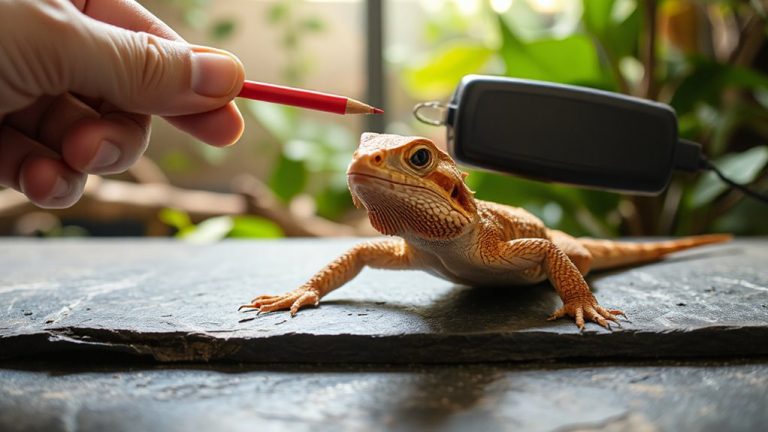
Understanding Operant Conditioning in Training Your Exotic Pets
You shape your exotic pet’s behavior through operant conditioning by linking actions to precise consequences within 1–2 seconds. Positive reinforcement, like offering mealworms or sunflower seeds, strengthens desired behaviors when delivered immediately. Use fixed-ratio or variable-interval schedules to maintain response rates. Avoid punishment-it risks fear and confusion. Instead, apply negative reinforcement only if needed, ensuring mild, timed stimulus removal. Consistency in timing, rewards, and daily 10–15 minute sessions builds reliable, lasting behaviors. Further details reveal even greater precision in training outcomes.
Notable Insights
- Operant conditioning uses consequences like rewards or stimulus removal to shape desired behaviors in exotic pets.
- Positive reinforcement strengthens behaviors by delivering immediate, species-appropriate rewards within 1–2 seconds of the action.
- Negative reinforcement increases behavior by ending an aversive stimulus, such as reducing heat when a reptile moves to a target zone.
- Punishment is risky and often counterproductive; use differential reinforcement or time-outs instead to avoid fear or aggression.
- Short, daily training sessions with consistent timing, varied stimuli, and logged progress optimize learning and prevent habituation.
What Is Operant Conditioning for Exotic Pets?
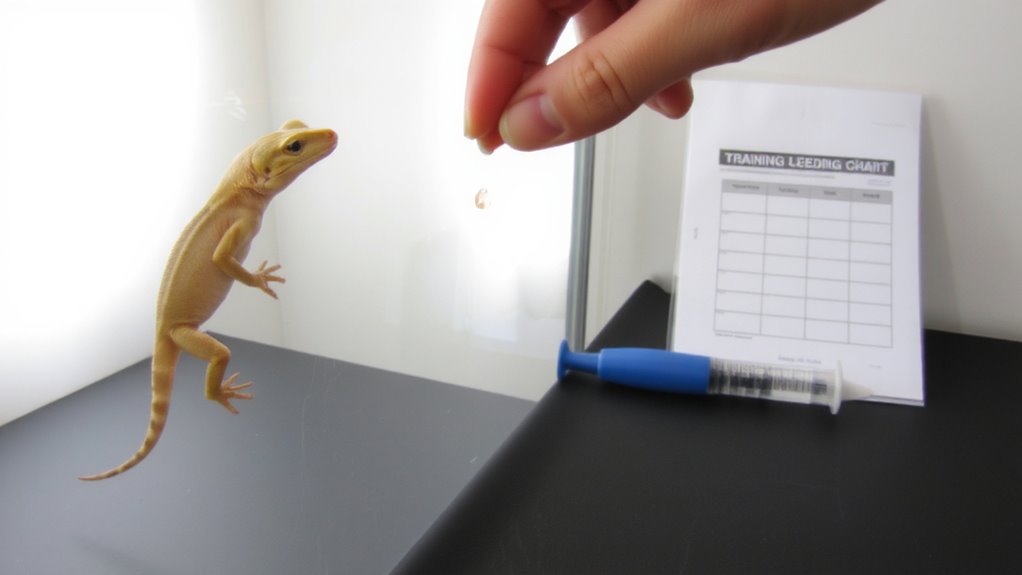
Behavior is the cornerstone of how exotic pets interact with their environment, and operant conditioning shapes that behavior through consequences. You use operant conditioning when you reinforce or punish specific actions to increase or decrease their frequency. Unlike classical conditioning, which pairs stimuli to evoke reflexive responses, operant conditioning relies on consequence-driven learning. Stimulus generalization occurs when your pet responds similarly to related cues, such as reacting to different tones or gestures as if they’re identical. This can affect training precision. Positive outcomes follow consistent reinforcement schedules-fixed ratio (FR-5) or variable interval (VI-30 sec), for example. Accurate timing of consequences within 1–2 seconds guarantees proper association. Devices like clickers provide discriminative stimuli, marking desired behaviors with 0.5-second precision. You must control environmental variables to limit unintended reinforcement. Mastery requires understanding how stimulus control, extinction, and spontaneous recovery influence long-term behavioral adaptation in species from reptiles to birds.
How Positive Reinforcement Shapes Pet Behavior
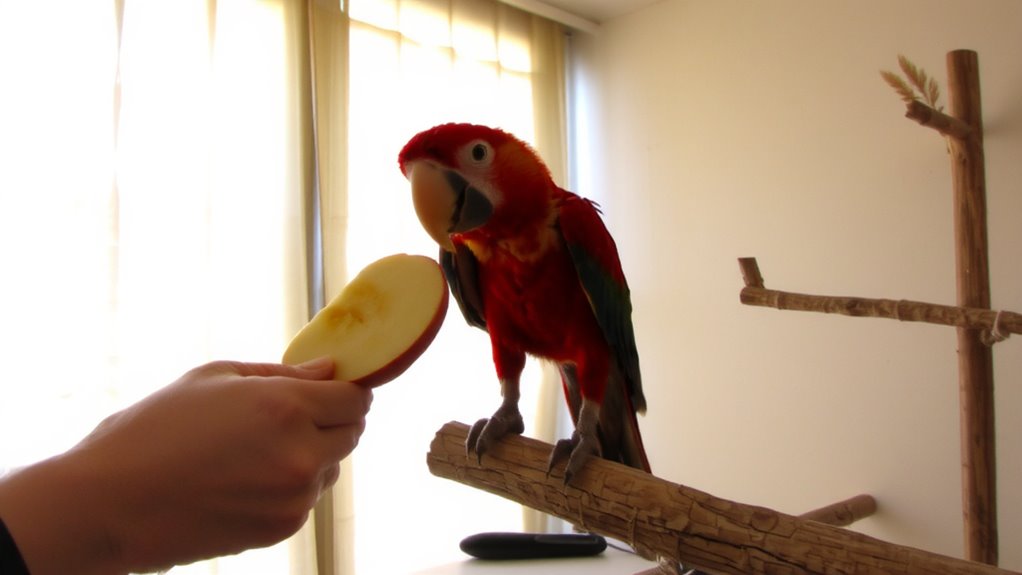
Success in training exotic pets often hinges on one powerful tool: positive reinforcement. This method strengthens desired behaviors by immediately following them with a reward. Proper reward timing is critical-delays longer than 2 seconds weaken learning efficacy. Consistency building guarantees your pet reliably associates action with outcome. Use small, frequent rewards and repeat sessions daily for peak conditioning.
| Species | Reward Type | Ideal Timing |
|---|---|---|
| Parrot | Sunflower seed | <1 second |
| Sugar Glider | Mealworm | <2 seconds |
| Bearded Dragon | Cricket | <2 seconds |
| Ferret | Chicken treat | <1 second |
Rewards must be species-specific and administered with precision. Neural pathways reinforce behavior most effectively when intervals between action and reward are short and predictable. Maintain session logs to track progress in consistency building. Over time, this structured approach produces measurable behavioral improvements, enhancing both learning speed and retention in exotic animals.
When to Use Negative Reinforcement (and When to Avoid It)
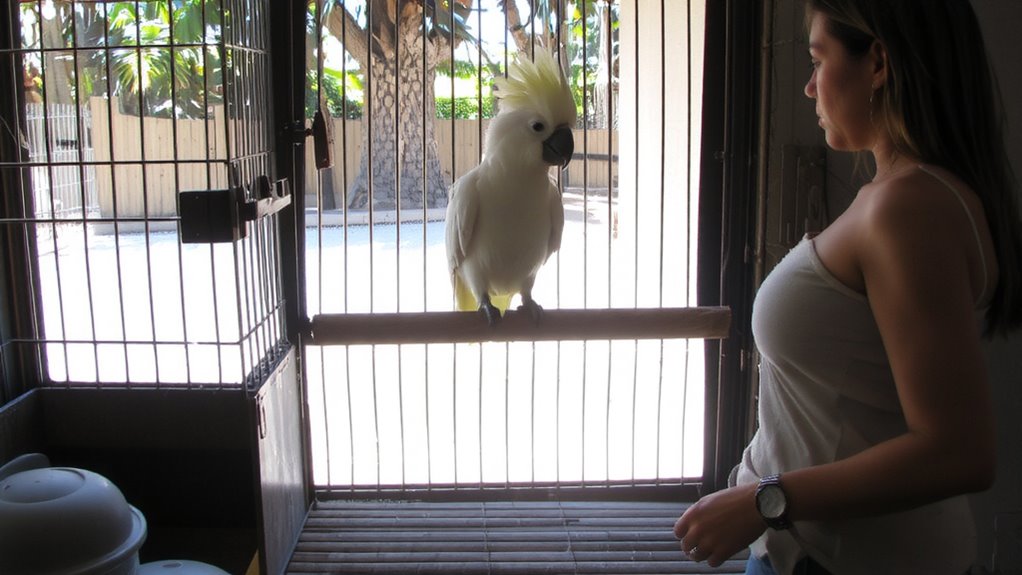
Positive reinforcement isn’t the only operant conditioning method that shapes behavior-negative reinforcement also plays a role, though its use demands careful consideration. You apply negative reinforcement by removing an aversive stimulus to increase a desired behavior. This promotes escape behavior, where your pet acts to terminate an unpleasant stimulus, and avoidance learning, where it acts to prevent the stimulus altogether. For example, gently increasing cage temperature until the animal moves to a designated zone-and then reducing the heat-reinforces zone use. Use this method only when positive techniques fail and the stimulus is mild. Avoid negative reinforcement with fearful or aggressive animals, as it can worsen stress. It’s effective in controlled environments with predictable triggers. Misapplication leads to chronic escape behavior, undermining training. Always monitor physiological signs like increased respiration or freezing, which indicate distress. Precision and timing are essential-reinforcement must follow the behavior within 1–2 seconds for clear association.
Can Punishment Work? Risks and Safer Alternatives
How effective is punishment when shaping behavior in exotic pets? It’s often ineffective and risky. Aversive timing must be precise-within seconds-to associate the behavior with the consequence, but missteps cause confusion. Poorly timed punishment leads to fear, not learning. Many exotic pets respond with escape learning, fleeing stress rather than modifying actions. This undermines trust and increases anxiety-driven behaviors. Punishment can suppress unwanted actions temporarily but rarely eliminates underlying causes. It may also trigger aggression or learned helplessness, especially in sensitive species like birds or reptiles. Safer alternatives include differential reinforcement of incompatible behaviors (DRI) and negative punishment, such as removing a stimulus. These methods reduce undesired behaviors without inducing fear. They promote clearer communication, improve compliance, and support long-term behavioral change. Use them instead of aversives to achieve reliable, humane results. For those considering training tools, the best pet training correction devices are designed with safety and timing precision in mind.
Daily Training Habits That Build Consistent Behaviors
Avoiding punishment is only the first step-building reliable behavior in exotic pets depends on consistent, structured daily routines. Routine scheduling establishes predictability, which enhances learning and reduces stress-induced behaviors. Train at the same times each day, using 10–15 minute sessions to align with short attention spans. Pair sessions with feeding times to leverage motivation through food reinforcement. Environmental enrichment must be integrated, including foraging tasks, novel textures, and problem-solving toys calibrated to species-specific needs. For example, parrots benefit from puzzle feeders requiring manipulation, while reptiles respond to thermoregulatory choices and scent trails. Rotate stimuli every 72 hours to prevent habituation. Reinforce target behaviors immediately with biologically appropriate rewards-mealworms for insectivores, fruit fragments for frugivores. Track progress in a log, noting latency, frequency, and duration. Consistency transforms isolated responses into durable behavioral repertoires.
On a final note
You now understand how operant conditioning shapes exotic pet behavior. Positive reinforcement increases desired actions through rewards like food or praise. Negative reinforcement removes aversive stimuli to encourage behavior, but misuse risks stress. Punishment often backfires, increasing fear or aggression. Instead, use consistent reinforcement schedules-fixed-ratio or variable-interval-to build reliable responses. Daily, brief sessions yield stronger behavioral outcomes than infrequent, lengthy ones.