Creating a Safe Environment for Small Rodents With Proper Substrate Choices
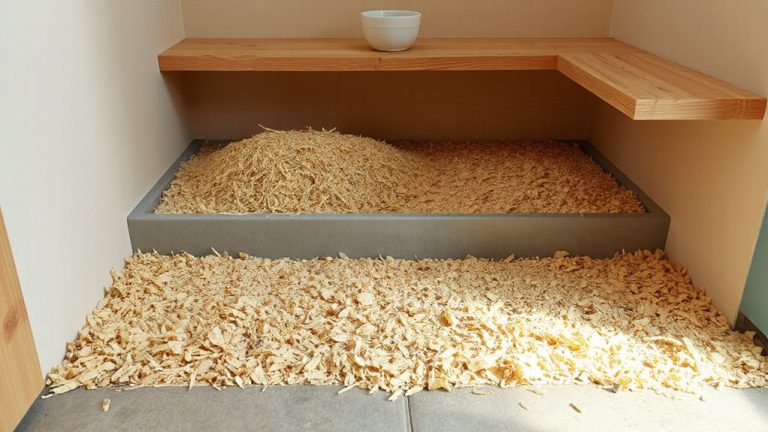
Choose low-dust, high-absorbency bedding like kiln-dried aspen or recycled paper to maintain respiratory health and control ammonia. Avoid cedar and softwood beddings-they release phenols and VOCs that damage liver and lung tissue. Opt for substrates with <5% dust and 1–5 mm particle size to prevent inhalation. Use 2–4 inches of bedding for burrowing and moisture management. Spot-clean daily and replace fully every 7–10 days. Proper substrate supports natural behaviors and reduces health risks-further details reveal how each choice impacts longevity and well-being.
Notable Insights
- Choose high-absorbency, low-dust bedding like recycled paper or aspen to minimize ammonia and respiratory risks.
- Avoid cedar and untreated pine due to harmful phenols and volatile compounds that damage rodent health.
- Maintain a bedding depth of 2–4 inches to support natural burrowing and waste dilution behaviors.
- Spot clean soiled areas daily and replace all bedding every 7–10 days for optimal hygiene.
- Use pre-washed, kiln-dried, or dust-free substrates with particles between 1–5 mm to reduce inhalation hazards.
How Bedding Affects Small Rodent Health
Why do some rodent beddings lead to better health outcomes than others? The answer lies in material composition and absorbency. Low-absorbency substrates fail to control moisture, leading to rapid ammonia buildup from urine. Ammonia concentrations above 25 ppm cause respiratory irritation in rodents, damaging delicate lung tissues over time. High-quality bedding, like kiln-dried pine or recycled paper, absorbs up to 400% of its weight in moisture, slowing ammonia release. Dust levels under 5% minimize respiratory irritation risks. You need at least 2–3 inches of bedding depth for adequate waste dilution and burrowing behavior. Poor substrate compacts easily, reducing air exchange and increasing humidity. You want bedding with particle sizes between 1–5 mm-large enough to resist inhalation, small enough to insulate. Choosing bedding isn’t just comfort-it’s a direct factor in maintaining respiratory and dermal health through controlled microenvironments.
Avoid These Harmful Bedding Materials
What makes certain bedding materials a poor choice for your small rodents? They pose serious health risks. Avoid cedar and pine bedding due to pine toxicity. These softwoods release volatile organic compounds, especially phenols, which can damage liver and respiratory tissues. Studies show exposure leads to increased respiratory infections and reduced lifespan in sensitive species like hamsters and gerbils. Also, these beddings generate high levels of dust, contributing to chronic dust inhalation. Particulate matter under 10 microns can penetrate deep into lungs, triggering inflammation or pneumonia. Even “kiln-dried” pine isn’t safe-processing reduces but doesn’t eliminate harmful oils. Recycled paper or aspen bedding is preferable. Aspen lacks toxic phenols and produces minimal dust, typically less than 0.5% particulate by weight. Always choose low-dust, fragrance-free options to guarantee respiratory health. Your rodent’s well-being depends on avoiding these hazardous materials.
Best Bedding for Small Rodents
A safe, absorbent bedding forms the foundation of a healthy rodent habitat. You’ll want materials that provide strong odor control and maintain low dust levels to protect respiratory health. Paper-based bedding, such as recycled pulp, offers high absorbency-up to three times its weight in moisture-while minimizing ammonia buildup. It’s also virtually dust-free, making it ideal for sensitive rodents. Aspen shavings are another safe option; they naturally resist mold and manage odor effectively without added chemicals. Avoid scented or cedar-based products-they release volatile oils harmful to lungs. Opt for pre-washed or kiln-dried options to further reduce particulates. High dust levels can trigger allergies or respiratory infections, so always choose low-dust certified bedding. Proper odor control isn’t just about comfort-it’s a sign of hygiene and air quality. Your rodent’s health depends on it.
How Deep to Layer Small Rodent Bedding?
Proper bedding depth supports both comfort and hygiene in your rodent’s enclosure. For most small rodents, a bedding depth of 2 to 3 inches is ideal. This depth allows natural digging and burrowing while maintaining dry, clean conditions at the surface. Species like hamsters and gerbils exhibit strong nesting habits, requiring sufficient substrate to construct insulated nests. A deeper layer-up to 4 inches-may be necessary for burrowing specialists such as dwarf hamsters. Inadequate bedding depth restricts natural behaviors and increases stress. Use compressible, absorbent bedding that maintains loft, such as paper-based or aspen shavings. Avoid overly fine materials that compact easily. A uniform bedding depth also enhances odor control and moisture management by enabling waste to sink while the top remains dry. Always monitor compaction and adjust depth as needed to support species-specific nesting habits. A suitable mini gerbil habitat provides ample space and appropriate bedding depth for healthy burrowing behavior.
Spot-Clean or Replace? Bedding Maintenance Guide
How often should you clean your rodent’s bedding-spot-clean daily or replace it entirely each time? Spot cleaning frequency should be daily to remove soiled areas, especially urine spots and wet bedding, which harbor ammonia and bacteria. Use gloves and a small scoop to extract contaminated material without disturbing the entire habitat. This practice maintains air quality and reduces stress. For the complete replacement schedule, fully replace all bedding every 7 to 10 days, depending on cage size and animal density. A 10-gallon enclosure hosting one hamster requires full changes weekly; larger colonies may need changes every five days. Always disinfect the enclosure with a 3% bleach solution, then rinse thoroughly. Use only bedding compatible with deep-layer nesting. Consistent maintenance prevents respiratory issues and dermatitis. Follow these protocols to guarantee hygiene and animal well-being. Choosing the right material is crucial, and among the top options are best guinea pig bedding selections that offer superior absorbency and safety.
Choose Bedding That Supports Digging and Nesting
Digging and nesting aren’t just natural behaviors-they’re essential to your rodent’s physical and mental health. You need bedding that supports tunnel design and provides effective burrow insulation. Deep-layered, compressible substrates mimic natural underground systems, allowing your pet to form stable tunnels and insulated nests. Choose materials like aspen shavings or paper-based bedding, which hold structure without collapsing.
| Feature | Benefit |
|---|---|
| High loft (6–8 cm depth) | Enables complex tunnel design |
| Low thermal conductivity | Enhances burrow insulation |
| Fiber interlock | Prevents tunnel collapse |
| Dust-free | Reduces respiratory stress |
| Water-resistant | Maintains nest integrity |
These properties guarantee structural stability and thermal regulation. You should provide at least 6 cm of bedding to allow full burrowing expression. Proper substrate supports natural thermoregulation and reduces stress, directly improving welfare metrics. Select bedding engineered for deep digging-not just surface nesting.
On a final note
You must choose bedding carefully to protect your rodent’s health. Paper-based or aspen shavings offer safe, dust-free options with low aromatic hydrocarbon levels. Avoid cedar and pine-volatile oils cause respiratory damage. Layer bedding 2–3 inches deep to support natural burrowing. Replace soiled sections daily; do full changes weekly. Proper substrate controls ammonia, reduces pathogens, and mimics natural habitat-critical for long-term wellbeing.