Best Guinea Pig Bedding That Keeps Cages Clean and Cozy
You need highly absorbent, low-dust bedding to keep your guinea pig’s cage clean and cozy. Kaytee Clean & Cozy absorbs up to 5 times its weight in liquid, while Carefresh is 2X more absorbent than wood shavings. Oxbow Pure Comfort removes 99.9% of dust and supports natural burrowing. All are 100% recycled, chemical-free paper, biodegradable, and safe for sensitive respiratory systems. High absorbency means less ammonia and fewer cage changes. Best performance starts with proper material selection.
We are supported by our audience. When you purchase through links on our site, we may earn an affiliate commission, at no extra cost for you. Learn more. Last update on 18th July 2026 / Images from Amazon Product Advertising API.
Notable Insights
- Choose highly absorbent bedding like Kaytee or Carefresh to manage moisture and minimize ammonia buildup.
- Opt for 99% dust-free, hypoallergenic paper bedding to protect respiratory and skin health.
- Select unscented, chemical-free options to avoid irritation from artificial fragrances or dyes.
- Prioritize soft, pillowy textures that support burrowing and cushion delicate feet.
- Use biodegradable, recycled paper bedding for eco-friendly disposal and natural safety.
Kaytee Clean & Cozy Paper Bedding (2-Pack)

If you’re looking for bedding that keeps your guinea pig’s habitat dry and odor-free for longer, Kaytee Clean & Cozy Paper Bedding is an excellent choice-especially for owners who prioritize low maintenance and high performance. I rely on its high absorbency, which locks in up to 6 times its weight in liquid. The bedding stays dry on the surface, reducing moisture-related health risks. It’s 99% dust-free and fragrance-free, so it won’t irritate sensitive respiratory systems. Made from soft, chemical-free paper, it’s safe for daily contact. I use it across various habitats-it works reliably in cages, bins, and enclosures. This bedding suits guinea pigs, rabbits, hamsters, and other small animals, offering consistent comfort and lasting freshness without frequent changes.
Best For: Small pet owners seeking a safe, highly absorbent, and low-maintenance bedding solution that ensures long-lasting freshness and comfort.
Pros:
- Highly absorbent, locking in up to 6 times its weight in liquid to keep habitats dry
- 99% dust-free and fragrance-free, making it ideal for pets with sensitive respiratory systems
- Made from soft, chemical-free paper that’s safe and gentle for daily contact
Cons:
- May be more expensive than traditional wood or paper-based beddings
- Not suitable for pets that tend to ingest large amounts of bedding material
- Requires regular spot cleaning despite high absorbency for optimal hygiene
Kaytee Lavender Paper Bedding 49.2L

Kaytee Lavender Paper Bedding 49.2L stands out as an ideal choice for guinea pig owners prioritizing odor control and respiratory health. I use this bedding because it’s 99% dust-free, reducing respiratory irritation. The soft paper fibers are gentle on delicate paws and safe if nibbled. Real, pet-safe lavender buds provide natural scent control, not masking odors but absorbing them. It holds up to six times its weight in moisture, keeping cages dry. Compared to wood or fabric, it’s more absorbent and less likely to harbor bacteria. Made in the USA, it’s free of chemicals and by-products. Kaytee’s 150-year reputation guarantees reliability.
Best For: Small animal owners seeking a dust-free, highly absorbent bedding with natural odor control and respiratory safety.
Pros:
- Made with 99% dust-free, soft paper that’s gentle on paws and safe for sensitive respiratory systems
- Infused with real, pet-safe lavender buds for natural, long-lasting odor control
- Absorbs up to six times its weight in liquid, keeping habitats dry and clean longer than wood or fabric beddings
Cons:
- Scented with lavender, which may be overwhelming or irritating to some animals or owners
- Paper-based bedding may break down faster than pellet or aspen varieties in high-moisture areas
- Higher price point compared to basic wood shavings or generic paper beddings
Oxbow Pure Comfort Pet Bedding (72L)
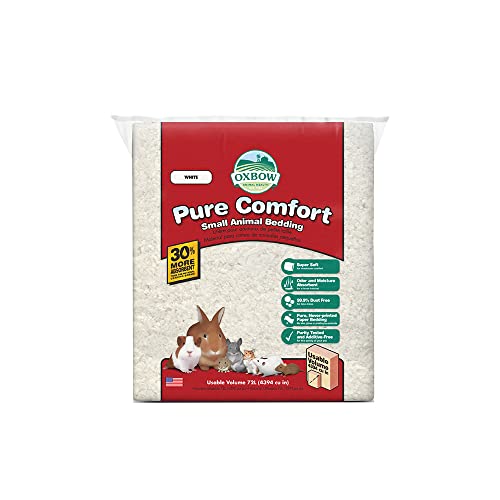
I rely on Oxbow Pure Comfort Pet Bedding (72L) for guinea pigs with sensitive respiratory systems because it delivers clinically low dust levels-99.9% reduction-through sealed milling processes that suppress airborne particles. The bedding is made from unprinted, high-quality white paper, free of inks and dyes, ensuring a non-toxic, hygienic environment. Its soft, absorbent texture supports natural burrowing and nesting behaviors. It neutralizes odors and locks in moisture quickly, maintaining dry, fresh habitats. Ideal for guinea pigs, rabbits, and hamsters, it’s easy to clean and lasts longer due to high compaction resistance.
Best For: Small pets with sensitive respiratory systems, particularly guinea pigs, rabbits, and hamsters requiring a low-dust, hypoallergenic bedding solution.
Pros:
- 99.9% dust reduced, supporting optimal respiratory health
- Made from safe, non-toxic, unprinted white paper free of inks and dyes
- Highly absorbent with effective odor control for a clean, dry habitat
Cons:
- Paper-based bedding may be less absorbent than some premium wood or hemp alternatives
- Not suitable for pets that require deep burrowing due to texture and compaction
- Higher cost per volume compared to basic recycled paper beddings
Oxbow Pure Comfort Small Animal Bedding (36L)
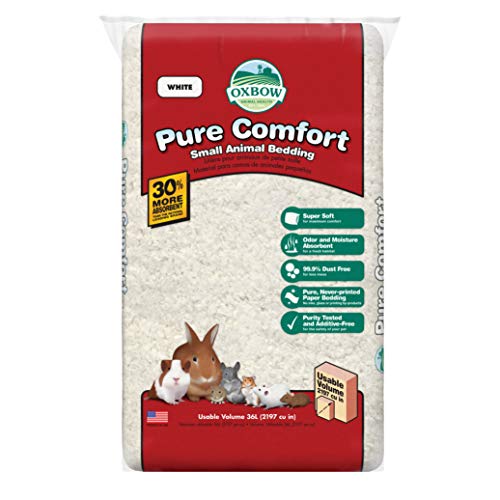
Oxbow Pure Comfort Small Animal Bedding (36L) is my top choice for guinea pig owners who prioritize dust-free safety and effective odor control. It’s made from 100% undyed, never-printed paper, eliminating risks from inks and chemicals. The low-dust formula removes 99.9% of particulates, protecting respiratory health in sensitive animals. This bedding absorbs moisture rapidly and neutralizes odors at the source, keeping enclosures fresh between cleanings. At 36 liters, it suits small to medium habitats or short-term use. Cleanup is fast and simple, making daily maintenance efficient. Safe for guinea pigs, rabbits, hamsters, and ferrets, it delivers consistent performance without compromising comfort or hygiene standards.
Best For: Guinea pig owners seeking a dust-free, chemical-free bedding with superior odor and moisture control.
Pros:
- Made from 100% undyed, never-printed paper, ensuring no harmful inks or chemicals contact pets
- Removes 99.9% of dust, promoting better respiratory health for sensitive small animals
- Excellent moisture absorption and odor neutralization for a cleaner, fresher habitat
Cons:
- 36L volume may be insufficient for large or multi-pet enclosures between reuses
- Paper-based bedding may break down faster than wood-based options in high-moisture areas
- Not reusable, requiring full replacement after soiling, which may increase long-term costs
Carefresh Dust-Free Paper Small Pet Bedding

Because it’s made from 100% natural paper fibers, Carefresh Dust-Free Paper Small Pet Bedding is an ideal choice for owners of guinea pigs with sensitive respiratory systems or delicate feet. It’s 99% dust-free, reducing airborne irritants. The soft, pillowy texture supports comfortable burrowing and protects tender footpads. I’ve found its absorbency is twice that of traditional wood shavings, effectively locking in moisture to keep the cage dry. It controls ammonia odors for up to 10 days using a pet-safe formula. Biodegradable and compostable, it’s an eco-conscious pick. I use it for guinea pigs, rabbits, and rats-with no synthetic dyes or chemicals.
Best For: Small pet owners seeking a natural, dust-free, and highly absorbent bedding option for animals with sensitive respiratory systems or delicate feet.
Pros:
- Made from 100% natural paper fibers, biodegradable, and compostable for eco-friendly disposal
- 99% dust-free and free of synthetic dyes or chemicals, promoting healthier respiratory and skin conditions
- Twice as absorbent as wood shavings with effective odor control for up to 10 days
Cons:
- May be more expensive than traditional wood shavings or other basic bedding materials
- Paper-based bedding can break down faster in high-moisture environments
- Not suitable for pets that chew bedding excessively, as ingestion may pose a risk
Carefresh Sea Glass Small Pet Bedding (50 L)

Carefresh Sea Glass Small Pet Bedding (50 L) stands out as an ideal choice for guinea pig owners prioritizing health, comfort, and long-term habitat hygiene. I rely on its 99% dust-free natural paper fibers to protect my pet’s respiratory system. It’s free of harmful chemicals and synthetic dyes-safe for sensitive skin and paws. The bedding is biodegradable and compostable, supporting eco-conscious pet care. Its pillowy soft texture encourages burrowing and nesting. I’ve found it’s twice as absorbent as wood shavings, keeping the cage dry. The odor-control formula suppresses ammonia smells for up to 10 days. I use it for bedding, litter, and lining-it works well for guinea pigs, rabbits, hamsters, and other small pets.
Best For: Small pet owners seeking a safe, highly absorbent, and eco-friendly bedding that promotes respiratory health and comfort.
Pros:
- Made from 99% dust-free natural paper fibers, reducing respiratory risks and safe for sensitive skin
- Biodegradable and compostable, offering an environmentally responsible choice for pet care
- Superior absorbency (2X more than wood shavings) and long-lasting odor control up to 10 days
Cons:
- Higher price point compared to conventional wood shavings or clay-based beddings
- May break down faster in high-moisture environments, requiring more frequent spot cleaning
- Limited color options due to absence of synthetic dyes, which may not appeal to all aesthetic preferences
Kaytee Lavender Paper Bedding for Small Animals

If you want a bedding that combines superior absorbency with reliable odor control, Kaytee Lavender Paper Bedding stands out as an excellent choice for guinea pigs and other small animals. It absorbs up to six times its weight in liquid, keeping habitats dry and clean. The 99% dust-free formula protects delicate respiratory systems. Soft premium paper is safe for paws and noses. Real, pet-safe lavender buds provide a naturally fresh scent without harsh chemicals. I use it in all habitat types-it’s ideal for guinea pigs, rabbits, hamsters, and more. Made in the USA, Kaytee’s 150-year legacy guarantees trusted, animal-focused quality.
Best For: Small animal owners seeking a highly absorbent, odor-controlling, and dust-free bedding that’s gentle on pets and safe for sensitive respiratory systems.
Pros:
- Absorbs up to 6 times its weight in liquid for a consistently dry and clean habitat
- 99% dust-free and free of harmful chemicals, promoting respiratory health and safety
- Naturally scented with real, pet-safe lavender buds for long-lasting freshness
Cons:
- Scented formula may not be preferred by owners who favor unscented bedding
- Paper-based bedding may require more frequent changes in high-moisture environments
- May be more expensive than basic wood or recycled paper beddings
Kaytee Clean & Cozy Paper Bedding for Small Animals

When choosing bedding for sensitive small animals like guinea pigs, dust levels and material safety are critical-and that’s where Kaytee Clean & Cozy Paper Bedding stands out. I rely on its 99% dust-free formula to protect respiratory health. It’s made from 100% recycled paper, with no artificial dyes, bleaches, or fragrances. The bedding is naturally soft, gentle on paws and noses. It absorbs up to five times its weight in liquid, keeping habitats dry. I’ve seen it last longer than wood or fleece options. It’s safe for rabbits, mice, hamsters, and chinchillas too. Made in the USA, Kaytee’s reputation spans 150 years.
Best For: Small animal owners seeking a safe, eco-friendly, and highly absorbent bedding that supports respiratory health and comfort for pets like guinea pigs, rabbits, and hamsters.
Pros:
- Made from 100% recycled, natural paper with no artificial dyes, fragrances, or chemicals
- 99% dust-free and gentle on paws and noses, ideal for sensitive animals
- High absorbency-up to 5 times its weight in liquid-keeps habitats dry and fresh longer
Cons:
- May be more expensive than traditional wood shavings
- Paper-based material may break down faster in high-moisture environments
- Some animals may prefer fluffier or softer textures like fleece or fiber blends
Carefresh Dust-Free Paper Small Pet Bedding
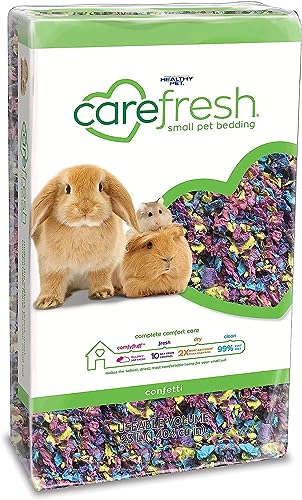
This bedding works best for guinea pigs with sensitive respiratory systems or delicate feet, thanks to its 99% dust-free composition and soft, paper-based texture. I rely on Carefresh because it’s made from natural paper fibers, free of chemicals and synthetic dyes. It’s biodegradable and compostable, making cleanup eco-friendly. The confetti-style cut creates a pillowy layer ideal for burrowing and nesting. It’s twice as absorbent as wood shavings, wicking moisture fast to prevent damp spots. Its odor-control formula neutralizes ammonia for up to 10 days. I use it safely for guinea pigs, rabbits, and rats alike.
Best For: Small pets with sensitive respiratory systems or delicate feet, especially guinea pigs, rabbits, and rats needing a soft, dust-free, and highly absorbent bedding.
Pros:
- Made from natural, biodegradable paper fibers free of chemicals and synthetic dyes
- 99% dust-free and gentle on sensitive feet, ideal for burrowing and nesting
- 2X more absorbent than wood shavings with proven odor control for up to 10 days
Cons:
- May break down faster than wood-based bedding in high-moisture environments
- Confetti-style texture may scatter more easily outside the habitat
- Higher price point compared to traditional wood shavings
Vitakraft Fresh World Small Animal Bedding

I choose Vitakraft Fresh World Small Animal Bedding when I need maximum absorbency and long-term odor control in my guinea pig’s living space. It absorbs up to three times its weight in liquid. Ammonia odor stays neutralized for up to 14 days. The bedding stays dry and fresh, even in high-moisture zones. It’s made from 100% recycled paper-dust-free, chemical-free, and hypoallergenic. The soft texture protects sensitive paws and reduces stress. Its gray fibers are low-tracking and hold structure in litter boxes or cages. Safe for rabbits, hamsters, ferrets, and birds too. Volume: 16 L (975 cu in). It’s eco-conscious, too-sustainability built in.
Best For: Small animal owners seeking a highly absorbent, odor-controlling, and eco-friendly bedding that ensures comfort and safety for sensitive pets.
Pros:
- Exceptional absorbency, holding up to 3 times its weight in liquid while maintaining a dry environment
- Neutralizes ammonia odors for up to 14 days, ideal for low-maintenance cleaning routines
- Made from 100% recycled paper, dust-free, chemical-free, and safe for rabbits, guinea pigs, hamsters, ferrets, and birds
Cons:
- Gray color may show soiling more visibly compared to lighter or multi-colored beddings
- Paper-based material may break down faster in very high-moisture conditions with heavy use
- Some picky animals may take time to adjust to the texture or scent-free profile
Factors to Consider When Choosing Guinea Pig Bedding
You need bedding that controls odors effectively, and options with natural enzymes or plant-based powders can neutralize ammonia smells for up to five days. Look for dust-free bedding-measured at less than 1% dust content-to protect your guinea pig’s sensitive respiratory system. High absorbency, at least 300% of the material’s weight in liquid, keeps the cage dry, while soft, fiber-free materials prevent bumblefoot and meet safety standards like ASTM F2056 for small animal bedding.
Odor Control Effectiveness
How do you keep a guinea pig’s habitat smelling fresh between cleanings? Choose bedding with high absorbency, capable of trapping up to six times its weight in liquid. This keeps the cage dry and suppresses bacterial growth that causes bad odors. Some formulas neutralize ammonia from urine, offering effective odor control for up to 14 days. Opt for dust-free or low-dust materials to reduce airborne particles that can trap and hold smells. Avoid artificial fragrances, which may irritate your pet’s sensitive respiratory system. Instead, select bedding with natural, pet-safe botanicals for a mild, lasting freshness. Use undyed, chemical-free paper fibers to prevent residue buildup that reacts with urine and creates stronger stench. These features work together to maintain a cleaner, more pleasant environment. You’ll reduce odor between cleanings without compromising safety.
Dust Level Safety
What if the bedding you choose could silently harm your guinea pig’s lungs? High dust levels irritate sensitive respiratory systems and can lead to chronic breathing problems. Always select bedding labeled 99% or more dust-free to protect your pet. Dust particles accumulate in enclosed habitats, where limited airflow increases inhalation risks. Low-dust bedding reduces irritation to the eyes, nose, and lungs, supporting long-term health. Opt for processed paper-based materials engineered for minimal dust emission. These products undergo refining to remove loose fibers and particulates, improving air quality. Unlike straw or sawdust, which release airborne particles easily, quality paper bedding maintains structural integrity without sacrificing safety. You’re not just adding comfort-you’re enforcing a cleaner breathing environment. Dust control isn’t optional; it’s a baseline requirement for responsible guinea pig care. Your choice directly influences respiratory wellness.
Absorbency Performance
High absorbency in guinea pig bedding directly impacts hygiene and comfort by locking away moisture. You’ll find that top-tier bedding absorbs up to six times its weight in liquid, drastically reducing dampness. Materials like recycled paper or compressed alfalfa outperform standard wood shavings, with some offering twice the absorbency. This high capacity prevents soggy spots, which can trigger bacterial growth and skin irritation. You’ll also maintain better enclosure humidity control, supporting your guinea pig’s sensitive respiratory system. Effective moisture retention means fewer full bedding changes, extending freshness between cleanings. Unlike less efficient options, highly absorbent bedding manages urine pools and spills efficiently, minimizing ammonia buildup. You’ll notice drier surfaces longer, improving overall cage sanitation. Choosing bedding with proven absorbency metrics guarantees a cleaner, healthier habitat. Don’t underestimate this feature-your guinea pig’s wellbeing hinges on consistent dryness and reduced microbial exposure.
Comfort For Paws
Your guinea pig’s footpads are delicate and prone to injury, so selecting bedding that prioritizes paw comfort is critical. Choose soft, fine-textured materials free of sharp or coarse fibers to prevent abrasions and bumblefoot. Opt for low-dust formulas-under 5% dust content-to reduce respiratory irritation and maintain clean air. Pillowy or fibrous textures, like shredded paper or aspen shavings, offer cushioning up to 2 inches deep, supporting natural burrowing without compacting. These materials mimic the insulating softness of wild nests, improving thermal regulation and joint support. Hypoallergenic options minimize immune responses, directly benefiting skin and footpad health. Avoid inks, dyes, and fragrances; these additives contain irritants that penetrate through porous footpads. Chemical-free bedding maintains pH balance and reduces dermatological stress. Comfort isn’t just tactile-it’s physiological. Proper bedding reduces pressure points during long rest periods, preventing sores. Prioritize texture, purity, and structure-your guinea pig’s mobility depends on it.
Material Safety Standards
Choose bedding made from unprinted, undyed paper to eliminate exposure to toxic inks, dyes, and chemical residues that can harm your guinea pig’s respiratory and digestive systems. Opt for dust-reduced bedding with at least 99% dust removal during processing-this guarantees cleaner air and minimizes respiratory irritation. Avoid synthetic fragrances and harsh chemicals; they trigger sensitivities in delicate nasal and skin tissues. Select natural, biodegradable fibers like pure paper, which are safer if ingested accidentally. High absorbency is critical: choose materials that hold at least three times their weight in liquid to maintain dry conditions. A dry cage reduces bacterial growth and ammonia buildup from urine, improving hygiene. These standards aren’t optional-they’re essential for your guinea pig’s daily health. Safe bedding acts like a filter, quietly protecting with every layer. Test brands for particle size, breakdown rate, and pH neutrality to match veterinary recommendations.
Frequently Asked Questions
Can Guinea Pigs Be Allergic to Scented Bedding?
Yes, guinea pigs can be allergic to scented bedding. Their respiratory systems are sensitive, and added fragrances may trigger irritation or allergic reactions. You’ll see sneezing, watery eyes, or labored breathing. Unscented, low-dust options like paper-based or kiln-dried pine are safer. Avoid cedar and aromatic woods-they release volatile oils. Switch bedding immediately if symptoms appear. Use hypoallergenic materials to minimize risk and support respiratory health.
How Often Should Bedding Be Completely Changed?
You should completely change your guinea pig’s bedding every 7 to 10 days. Spot clean soiled areas daily to manage odor and moisture. A full change prevents ammonia buildup from urine, which can exceed 50 ppm and harm respiratory health. Use bedding 2–3 inches deep for absorption. Paper-based or aspen options work best-avoid cedar. Proper ventilation and cage size (minimum 7.5 sq ft for two pigs) improve results.
Is Recycled Paper Bedding Safe for Babies?
Yes, recycled paper bedding is safe for baby guinea pigs when it’s dust-extracted and chemical-free. You must choose products labeled “safe for small animals” and avoid those with inks or dyes. High-absorbency paper beddings trap moisture quickly, reducing ammonia buildup. Opt for soft, finely shredded variants to prevent irritation to delicate skin. Always monitor for respiratory signs, as even low dust levels can affect young pups.
Can I Compost Used Guinea Pig Bedding?
Yes, you can compost used guinea pig bedding-if it’s made from biodegradable materials like paper, aspen, or straw. Avoid bedding with synthetic additives or treated wood. Break soiled bedding into small pieces to speed decomposition. Mix it with brown and green compost materials in a 3:1 ratio. Maintain moisture at 40–60% and turn the pile weekly. After 8–12 weeks, it becomes nutrient-rich compost safe for non-edible plants.
Should I Mix Different Bedding Types Together?
Yes, you can mix bedding types, but do it carefully. Combining absorbent paper bedding with soft fleece adds wicking and comfort. Use a 2:1 ratio-two parts paper to one part fleece-to prevent moisture buildup. Avoid mixing loose substrates like pine with paper; uneven decomposition hampers composting. Mixed beddings must stay dry underneath. Check pH and ammonia weekly. Inconsistent textures can stress guinea pigs. Test small batches first to monitor health and hygiene.