Substrate and Bedding Safety for Pet Chinchillas: Comprehensive Guide to a Healthy Living Environment
Choose safe bedding like dust-extracted paper or kiln-dried aspen to protect your chinchilla’s sensitive respiratory system. Avoid cedar and pine-they release harmful phenols and VOCs. Opt for substrates with less than 1 mg/m³ dust and particulates under 10 micrometers. Bedding must be non-toxic, pH-neutral, and highly absorbent to control moisture and limit bacterial growth. Use 1–2 inches of material, spot clean daily, and change weekly. A proper setup prevents liver damage, respiratory irritation, and GI blockages-keep conditions stable, and you’ll soon discover how small changes greatly impact long-term health.
Notable Insights
- Avoid cedar and pine bedding due to toxic aromatic hydrocarbons that harm respiratory and liver health.
- Choose dust-extracted, paper-based bedding to minimize inhalation risks and support respiratory health.
- Ensure bedding has high absorbency (>300%) and is pH-neutral to control moisture and inhibit bacterial growth.
- Never use clumping clay or fine particulate substrates that may cause gastrointestinal impaction if ingested.
- Maintain 1–2 inches of clean, layered bedding with spot cleaning daily and full changes weekly.
Why the Right Bedding Keeps Your Chinchilla Healthy
While choosing the right bedding might seem like a minor detail, it plays a critical role in maintaining your chinchilla’s long-term health. Poor substrates introduce toxic reactions through off-gassing phenols or ammonia from urine breakdown. These volatile compounds irritate respiratory tissues, weakening immune response. You must avoid cedar and pine beddings-known sources of aromatic hydrocarbons that trigger such reactions. Additionally, materials like clumping clay or fine particulate sands pose digestive hazards if ingested. Even small amounts can cause impaction in the gastrointestinal tract, a common issue in curious chewers. Bedding should be dust-extracted, with particulate matter under 50 microns to minimize inhalation risks. Absorbency rates above 300% reduce moisture buildup, inhibiting bacterial growth. Choose inert, low-particulate options. Guarantee pH neutrality and zero chemical additives. Your chinchilla’s environment depends on precise material science-not guesswork. Regular use of a proper dust bath helps maintain coat and skin health while reducing excess oil and dirt.
Safe Chinchilla Bedding Options That Work
Safety begins with selection-paper-based bedding stands out as a top choice for chinchillas. It’s dust-extracted, minimally processed, and has high absorbency with low moisture retention, reducing bacterial growth. Most brands use recycled, ink-free paper, making it safe if ingested in small amounts. You’ll find bedding color variety in some lines, though natural tan or white is typical; avoid dyes if possible. Paper bedding usually measures 1–3 inches in uncompressed thickness and lasts 7–10 days per change. It integrates well into aesthetic cage design, offering a clean, uniform look that highlights cage features without visual clutter. Shredded or pellet forms prevent clumping and support proper airflow. Unlike fibrous alternatives, it resists fur entanglement and respiratory irritation. You can pair it with fleece liners in trays for added comfort. This bedding option balances safety, function, and subtle visual appeal without compromising health.
Bedding Materials That Are Dangerous for Chinchillas
Several common bedding materials pose serious health risks to your chinchilla and should be avoided. Cedar and pine shavings release aromatic hydrocarbons that can damage liver function and irritate respiratory tissues. Recycled paper beddings printed with toxic inks or colored with chemical dyes may lead to gastrointestinal distress or allergic reactions. Fabric bedding with loose threads increases the risk of limb entanglement and intestinal blockage if ingested.
| Material | Risk Level |
|---|---|
| Cedar shavings | High |
| Pine shavings | High |
| Printed paper | Moderate (toxic inks) |
| Dyed bedding | Moderate (chemical dyes) |
| Towels/blankets | Low-Moderate (choking hazard) |
Avoid any substrate treated with preservatives, inks, or dyes. Opt for untreated, dust-free, and non-toxic alternatives. Your chinchilla’s well-being depends on informed, precise bedding choices.
Choose Dust-Free Bedding to Protect Lungs
Chinchillas have highly sensitive respiratory systems that react quickly to airborne particles, making dust content in bedding a serious concern. You must choose dust-free bedding to protect your chinchilla’s lung health. Bedding dust can carry fine particulate matter under 10 micrometers in diameter, small enough to penetrate deep into the lungs. Inhaling these particles triggers inflammation, leading to chronic respiratory issues. Reputable labs test bedding using gravimetric analysis, measuring dust levels in milligrams per cubic meter of air. Acceptable dust levels should be below 1 mg/m³. Paper-based or aspen shavings processed through kiln-drying and sifted through 2-mm mesh screens reduce bedding dust markedly. Avoid pine and cedar, which release volatile organic compounds. Dust-free doesn’t mean zero dust, so always inspect bedding before use. Consistent use of low-dust materials supports long-term lung health. For reliable options, consider top-rated picks like best guinea pig bedding that meet strict dust-extraction standards.
How to Keep Bedding Clean & Safe
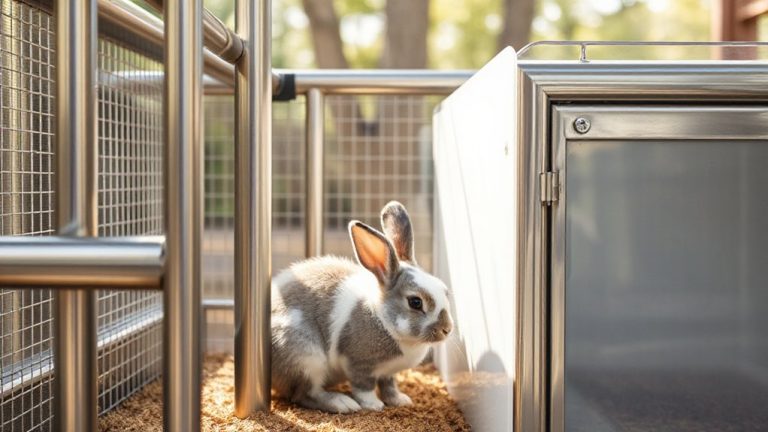
Regularly maintaining your chinchilla’s bedding prevents harmful bacterial buildup and guarantees a healthy living environment. Spot clean soiled areas daily, removing waste and wet spots to reduce ammonia exposure. Perform a full bedding change weekly, using mild, non-toxic cleaners when sanitizing the enclosure. Proper ventilation importance cannot be overstated-ensure the cage has mesh walls or airflow vents to disperse moisture and prevent mold. Avoid solid-sided enclosures, which trap humidity. Maintain temperature control between 60–70°F (15–21°C); higher temperatures encourage bacterial growth and increase respiratory risks. Bedding depth should be 1–2 inches to balance absorbency with ease of cleaning. Use dust-free, absorbent materials like paper-based or aspen shavings. Monitor humidity levels; keep them below 60% to inhibit microbial proliferation. Good airflow and stable temperatures considerably extend bedding life and safeguard respiratory health. When selecting a habitat, consider a compact ferret cage designed for small pets to ensure adequate space and proper ventilation.
How to Layer Bedding for Safety & Comfort
Now that you’ve established a consistent cleaning routine to minimize bacteria and maintain air quality, it’s time to focus on how bedding layers affect your chinchilla’s physical well-being. Proper bedding depth is essential-maintain a base layer of 2 to 3 inches of paper-based or aspen substrate. This depth cushions jumps and prevents foot injuries. Above this, add a thin top layer of soft hay for nesting. Avoid cedar or pine, which release harmful oils. Each layer must stay dry to support effective air circulation. Compacted or damp bedding traps moisture and ammonia, increasing respiratory risks. Keep gaps between bedding and enclosure walls to promote cross-ventilation. Never use fabrics or towels-they restrict airflow and pose entanglement hazards. Layering balances comfort with hygiene; too little depth causes stress, while excess depth hinders air circulation. Monitor packing density daily; fluff bedding to maintain loft and breathability.
How to Switch Chinchilla Bedding Without Stress
While shifting to a new bedding type, maintaining your chinchilla’s respiratory and behavioral health depends on a gradual, controlled process. A sudden change can disrupt their sensitive system, so a gradual shift is essential for stress reduction. Start by mixing 25% new bedding with 75% old, increasing the new type by 25% every 2–3 days. Monitor for signs of respiratory distress or avoidance behavior. Confirm all bedding is dust-extracted and low in phenols.
| Day Range | Old Bedding (%) | New Bedding (%) |
|---|---|---|
| 1–2 | 75 | 25 |
| 3–4 | 50 | 50 |
| 5–6 | 25 | 75 |
| 7–8 | 0 | 100 |
Complete the switch within 8 days. This method confirms physiological stability and effective stress reduction.
On a final note
Your chinchilla’s health depends on proper bedding. Use dust-free, low-aromatic materials like paper-based or aspen shavings. Avoid cedar and pine-these release harmful phenols. Opt for 2–3 inches of bedding depth for comfort and waste absorption. Clean weekly with mild, non-toxic disinfectants. A layered setup-solid base, absorbent middle, soft top-improves hygiene. Switch bedding gradually over 3 days to prevent stress. Precision in choice and maintenance prevents respiratory and digestive issues.