How to Brush a Dog With a Feathered Face Like a Shih Tzu Safely
Use a fine-tooth comb with 0.5 mm spacing and a soft slicker brush with tines no more than 2 mm apart to safely detangle your Shih Tzu’s feathered face. Inspect daily for mats larger than a grain of rice, especially around the eyes, ears, and muzzle. Hold hair at the base while brushing in 1-inch sections to prevent pulling. Trim facial hair to ½ inch with rounded-tip scissors to reduce debris trapping. Wipe with a damp microfiber cloth post-brushing to remove allergens and check for redness or irritation. Consistent daily grooming minimizes matting and supports long-term skin health. You’ll find the right routine makes maintenance easier over time.
Notable Insights
- Use a fine-tooth comb and soft slicker brush to gently detangle the dense, silky facial fur without causing breakage or irritation.
- Inspect for mats daily around the eyes, muzzle, and ears, focusing on areas prone to moisture and debris buildup.
- Divide the face into sections and brush in small, 1-inch segments, holding the base of the hair to prevent skin pulling.
- Trim hair around the eyes and muzzle to 1/2 inch using blunt-tipped scissors to reduce debris trapping and matting risk.
- Cleanse the face post-brushing with a hypoallergenic wipe and maintain a daily 3–5 minute routine to prevent matting and skin issues.
Pick the Right Tools for Brushing a Shih Tzu’s Face
A quality grooming kit starts with the right tools-especially when working around a Shih Tzu’s delicate, feathered face. Use a fine-tooth comb with teeth spaced 0.5 mm apart to navigate dense fur without causing breakage. Pair it with rounded-tip straight scissors, 6 inches long, for safe trimming near the eyes. You’ll also need a soft slicker brush with wire tines spaced no more than 2 mm apart to avoid skin irritation. Proper lighting is non-negotiable; use a daylight-balanced LED lamp at 5000K to reveal hidden matting. Tool sanitation prevents infection-sterilize combs and scissors after each use with 70% isopropyl alcohol. Wipe brushes weekly with antimicrobial spray. Keep all tools stored in a dry, clean case to maintain hygiene. Precision and cleanliness reduce grooming risks. Choose tools designed specifically for long-haired breeds. They provide better control and comfort. For optimal coat health, consider using one of the best dog grooming combs recommended for tangle-prone coats.
Check for Tangles Before Brushing Your Shih Tzu
Your Shih Tzu’s face requires careful inspection before any brush touches its fur. Begin by parting the hair along the muzzle, cheeks, and around the eyes to reveal hidden mats. Early detection prevents discomfort and breakage during brushing. A Shih Tzu’s coat texture is fine, silky, and prone to tangling, especially in high-moisture zones like under the eyes and mouth. Regular inspection supports effective brushing frequency-ideally daily-for tangle prevention. A high-quality grooming comb makes it easier to detect and remove small tangles before they become problematic.
| Area Checked | Common Issues |
|---|---|
| Muzzle | Food residue, moisture-induced mats |
| Under Eyes | Tear stains, damp fur clumping |
| Cheeks | Loose hair trapping debris |
| Behind Ears | Hidden tangles due to airflow resistance |
Maintain a log to track brushing frequency and tangle development. This data helps adjust grooming routines based on coat texture changes or seasonal shedding. Use fingertips to gently test resistance; any knot larger than a grain of rice needs detangling before brushing.
Brush Each Facial Section to Prevent Breakage
Now that you’ve inspected and cleared any hidden tangles, it’s time to begin brushing. Start by dividing the facial coat into sections: left, center, and right. This method maintains facial symmetry and guarantees even attention. Use a slicker brush with fine, bent wires spaced 2–3 mm apart to match the Shih Tzu’s soft coat texture. Work in 1-inch sections, holding the base of each tuft to prevent pulling. Apply light, consistent strokes from root to tip. Brushing small segments reduces tension, minimizing breakage. The delicate facial hairs are finer than body hairs, so excessive pressure can damage follicles. Use a 7-inch stainless steel comb afterward to verify smoothness. Repeat on each side to preserve balance. Proper sectioning supports healthy growth patterns. Always follow coat direction to avoid stress on the hair shaft. This systematic approach protects coat integrity.
Clean Up Common Mat Zones: Eyes, Ears, and Muzzle
The most vulnerable areas for matting in a dog with a feathered face are around the eyes, ears, and muzzle-regions where moisture, debris, and friction combine to felt delicate hairs quickly. Mats here can lead to irritation, infection, and persistent facial odor if not managed. Tear staining frequently darkens hair near the eyes, creating a damp environment ideal for mat formation. You should inspect these zones daily.
| Area | Common Issue |
|---|---|
| Eyes | Tear staining, matting |
| Ears | Trapped moisture, odor |
| Muzzle | Food debris, skin irritation |
| Under eyes | Crusting, bacterial growth |
| Ear flaps | Matting at base, wax buildup |
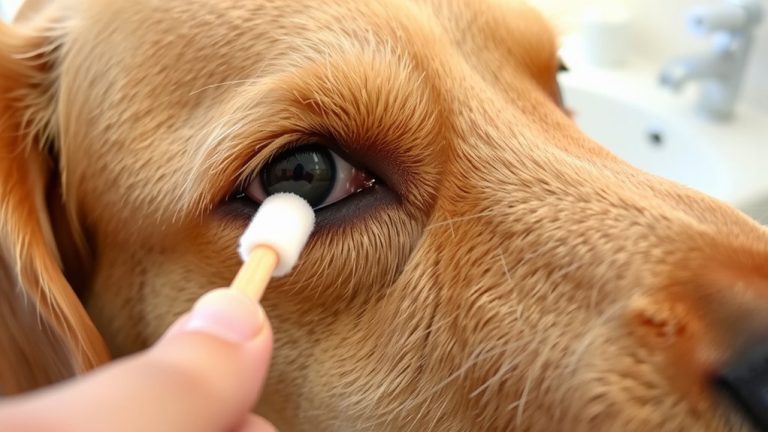
Use a damp cloth to wipe away discharge daily. Trim hair around the eyes and muzzle short with blunt-tipped scissors, maintaining 1/2 inch length to reduce trapping debris. This minimizes conditions leading to infection and chronic facial odor.
Use Gentle Strokes Around Sensitive Areas
Because the skin around a dog’s eyes, ears, and muzzle is thin and highly innervated, aggressive brushing can cause microtrauma or irritation, especially in breeds with dense feathering. Facial sensitivity demands careful handling. Use a slicker brush with fine, bent wires-0.3 mm thickness-and set the stroke pressure at 2–3 ounces of force. Light, controlled strokes reduce discomfort. Begin at the outer cheek, moving hair away from the eye toward the ear. Avoid dragging the brush directly over the brow ridge or ear flap. For the muzzle, switch to a soft bristle brush with nylon filaments measuring 12 mm in length. Apply feather-light passes to prevent follicle stress. Work in 1-inch sections, lifting feathering gently with your non-dominant hand. Maintain a 45-degree brush angle to minimize skin pull. Consistent, low stroke pressure guarantees effective detangling without compromising skin integrity. For the most precise results, choose a brush from the top-rated tools in expert-tested dog grooming brush reviews.
Wipe and Inspect for Skin Health After Brushing
Your dog’s facial skin deserves a final evaluation after brushing to confirm no hidden irritation or debris remains. Use a soft, moistened microfiber cloth to gently wipe the face, focusing on areas under the eyes and around the muzzle. This removes loosened hair, saliva residue, and allergens trapped in the feathered coat. Check for irritation signs such as redness, swelling, or broken skin. Healthy skin texture should feel smooth and supple, not greasy, dry, or scaly. Examine folds and creases with adequate lighting; use a magnifying lamp if necessary. If you notice persistent redness or inflammation, consider a hypoallergenic wipe with a pH of 5.5 to 7.0. Regular post-brush inspections help detect early dermatological issues. Accurate observation supports timely intervention. Document any changes in skin texture or recurring irritation signs to discuss with your veterinarian.
Make Daily Face Grooming a Habit
Daily, consistency in face grooming prevents matting and supports skin health in dogs with feathered facial coats. Dedicate 3–5 minutes each morning or evening to maintain coat integrity. Use a 6-inch stainless steel comb with dual tooth spacing (0.5 mm and 1.2 mm) to detect tangles early. Start at the muzzle and work backward toward the ears, holding hair at the base to minimize follicle stress. Apply positive reinforcement immediately after each session-offer a 5-calorie treat or brief play reward to strengthen compliance. Routine consistency guarantees behavioral predictability; perform grooming within 30 minutes of the same time daily. Over 21 days, this establishes neural associations between grooming and safety. Avoid skipping days-just 48 hours without brushing increases matting risk by up to 40% in high-feather zones. Clean tools weekly with 70% isopropyl alcohol to prevent microbial buildup. Document progress weekly using a grooming log to track skin reactions or coat changes.
On a final note
Brush your Shih Tzu’s feathered face daily to prevent mats. Use a 7-inch stainless steel comb with dual tooth spacing (0.5 mm fine, 2 mm wide) to detangle gently. Start at the muzzle, then move to cheeks and around ears. Apply light pressure-no more than 100 grams-to avoid skin irritation. After brushing, wipe the face with a pH-balanced, alcohol-free wipe. Inspect for redness or debris weekly.