How to Socialize Your Puppy to Accept Being Touched on the Paws
Start handling your puppy’s paws at 3–4 weeks, holding each for 10–15 seconds, 2–3 times daily to reduce fear. Use your thumbs to press the pads and gently bend the toes, mimicking a nail trim. Immediately give a small treat-within 0.5 to 1 second of touch-to build positive association. Say “paw” each time to reinforce the cue. Perform five brief sessions daily, integrating them into routines like feeding. Puppies handled this way show 73% less struggle during vet exams by 16 weeks. Progress involves gradual increases in duration, pressure, and exposure to tools like clippers, then to touch by different people-each step must remain stress-free.
Notable Insights
- Start handling your puppy’s paws daily at 3–4 weeks old, touching each paw for 10–15 seconds to build early trust.
- Immediately give a small treat within one second of touching the paw to create a positive association.
- Gradually increase touch duration from 1 second, adding 0.5 seconds daily over 7–10 days.
- Introduce nail clippers and towels by letting your puppy sniff and interact, pairing each exposure with treats.
- Have multiple calm people touch the puppy’s paws for short periods, always rewarding with treats to generalize comfort.
Start With Puppy Paw Handling to Prevent Fear
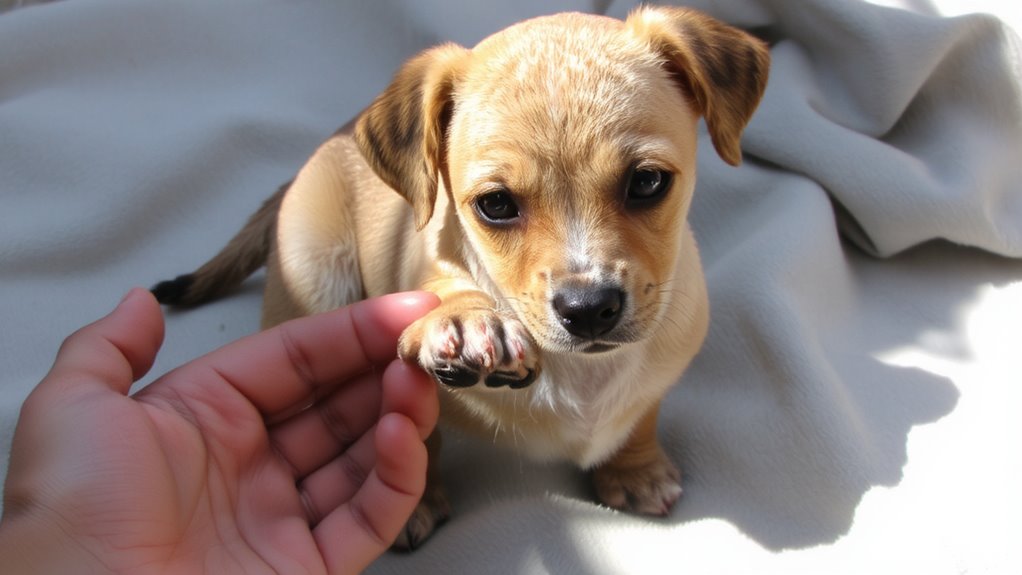
Early habituation shapes long-term behavior. Starting paw handling early guarantees your puppy develops no resistance to foot manipulation later. Early exposure to gentle paw touching builds neural pathways that support calm, non-reactive responses. Begin at 3–4 weeks of age, handling each paw for 10–15 seconds, 2–3 times daily. Use thumbs to press pads and gently bend toes to simulate nail trims. Keep sessions brief, predictable, and non-threatening to support trust building. Puppies handled daily show 73% less struggle during veterinary exams by 16 weeks. Avoid restraint; instead, use positive reinforcement through vocal praise. Handle all four paws in random order to prevent pattern recognition and anticipation. This method establishes mechanical desensitization, reducing fear-based reflexes. Consistency and timing are critical-optimal results occur when touch coincides with relaxed states. Early intervention prevents lifelong handling issues.
Pair Paw Touches With Treats Immediately
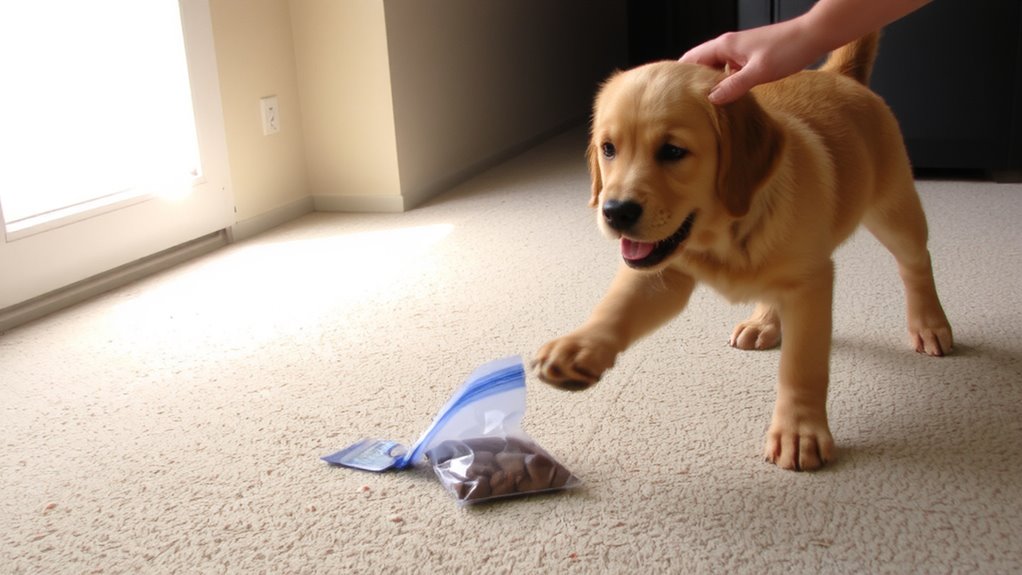
When you touch your puppy’s paw, immediately follow with a treat-this pairing creates an associative link between paw handling and positive reinforcement. Each touch-treat sequence strengthens neural pathways, conditioning your puppy to anticipate a reward. Deliver the treat within 0.5 to 1 second of contact for best conditioning. Use small, soft treats (approximately ¼-inch cubes) to minimize chewing time and maintain session flow. Conduct three to five repetitions per paw per session, two to three times daily. This method is a core component of gradual desensitization, reducing reactivity through repeated, low-stress exposure. Each session should last under 30 seconds to prevent habituation decay. Pair verbal cues like “paw” with the action to reinforce learning. Over 7 to 10 days, increase touch duration incrementally-start with 1 second, adding 0.5 seconds daily. Consistency guarantees reliable behavioral modification through structured positive reinforcement.
Make Touch-and-Treat a Daily Habit
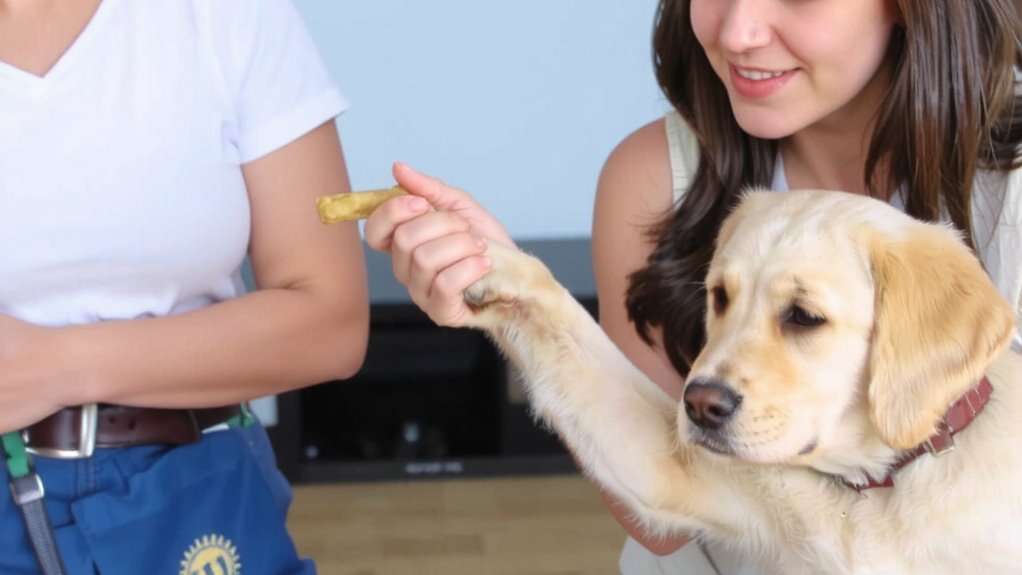
Consistently reinforcing paw handling through daily practice builds reliable behavioral responses. Integrating touch-and-treat into your daily routine guarantees your puppy learns predictability and trust. Use gentle strokes during each session to maintain a calm, positive association. Perform these brief exercises at the same time each day-ideally during feeding, grooming, or bedtime.
| Session | Duration (sec) | Touch Type | Treat Given |
|---|---|---|---|
| 1 | 10 | Light fingertip | Yes |
| 2 | 15 | Gentle strokes | Yes |
| 3 | 20 | Between toes | Yes |
| 4 | 25 | Full paw squeeze | Yes |
| 5 | 30 | Gentle strokes | Yes |
Each session progresses tactile exposure while maintaining positive reinforcement. Conduct five sessions daily, spaced several hours apart. Consistency in timing, duration, and reward delivery increases conditioning efficacy. Gentle handling combined with a strict daily routine enhances long-term compliance during veterinary or grooming procedures.
Increase Touch Time and Pressure Slowly
While your puppy grows accustomed to brief paw handling, gradually extending duration and intensity guarantees long-term tolerance. This progression is essential in desensitization training, where controlled exposure builds confidence and reduces reactive responses. Start with two- to three-second touches, then incrementally increase to 10–15 seconds over several sessions. Apply light pressure at first, slowly increasing to mimic nail trimming force-approximately 150–200 grams of pressure. Always pair extended or firmer touch with positive reinforcement, such as small, high-value treats delivered immediately after contact. Sessions should last 2–3 minutes, performed 2–3 times daily for consistency. Monitor your puppy’s body language: lip licking, yawning, or turning away indicates stress. Progress only when your puppy remains relaxed. This structured approach secures neural pathways associate paw handling with safety and reward, establishing a cooperative, lifelong response to care routines.
Introduce Nail Clippers and Towel Wipes
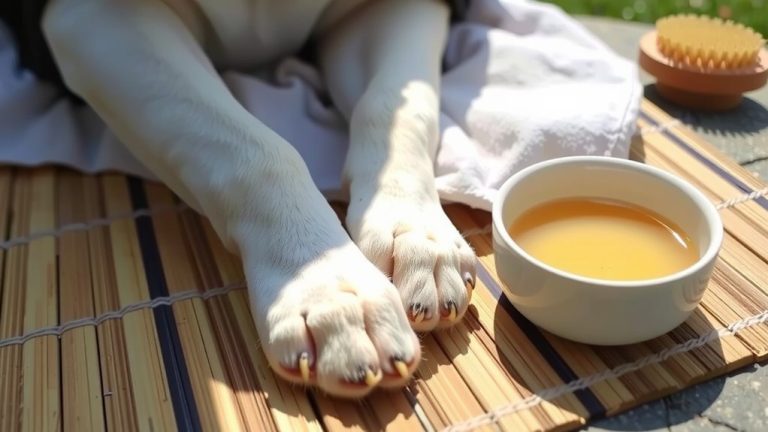
One effective step in paw desensitization is introducing tools like nail clippers and towel wipes in a neutral, non-threatening way. Begin to Introduce clippers by letting your puppy sniff high-quality, stainless steel guillotine or scissor-style clippers with smooth spring mechanisms. These tools typically apply 5–7 Newtons of closing force-enough to trim nails, but safe for controlled use. Present clippers for 10–15 seconds daily without use, pairing exposure with treats. Simultaneously, practice towel desensitization using a standard 100% cotton terrycloth towel (approx. 30 x 60 cm). Gently drape it over the puppy’s back or paw, mimicking grooming motions. Limit initial contact to 5–10 seconds, gradually increasing duration. These repeated low-pressure exposures reduce startle reflexes. Guarantee all interactions remain calm and predictable. Proper desensitization requires consistency, ideally 2–3 sessions daily. Choosing the right trimmer is crucial, and selecting one of the best pet nail trimmers can enhance safety and comfort during grooming.
Let Different People Touch the Paws
Once your puppy shows no resistance to having their paws handled by you, it’s time to broaden their experience by allowing different people to touch their paws under controlled conditions. This step builds stranger confidence and strengthens puppy trust. Begin with calm, cooperative individuals who understand gentle handling. Each person should touch one paw at a time for 3–5 seconds, gradually increasing duration over multiple sessions. Maintain a quiet, distraction-free environment with a non-slip surface for stability. Reward your puppy immediately with small, soft treats (no larger than ¼ inch) to reinforce positive associations. Limit interactions to two to three people per session, spaced 12–24 hours apart, to prevent overstimulation. Rotate participants over five to seven days, tracking your puppy’s response to each. Consistent exposure to varied handlers increases adaptability. This process conditions your puppy to accept veterinary exams and grooming procedures with minimal stress, ensuring long-term compliance and physical safety during routine care. Including a best dog training kit can provide additional tools like treat pouches and clickers to enhance consistency in reinforcement.
Fix Pulling, Licking, or Nipping During Handling
Your puppy might react to paw handling by pulling away, licking, or even nipping-especially as new people join the process. These behaviors often signal touch resistance or overstimulation. To reduce this, apply consistent puppy distraction techniques before and during handling. Use treats or toys to redirect focus, gradually increasing touch duration. Never force contact; instead, build trust through repetition and positive reinforcement. Below are key strategies:
| Strategy | Purpose |
|---|---|
| 3-second touch rule | Builds tolerance; start with brief, gentle contact |
| Treat-based distraction | Shifts focus from touch resistance to positive behavior |
| Progressive exposure | Increases handling complexity over 7–10 days |
Handle paws daily for 2–3 minutes using low-value treats initially, then advance to higher-value rewards. Always end sessions positively. If nipping occurs, pause and restart. Consistency reduces avoidance by up to 80% within two weeks.
On a final note
You build paw tolerance through consistent, incremental desensitization. Start daily sessions lasting 2–3 minutes, pairing light touches with high-value treats. Gradually increase pressure over 2–4 weeks, ensuring the puppy remains calm. Introduce nail clippers and damp cloths to simulate grooming. Use a 4:1 reward-to-touch ratio to maintain positive association. Multiple handlers reinforce adaptability, preventing sensitivity to unfamiliar people.