Seasonal Care Routines for Dogs With Special Coats
You should adjust grooming based on your dog’s coat type and seasonal changes. Double coats shed heavily in spring-use a de-shedding tool daily to remove 90% of loose fur. In summer, cooling vests with evaporative fabric last 2–4 hours. Fall calls for weekly undercoat raking. Winter demands humidity between 40–60% and anti-static sprays. Proper tools and routines prevent damage, keeping the coat resilient year-round-there’s a precise method for every season.
Notable Insights
- Match grooming tools to your dog’s coat type, like undercoat rakes for double coats and slicker brushes for curly fur.
- Use a de-shedding tool daily in spring to remove loose undercoat fur and reduce shedding by up to 50% in two weeks.
- Keep double-coated breeds cool in summer with hydration stations and cooling vests soaked in water for 2–4 hours of relief.
- Support healthy fall coat growth with weekly brushing and hydration even when thirst decreases due to cooler weather.
- Prevent winter coat dryness by maintaining indoor humidity between 40%–60% and using anti-static sprays every 3–4 days.
Match Grooming to Your Dog’s Coat Type
Coat type determines everything. You must align your grooming strategy with your dog’s specific coat classification-single, double, wiry, or hypoallergenic-each requiring distinct care protocols. For double-coated breeds like Huskies, use an undercoat rake with teeth spaced ½ inch apart to penetrate the dense underlayer without damaging guard hairs. Brush techniques vary: long, sweeping strokes prevent matting in long-haired breeds such as Maltese, while short, targeted strokes suit wiry coats like those of Scottish Terriers. You need a slicker brush with fine, bent pins for curly coats. Coat nutrition plays a pivotal role; make certain diets include omega-3 fatty acids (minimum 500 mg EPA/DHA daily) to support sebum production and cuticle integrity. Use biotin supplements at 2 mg/kg of food to strengthen keratin. Grooming isn’t just surface care-it’s physiological maintenance calibrated to coat biology. A high-quality dematting tool can significantly reduce discomfort and coat damage in severely matted areas.
Beat Spring Shedding With Deep Cleaning Tips
Why does your dog shed so heavily in spring? Seasonal coat change triggers increased shedding as your dog sheds its dense winter undercoat. Dead hairs loosen, creating mats and increasing allergens in your home. Combat this with structured deep cleaning. Start with daily brush feeding-using a de-shedding tool like the Furminator-to extract loose undercoat hairs before they scatter. Brush feeding removes up to 90% of dead fur, reducing shedding by half within two weeks. Follow with weekly vacuum bathing: apply a waterless foam cleanser (e.g., Bissell Tangle Spray), then use a pet vacuum with 8,000–10,000 Pa suction power to lift debris and loose hair. Vacuum bathing captures 99.7% of dander and reduces cleaning time by 40%. These precise techniques enhance coat health, minimize household mess, and prepare fur for seasonal changes-without impacting summer heat management. For optimal results, choose from the best deshedding tools for dogs, which are designed to target undercoat fur without damaging the topcoat.
Keep Your Dog Cool & Safe in Summer Heat
As temperatures rise, your dog’s freshly shed coat becomes an asset for summer comfort-but only if managed correctly. Overheating risks increase, especially in double-coated breeds. Provide consistent Hydration stations with fresh water throughout the day. Cool water intake supports thermoregulation and prevents heat exhaustion. Cooling vests use evaporative technology to maintain a lower body temperature. Activate by soaking in water; effectiveness lasts 2–4 hours.
| Feature | Specification |
|---|---|
| Cooling vest material | Breathable, lightweight polyester |
| Activation time | 15-minute soak in water |
| Hydration station capacity | Minimum 1 liter, shade-protected |
Use reflective labels on vests for visibility. Avoid midday walks when ambient temperatures exceed 80°F (27°C). Monitor for excessive panting. Immediate cooling reduces heatstroke risk.
Prep Your Dog’s Coat for Fall Weather
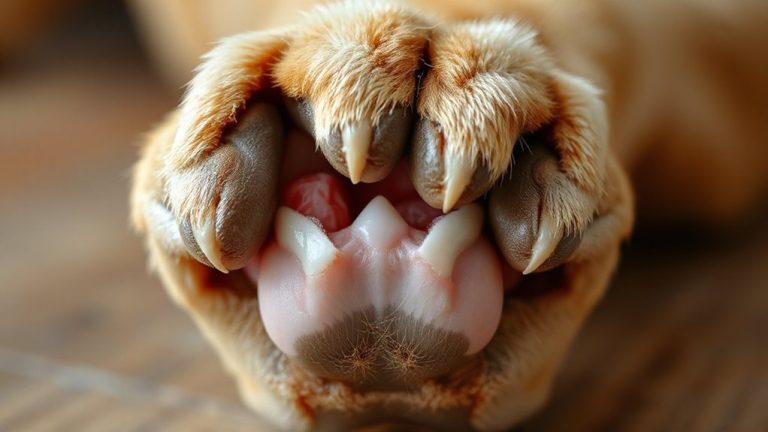
Your dog’s natural insulation begins gearing up for cooler months as daylight hours shorten and temperatures gradually drop. You’ll notice increased undercoat growth in double-coated breeds like Huskies and Golden Retrievers, requiring weekly brushing with a slicker brush and undercoat rake (7–10 cm tine length) to manage shedding. Begin adjusting grooming practices now to support coat shift without compromising protection. Maintain fall hydration-cool weather reduces thirst, but dogs still need 45–60 ml of water per kg of body weight daily. Dehydrated skin impairs coat resilience. Introduce paw protection early; evenings grow damp, increasing exposure to abrasive surfaces and cold concrete. Apply a wax-based balm with beeswax and shea butter (melting point 62–65°C) to form a durable, water-resistant barrier. Reapply every 3–5 days or after wet walks. These targeted steps sustain coat health and comfort through seasonal shift.
Prevent Winter Coat Problems Indoors
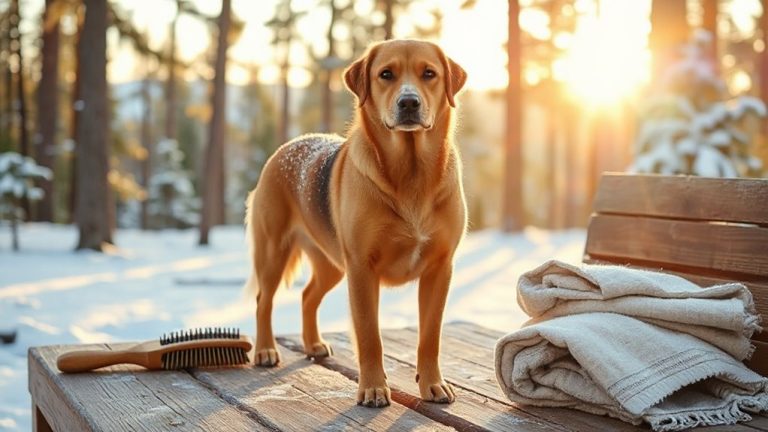
Winter’s indoor heating shifts the coat care challenge from outdoor exposure to environmental dryness. Low indoor humidity reduces moisture in your dog’s skin and coat, increasing flakiness and brittleness. Maintain indoor humidity between 40% and 60% using a digital hygrometer and a humidifier with a 1.5-gallon tank or larger for consistent output. This range minimizes desiccation of epidermal layers and supports natural sebum production. Static control is essential for double-coated breeds; static buildup can lead to hair breakage and discomfort. Use anti-static sprays containing ammonium compounds or silicone derivatives, applied with a grounding brush every 3–4 days. Avoid plastic grooming tools, which increase electrostatic accumulation. Instead, use carbon-infused or metal combs to dissipate charge. Regular hydration and omega-3 supplementation improve coat resilience. These measures collectively reduce indoor winter coat degradation and maintain dermal integrity.
On a final note
Your dog’s coat health depends on seasonal adaptation. Use a deshedding tool with stainless steel blades weekly in spring to remove undercoat efficiently. In summer, opt for lightweight, breathable cooling vests with UPF 50+ protection during outdoor activity. Fall calls for fatty acid supplements-300 mg omega-3 per 20 lbs of body weight daily-to bolster coat resilience. In winter, maintain indoor humidity between 40–60% to prevent static and dry skin.