Nail Trimming 101: How Often Should You Trim Your Pet’s Nails?
You should trim your pet’s nails every 3 to 4 weeks to prevent overgrowth and maintain proper gait. Indoor pets, especially, need regular trims since soft surfaces don’t wear down nails like concrete or bark. Nails are too long if they tap the floor or extend past the paw pad by more than 2 millimeters. Use species-appropriate clippers-guillotine for small dogs, scissor-style for larger breeds-or a grinder with 10,000–30,000 RPM for precision. Overgrown nails can lead to joint stress, discomfort, or curled infections. Proper trimming supports musculoskeletal health, and knowing the right tools and signs guarantees effective care with minimal stress-there’s a lot more to get right with technique and timing.
Notable Insights
- Most pets need nail trims every 3 to 4 weeks to maintain proper paw health and posture.
- Indoor pets require more frequent trims than outdoor pets due to less natural nail wear.
- Cats should have nails trimmed every 10–14 days to prevent overgrowth and paw pad injuries.
- Trim nails if you hear clicking on floors or see nails extending beyond the paw pads.
- Activity level affects trimming frequency; dogs walking regularly on hard surfaces need fewer trims.
How Often Should You Trim Your Pet’s Nails?
How often should you trim your pet’s nails? Most pets need nail trims every 3 to 4 weeks. Nail growth patterns vary by species, breed, and individual metabolism, with indoor pets typically requiring more frequent trims than outdoor ones. Your pet’s activity levels heavily influence wear; dogs that walk regularly on hard surfaces may need trimming less often. Cats, even active ones, rarely wear down nails sufficiently on their own. Use a dedicated pet nail clipper with a sharp stainless-steel blade for clean cuts. Avoid the quick, which contains nerves and blood vessels. For dogs, if you hear clicking on floors, it’s time to trim. Ignoring nail growth can lead to joint misalignment and gait issues over time. Regular inspection helps track changes in nail growth patterns and prevents overgrowth.
Do Cats Need Nail Trims Like Dogs?
Yes, cats need nail trims just like dogs, even though their natural behaviors differ. While feline independence means they often self-maintain through natural scratching, this doesn’t replace regular trimming. Scratching removes outer nail sheaths and marks territory but doesn’t always shorten nails sufficiently. Overgrown nails can curl into paw pads, causing pain or infection. Use guillotine-style or scissor clippers designed for cats, trimming only the white tip-avoiding the pink quick, which contains nerves and blood vessels. Trim every 10–14 days. Mature indoor cats especially require trims, as surfaces like carpet don’t wear nails as effectively as tree bark. Natural scratching complements nail care but isn’t a substitute. Regular trims support mobility, prevent accidental snags, and reduce household damage. Proper maintenance guarantees your cat remains active and comfortable. For safe and effective grooming, consider using one of the best cat nail trimmers recommended for precision and ease of use.
When Are Your Pet’s Nails Too Long?
Why do your pet’s nails tap against the floor with each step? Floor tapping is a clear sign their nails are too long. When your pet stands, their nails should not touch the ground. Visual cues like nails visibly extending over the paw pad or constant clicking on hard surfaces indicate overgrowth. Nails exceeding 2 millimeters past the pad compromise posture and gait. Prolonged overgrowth can force toes into unnatural positions, increasing joint stress. Floor tapping isn’t just annoying-it’s biomechanically inefficient. Overgrown nails alter weight distribution, potentially leading to tendon strain or reduced mobility. In severe cases, nails may curl, penetrate paw pads, and cause infection. Check your pet weekly. Viewed from the side, the nail tip should stop short of the ground when the paw bears weight. Immediate trimming is needed if you observe floor tapping or abnormal posture. Proper length supports natural alignment and healthy movement patterns. Using a high-quality dog nail file can help maintain the correct nail length between trims and reduce the risk of overgrowth.
How Do You Trim Your Pet’s Nails at Home?
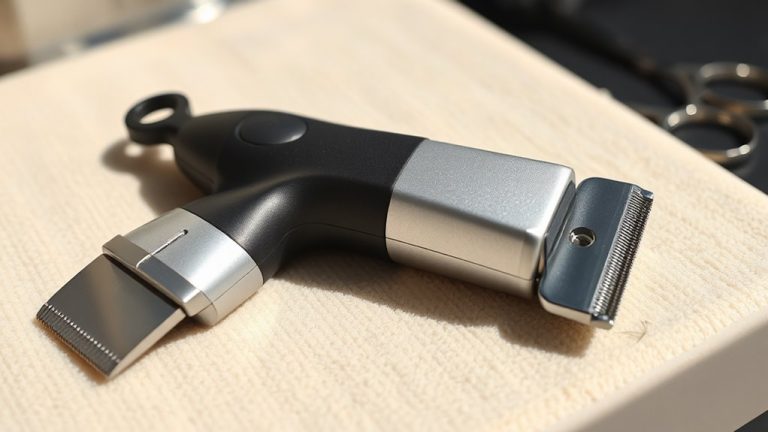
You’ve already learned to recognize when your pet’s nails are too long-floor tapping, visible overhang, or abnormal posture all signal it’s time to act. Begin by choosing the right tool: guillotine clippers work well for small dogs, while larger breeds often require scissor-style trimmers with safety guards. For precision and smooth finishes, many owners prefer nail grinding with a rotary tool. Grinders remove small amounts at a time, reducing split nails and creating a polished edge. Use one with variable speeds (10,000–30,000 RPM) and a diamond-coated bit for durability. Restraint is essential; keep your pet calm and secure. Hold the paw firmly but gently. Trim at a 45-degree angle just below the quick. Always have styptic powder on hand to stop minor bleeding instantly. Perform sessions in short bursts to prevent stress. Regular maintenance every 2–4 weeks guarantees ideal nail length and joint health.
What Should You Do If You Cut the Quick?
If you accidentally cut into the quick, stay calm and act quickly to control the bleeding. The quick contains nerves and blood vessels, so immediate pain management is essential. Apply styptic powder or a silver nitrate stick directly to the nail tip-these agents cauterize the tissue within 15 to 30 seconds, halting blood flow. If unavailable, cornstarch and hydrogen peroxide can form a temporary clotting paste. Hold firm pressure for at least two minutes; release slowly to assess hemostasis. Pain usually subsides within 10 to 20 minutes but monitor your pet for signs of discomfort. For infection prevention, clean the area with a 0.1% chlorhexidine solution. Avoid submerging the paw in water for 24 hours. Inspect daily for redness or swelling. While rare, bacterial entry via the exposed pulp can lead to phalangeal cellulitis. Keep nails trimmed regularly to minimize future risk.
On a final note
You should trim your pet’s nails every 2–4 weeks. Overgrown nails exceed the paw pad’s edge, causing discomfort and potential injury. Use sharp, species-specific clippers-guillotine or scissor-style-for clean cuts. Avoid the quick, a blood-rich nerve center in the nail. If nicked, apply styptic powder or cornstarch to stop bleeding. Regular trimming prevents overgrowth and maintains proper foot alignment. Consult your vet for guidance on tough or dark nails.