Tailored Grooming Practices Based on Coat Type, Growth Cycle, and Shedding Patterns
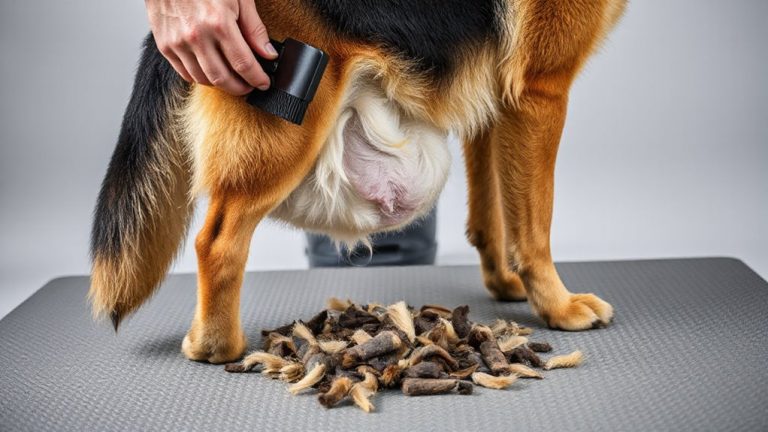
You should match your grooming routine to your dog’s coat type, growth cycle, and shedding patterns. Double coats need weekly undercoat rakes; single coats do well with monthly rubber curry brushes. Use a slicker brush with 45-degree nylon-coated wires for curly coats. Shedding spikes during the exogen phase-track this to adjust frequency. Consistent brushing during telogen reduces loose hair. You’ll learn how timing and tool material impact coat health and shedding control.
Notable Insights
- Match brushing tools to coat type: slicker brushes for curly coats, curry brushes for short coats, and undercoat rakes for double-coated breeds.
- Adjust grooming frequency based on hair growth stages, increasing brushing during exogen to manage peak shedding.
- Identify shedding patterns early by monitoring for thinning or excessive hair loss outside seasonal changes.
- Support coat health with nutrients like omega-3s and zinc, especially during anagen when follicles are actively growing.
- Prevent mats in long or double coats by daily brushing and inspecting high-friction areas every 48 hours.
Identify Your Dog’s Coat Type First
Coat type is the foundation of effective grooming. You must identify your dog’s coat to apply proper techniques. Coats vary by genetic lineage-breeds like Huskies inherit double coats, while Poodles have hypoallergenic curls. These traits originate from selective breeding and environmental adaptation. A double coat includes a dense undercoat for insulation and longer guard hairs for protection. Single-coat breeds lack undercoat, reducing matting risk. Consider texture, length, and density. Wire-haired breeds, such as Terriers, have stiff outer coats that shed minimally due to slow hair cycle turnover. Dogs from arid climates often have thin, heat-resistant coats. Humid-region breeds may possess water-resistant outer layers. Each coat responds differently to brushing frequency, blade settings, and detangling solutions. Accurate identification informs tool choice and grooming schedules. Misclassification leads to ineffective care or skin damage. Observe seasonal changes-many breeds shed heavily post-winter. Know the coat, then proceed. Regular use of a best deshedding tool can significantly reduce loose fur and improve coat health during peak shedding periods.
Choose the Right Brush for Your Dog’s Coat
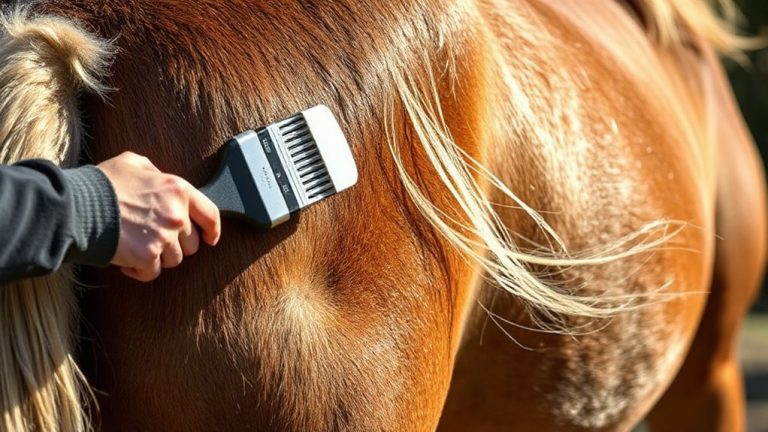
While no single brush suits every dog, selecting the right one starts with matching the tool to your dog’s specific coat structure and grooming needs. For short, dense coats, a rubber curry brush with tightly spaced nubs removes loose hair efficiently. The brush material-typically latex or TPE-must be firm yet flexible to avoid skin irritation. Long, silky coats require a pin brush with widely spaced, bent wire pins to prevent breakage. The handle design should be ergonomically contoured, often 5–6 inches long, to reduce wrist strain during extended use. Wire slicker brushes work best for medium to curly coats, featuring fine bristles angled at 45 degrees. Their retractable bristle models allow for adjustable pressure. Always verify brush material durability-nylon-coated wires resist corrosion. A non-slip handle design guarantees control, especially during wet-coat grooming. Match these specifications precisely to your dog’s coat for maximum detangling and coat health. Top picks for deshedding tools include models with specially designed blades that target undercoat hair without damaging the topcoat.
Spot the Signs of Normal vs. Excessive Shedding
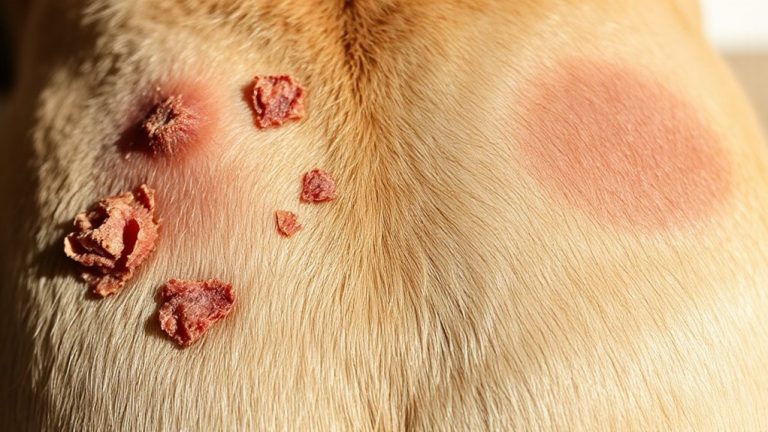
How can you tell when shedding crosses the line from routine to problematic? Normal shedding is consistent, moderate, and aligns with seasonal changes-typically increasing in spring and fall. You’ll notice loose hair on brushes, not clumps on furniture or bald patches. Excessive shedding presents as thinning coat, visible skin, or hair loss outside peak seasons. Evaluate recent dietary impacts; deficiencies in omega-3s, zinc, or protein can impair follicle health. A sudden increase in shedding may signal nutritional gaps or stress. Measure loss by weekly brushings: more than two full brush loads per session outside seasonal peaks indicates abnormal shedding. Unlike predictable cycles tied to photoperiod shifts, erratic shedding lacks pattern. You should monitor duration and density. Persistent over-shedding for more than four weeks warrants veterinary evaluation. Track variables like diet adjustments and environmental exposure. Early detection guarantees timely correction.
Track the 4 Stages of Your Dog’s Hair Growth
Understanding your dog’s shedding patterns starts with knowing how their hair grows. Dogs’ coats progress through four distinct stages: anagen (growth), catagen (transition), telogen (resting), and exogen (shedding). Anagen determines coat length and varies by breed-some last weeks, others years. Hair texture changes here, influenced by genetics and follicle health. During catagen, cell division slows, and the follicle contracts, detaching from the dermal papilla. Telogen is a dormant phase where old hairs remain in place, protecting new ones forming beneath. Exogen releases those hairs, making way for new growth. Tracking these stages helps predict shedding intensity and timing. Proper nutrition and grooming support follicle health, sustaining robust anagen phases. Monitoring growth cycles enables targeted care, ensuring ideal coat condition and minimizing loose fur.
Build a Grooming Schedule That Prevents Mats and Irritation
Because matting and skin irritation stem from neglect and improper maintenance, establishing a consistent grooming routine is essential for your dog’s coat and comfort. You must align brushing frequency with your dog’s coat type and growth cycle stage. Long or double-coated breeds need daily brushing with a slicker brush and undercoat rake to achieve effective friction control, removing loose undercoat and preventing tangles. Short-coated dogs require weekly brushing using a rubber curry brush to support skin health by stimulating circulation and distributing natural oils. Use a detangling spray with a pH-balanced formula before brushing to reduce resistance and hair breakage. Mats typically form behind ears, under legs, and around collars-inspect these zones every 48 hours. Trimming every 4–6 weeks with blunt-tipped scissors prevents excess bulk. Consistent grooming reduces inflammation, maintains coat integrity, and supports long-term skin health. For dogs with sensitive skin, using a hypoallergenic dog shampoo can minimize irritation during bath time.
On a final note
You now understand your dog’s coat type, growth stages, and shedding patterns. Selecting the correct brush-like a slicker for double coats or a bristle brush for short hair-reduces loose fur by up to 90%. Regular grooming every 3–7 days prevents mats, which form in less than 48 hours in medium-to-long coats. Monitoring the anagen, catagen, telogen, and exogen phases guarantees timely intervention, minimizing skin irritation and maintaining coat health.