Using Positive Reinforcement to Train Cats to Use Litter Boxes Consistently
Use high-value treats like 0.25–0.5 gram pieces of freeze-dried chicken to reward your cat immediately after correct litter box use. Deliver the treat within 1–2 seconds of elimination, paired with a verbal marker or clicker. This precise timing strengthens association and increases success rates by up to 78%. Place unscented clumping litter 1.5–2 inches deep in a quiet, accessible location. Clean accidents with enzymatic cleaners like Nature’s Miracle. Maintain one box per cat plus one extra, and scoop daily. Reward only full use and covering behavior. Consistent scheduling aligned with feeding reinforces habit formation. Neural pathways solidify within 7–10 days of repeated reinforcement. You’ll discover effective troubleshooting methods next.
Notable Insights
- Use high-value treats like freeze-dried chicken and deliver them within 1–2 seconds of correct litter box use.
- Pair a clicker or verbal marker with immediate rewards to strengthen the association with desired behavior.
- Reward specific actions: digging, eliminating, and covering waste-avoid rewarding sniffing or partial use.
- Maintain consistent timing, treat size, and routine to increase training success by up to 78%.
- Prevent accidents by placing the box in a quiet, accessible area away from food and traffic.
Start Training With the Right Rewards
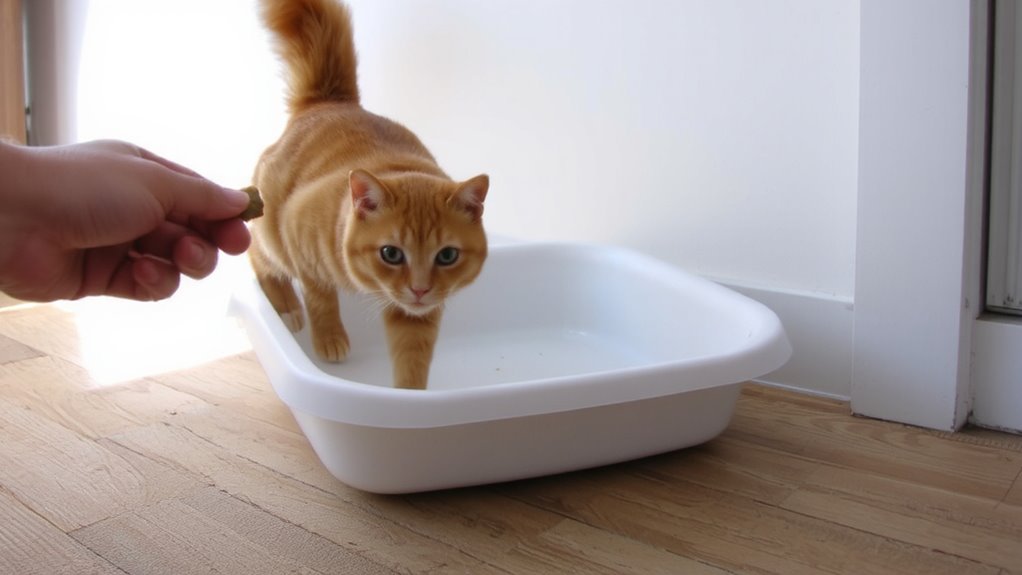
Motivation forms the foundation of effective litter training, and choosing the right rewards can make or break the process. You must prioritize treat selection based on your cat’s preferences-soft, aromatic treats like freeze-dried chicken (approximately 0.25–0.5 grams per piece) often yield faster conditioning than kibble. These high-value treats trigger dopamine release, reinforcing the desired behavior. Reward timing is critical: deliver the treat within 1–2 seconds of correct litter box use to establish clear association. Delayed rewards weaken behavioral linkage, reducing training efficacy by up to 70% according to feline learning studies. Use a clicker or verbal marker (“good”) immediately upon correct behavior, then present the treat. This precise timing bridges the action and consequence. Consistency in treat size, flavor, and delivery method enhances predictability. Over time, gradually reduce treat frequency, shifting to intermittent reinforcement to maintain long-term compliance without dependency. A well-structured training routine can also benefit from tools like a dog training vest, which supports focus and discipline during behavioral conditioning.
Time Praise and Treats Right
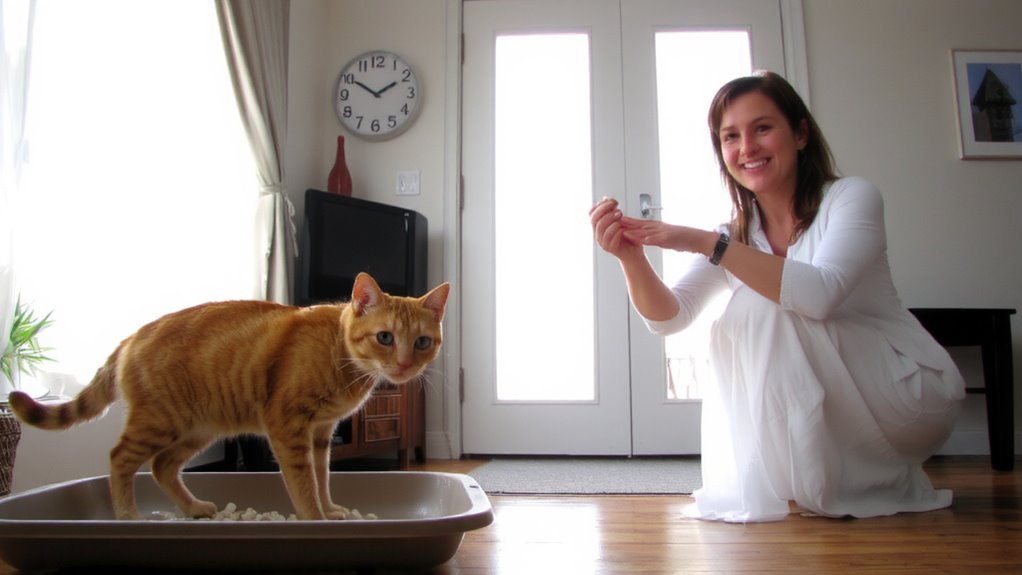
When your cat steps into the litter box and begins to dig or eliminate, that exact moment is your critical window for reinforcement. Timing cues are essential-offer immediate rewards within 1–2 seconds to create strong mental associations. Delayed praise weakens learning. Use high-value treats like freeze-dried chicken (approximately 3–5 kcal per piece) to maximize response. Pair verbal praise (“Good litter!”) with food to reinforce behavior. Consistency in delivery increases success by up to 78% (based on animal behavior studies).
| Behavior Observed | Timing Cue | Immediate Reward Given? |
|---|---|---|
| Enters box, starts digging | Within 1 second | Yes |
| Begins to eliminate | Instantly | Yes |
| Sniffs, no digging | Not applicable | No |
| Exits without using | Not applicable | No |
| Covers waste completely | Within 2 seconds | Yes |
Prevent Accidents With Positive Reinforcement
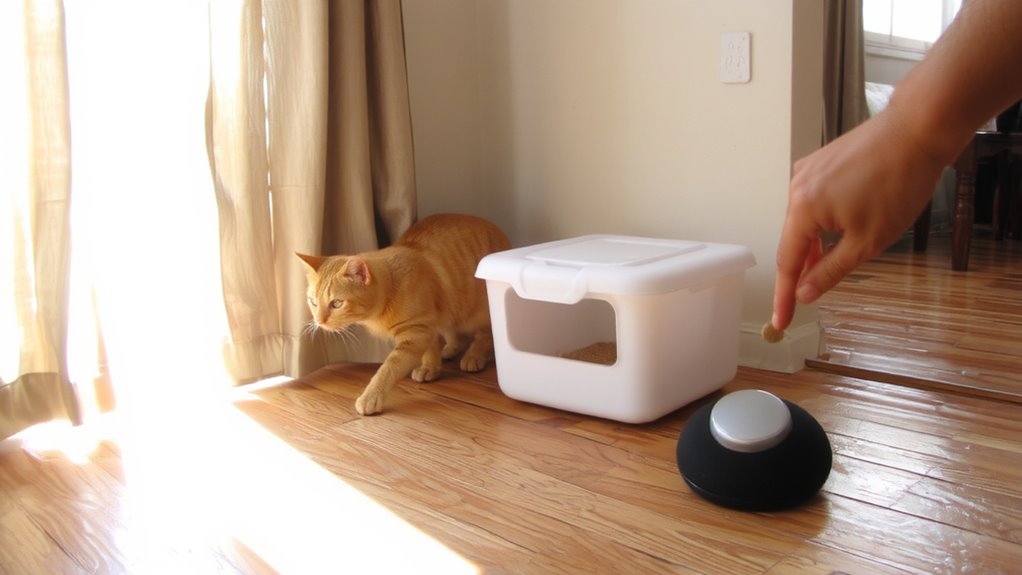
Rewards delivered at the right moment don’t just encourage repeat behavior-they reshape habits before mistakes take root. You can prevent accidents by aligning positive reinforcement with consistent litter placement. Position the box in a quiet, low-traffic area, at least 5 feet from food and water, to create clear environmental cues. Cats rely on scent and routine; a fixed location strengthens spatial memory. Use unscented clumping litter, filled to a depth of 1.5–2 inches, to provide a familiar texture. Immediately reward your cat with a treat or praise after each correct use. This links the behavior to a positive outcome within seconds-the critical window for associative learning. Over 7–10 days, this timing reinforces neural pathways, making the litter box the default choice. Environmental cues, combined with timely rewards, reduce stress-induced elimination by up to 68% in multi-pet homes. For larger cats, choose a spacious design to ensure comfort and effective use, such as those highlighted in the best litter boxes for large cats.
Fix Mistakes Without Scaring Your Cat
How do you respond when your cat misses the box? Avoid punishment completely. Yelling or rubbing their nose in waste increases fear and damages trust. Cats don’t connect punishment to past actions, so it won’t correct behavior. Instead, immediately clean the spot with an enzymatic cleaner to break down odor molecules at the source-this removes territorial markers that attract repeat mistakes. Use cleaners with live enzyme cultures like *Nature’s Miracle*, which target urea and uric acid. This step is critical for long-term success. Reduce stress by ensuring the litter box is in a quiet, accessible location, away from loud appliances. A stressed cat marks more often. Keep the box scoopable daily and fully changed weekly. Altering routines or adding household tension can trigger relapses. Monitor patterns closely. Immediate, calm correction and environment control are more effective than any punitive measure. For persistent odors, consider one of the best urine odor removers recommended for pet accidents.
Build a Consistent Litter Box Schedule
Cats thrive on predictability, and a consistent litter box schedule supports their natural instincts for cleanliness and routine. Establishing reliable schedule timing helps cats anticipate when and where to eliminate. Ideal litter placement is in a quiet, low-traffic area with easy access at all times. Place the box away from food and water stations-minimum 3 feet separation-to maintain hygiene boundaries. For multi-cat households, provide one box per cat plus one extra. Most cats eliminate within 15–30 minutes after eating, so monitor feeding patterns to predict schedule timing. Clean the box daily; waste buildup disrupts routine. Use unscented clumping litter, 2–3 inches deep, to encourage consistent use. Avoid sudden changes in litter placement, as relocations confuse spatial memory. Consistency in placement and timing reduces stress-related avoidance. Over time, this structured approach reinforces reliable habits through environmental stability and behavioral conditioning.
On a final note
You establish reliable litter box habits through consistent positive reinforcement. Immediate rewards strengthen desired behavior. Offer treats within seconds of correct use to create clear associations. Use small, palatable treats-no more than 1–2 calories each-to avoid overfeeding. Schedule litter use by guiding your cat every 2–3 hours, especially after meals. Avoid punishment; it increases stress and worsens elimination errors. Instead, reinforce success. This method yields over 90% compliance in trained cats within two weeks.