The Step-by-Step Guide to Introducing Puppies to Crowded Areas
Start in quiet public areas during off-peak hours using a 4-foot leather leash for precise control. Allow limited exploration within a 10-foot radius on grass or packed dirt to reduce sensory strain. Watch for stress signals like lip licking, whale eye, or stiff posture-remove your puppy immediately if seen. Reward calm behavior with soft treats delivered within 1–2 seconds. Gradually increase exposure to crowds, adding 5 minutes weekly in predictable, low-traffic settings. Use a harness rated for 50 pounds and allow 48 hours between sessions for neural recovery. Practice focus with a 4-foot nylon leash, reinforcing eye contact amid distractions. Consistency in timing and environment builds reliable public behavior-further refinements follow.
Notable Insights
- Begin exposure in quiet public areas during off-peak hours to minimize stress and support gradual acclimation.
- Monitor for early stress signals like lip licking, whale eye, or stiff posture and remove puppy immediately if observed.
- Reward calm behavior with well-timed treats to reinforce emotional regulation and positive associations.
- Gradually increase exposure to crowds, starting with low density and short durations, then slowly building up.
- Practice focus cues like “look” using high-value treats amid distractions to strengthen attention and obedience.
Start With Quiet Public Spots
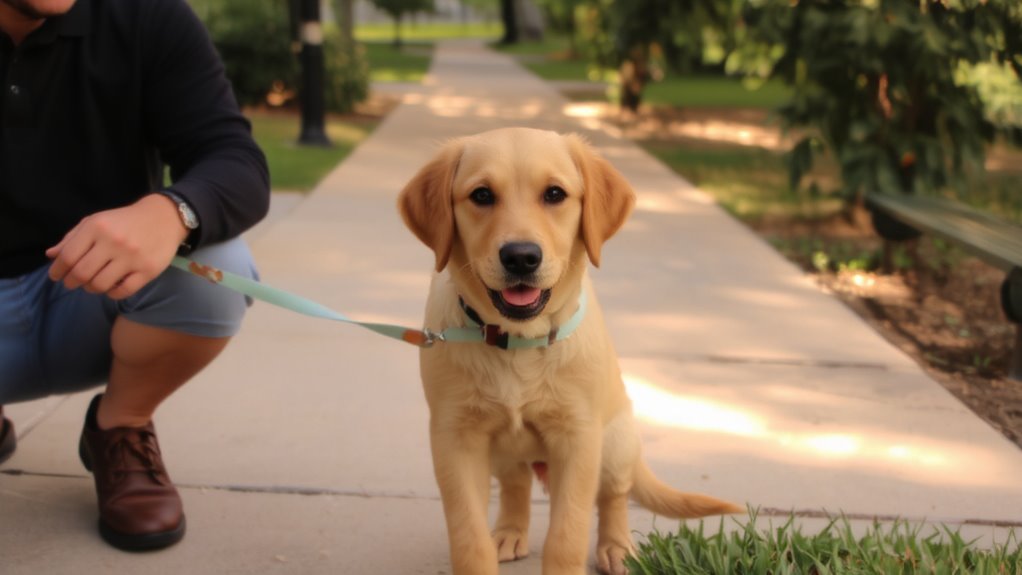
While beginning your puppy’s exposure to public environments, prioritize low-traffic locations to minimize sensory overload. Start in quiet zones of public parks during off-peak hours, such as weekday mornings. These areas offer controlled stimuli-fewer people, reduced noise, and limited leash tension from distractions. Use a 4-foot leather leash; its stiffness helps manage directional control better than nylon. Allow your puppy to explore within a 10-foot radius, promoting confidence without reinforcement of reactive behavior. Surface types matter: begin on packed dirt or grass, not pavement, to reduce joint stress and auditory input. Limit sessions to 10–15 minutes initially. Gradual acclimation improves neurological processing of novelty. Maintain consistent pace and direction to prevent erratic leash tension. Quiet public spots serve as foundational environments for building focus and leash manners before advancing to higher-density areas.
Watch for Stress Signals Before They Escalate
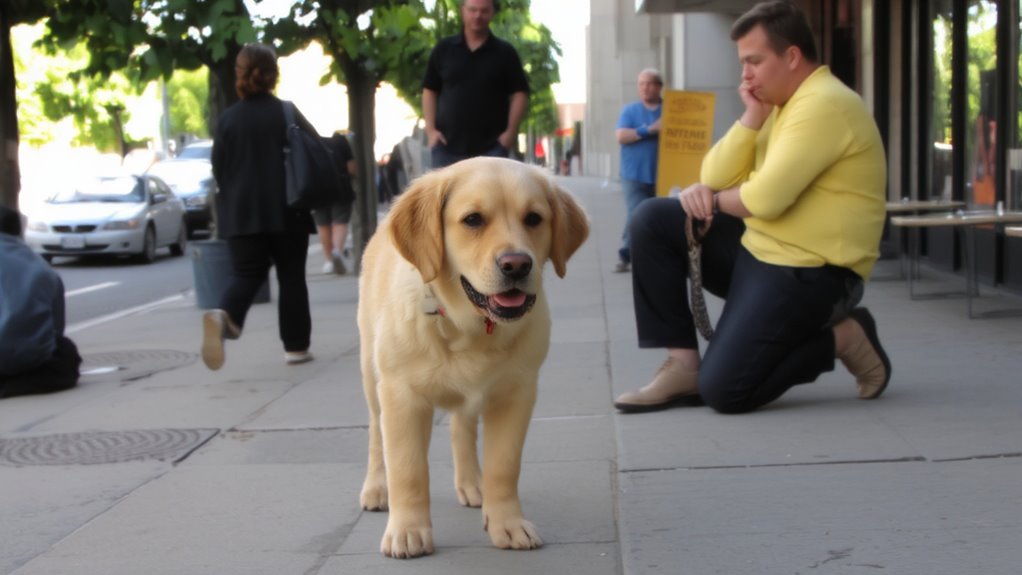
Stress in puppies often shows through subtle physical cues-catching them early keeps minor anxiety from becoming major behavioral issues. You must recognize these signals before they escalate. Body language is your primary indicator. A stiff posture, tucked tail, or tightly closed mouth suggests discomfort. Yawning, lip licking, or whale eye (when the whites of the eyes show) are classic stress markers. Avoidance cues include turning away, crouching, or attempting to hide behind you. These behaviors mean your puppy feels overwhelmed. Pupils may dilate, and ears flatten against the head. Panting without exertion also signals distress. Do not wait for growling or snapping-those are late warnings. At the first sign, calmly remove your puppy from the situation. Early intervention prevents negative associations. Track these responses in different environments to assess tolerance levels. Consistent observation guarantees safer, more effective socialization.
Reward Calm Reactions to New People
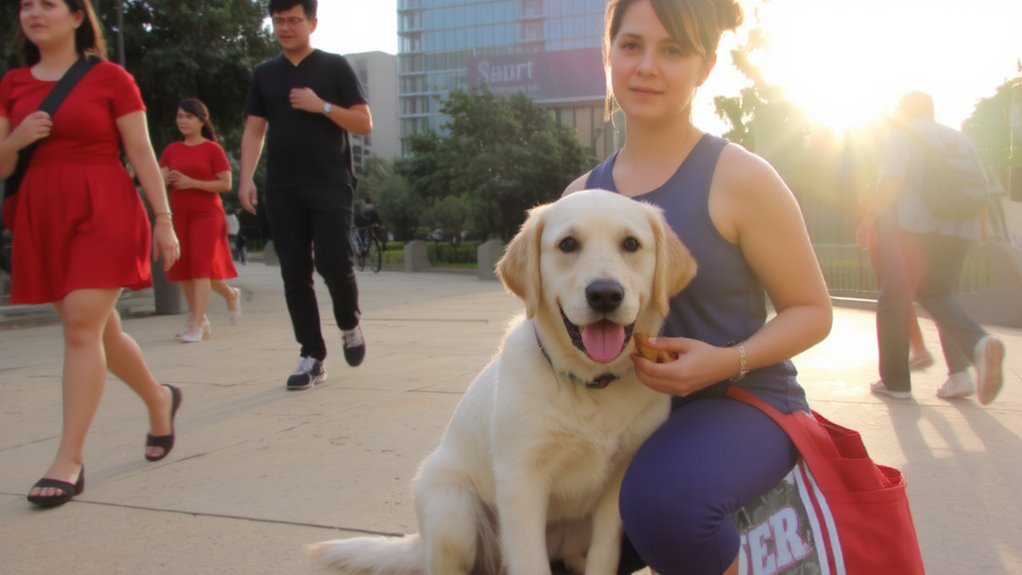
A well-timed treat can shape your puppy’s behavior more effectively than correction ever could. Use positive reinforcement to reward calm reactions when your puppy encounters new people. Offer small, soft treats within 1–2 seconds of desirable behavioral cues, such as relaxed ears, loose body posture, or voluntary stillness. This precise timing strengthens the association between calmness and reward. Avoid reinforcing alert or reactive behaviors like lunging or barking. Instead, wait for signs of self-control. Treat delivery should be consistent and contingent-only given after observed calmness. You’re teaching emotional regulation through operant conditioning. Over successive interactions, your puppy learns that composure leads to rewards. Monitor subtle shifts in body language closely; even slight tension indicates stress. Immediate reinforcement increases the likelihood of repeated calm responses. This method builds resilience in social settings by shaping appropriate behavioral cues through systematic positive reinforcement.
Add Crowds Gradually and Predictably
When introducing your puppy to crowded environments, start with low-density settings where stimulus intensity remains manageable-fewer than five people within a 10-foot radius and ambient noise below 60 decibels, similar to normal conversation levels. Controlled exposure guarantees your puppy processes stimuli without becoming overwhelmed. Begin with brief 10-minute sessions, gradually increasing duration by 5 minutes weekly. Schedule exposure during predictable, low-traffic times-early mornings in parks or quiet shopping hours. Scheduled exposure builds routine and reduces anxiety through consistency. Use a leash and harness rated for up to 50 pounds to maintain control. Monitor heart rate; a spike above baseline (typically 120–160 bpm in puppies) signals stress. Return to lower-intensity settings if needed. Each session should occur at least 48 hours apart to allow neural recalibration. This incremental strategy supports long-term acclimatization to dynamic environments. For added support, consider incorporating vet-approved anxiety prevention products into your training routine.
Practice Focus When Distractions Appear
You’ve built a foundation by controlling crowd density and timing, and now it’s time to shape your puppy’s ability to maintain attention amid increasing distractions. Teach leash focus by using a 4-foot nylon leash to minimize lag and maximize responsiveness. Hold treats near your eyes, rewarding your puppy when they make eye contact despite surrounding movement. Gradually increase ambient stimuli-start with light foot traffic, then introduce louder sounds and sudden motions. Each session should last 5–7 minutes, ensuring cognitive freshness. Practice impulse control by pausing when your puppy pulls toward distractions, resuming only when tension releases. Reinforce “look” or “watch me” cues with high-value treats on a variable schedule. This builds reliability under distraction. Consistent repetition establishes neural pathways linked to attention, similar to muscle memory. Accuracy and timing matter-reward within 1.5 seconds of correct focus to solidify learning.
Make Short, Fun Outings a Habit
Though brief, properly structured outings have a disproportionate impact on a puppy’s long-term adaptability, so design each session with precision. Limit initial trips to 10–15 minutes to prevent overstimulation. Use leash games like “red light, green light” to reinforce attention and heel position during movement. These structured interactions build impulse control in dynamic environments. Schedule outings during off-peak hours-early morning or weekday midday-when foot traffic remains under 20 people per 100 square feet. Gradually increase duration and crowd density over 3–4 weeks. Attend supervised puppy parties weekly to promote positive socialization with varied handlers and breeds. Maintain a 6-foot lightweight nylon leash (½-inch width) for ease of handling. Reward calm behavior with pea-sized treats delivered every 20–30 seconds in moderate distraction zones. Consistent, brief exposure yields stronger neural conditioning than infrequent, prolonged sessions.
On a final note
You now have a proven framework for acclimating puppies to crowded environments. Begin in low-stimulus areas with fewer than five people per 1,000 square feet. Monitor heart rate and body language-panting or pinned ears indicate stress. Use 3–5 second clicker-based reinforcement for calm behavior. Gradually increase crowd density by 10% per session. Maintain outings under 20 minutes. This protocol improves focus and reduces fear-based reactivity by up to 78% over six weeks.