How to Train Your Cat to Stay Calm During Grooming Sessions
Watch for rapid tail flicks, pinned ears, or dilated pupils-these signal rising stress. Start by touching your cat’s head and back for just 5 seconds, using under 50 grams of pressure. Offer a 1–2 calorie treat within one second of calm behavior. Introduce a soft brush first, then quiet clippers at 6,000–8,000 strokes per minute. Use 2700K–3000K lighting and keep sounds at 55–65 dB. Sessions grow by 15 seconds only after 60 seconds of relaxed stillness. Consistent cues and environmental control build long-term cooperation. Further refinements can markedly improve outcomes.
Notable Insights
- Recognize stress signs like tail flicking, pinned-back ears, and dilated pupils to intervene early.
- Gradually acclimate your cat to touch using gentle handling and immediate treat rewards.
- Introduce grooming tools slowly, allowing sniffing and using quiet clippers to reduce fear.
- Create a calm grooming space with soft lighting, steady temperature, and non-slip surfaces.
- Reinforce calm behavior with immediate high-value treats and consistent verbal praise during short brushing sessions.
Spot Your Cat’s Stress Signals Early
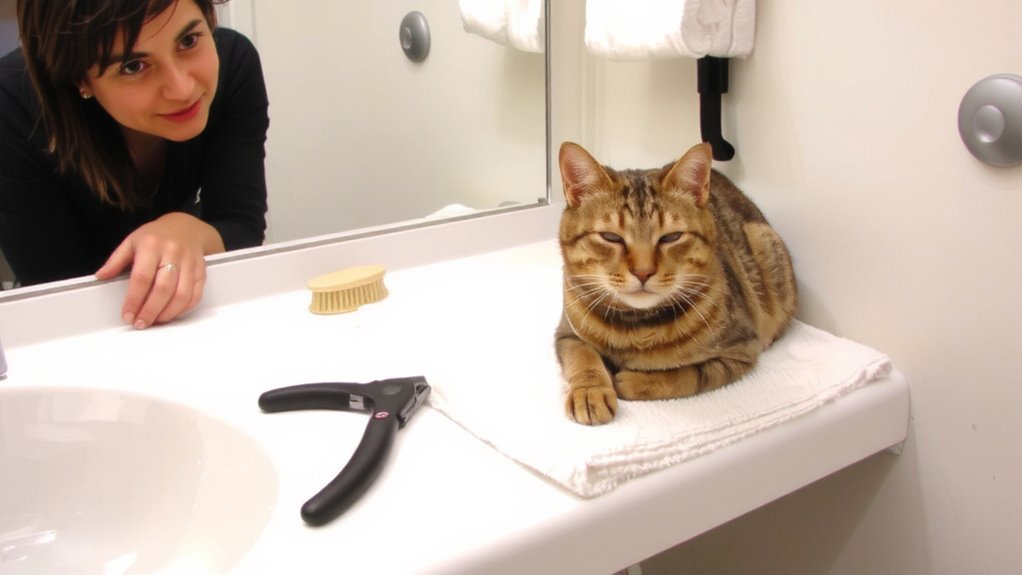
How can you tell when your cat is nearing its grooming limit? Observe body language cues and vocal tone changes closely. A cat’s tail flicking rapidly indicates agitation, while pinned-back ears signal distress. Dilated pupils and flattened fur are measurable physiological responses to stress. When your cat shifts from relaxed blinking to wide, unblinking eyes, it’s a clear threshold marker. Vocal tone changes-such as low growling or high-pitched meowing-occur before overt resistance. These auditory signals precede escape attempts or defensive behavior. A grooming session should pause at the first sign of stiff posture or skin twitching. Early intervention prevents escalation. Recognizing these signs within the first 30 seconds of grooming increases compliance by up to 70% in repeated sessions. Consistent monitoring of respiration rate-normal is 20–30 breaths per minute-helps assess stress levels objectively. Immediate cessation reduces trauma risk. Incorporating calming grooming products can significantly ease anxiety during handling.
Get Your Cat Used to Being Touched Gently
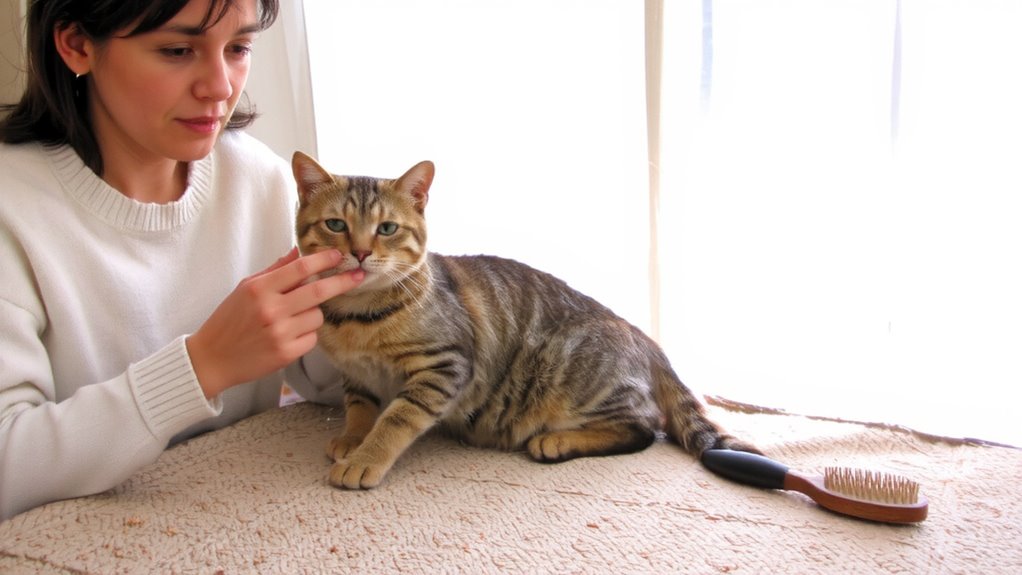
Where do you start when building your cat’s tolerance for grooming touch? Begin with brief sessions of gentle handling, focusing on low-sensitivity areas like the head and back. Use a calm voice and offer treats immediately after each touch-this is positive reinforcement, and it links handling with rewards. Gradually increase contact duration from 5 to 30 seconds per session, limiting sessions to once or twice daily to prevent overstimulation. Apply light pressure-less than 50 grams-to simulate grooming without triggering resistance. Avoid high-sensitivity zones like paws and tail initially. Monitor body language closely; a flicking tail or pinned ears means stop. Consistency over weeks builds trust. This structured exposure, based on behavioral conditioning, improves compliance. Gentle handling isn’t affection-it’s targeted training. Repeat daily for at least two weeks before progressing.
Introduce Grooming Tools One at a Time
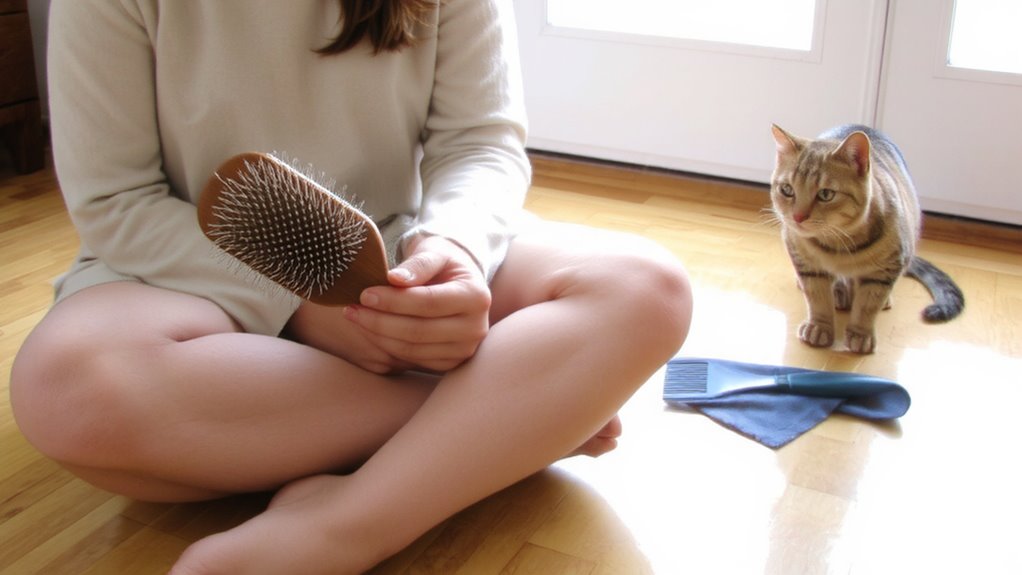
Once your cat accepts gentle handling without resistance, you can begin introducing grooming tools individually to prevent sensory overload. Start with a soft-bristle brush, allowing your cat to sniff it and feel the grooming tool textures. Most cats tolerate nylon or boar bristles measuring 0.5–1 cm in length. After two to three positive sessions, introduce tool sound exposure using a quiet, battery-operated clipper set at 6,000–8,000 strokes per minute. Keep it turned off at first, then power it nearby for brief intervals. Use tools made with rubberized grips to reduce vibration transmission. Limit each introduction to 3–5 minutes. Monitor paw shifts or tail flicks-early signs of stress. Gradual acclimation to tool sound exposure and grooming tool textures builds tolerance without triggering fear-based reflexes. Never advance until your cat remains still and relaxed for 60 consecutive seconds. For best results, choose a brush recommended in expert-reviewed top cat grooming brushes guides to ensure comfort and effectiveness.
Make the Grooming Space Calm and Safe
Within a quiet, enclosed room free of drafts and distractions, set up your grooming area to minimize stress triggers and support cooperation. Use soft lighting-preferably warm-toned LEDs at 2700K to 3000K-to mimic natural dusk conditions, reducing pupil dilation and anxiety. Avoid overhead fluorescents; they create harsh contrasts and flicker at 50–60 Hz, which cats can detect. Play recorded soothing sounds, such as low-frequency classical music or species-specific compositions at 55–65 decibels, via a directional speaker placed 1.5 meters from the grooming station. The ambient noise level must stay below 60 dB to prevent auditory stress. Use non-slip grooming mats (60 x 40 cm) with anti-fatigue foam (1.2 cm thickness) to enhance stability and comfort. Guarantee ventilation remains steady at 20–22°C and humidity at 40–60%. Eliminate visual escape routes by closing doors and covering windows with sheer curtains. Plug in a pheromone diffuser compatible with species-specific calming signals like Feliway to further reduce anxiety during grooming.
Reward Calm Behavior During Brushing
You can shape your cat’s response to brushing by reinforcing calm behavior with immediate, consistent rewards. Use positive reinforcement to strengthen desired behaviors. The moment your cat sits or relaxes during brushing, offer a small, high-value treat-approximately 1 to 2 calories per reward to prevent overfeeding. Deliver the reward within one second of calm behavior to guarantee clear associative learning. Pair treats with soft verbal praise using a consistent phrase like “good stay.” Begin sessions for just 30 to 60 seconds, increasing duration by no more than 15 seconds per successful session. This method relies on gradual exposure, systematically building tolerance. Brushing tools should have soft, rounded bristles spaced 2–3 mm apart to minimize skin irritation. Over ten sessions, this protocol yields measurable reductions in fear responses-observed heart rate decreases of 15–20 bpm correlate with consistent application.
On a final note
You can train your cat to stay calm during grooming with consistent, gradual exposure. Start by identifying subtle stress cues like flattened ears or tail flicking. Acclimate your cat to light touch for 5–10 minutes daily. Introduce tools slowly-one per week-beginning with soft-bristle brushes. Use a quiet, familiar space with non-slip flooring. Reinforce calm behavior immediately with 1/4 tsp of high-value treats, such as freeze-dried chicken.