How to Tell If Your Dog Needs a Bath Using Visual and Olfactory Cues
Your dog needs a bath if you notice a persistent wet hay-like odor after rain, which signals microbial growth in damp undercoats. Greasy fur, visible debris, or matted patches indicate sebum buildup and foreign material retention. Check for dark ear wax, discolored paw pads, or crusty skin fold residue-signs of trapped moisture and bacterial or yeast overgrowth. Persistent yeasty, sour, or ammonia-like smells suggest infection or metabolic issues. Bathe only as needed to avoid disrupting the skin’s pH (6.2–7.4); overbathing strips protective lipids. Proper assessment prevents dermatitis and maintains coat integrity. Further details clarify ideal hygiene practices for different coat types and health indicators.
Notable Insights
- Check for a persistent, strong body odor, as a rancid or sour smell may indicate seborrhea or microbial overgrowth.
- Inspect ears weekly for dark wax or a yeasty smell, which signals moisture buildup and possible infection.
- Look for greasy fur or resistance when running fingers through the coat, indicating excess sebum and need for washing.
- Examine paw pads and skin folds for dark, crusty debris or foul odor, signs of trapped dirt or bacterial growth.
- Assess the coat after rain; if fur stays damp more than 2 hours, bathing may be necessary to prevent odor and matting.
How to Tell When Your Dog Needs a Bath
Ever wonder why your dog suddenly smells like wet hay after a rainstorm? That odor often signals microbial growth in damp fur. Perform an ear check weekly; dark wax or odor indicates trapped moisture and potential infection. Inspect the base of the tail thoroughly-moisture and debris there cause tail tangle, a precursor to matting and skin irritation. Dogs with double coats retain more water, increasing odor and hygiene risks. If your dog’s fur remains damp 2+ hours post-rain, bathing is necessary. Use a pH-balanced shampoo (pH 6.2–7.5) to preserve skin integrity. Lather deeply, ensuring penetration to the undercoat. Rinse for at least three minutes; residue causes irritation. Towel-dry immediately, then use a high-velocity dryer at 60–70°F to prevent fungal growth. Regular grooming reduces odor and infection risk. Consistent hygiene prevents dermatological complications.
Is Your Dog’s Fur Greasy or Full of Debris?
After extended outdoor在玩家中, your dog’s coat may accumulate oils and particulate matter that compromise skin health. Greasy fur and debris buildup are visible indicators your pet needs cleaning. Check by running your fingers through their coat. If resistance occurs or the fur clings unnaturally, excess sebum is present. Debris buildup, including dirt, twigs, or particles, traps moisture and fosters bacterial growth.
| Condition | Visual and Tactile Clue |
|---|---|
| Greasy fur | Hair mats easily; leaves oily residue |
| Debris buildup | Twigs, leaves, or mud caught in coat |
| Combined issues | Dull coat; clumped, soiled patches |
Regular inspection prevents dermatological complications. Immediate bathing is advised when greasy fur coexists with foreign material embedded in the undercoat. Use a veterinary-recommended shampoo to restore dermal balance and coat integrity without stripping essential lipids. For dogs with sensitive skin or chronic itching, consider a shampoo formulated for allergy and itch relief to help soothe irritation and support long-term coat health.
Why Your Dog’s Paws or Skin Might Need a Bath
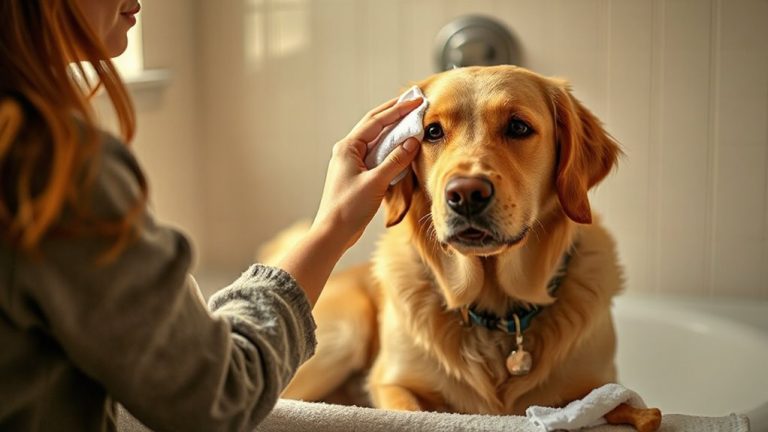
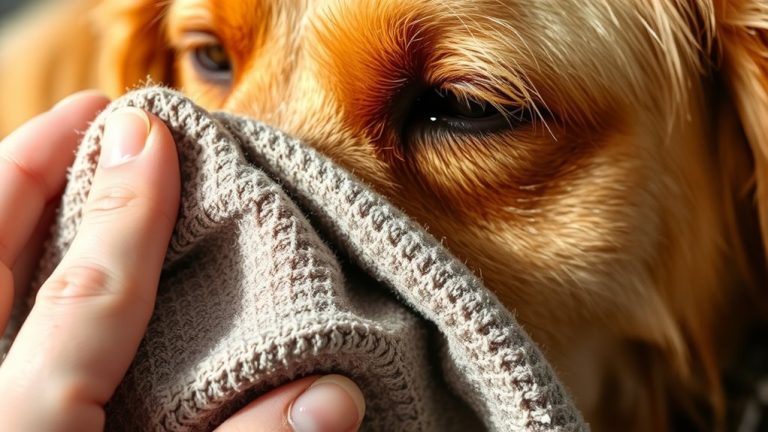
Could the condition of your dog’s paws or skin signal an underlying need for cleaning? Paw pad discolor❈ation often indicates trapped dirt, yeast overgrowth, or foreign substances requiring removal. Light-colored pad staining may result from porphyrin-containing saliva, while dark, crusty buildup suggests debris accumulation or microbial colonization. Skin fold odor arises when moisture and bacteria proliferate in facial, tail, or body folds, particularly in brachycephalic or wrinkled breeds. This localized septic smell stems from anaerobic bacteria thriving in warm, humid microenvironments. Left untreated, these conditions can progress to dermatitis or infection. Cleaning with a pH-balanced, non-irritating antiseptic wipe or shampoo reduces microbial load. For folds, use cotton swabs dampened with chlorhexidine solution (0.5–2%) to access narrow spaces. Rinse thoroughly. Regular inspection and hygiene prevent escalation. For quick maintenance between baths, consider using best dog grooming wipes formulated to safely remove dirt and reduce odor without irritating sensitive skin.
Normal Vs. Problematic Dog Smells: How to Tell the Difference
A dog’s natural scent is often mild and musky, reflecting healthy skin and coat oils, but persistent or unusually strong odors can signal hygiene issues or medical conditions. Sweet or yeasty smells near the ears often indicate ear infections, commonly caused by bacteria or yeast overgrowth in moist environments. Inspect the ear canal for redness, discharge, or wax buildup. Foul breath may point to poor dental hygiene, where plaque accumulation fosters bacterial growth, potentially leading to periodontal disease. Check gums for swelling or bleeding. A rancid or sour body odor could stem from seborrhea, an overproduction of skin oils. Musty smells after outdoor activity usually resolve with brushing. However, ammonia-like or metallic scents might suggest urinary or systemic disorders. Unlike transient smells from dirt or sweat, problematic odors persist beyond grooming. Recognizing these distinctions helps identify underlying health concerns early, improving treatment outcomes. Regular cleaning with an effective dog ear cleaner can prevent wax buildup and reduce the risk of infection.
Bathing Too Often (or Not Enough): How to Get the Frequency Right
While your dog’s coat is designed to self-regulate its natural oils, bathing too frequently-more than once every three to four weeks for most breeds-can strip away these protective lipids, leading to dry skin and irritation. Overbathing risks include compromised skin barriers, increased susceptibility to dermatitis, and disrupted pH balance, typically measured between 6.2 and 7.4 in canines. Use hypoallergenic, pH-balanced shampoos (pH 7.0) to mitigate damage. Dry skin prevention relies on maintaining sebum production; limit baths to once monthly unless activity level or coat type demands more. Dogs with double coats, like Huskies, need fewer baths (every 8–12 weeks) due to dense undercoats that retain oils. Conversely, short-haired breeds such as Beagles may tolerate bathing every four weeks. Assess individual needs through tactile inspection and odor evaluation. Establish a routine that balances cleanliness with coat integrity.
On a final note
You know your dog needs a bath when you see greasy fur or visible debris. Check for dirt, mats, or tracked-in substances on the coat and paws. A strong or sour odor signals bacterial buildup. Normal dog scent is mild; persistent smell needs action. Bathe every 4–6 weeks for most breeds. Overbathing strips natural oils. Use pH-balanced shampoo at 6.2–7.4.