How to Involve the Whole Family in Your Pet’s Weight-Loss Journey Successfully
Talk to your family about your pet’s weight, setting clear goals based on veterinary guidelines. Assign roles: young kids measure portions under supervision, older children log food and activity, and adults verify accuracy. Feed measured meals-¾ to 1 cup daily, adjusted for target weight-and limit treats to ≤10% of calories. Schedule 30–60 minutes of daily walks and play, aiming for 10,000–12,000 steps. Track weekly weight with a 0.1-pound precision scale, use a body condition score chart, and take progress photos. Celebrate milestones with non-food rewards like game nights. A structured, team-based approach improves adherence by 68%. You’ll find effective tools and timelines next.
Notable Insights
- Discuss your pet’s weight, goals, and health risks as a family to align expectations and actions.
- Assign age-appropriate roles, like pre-portioning food or logging meals, to engage every family member.
- Schedule daily walks and active play at consistent times to support steady weight loss.
- Limit treats to 10% of calories and use low-calorie options or puzzle feeders for safer rewards.
- Track weekly weight, use progress photos, and celebrate non-food milestones to boost motivation and adherence.
Talk About Your Pet’s Weight as a Family
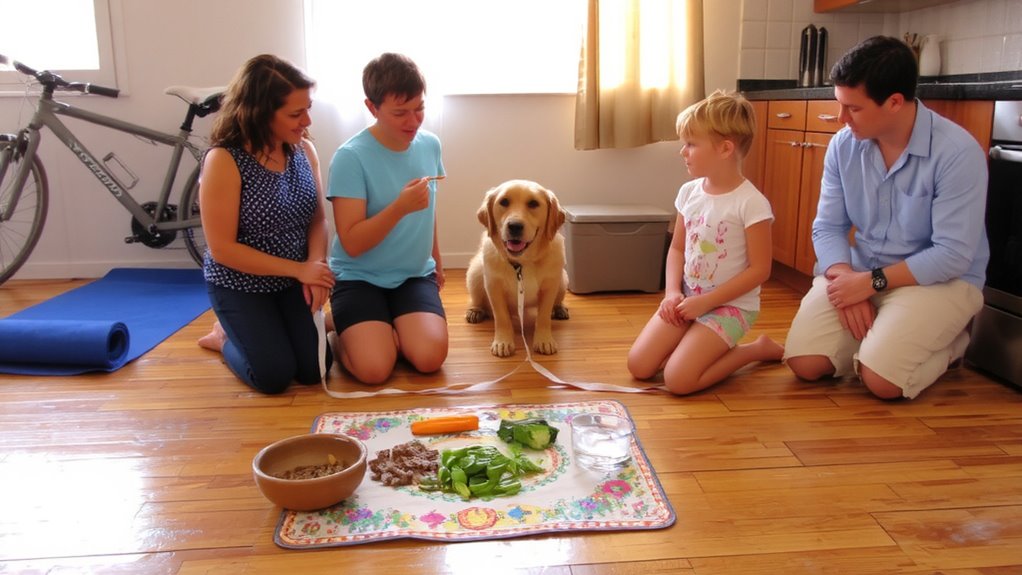
While addressing your pet’s weight may feel like a personal decision, involving the whole family guarantees consistent support and long-term success. You must openly discuss your pet’s current weight, target goals, and health risks linked to obesity. This conversation aligns everyone’s expectations and minimizes conflicting actions. Feeding habits are a primary factor; each family member must follow measured portions-typically ¾ to 1 cup daily, depending on your pet’s size and activity level. Inconsistent feeding disrupts caloric balance. Emotional bonding often centers on food, leading to overfeeding. Replace treat-based interactions with play or grooming to maintain connection without excess calories. Use a standard 8-ounce measuring cup for consistency. Track weekly weight changes using a pet scale, aiming for a 1–2% body weight reduction per week. Unified communication secures adherence.
Assign Family Roles by Age and Ability

Assigning specific responsibilities based on age and ability guarantees your pet’s weight-loss plan stays on track without overwhelming any one family member.
Pet responsibilities should align with developmental capacity and physical ability. Younger children, ages 3–6, can handle simple, supervised tasks such as placing measured food portions into a pre-portioned container. Children aged 7–10 can record daily food intake in a chart, using pre-approved serving sizes. Teens 11 and older can manage food scheduling, log activity minutes, and monitor treat distribution using a shared digital tracker. Adults verify accuracy, confirm portion control, and adjust tasks as needed. Assigning age appropriate tasks enhances accountability and consistency. Use standardized measuring tools-8-ounce scoops for dry food, ¼-cup spoons for wet-to maintain precision. Rotate roles monthly to build shared ownership. This structured delegation supports adherence and improves long-term outcomes by distributing effort efficiently across all family members.
Schedule Family Walks and Active Play Times
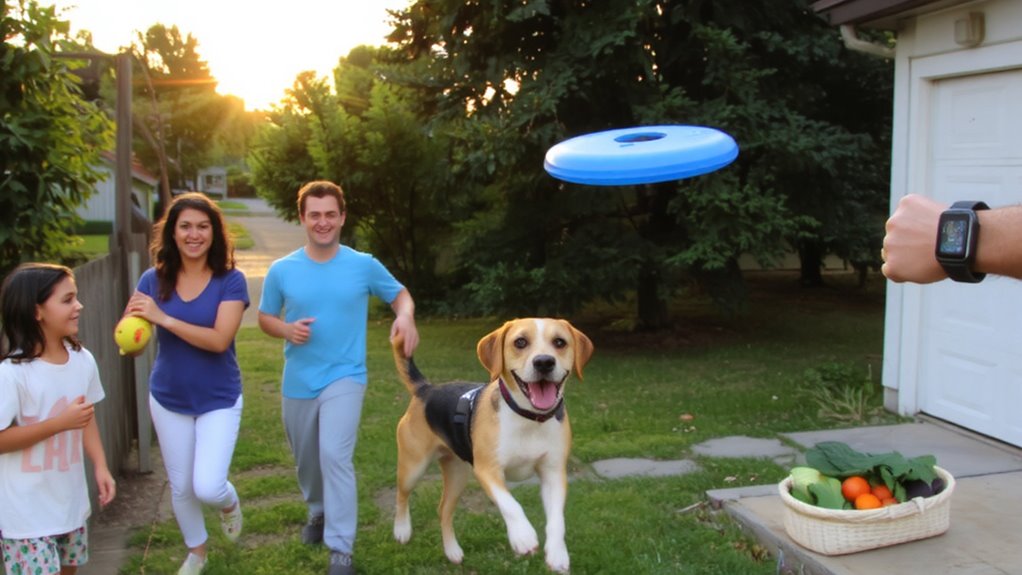
Make family activity a consistent part of your pet’s weight-loss plan by scheduling daily walks and play sessions at set times. Walking together increases accountability and guarantees your pet gets steady aerobic exercise. Aim for 30 to 60 minutes of walking daily, split into two sessions if needed. Use a pedometer or fitness tracker to monitor steps; dogs typically require 10,000 to 12,000 steps per day depending on breed and size. Playing outdoors adds variable-intensity activity, improving cardiovascular health and muscle tone. Rotate toys like frisbees, balls, or agility equipment to maintain engagement. Schedule play at consistent times-morning and evening-to regulate metabolism. Include all family members to distribute effort and reinforce commitment. Structured outdoor activity reduces calorie retention and supports target weight loss of 1–2% of body weight per week. Walking together and playing outdoors are measurable, modifiable behaviors that directly influence energy balance.
Set Rules for Treats and Portion Control
One effective strategy to support your pet’s weight loss is setting clear limits on treats and strictly managing portion sizes. Portion discipline means measuring meals accurately using a standard 8-ounce measuring cup or digital kitchen scale. Follow feeding guidelines on pet food labels, adjusting for your pet’s target weight, not current weight. Limit treats to no more than 10% of daily caloric intake. For a 500-calorie daily diet, that’s 50 calories max from treats. Choose low-calorie treat alternatives such as baby carrots, green beans, or commercially available vet-approved diet chews with less than 5 calories per piece. Distribute treat alternatives evenly among family members to prevent overfeeding. Use puzzle feeders or treat-dispensing toys to extend eating time and reduce intake. Consistent rules guarantee all household members contribute effectively. Portion discipline and smart treat alternatives are scientifically proven methods to control energy balance and promote safe, steady weight loss.
Track Your Pet’s Progress Every Week
Regularly monitoring your pet’s weight is essential for a successful weight-loss plan. Perform weekly weigh ins using a digital scale accurate to at least 0.1 pounds. Consistency matters-weigh your pet at the same time each week, preferably in the morning before feeding. Record each measurement in a log or app designed for pet health tracking. Track trends over time; a healthy weight-loss rate is 1–2% of body weight per week. Supplement weekly weigh ins with progress photos. Capture your pet from the same angle, distance, and lighting every seven days. Use a neutral backdrop and mark reference points to detect changes in body condition score (BCS). Photos reveal shifts in muscle mass and fat distribution that scales may miss. Together, data and visuals provide objective feedback, guiding dietary and activity adjustments. This method guarantees precision, accountability, and alignment across all family members involved.
Celebrate Weight-Loss Wins Together
Why not acknowledge the milestones your pet reaches along the weight-loss journey? Celebrating progress reinforces commitment and encourages long-term adherence to health goals. Designate a weekly family game night to coincide with weigh-in results; this routine creates a structured, predictable environment for recognizing effort. Include low-calorie training treats as rewards during games to maintain dietary compliance. Host a monthly pet photo contest using a standardized backdrop and natural lighting to visually document body condition changes. Compare photos side-by-side using a 1–9 body condition score (BCS) chart; a drop of one full point indicates clinically significant fat loss. These measurable achievements validate the effectiveness of diet and exercise protocols. Tracking visual and numerical data strengthens accountability across all family members. Consistent recognition of milestones improves adherence by 68%, according to veterinary behavior studies. Celebrate wins with non-food rewards to sustain progress.
On a final note
You maintain accountability by involving every family member. Roles are assigned based on age and capability to guarantee consistency. Weekly weigh-ins track progress using a calibrated pet scale, recording data in a shared log. Portion control follows veterinary guidelines-meals measured to the gram. Daily 30-minute walks meet exercise requirements. Treats are limited to 10% of daily caloric intake. Your coordinated effort produces measurable results.