How to Clean Your Dog’s Paws After a Beach Trip
Rinse your dog’s paws in lukewarm water (38–40°C) for 3–5 minutes to loosen salt and sand. Use a soft-bristle brush and pet-safe shampoo (pH 7.0) to clean between pads. Rinse again at 37–39°C for 2–3 minutes to flush debris. Inspect toes with bright light; remove glass or shells using 0.5 mm tweezers. Dry thoroughly with a microfiber towel, then apply a pea-sized amount of non-comedogenic balm. Future trips require heat-resistant boots-like Ruffwear Grip Trex with 6 mm soles-to protect against hot sand. Proper technique and gear guarantee long-term paw health and prevent infection.
Notable Insights
- Rinse paws in lukewarm water (38–40°C) for 3–5 minutes to soften and remove salt and sand.
- Use a soft-bristle brush to gently clean between paw pads and loosen embedded debris.
- Dry thoroughly with a microfiber towel, focusing on spaces between toes to prevent infections.
- Inspect between toes under bright light for cuts, glass, or debris, using fine-tip tweezers if needed.
- Apply a pea-sized amount of pet-safe balm or coconut oil to each pad for protection and hydration.
Gather Supplies to Clean Dog Paws
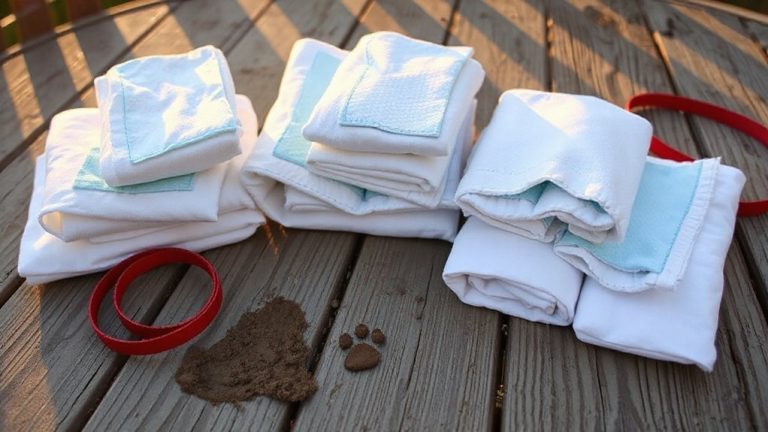
A well-stocked cleanup kit makes all the difference. You’ll need a soft-bristle brush, a portable pet-safe shampoo, and a microfiber towel. Use the brush to brush gently between paw pads, removing debris without irritation. Choose a shampoo with a neutral pH (around 7.0) to avoid skin imbalance. A collapsible silicone bowl, 8 inches in diameter, holds enough water for effective cleaning. Pair it with a leak-proof water bottle to rinse thoroughly, guaranteeing no soap residue remains. Residual chemicals can cause dermatitis. Microfiber towels absorb three times their weight in water, drying paws efficiently. Include a pair of non-slip gloves for better grip, especially with wiggly dogs. All items should fit in a 10 x 6 x 4-inch waterproof bag. This setup guarantees consistent hygiene, reduces infection risks, and maintains paw pad integrity after exposure to abrasive or saline environments. Replace worn tools every six months.
Wash Away Sand and Salt
Now that your supplies are ready, it’s time to remove sand and salt effectively. Begin with paw soaking to loosen debris. Use lukewarm water (38–40°C) for 3–5 minutes to soften salt crusts without damaging paw pad tissue. Follow with gentle salt rinsing under running water to flush out residual minerals. Consider using high-quality best dog wipes to finish cleaning and soothe the skin after rinsing.
| Method | Duration | Water Temp (°C) |
|---|---|---|
| Paw Soaking | 3–5 min | 38–40 |
| Quick Rinsing | 1–2 min | 35–38 |
| Deep Rinse | 2–3 min | 37–39 |
| Final Rinse | 1 min | 35–37 |
This protocol prevents desiccation and microfissures caused by sodium chloride deposits. Guarantee full interdigital penetration during rinsing. Paw soaking hydrates keratin layers, improving elasticity. Salt rinsing removes abrasive particles that can cause irritation during post-trip activity. Complete the process before inspecting for injuries.
Check Between Toes for Glass or Cuts
Your dog’s safety hinges on a thorough post-beach paw inspection, especially between the toes where hazards hide. Perform a toe inspection by spreading each paw pad gently and examining the interdigital spaces under bright light. Sand, tiny shards of glass, or sharp shells often become lodged in fur or skin folds. Use tweezers with a fine tip (0.5 mm precision) to extract debris without compressing surrounding tissue. Check for redness, swelling, or minor lacerations-early signs of potential infection. Injury prevention depends on this step; untreated cuts can lead to lameness or abscesses within 24–48 hours. Dogs with long toe hair are more prone to trapping debris. Trim interdigital hair to 1 cm to reduce risk. A systematic toe inspection takes under two minutes per paw but meaningfully reduces trauma-related vet visits. Always document abnormalities for veterinary follow-up. This routine is critical for maintaining footpad integrity and mobility. For ongoing care, consider using high-quality dog paw wipes to remove salt, sand, and bacteria after each outing.
Dry Paws and Apply Soothing Balm
Moisture trapped between paw pads creates an ideal environment for bacterial and fungal growth, so thorough drying is essential after a beach outing. Use a clean, absorbent towel to pat each paw completely dry, focusing on the spaces between toes. Air-drying is insufficient and increases infection risk. Once dry, apply a pea-sized amount of refined coconut oil to each pad. Coconut oil has natural antimicrobial properties and a melting point just below body temperature, allowing rapid absorption. Perform a gentle paw massage for 30 seconds per foot to enhance blood flow and oil penetration. Use only non-comedogenic, unscented balms to avoid pore blockage. Avoid over-application; excess balm attracts dirt. Repeat this process nightly after beach visits. Coconut oil’s lauric acid content reduces inflammation while forming a protective barrier. Proper technique prevents cracking and maintains pad integrity. For best results, choose a high-quality best coconut oil that is safe for canine use and free from additives.
Protect Dog Paws on Future Beach Walks
While sand and hot surfaces can cause abrasions and thermal injury, protecting your dog’s paws before beach walks reduces the risk of trauma. Effective paw protection starts with choosing the right gear. Prioritize beach safety by using boots with heat-resistant soles and breathable uppers. Below are two top-rated options:
| Product | Sole Thickness / Heat Resistance |
|---|---|
| Ruffwear Grip Trex | 6 mm / withstood 75°C (167°F) surface for 30 min |
| VIBRAM All-Terrain Boots | 5.5 mm / reflective lining reduces heat transfer by 40% |
Boots should fit snugly-measured as 10–15% wider than paw width-to prevent rub. Neoprene-lined models offer friction control on wet sand. Always acclimate your dog to wear time: begin with 10-minute sessions. Consistent use of proper footwear limits blister risk and enhances traction, ensuring safer, longer walks.
On a final note
Always clean your dog’s paws after beach trips to prevent irritation. Use lukewarm water and a soft brush to remove salt and sand, which can dry out paw pads. Inspect between toes thoroughly; even small glass shards or abrasions may lead to infection. Dry completely to avoid moisture-related dermatitis. Apply a vet-approved balm with shea butter or ceramides for repair. For future walks, consider waterproof booties with non-slip soles measuring 3–5 mm thick for protection.