Feeding Guidelines for Dogs With Soft Stools and Gas
Switch to highly digestible proteins like boiled chicken or cooked white fish, which provide 18–25g of protein per 100g and minimize irritation. Avoid common allergens such as beef, dairy, and wheat, and eliminate artificial preservatives like BHA or BHT. Feed smaller meals 3–4 times daily, spaced 6–8 hours apart, to stabilize digestion. Add 1–2g of soluble fiber per 10lb body weight from sources like psyllium or canned pumpkin. You’ll see how targeted adjustments can resolve symptoms within days.
Notable Insights
- Identify and eliminate common dietary allergens like beef, dairy, and wheat to reduce intestinal inflammation and soft stools.
- Replace artificial preservatives with natural alternatives such as mixed tocopherols to minimize gut irritation and fermentation.
- Feed highly digestible, lean proteins like boiled chicken or cooked white fish to support nutrient absorption and mucosal healing.
- Divide daily food into 3–4 smaller meals to regulate digestion, reduce gas, and prevent bile reflux.
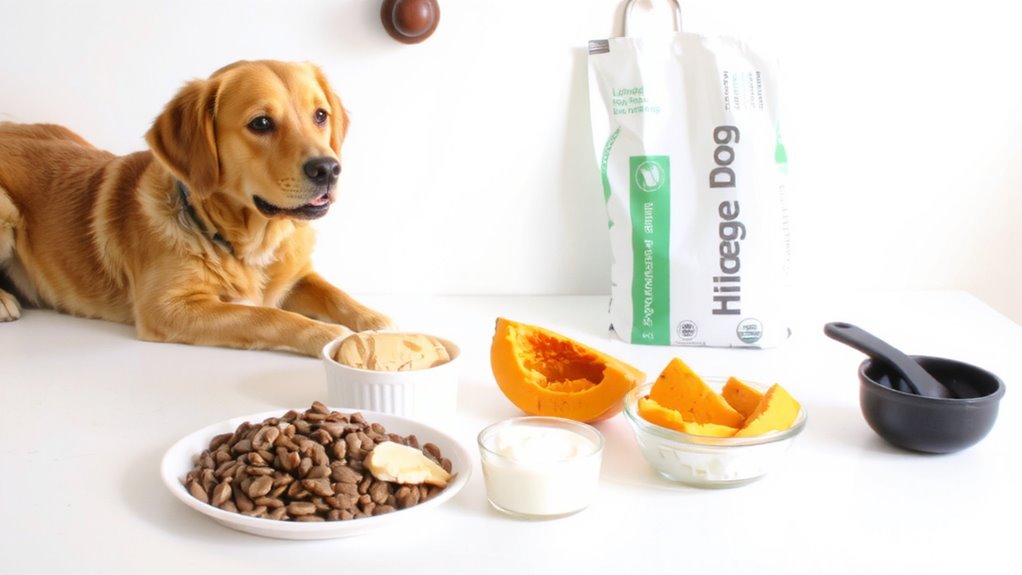
- Add 1–2g of soluble fiber per 10lb body weight to normalize stool consistency, using sources like psyllium or canned pumpkin.
Why Is Your Dog Gassy and Having Soft Poops?
What could be causing your dog’s soft stools and excessive gas? Dietary allergies are a common culprit. These occur when your dog’s immune system overreacts to specific proteins or carbs in food, triggering inflammation in the intestines. Common allergens include beef, dairy, and wheat. Undigested components then ferment in the colon, producing gas and drawing in water, which leads to soft stools. A gut imbalance-also known as dysbiosis-further worsens the issue. Dysbiosis involves an abnormal ratio of harmful to beneficial gut bacteria, reducing nutrient absorption and increasing fermentation byproducts. This condition disrupts intestinal motility and stool consistency. Both dietary allergies and gut imbalance compromise digestive efficiency. Diagnosis often requires elimination diets and fecal analysis. Addressing these underlying causes stabilizes digestion, reduces gas production, and improves stool quality. Correcting diet alters microbial populations within 7–14 days.
Avoid Ingredients That Cause Gas and Loose Stools

You can reduce your dog’s soft stools and gas by removing problematic ingredients from their diet. Artificial preservatives like BHA, BHT, and ethoxyquin may irritate the gastrointestinal tract, leading to loose stools and increased fermentation. These chemicals serve to extend shelf life but offer no nutritional benefit. Eliminate them by choosing natural alternatives such as mixed tocopherols or citric acid. Dairy products are another common trigger. Many dogs lack sufficient lactase, the enzyme needed to digest lactose, causing undigested sugars to ferment in the colon. This process produces excess gas and draws water into the intestines, resulting in soft stools. Even small amounts of milk or cheese can provoke symptoms. Replace dairy-containing treats with non-dairy options. Consistent removal of these ingredients typically improves stool quality within 7–10 days.
Feed Easy-to-Digest Proteins Like Chicken or Fish
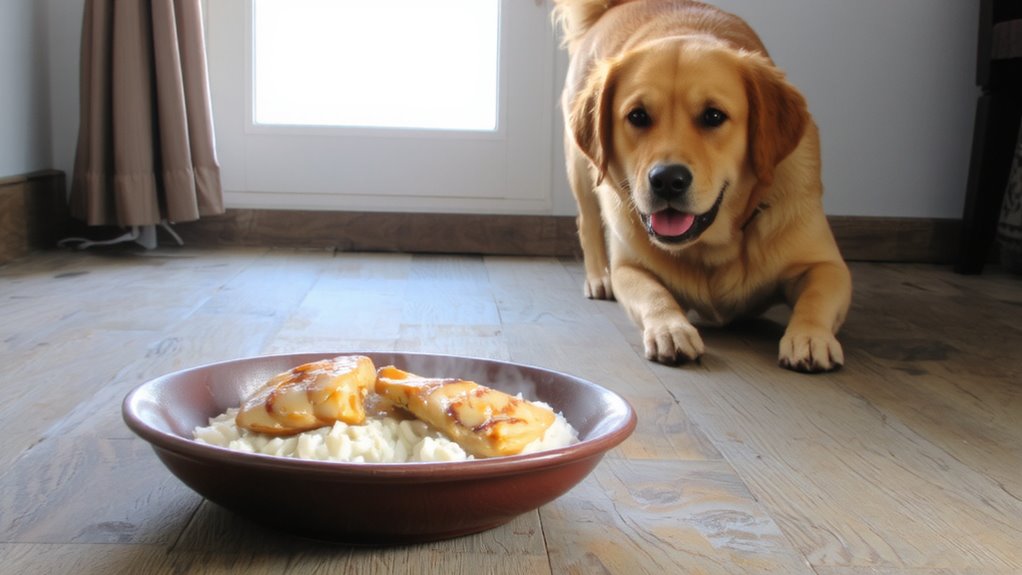
Choose a highly digestible protein source like boiled chicken or cooked white fish to help stabilize your dog’s digestion. These proteins are low in fat and fiber, reducing gastrointestinal stress. Boiled chicken contains approximately 25 grams of protein per 100 grams, making it efficient for nutrient absorption. White fish, such as cod or haddock, offers roughly 18–20 grams of protein per 100 grams and is rich in omega-3 fatty acids. These nutrients support mucosal healing in the intestinal tract. Highly digestible proteins enhance the release of Digestive Enzymes, improving breakdown and nutrient uptake. They also promote a stable Probiotic Balance by minimizing undigested residue that feeds harmful bacteria. Avoid seasoning or oils, which can irritate the gut. Use exclusively lean cuts, skinless and bone-free. This targeted dietary approach reduces fermentation in the colon, decreasing gas and soft stools. Consistency in protein quality supports long-term digestive health.
Give Smaller Meals Throughout the Day
Frequently, feeding your dog smaller meals throughout the day helps regulate gastrointestinal motility and reduce digestive stress. Adjusting feeding frequency to three or four meals instead of one or two improves nutrient absorption and minimizes fermentation in the colon. Consistent meal timing prevents prolonged fasting, which can trigger bile reflux and irritate the intestinal lining. Large meals increase gastric distension, stimulating excess gas production and accelerating intestinal transit-leading to soft stools. Smaller portions maintain steady digestive enzyme secretion and promote more predictable bowel movements. Aim for meals spaced evenly, such as every six to eight hours, depending on your dog’s size and metabolism. This approach supports a more stable gut environment, reducing both gas formation and stool inconsistency. Precision in feeding frequency and meal timing is essential for managing chronic digestive discomfort in sensitive dogs.
Use Soluble Fiber to Firm Up Stool and Reduce Gas
Soluble fiber acts like a sponge in the digestive tract, absorbing water and forming a gel-like substance that helps normalize stool consistency and minimize gas production. You can see noticeable improvement within 2–3 days when adding 1–2 grams of soluble fiber per 10 pounds of body weight daily. This gel enhances water absorption in the colon, reducing stool moisture and firming the output. Unlike insoluble fibers, soluble types are moderately fermentable fibers, producing short-chain fatty acids without excessive gas. Psyllium husk, oat bran, and canned pumpkin are effective sources. Psyllium, for example, absorbs up to 14 times its weight in water, supporting ideal bulk and transit time. Balance is key-too much fermentable fiber increases fermentation by-products, potentially worsening gas. Aim for a total dietary fiber content of 2–4% on a dry matter basis. Consistent dosing supports digestive stability and predictable stool formation.
When to Call the Vet About Digestive Issues
How long should you wait before calling the vet when your dog’s soft stools and gas don’t improve? If symptoms persist beyond 48 hours despite dietary adjustments, contact your veterinarian. Abdominal pain, indicated by restlessness, bloating, or reluctance to move, signals possible gastrointestinal distress requiring immediate evaluation. Blood in stool-whether bright red (indicating lower tract injury) or tarry black (suggesting upper digestive bleeding)-is a critical red flag. Acute changes in behavior, appetite, or energy level warrant prompt consultation. Chronic soft stools lasting over a week can lead to dehydration, electrolyte imbalances, and nutrient malabsorption. Dogs with preexisting conditions like pancreatitis or inflammatory bowel disease need faster intervention. Diagnostic tools such as fecal exams, blood panels, and abdominal ultrasound may be necessary. Never delay care if vomiting, fever, or lethargy accompanies digestive signs. Early vet involvement improves prognosis and prevents complications.
On a final note
You should see improvement within a few days of adjusting your dog’s diet. Feed a highly digestible, low-fat dog food with named protein sources like chicken or salmon as the first ingredient. Choose formulas with 8–10% fiber, emphasizing soluble types like beet pulp or psyllium. Divide daily calories into 3–4 small meals to reduce fermentation and gas. Monitor stool consistency using the Bristol scale; firm,成型 stools indicate success. Consult your vet if symptoms persist beyond 7 days.