Designing a Weight-Loss Diet for Dogs With Pancreatitis and Obesity
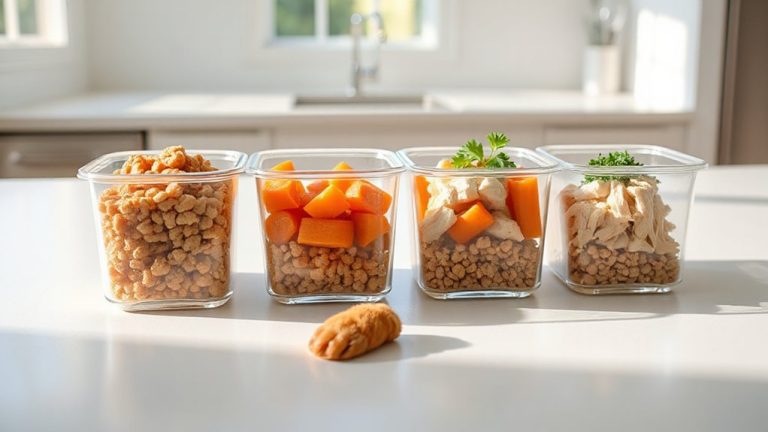
You need to feed your dog a precisely measured, ultra-low-fat diet with less than 10% fat on a dry matter basis to protect the pancreas. Set daily calories at 60–70% of the resting energy requirement, calculated as 70 × (ideal body weight in kg)^0.75. Choose high-protein (25–30% DM), moderate-fiber foods to maintain muscle and satiety. Divide intake into two or three controlled meals using a digital scale for ±5 gram accuracy. A slow-feeder bowl can reduce gastric stress. Monitor weight weekly and adjust based on trends and symptom tracking, as consistent data informs smarter, safer choices ahead.
Notable Insights
- Calculate daily calories using 60–70% of the dog’s resting energy requirement to ensure safe weight loss.
- Select a therapeutic low-fat diet with less than 10% fat on a dry matter basis to reduce pancreatic stress.
- Divide daily food into 2–3 measured meals to maintain digestion and prevent overeating.
- Use a digital scale for precise portion control, ensuring accuracy within ±5 grams per meal.
- Monitor weight and symptoms every 1–2 weeks and adjust the diet in consultation with a veterinarian.
Understanding Pancreatitis and Obesity in Dogs
While your dog’s body relies on the pancreas to produce digestive enzymes and regulate blood sugar, inflammation of this organ-known as pancreatitis-can disrupt these critical functions. Pancreas inflammation impairs enzyme secretion, leading to incomplete digestion and nutritional deficiencies. It also hampers insulin production, increasing diabetes risk. Concurrent obesity exacerbates this condition, promoting chronic low-grade inflammation and insulin resistance. Fat metabolism becomes inefficient, causing excess triglycerides to accumulate in tissues, including the pancreas, heightening sensitivity to future flare-ups. High dietary fat intake is a primary trigger, especially in predisposed dogs. Acute episodes may require hospitalization with IV fluids and fasting. Chronic cases demand lifelong dietary management. Reducing fat content to less than 10% of metabolizable energy is essential. Controlling weight supports metabolic health and reduces pancreatic stress. Early intervention improves long-term outcomes markedly.
Set the Right Calorie Goal for Weight Loss
Start by calculating your dog’s Resting Energy Requirement (RER), which is 70 multiplied by your dog’s body weight in kilograms raised to the 0.75 power. This value represents the calories needed for basic bodily functions at rest. For weight loss, feed 60–70% of the RER daily. Calorie counting is essential-use a digital food scale and log all meals and treats. Portion control prevents accidental overfeeding. Divide the daily calorie goal into two or more measured meals. Even healthy treats must fit within the limit. Use a feeding chart or veterinary nutrition app to track intake precisely. Avoid free-feeding or table scraps. Consistent portion control guarantees steady, safe weight loss-0.5–1% of body weight per week. Underestimate rather than overestimate portions. Adjust every 4 weeks based on weight changes. Accurate calorie counting supports metabolic health and reduces pancreatic stress.
Choose Low-Fat, Nutrient-Dense Dog Foods
Since managing pancreatitis and obesity requires careful dietary control, you’ll need to select dog foods that are both low in fat and rich in essential nutrients. Look for options with less than 10% fat on a dry matter basis to reduce pancreatic stress. High protein supports muscle retention during weight loss-aim for 25–30% protein (dry matter). Moderate fiber aids satiety and digestion, with ideal levels between 4–7%. These formulations help maintain energy and digestive health without triggering flare-ups.
| Benefit | Low-Fat Food Impact | Dog’s Improvement |
|---|---|---|
| Pancreas Health | Reduces enzyme overload | Less pain, fewer attacks |
| Weight Control | Limits calorie density | Steady, sustainable loss |
| Energy Levels | Balances nutrient delivery | More activity, less fatigue |
| Digestion | Moderate fiber regulation | Firmer stools, less bloating |
| Muscle Mass | High protein preservation | Stronger, healthier body |
Use Safe Feeding Practices to Prevent Flare-Ups
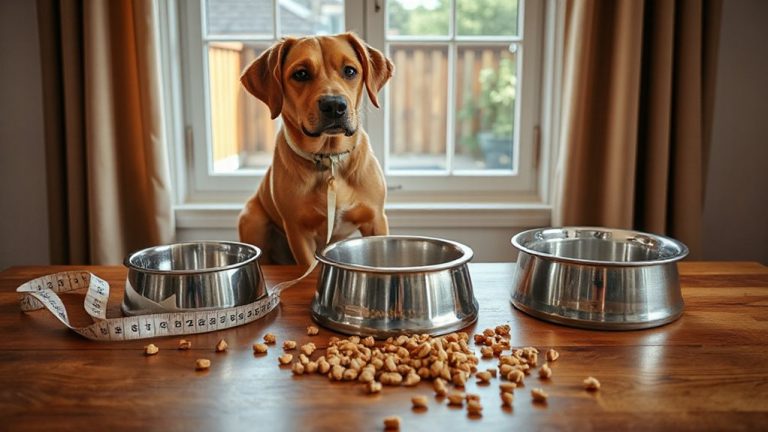
If you’re managing your dog’s pancreatitis and obesity, sticking to safe feeding practices isn’t just helpful-it’s essential for preventing painful flare-ups. Portion control guarantees your dog gets enough nutrition without excess calories or fat intake. Measure food portions precisely using a gram scale or measuring cup, ideally weighing within ±5 grams of the target. Overfeeding, even by 10%, can trigger inflammation. Implement a consistent meal frequency-typically two to three small, evenly spaced meals daily-to stabilize digestion and avoid pancreatic stress. Avoid free-feeding or sudden diet changes. Feed at the same times each day to regulate enzyme release. Use a slow-feeder bowl if your dog eats too quickly, reducing gastric pressure. These controlled feeding patterns support fat metabolism and reduce the risk of acute episodes. Safe practices directly influence pancreatic health and weight-loss success.
Track Weight and Symptoms to Adjust the Diet
Regular monitoring of your dog’s weight and clinical signs gives you real-time feedback on how well the current diet and feeding schedule are working. Weigh your dog every 1–2 weeks using a digital scale, recording results in a food diary to identify trends. A safe weight-loss rate is 1–2% of body weight per week. Faster loss risks hepatic lipidosis. Symptom tracking is equally critical-note vomiting, lethargy, or diarrhea daily. Use a standardized log to document meal times, portions (measured in grams), and treats. Sudden changes in appetite or stool consistency may signal dietary intolerance. Adjust portion sizes only after reviewing 7–10 days of symptom tracking and weight data. Consistency in timing and measurement guarantees accuracy. The food diary also helps detect patterns, such as post-meal discomfort, guiding further refinements without guesswork.
Partner With Your Vet to Refine the Diet Plan
While progress can be tracked at home, your vet plays a central role in fine-tuning your dog’s diet to meet the dual challenges of pancreatitis and obesity. Vet collaboration guarantees dietary adjustments are safe and effective. Your vet assesses body condition score (BCS), reviews weight trends, and interprets bloodwork, including pancreatic lipase (cPLI) levels. Dietary monitoring involves logging food portions, treats, and symptoms weekly. Vets use this data to adjust caloric intake-typically reducing by 10–20% initially-while maintaining 18–25% protein on a dry-matter basis. They may recommend a therapeutic diet with <10% fat (dry-matter basis) to reduce pancreatic stress. Regular rechecks every 2–4 weeks allow for timely modifications. Adjustments balance fat restriction with sustained weight loss. You provide real-world insights; your vet delivers medical oversight. Together, you optimize outcomes.
On a final note
You must maintain strict fat control to manage pancreatitis and obesity. Feed a prescription diet with ≤10% fat on a dry matter basis. Provide 60–70% of resting energy requirement to guarantee gradual weight loss. Divide meals into 3–4 daily portions to stabilize digestion. Monitor weight weekly; aim for 1–2% body weight loss per week. Adjust calories if symptoms flare or progress stalls. Always consult your vet before making changes.